Across New Hampshire, they’ve seen a spike in demand
Jon Decker, Granite State News Collaborative
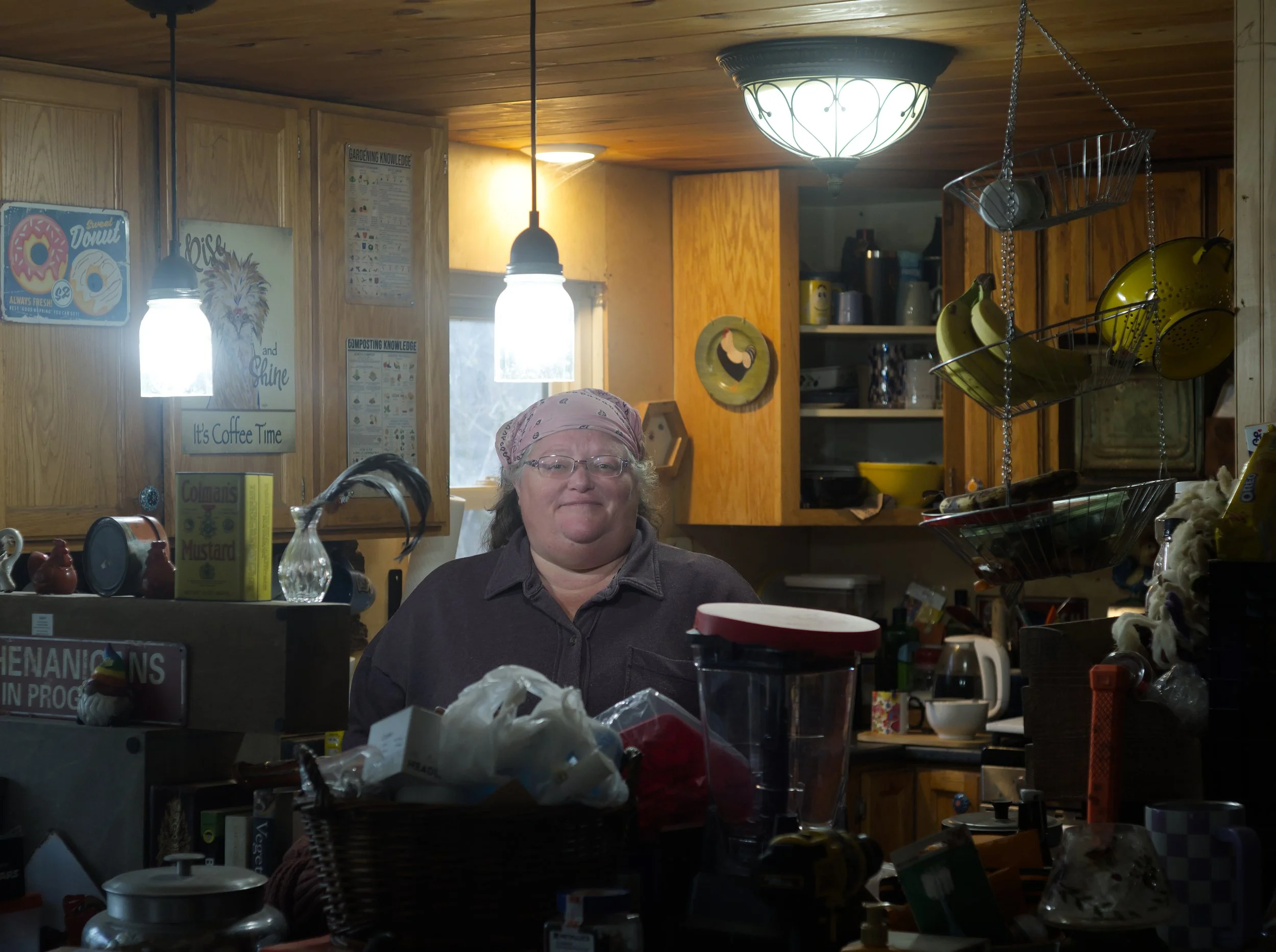
“It’s local,” said Kathy Sorell, founder and operator of Restoration Acres, a food-focused nonprofit she runs out of her home in Meredith.
Sorell started the organization to help out neighbors during the pandemic under the basic rule of no questions asked.
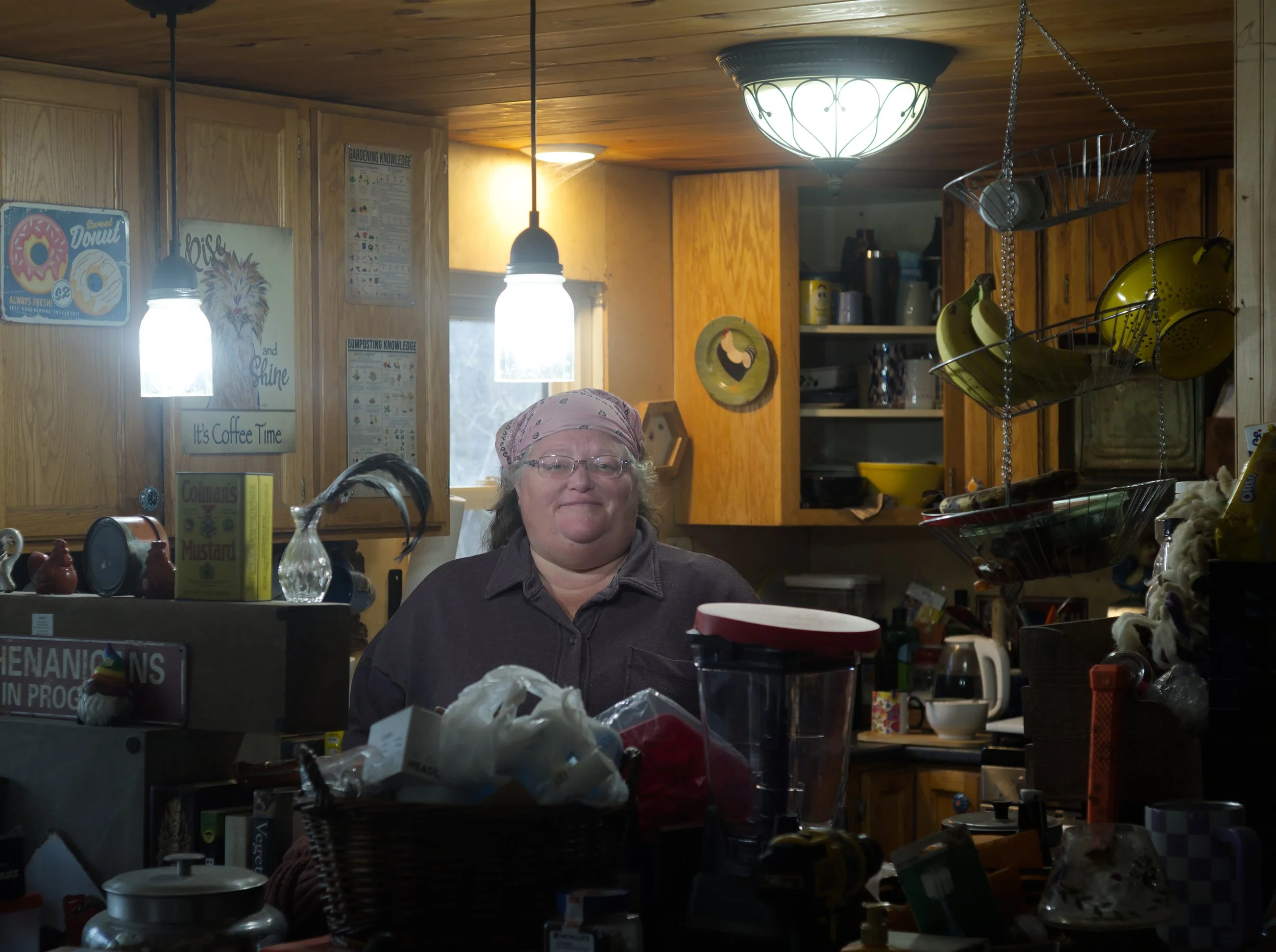
Kathy Sorell of Meredith in her kitchen. Sorell began crafting home-cooked meals to feed anyone in need during the pandemic. Since the government shutdown this fall, she’s seen demand in her community skyrocket. (Jon Decker/Granite State News Collaborative)
“We started doing this not really intending for it to become as big as it is,” Sorell said. “It started out just taking leftovers from our meals and making new meals and putting them out in our garage freezer, just to try to help people out. It’s just blown up from there.”
Five years later, that little freezer now sits in a donated, powered shed, flanked by two more much larger units and a steel shelf full of nonperishables. A second shed full of donated clothing items recently joined the operation, along with a greenhouse for fresh produce in the warmer months.
Thanks to these resources and community support, Sorell has been able to help feed around 500 people per month. Each meal is made possible because Sorell works from home and she gets donations from members of the community.
In the wake of the longest-ever government shutdown in U.S. history and severe long-term cuts in the federal SNAP program, also known as food stamps, the task of feeding people in need is increasingly falling on the shoulders of individuals and nonprofits. Even with the combined efforts of the N.H. Department of Health and Human Services and the New Hampshire Food Bank, small operations like Restoration Acres have seen a spike in demand, and it's not going away anytime soon.
Twelve percent, or one in eight Americans, rely on SNAP. In New Hampshire, about 76,000 of the state’s 1.4 million residents, or one in 18, rely on the program.
Sorell said that when SNAP benefits were temporarily shut off during the government shutdown, during one three-day period her outfit burned through $1,000 of food in just three days.
“Sometimes I have to go into my own checkbook, which I try not to do because I am just getting by myself,” Sorell said.
‘A lot of new faces’
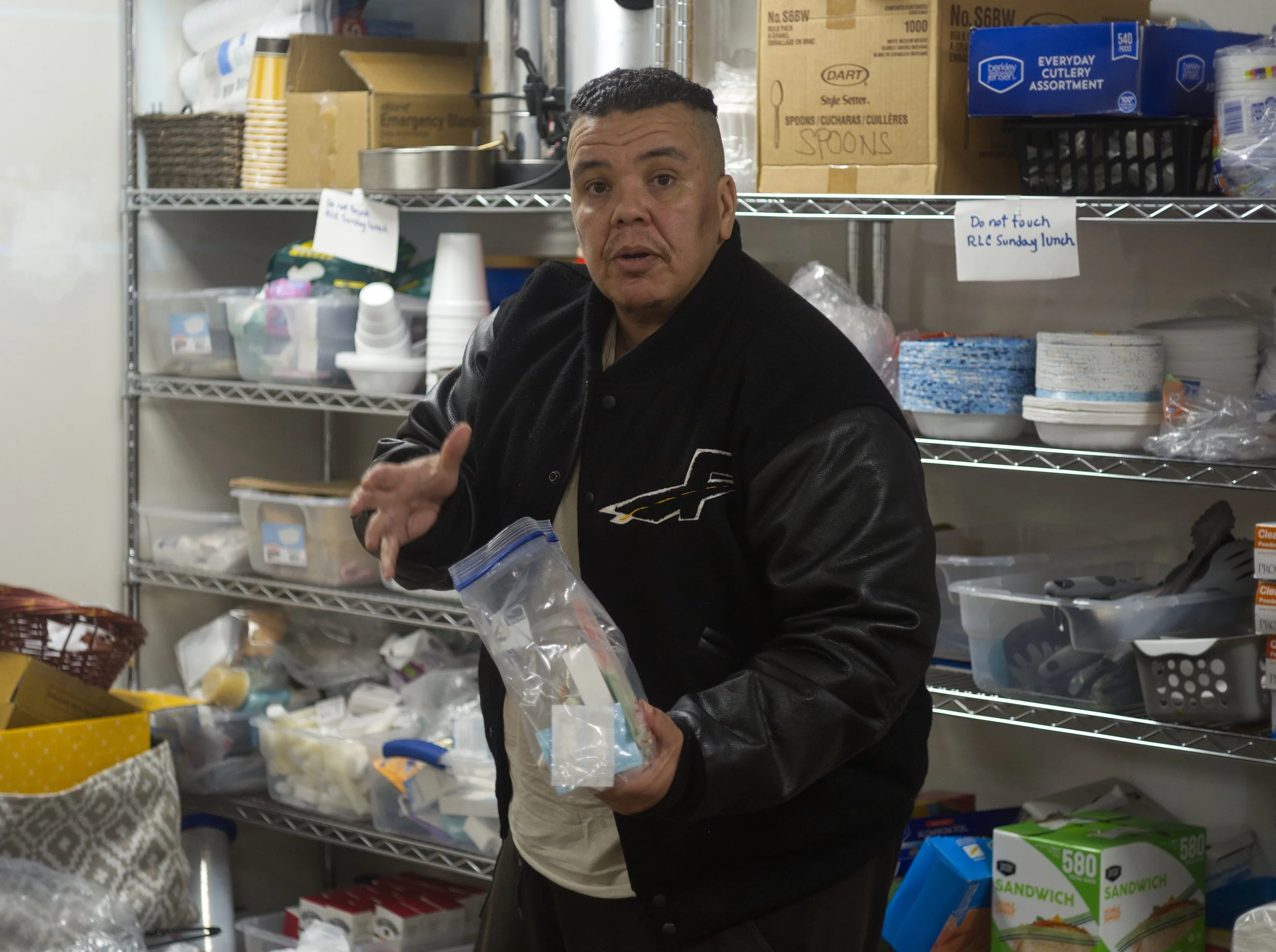
Pastor Kenzo Morris shows a bag of essential items that can be found at his food pantry in Laconia. (Jon Decker/Granite State News Collaborative)
Programs like Sorell's are found around New Hampshire, trying to fill at least some of the gap.
“When I found out our federal government was willing to starve our population for political control, I immediately stepped into action, knowing my neighbors would have trouble with this because our city already has trouble with this,” said Ashley Poulin of Manchester, known as the Soup Ladee on Facebook.
“I put a post up and said, ‘Hey, I need a network of neighbors.’ I got six of them to get together, to help me coordinate finding and facilitating food donations. I found the need, and these folks helped me fill it.”
Poulin works with a variety of nonprofits and soup kitchens throughout Manchester and described herself as a catalyst and connector for people seeking services. At this time of year, she shares photos showing delivery of turkeys and other donated goods for the holiday season. Poulin’s wife joined the effort, and they, along with their group, were able to bring Thanksgiving meals to a dozen families.
“During that whole SNAP shutdown, I got to see twofold where the need is and just how passionately the community feels,” Poulin recalled. But, despite the good vibes of giving and kindness, Poulin still described herself as “a little bit enraged.”
“I definitely think poverty is a policy choice,” she said.
Just 20 minutes from Sorell's turf of Meredith is Laconia, a city of 18,000 known mostly for its lake tourism and, increasingly, its affordability and homelessness crisis.
Right in the heart of Laconia’s downtown is Real Life Church, run by Pastor Kenzo Morris. Morris, along with a host of volunteers, runs a soup kitchen that caters mostly to the area’s homeless population, but in recent months, he’s seen a shift.
“We are seeing families starting to come in,” Morris said. “They can’t afford food, so they come here to get an extra meal and to kind of help, so we’re seeing an uptick of maybe 120, to about 180 people, and sometimes, during those days, it’s that many in one day.”
In addition to food, the church gives out other essentials, like clothes and baby formula — but Morris says, something has to give.
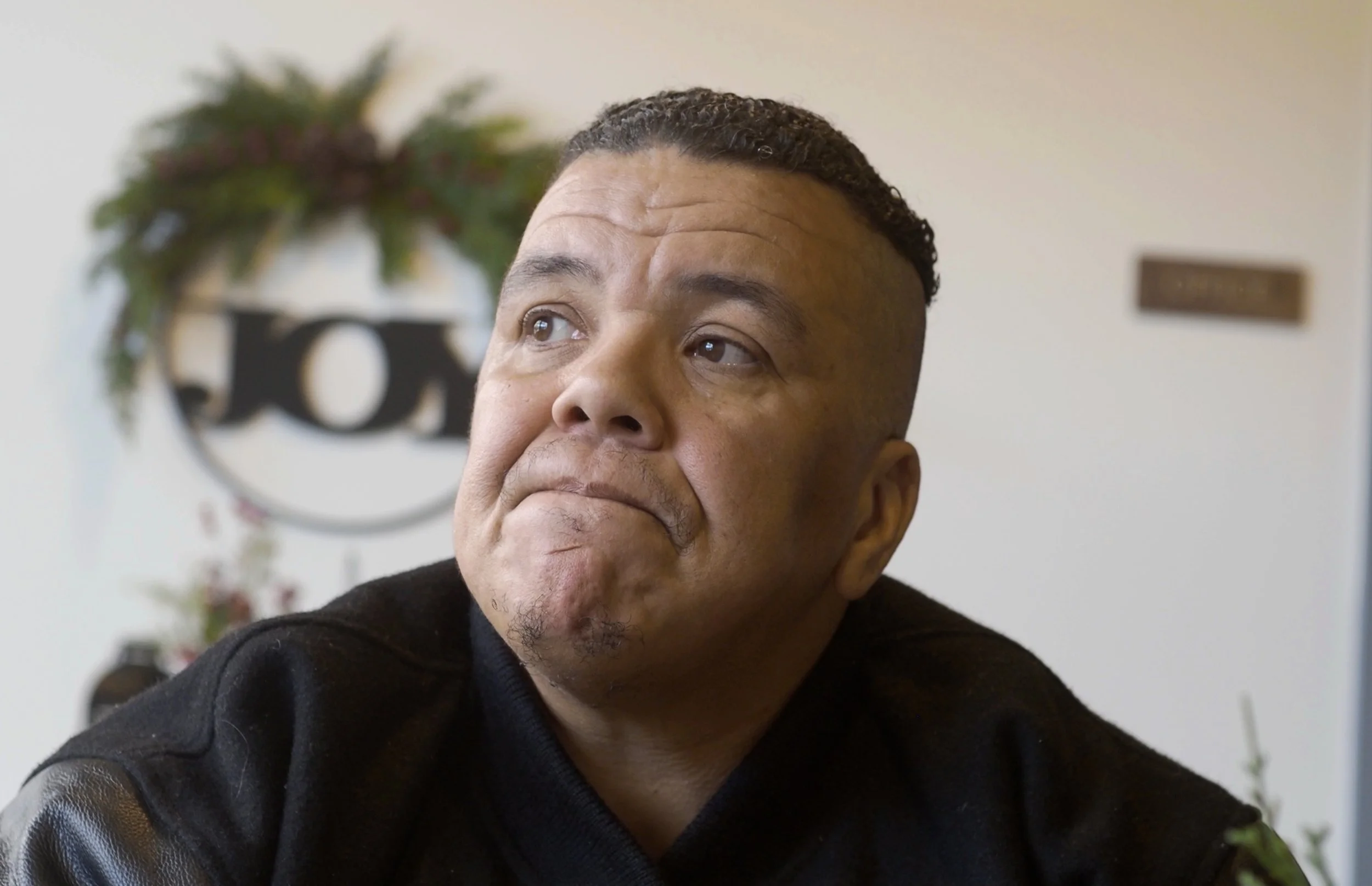
Pastor Kenzo Morris of Laconia’s Real Life Church runs a soup kitchen that usually caters to homeless people. Since the government shutdown and subsequent SNAP benefits turmoil, he’s seen more families show up. (Jon Decker/Granite State News Collaborative)
“A lot of new faces are starting to come in,” Morris said, “and it's sad because, you know, they need clothing or they need shoes.”
‘A tremendous amount of fear’
Farther north, the increased need is the same.
“During the week, when we would [previously] get 11 to 12 orders, we filled 25 to 26. It was double sometimes,” said Dick Gouette, a volunteer with the Littleton Food Pantry Distribution Center. “It was hard keeping up with the supply sometimes.”
Gouette explained that one order could mean just one hungry individual, or a family of 13.
Since the federal government shutdown ended in November, Poulin said, “I would say the alarm has gone down — the frenetic fear — but I would say that if we’re at 50, and we spiked up to 95, I’d say we’re now at about 75. It created a backlog.”
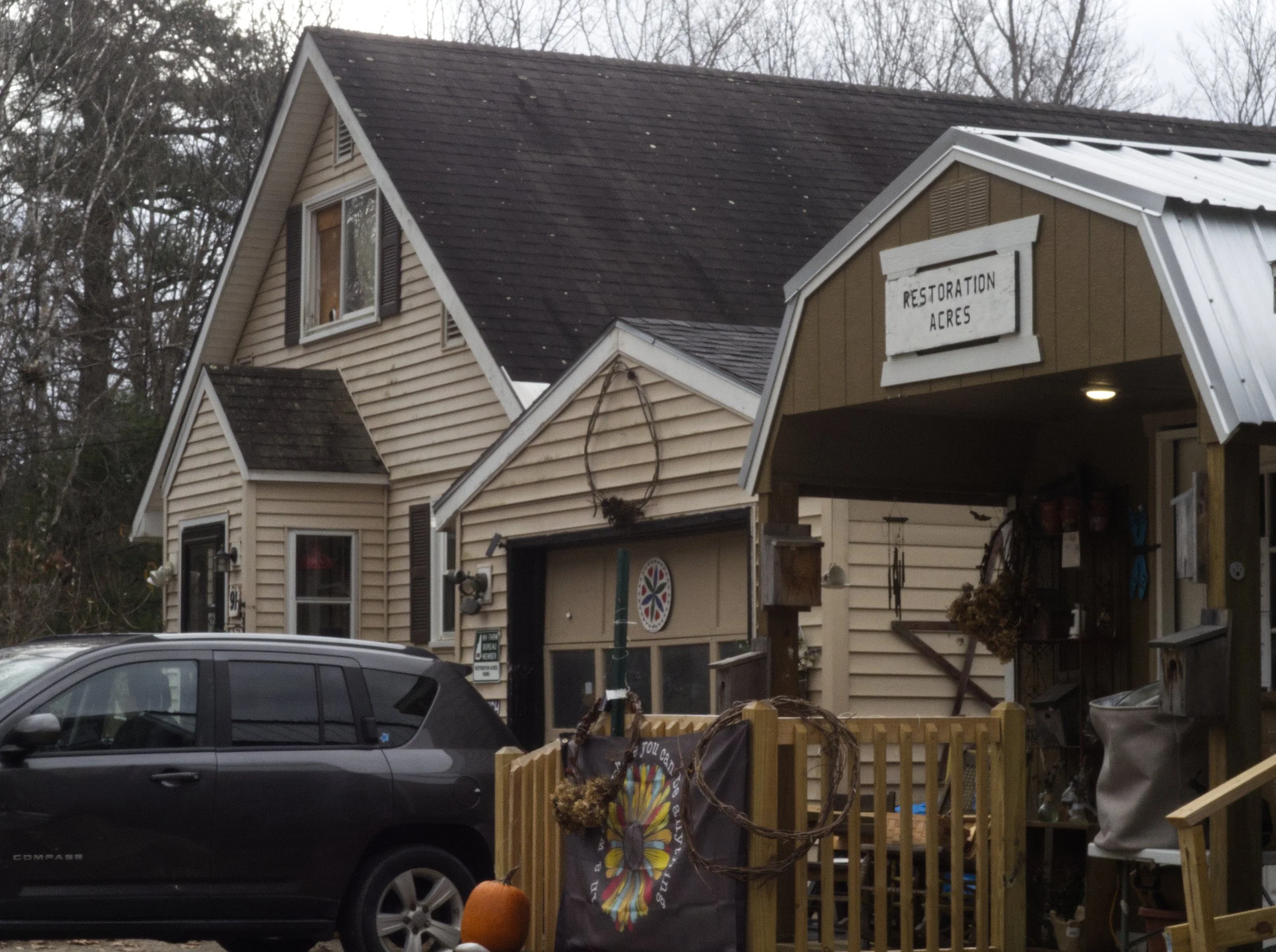
Since its beginnings in a Meredith garage, Restoration Acres, founded by Kathy Sorell, has expanded to include a greenhouse and two sheds to house donations (Jon Decker/Granite State News Collaborative)
He added: “Folks are recovering. The resources are being allocated where they should have been, which is a regular need, instead of extra-high need.”
In Meredith, Sorell said, much of the demand remains.
“There’s just a tremendous amount of fear people are feeling, and people with families especially. I have times where I will wake up at 3 in the morning and I'll have an email that will just keep me up all night, because I think, ‘What can we do? How can we help?’” she said. “Because, let's be honest, the pantry is supposed to be something where you go, you get something and it kind of gets you over the hump. We're no longer really dealing with just people getting over the hump. We're dealing with people that need us in a big way.”
She added: "I will say that I feel comfortable that our government is no longer functioning the way a government should.”
Meanwhile, in Littleton, Gouette said he sees a continued demand for services like his. “It feels like it's not going to slack off. I think it’s going to increase more and more with inflation and the price of food. Let’s hope and pray we can keep up. “
These articles are being shared by partners in the Granite State News Collaborative. Don’t just read this. Share it with one person who doesn’t usually follow local news — that’s how we make an impact. For more information, visit collaborativenh.org.