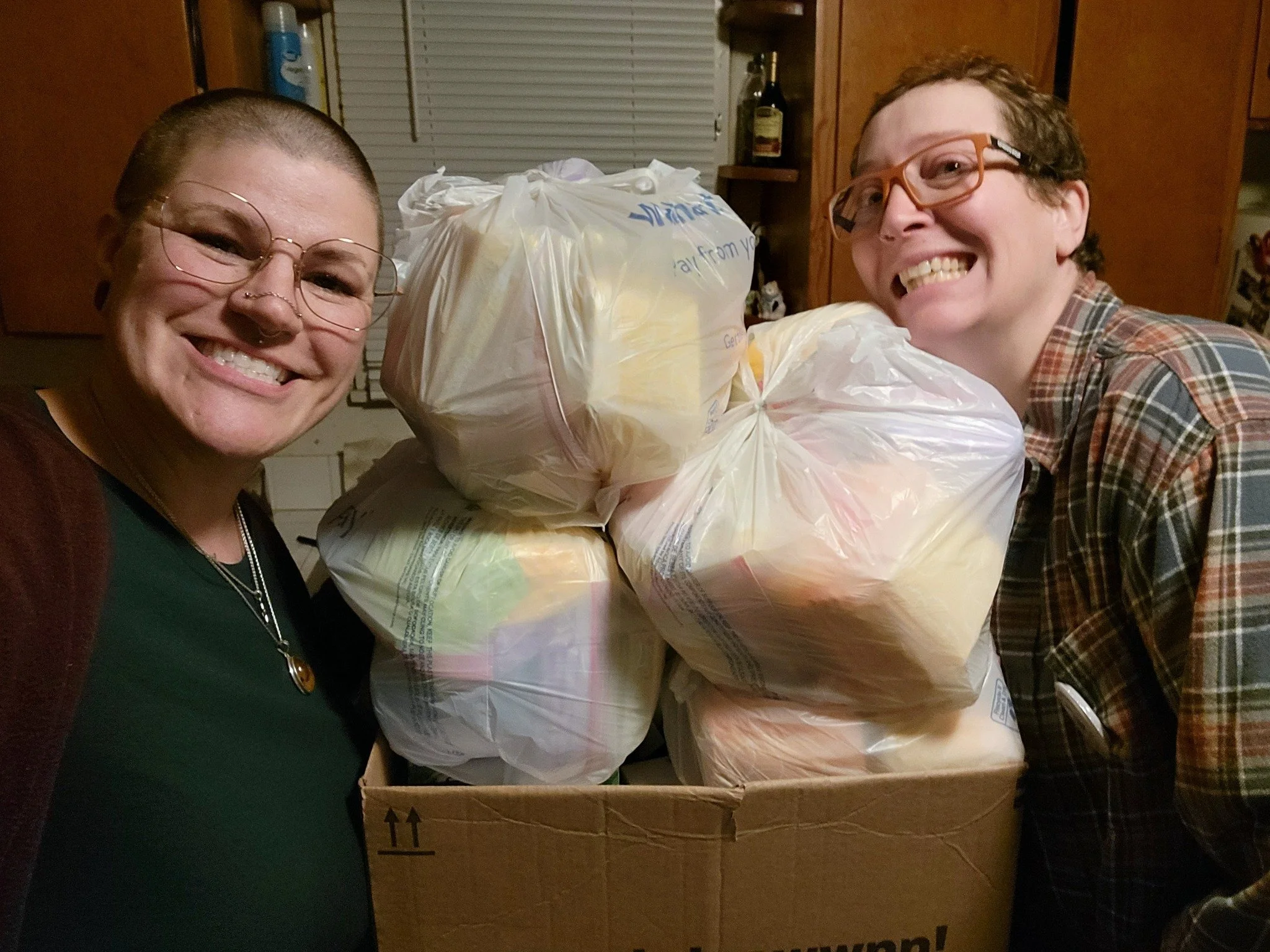
Inspired by SNAP suspension, community efforts seek to fill a persistent gap
Megan Rogers, Granite State News Collaborative
Community fridges in Berlin and Newmarket have been open for a little more than a month and are already drawing significant community support.
At the fridges, people drop off canned or fresh food to share with neighbors. Others stop by to obtain food at a 24/7 location with low barriers to use. Volunteers visit twice a day to check on the fridge. Restaurants donate leftover food.
“It’s been bigger than I ever dreamed it would be. I did not expect it to take off so fast,” says Magen Moreau, co-founder of the Berlin Community Fridge.
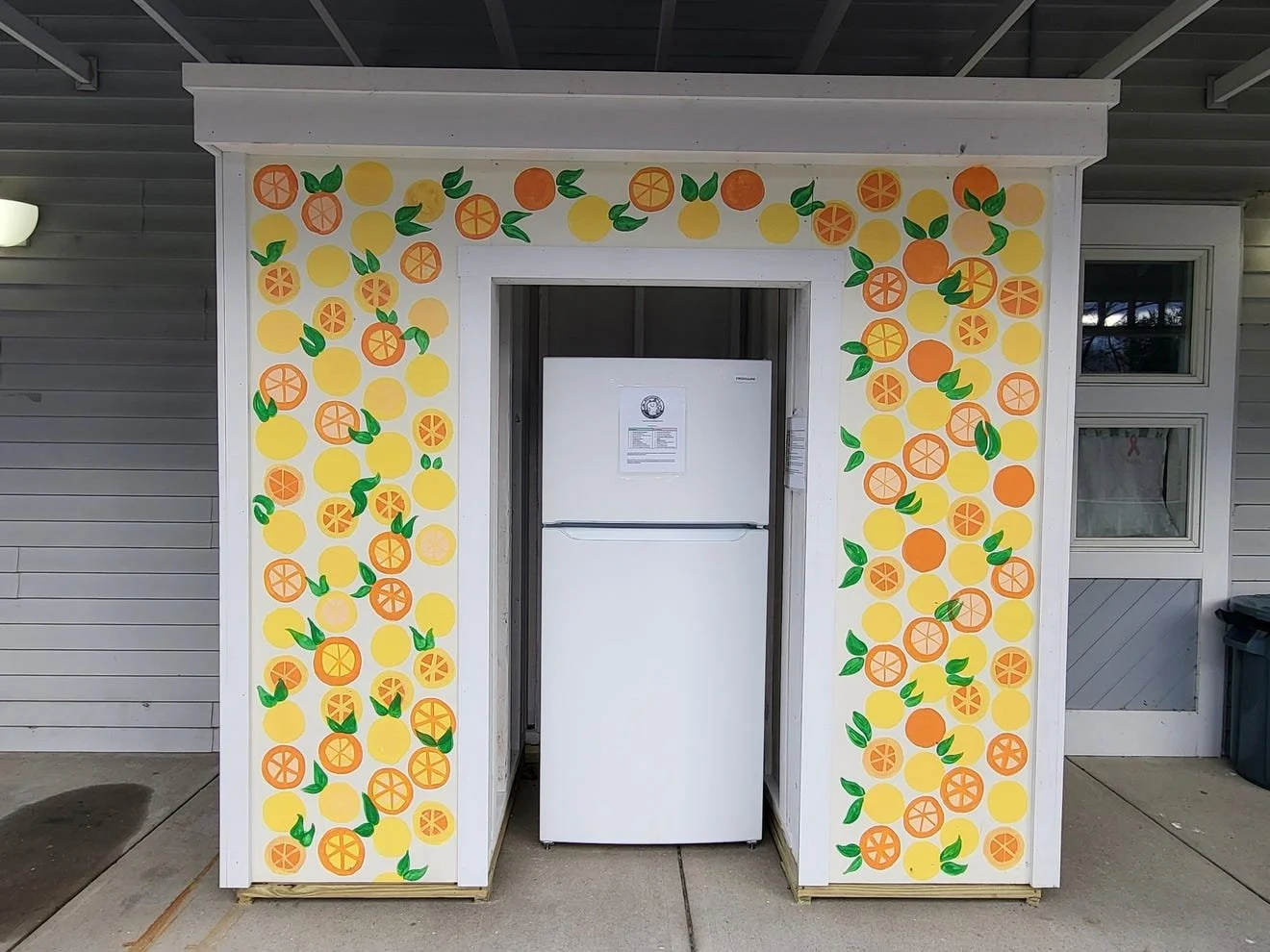
The Newmarket Community Fridge is located on the campus of Lamprey Health Care. (Courtesy photo)
The fridge is in a wooden shed next to the Berlin Parks Department garage. Within a week of opening, the contents of the fridge have completely changed over several times, as people come and go from the fridge, Moreau says.
A couple of hours to the south, at Newmarket Community Fridge, people can obtain refrigerated food, meals and other items — from birthday cake kits complete with frosting, candles and cake mix to tampons, diapers, wipes, and more.
“People have been beautiful about it. Every business I brought the idea up to loves it and wants to do something to help. It's been lovely,” says Tiara Lee, who spearheaded the Newmarket fridge.
The fridges are two examples of grassroots projects designed to address food insecurity in New Hampshire.
Moreau, Lee and others looked around, saw a need, and worked to fill it. So did others across the state who run other community fridges, free pantries and free stores. Many of these projects are longstanding, but received additional support and donations from local residents this fall as the question over the fate of SNAP benefits amid the federal government shutdown put a spotlight on food insecurity.
“There’s no better timing than now to get this up and running,” Moreau says. “It definitely pushed us to want to get it up and running as soon as possible.”
‘A way for everyone to matter’
From 2021 to 2023, an estimated 42,300 households in New Hampshire were food-insecure, an increase from about 30,000 food-insecure households during the 2019-2021 period, when temporary federal aid programs during the COVID pandemic were in place, according to research from the N.H. Fiscal Policy Institute.
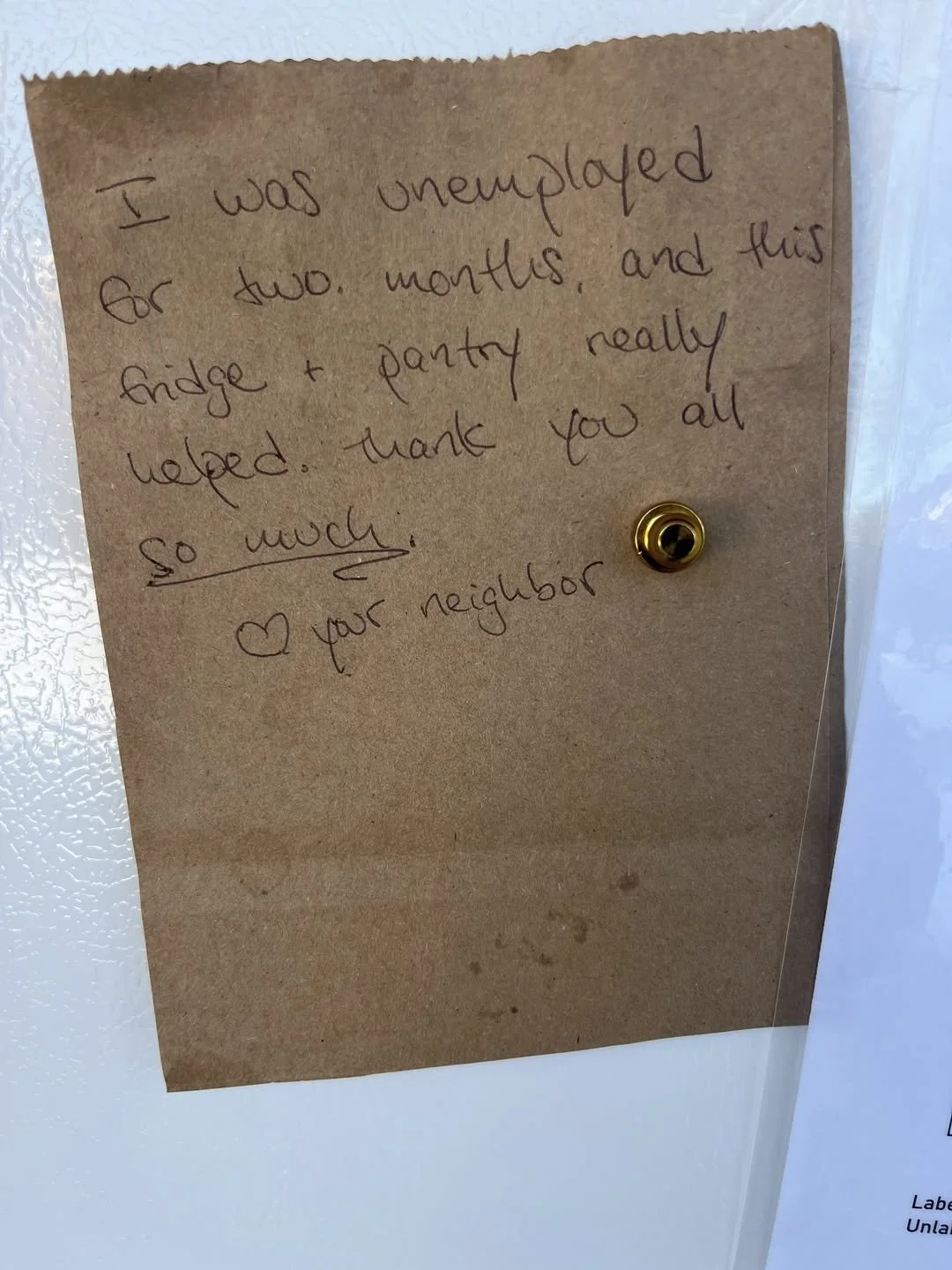
A note posted to the door of the Newmarket Community Fridge. (Courtesy photo)
These grassroots efforts are designed to be gap-fillers for traditional social services, offering low barriers for use and providing local residents with tangible ways to support their neighbors.
“There’s a lot of people that don't reach out for help when they need it, due to shame, embarrassment or stature in their community. When they need it most, they may not feel like they can take that help,” Moreau says. “This is a way for everyone,no matter who you are, where you come from, or what situation you are in, it gives everyone the option to have access to fresh or frozen or canned food.”
The Newmarket Community Fridge is located under a covered porch at Lamprey Health Care on Main Street in Newmarket. Lee was familiar with other community fridges and the local nonprofit that supports them, and was walking into work one day when she decided Newmarket should have its own fridge. That was August, and three months later, the fridge was open and full of food.
“The other day, a restaurant made us some smoked turkey bisque soup and jalapeno cornbread, so there were 70 of those in there,” Lee says.
Lee worked with Red’s Good Vibes, a nonprofit in Portsmouth that supports community fridges in Portsmouth, Exeter and the Seacoast, as well as the Berlin Community Fridge. Red’s Good Vibes helped with the fridge installation, Lee says, but the fridge itself is run by the community.
Volunteers visit the fridge twice a day to ensure that no food is spoiled, everything is labeled, and the fridge remains tidy. So far, nearly 40 people have volunteered to help sustain the fridge.
“It seems like every day more people are posting in the Facebook page, ‘How do I get involved?’” Lee says.
‘A game-changer’
How to get involved was a question that many people on the Seacoast were asking in late October, when the potential loss of SNAP funds loomed and nonprofits were stretched thin.
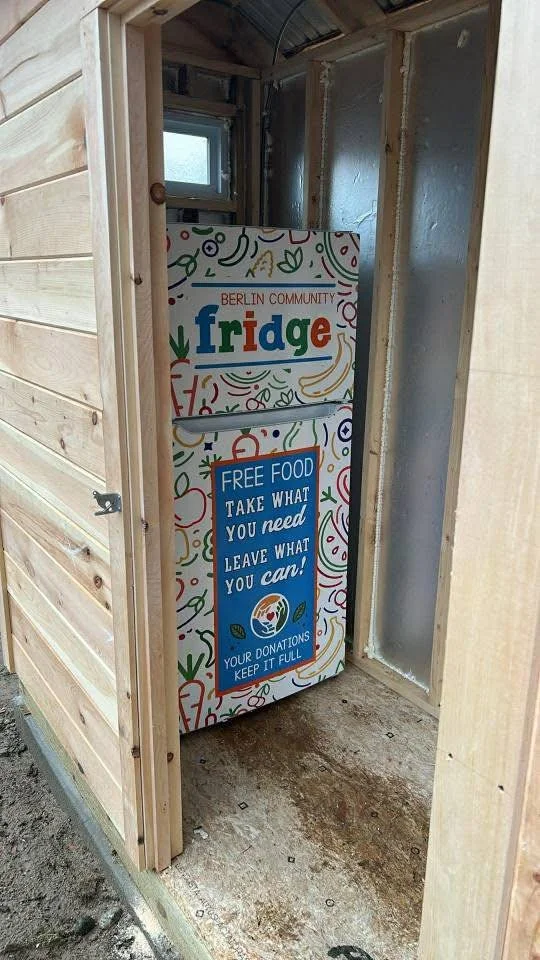
The Berlin Community Fridge is located in a wooden shed next to the Parks Department garage. (Facebook photo)
For Kate Malloy and Emily Moore, the answer was to start SNAPback Seacoast, a rapid-response coalition to meet urgent needs around food insecurity.
The duo worked with nonprofits addressing food insecurity, along with businesses, schools, local governments and faith communities, to identify what nonprofits needed and mobilized the community to meet those needs.
“We can as individuals make a very large difference in the community if we just are emboldened for whatever reason and just do it, and that is what keeps driving us,” says Malloy, who’s the owner and CEO of Portsmouth-based Purple Finch Events.
The group asked nonprofits for their top five needs for both food and personal care products and opened two temporary distribution centers, where they’ve been able to support more than 20 organizations.
More than 20 businesses offered space for collection efforts and others offered promotions to financially support SNAPback Seacoast. Community groups have put together ready-to-eat meals, and individuals have donated their time or money to fill urgent needs.
“Everyone is just finding their place in it and reaching out to ask how they can help or how we can support them,” Malloy says. “It’s really special to see.”
By mid-November, the group had already collected more than 5,000 food items and other supplies, and mobilized 150 volunteers.
“In their individual entities, it’s small acts, but together it's a game-changer for somebody,” says SNAPback co-founder Emily Moore, advancement director at Lighthouse Credit Union Foundation. “That’s why I’m exhausted but continue moving forward because that's the power I have and I want to give.
“It’s kind of neat. If you would have asked me at the beginning of October if this is what we were going to spend our time doing, it’s never in a million years what I would have thought, but I'm actually so grateful. This is probably the coolest thing I've ever done in my entire life.”
The project concluded earlier in December and, as a last effort, the group collected items such as headlamps, personal heaters, first-aid kits and other gear to put together 100 Kindness in the Cold Kits to help people stay safe during the winter.
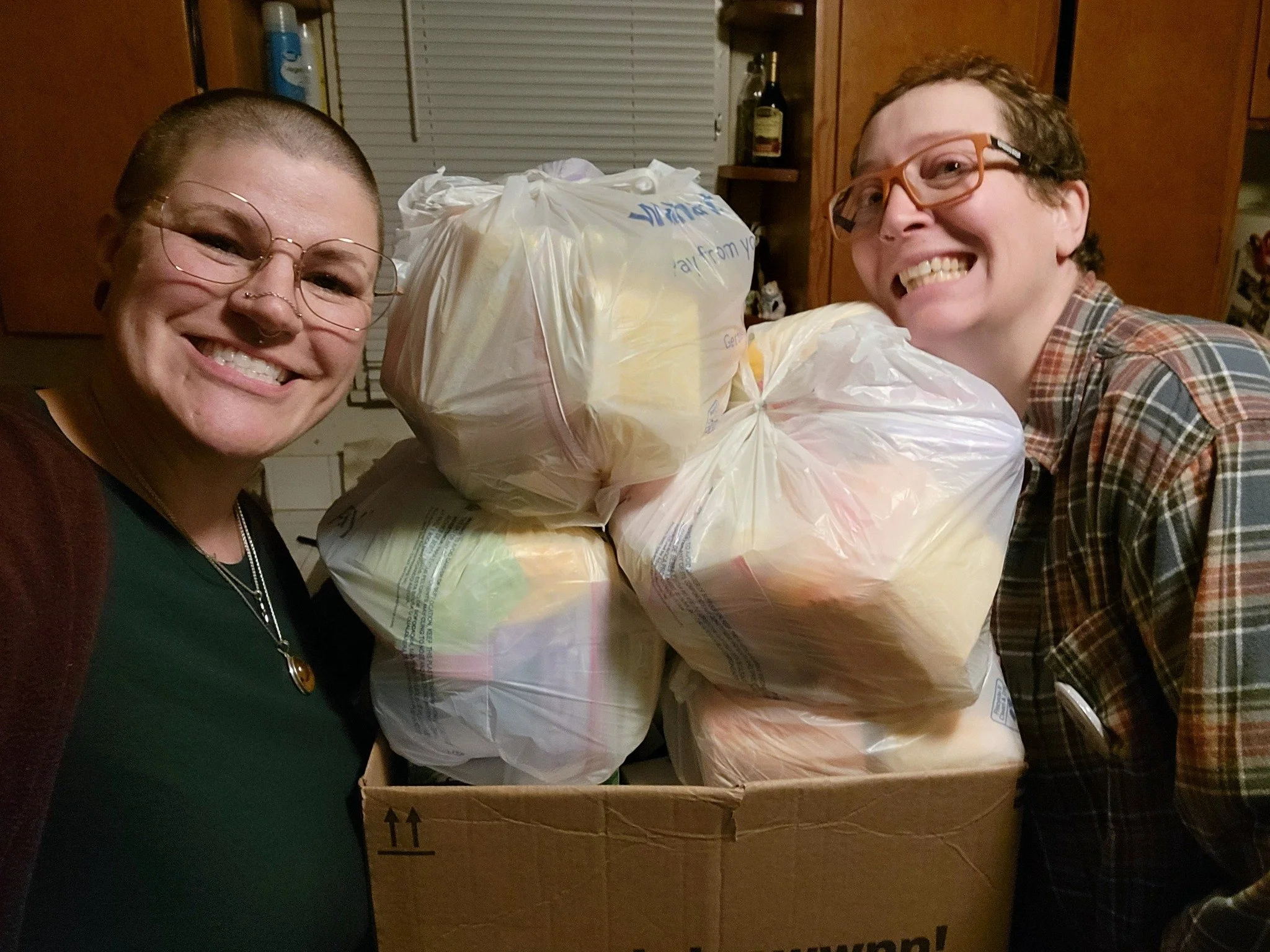
Kirstan Knowlton and Jamie Davis of the Little Free Library & Pantry in Berlin, accepting a delivery of hygiene packs made up of pads and tampons, soaps and other items, for distribution. (Facebook photo)
The founders’ hope is that community members will maintain connections with nonprofits in the wake of their work through SNAPback.
‘It has taken off so quickly’
The drive to help people has been felt and seen by the people who run free pantries and free stores across the state.
In Berlin, Kirstan Knowlton has hosted a Willard Street Little Free Library in her front yard and recently partnered with a local Girl Scout to install a Little Free Pantry.
“The timing of the pantry and the timing of what's going on across the country has motivated people,” says Knowlton. “They want to help.”
Because of the pantry’s location near schools, kids are the primary visitors to the pantry, which offers snacks and other shelf table foods.
“It has taken off so quickly and there’s no plans for stopping,” Knowlton says. “If anything, I want to expand.”
In Rochester, Allies United for Change has been running an emergency food pantry at Grace Community Church since 2021. Community members put their own items in the pantry, and the nonprofit fundraises to fill the pantry as well, even helping to support a food pantry at another church, says board president Stacey Purslow.
Another longstanding grassroots community organization is Keene Mutual Aid, which sets up a free store every Saturday from 2 to 3:30 p.m. in Keene’s Railroad Square. Keene Mutual Aid, founded in 2020, provides basic first-aid supplies, pantry supplies, seasonal clothes,and personal care items. The free store has taken on a life of its own, says treasurer Anna McGuiness.
“It was only in the past year and half that I don't go to every free store anymore,” she says. “I have enough regular, experienced volunteers that they can run it without me, and that feels amazing, that it's a community project that has taken on a life of its own.”
These articles are being shared by partners in the Granite State News Collaborative. Don’t just read this. Share it with one person who doesn’t usually follow local news — that’s how we make an impact. For more information, visit collaborativenh.org.