By Rosemary Ford and Caitlin Agnew
This article has been edited for length and clarity.
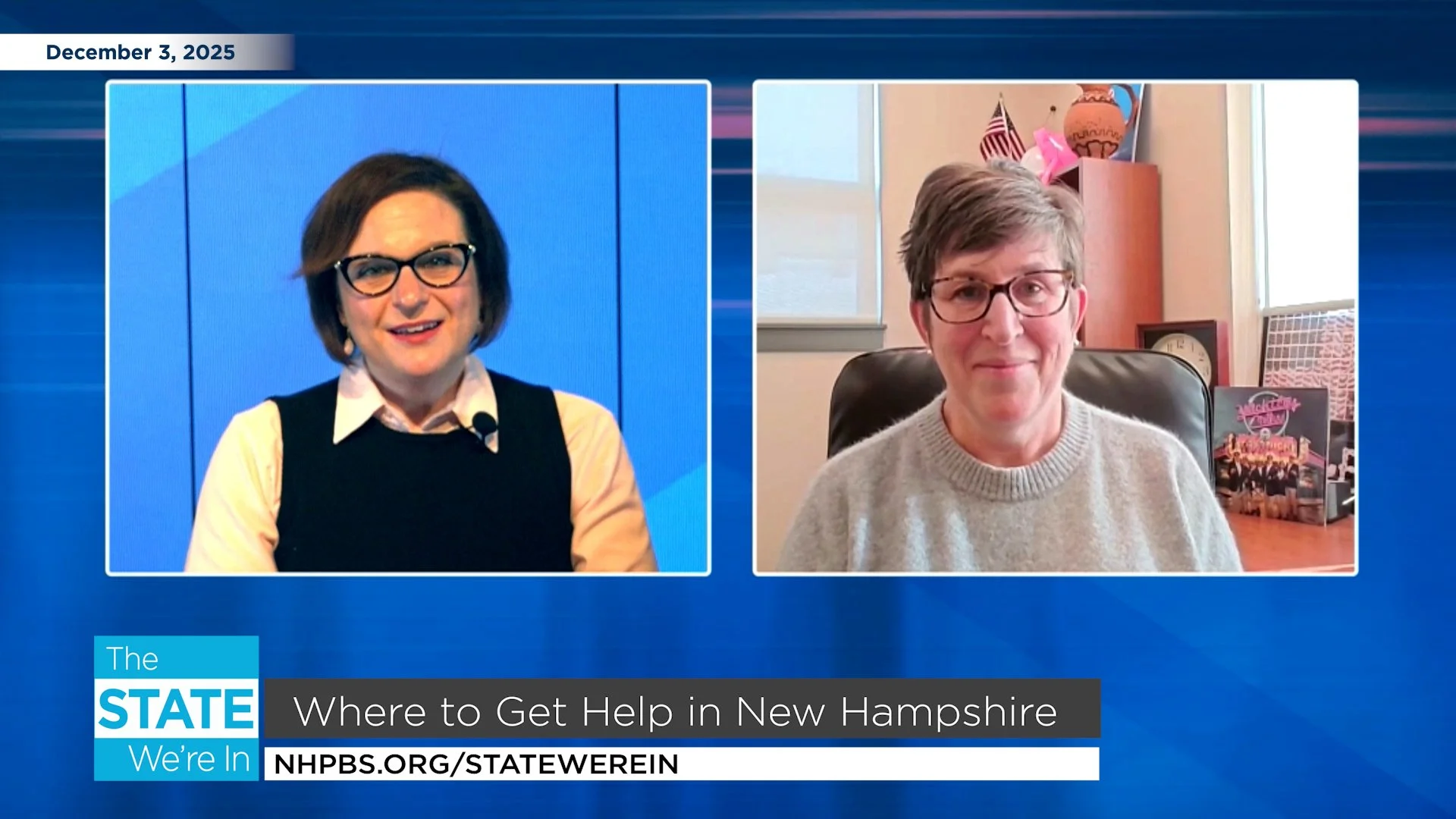
The holidays can be a difficult time for those who are struggling. As we begin this holiday season, we’re highlighting some of the organizations that support New Hampshire residents now and all year-round for those who may need assistance. The Community Action Partnership of New Hampshire is one example — it continues to aid residents across the state. That organization has five action agencies that support New Hampshire residents with resources such as access to food, energy and housing. Here to discuss what is offered locally is Betsey Andrews Parker, chief executive officer of the Community Action Partnership of Strafford County.
Melanie Plenda:
To start, what is the Community Action Partnership of Strafford County? What kinds of resources do they provide for residents?
Betsey Andrews Parker:
Community Action really is a bunch of coordinated programs that wrap around families or individuals to help get them over that tough time. Community Action Partnership of Strafford County is just one of five Community Action agencies in the state of New Hampshire. We cover the entire state. So anyone in New Hampshire that is looking for that support because of a job loss, an unexpected bill that's put them over the edge, for rental assistance, etc., Community Action is there.
Melanie Plenda:
How does your organization’s services compare to the services provided by other Community Action Partnership offices? Are there any differences between what Strafford County offers versus other counties?
Betsey Andrews Parker:
We’re one of 1,000 across the country — Community Action was started back with the War on Poverty in 1965. Across the board in New Hampshire, you know you can access Head Start, weatherization, fuel assistance, housing supports — that’s very consistent across Community Action.
But what makes Community Action really different and unique is that we're about community. So we look locally in our area at what needs to be done that we can help address. We do that by doing a needs assessment every three years and working with our community partners to say, “Is there something that we can do?” For example, some operate shelters. Three of our Community Actions operate the BRIC ((Building Resilient Infrastructure and Communities) program. What makes us different is that we all offer programs to help people who are experiencing low to moderate income be able to make their ends meet. We do it either directly or we partner with another organization.
Melanie Plenda:
Who qualifies for these services? How can people find out what they are eligible to receive?
Betsey Andrews Parker:
I would first of all encourage people to look up the Community Action Partnership of New Hampshire. You can actually go on and put your zip code in to find out exactly where your local Community Action office is, because we do have offices all across the state.
When I say low to moderate income, that could mean a lot of things. Typically, people who are experiencing low income would be what we call 100% of the federal poverty level, and we go up to 200% of the poverty level. Basically for a family of four, that’s around $55,000, $56,000. We are targeting the people in New Hampshire who are working, who are working and disabled, who are seniors, a lot of folks who are working in lower-wage jobs who are barely making ends meet with rent, child care payments, health insurance payments. Those are the folks that are really qualifying for our services right now.
Melanie Plenda:
What is the process for applying for these services?
Betsey Andrews Parker:
Every program tends to be a little different, and I think that's what makes Community Actions some of the best-kept secrets around. It's our job to worry about the red tape and the nuances of paperwork. So when you come in, for example, and you have a young child — you may have been referred by your provider to our agency — we do an intake with that client, the age of the child, how many kids, what the needs are, what the income is, and we sort of wrap around and find out what it is needed. It's really trying to figure out what the needs of the client are and how it fits in.
Melanie Plenda:
Do you have an idea of how many people in New Hampshire use these services across the state?
Betsey Andrews Parker:
Just in Strafford County alone, we have over 19,000, and if you look at the number of people for fuel assistance alone, it’s over 60,000 households. We’re really not talking about a couple of thousand, we’re talking close to 100,000 households that access a Community Action in some way shape or form.
Melanie Plenda:
Are there any services that residents are using more frequently than others? Over the past few years, rent has increased dramatically in New Hampshire. Are more people seeking housing assistance, for example?
Betsey Andrews Parker:
COVID really showed us what the housing instability was in the area, and that has remained. I know there's lots of conversations and different schools of thought about why it has remained, but the one thing that we saw is that when we stabilize families with the Rental Assistance Program, we saw other things stabilize. We saw people were able to feed their families. We saw people were able to pay for their child care. We saw that they were able to pay off some of their debts, and we saw that they were able to remain stably housed. They had better health care outcomes, and they just had better attendance in our programs. So that money went away — and that also included one-time things like moving expenses, security deposits, first-month rent — and since then we have seen that that has been one of the biggest requests right now.
Melanie Plenda:
According to a recent study from the U.S. Census Bureau, nearly one in three individuals experiencing poverty in New Hampshire are disabled. What specific services does your organization provide for these residents?
Betsey Andrews Parker:
I think fuel assistance is the big one that comes to mind. I think that one of the best things that New Hampshire does is when our program is open for enrollment, we target the most vulnerable, the disabled, people 65 and older, and families with children under the age of 5 because we do know how hard it is to heat a home. That is one big service that people do come to rely on because that big nugget of filling your oil tank or having that reduction of your electrical rates — that's one way we do it, with fuel assistance. If you have heat included in your rent, you get a discount on your rent.
It's a really big piece that people who have a disability have as one of their tools in their toolbox to help offset the other costs, such as healthcare, transportation and food. I mean, let's not forget that our food expenses have gone up, and that's one thing I forgot to mention — that Community Action agencies across the board have nutrition programs. Community Action also is a distributor of what’s called commodity food programs, and we coordinate the distribution of a lot of the government surplus food that comes through to all of our soup kitchens, food pantries and shelters in New Hampshire. I think nutrition for people who are disabled, WIC, SNAP, our senior programs, our food pantries, Meals on Wheels programs that are operated through Community Action. We also have a summer meals program too. So again, it captures a lot of things to help families.
Melanie Plenda:
In President Trump’s proposal for the 2026 budget, he aims to get rid of the Community Service Block Grant program, which funds Community Action Partnership programs — New Hampshire received $4 million from this grant in 2024. If this grant goes away, how will it affect your organization in the coming years?
Betsey Andrews Parker:
Again, I come back to what makes Community Action Community Action. One of them is the Community Services Block Grant. If we were to lose that, the Community Action agencies in New Hampshire will not be able to respond as quickly and effectively to community needs as we are right now.
Melanie Plenda:
How can residents who may not need services support your organization?
Betsey Andrews Parker:
First of all, we have an amazing federal delegation right now that advocates for us in Washington, D.C. Residents could also talk to our local state reps and town and city councils about how important Community Action is and the role that we fulfill in the communities.
I think people who don't need Community Action services should talk to our local elected officials about what would happen to your local tax bill, to your welfare bill, to your other budgets and things. Who would pick up the slack if we were gone? There aren't enough public education slots here in the state of New Hampshire for public preschool for all of our Head Start kids. There are not enough dollars in local cities and towns to pick up the amount of money that is in fuel assistance. There certainly aren't enough child care slots. So I think that people here could talk about why Community Action is very, very important to our community. And, as always, you can give money, you can volunteer, and you can find ways to get involved.
Melanie Plenda:
Thank you, Betsey, we really appreciate it.
“The State We’re In” is a weekly digital public affairs show produced by NH PBS and The Marlin Fitzwater Center for Communication at Franklin Pierce University. It is shared with partners in the Granite State News Collaborative, of which both organizations are members. For more information, visitcollaborativenh.org.