By Rosemary Ford and Caitlin Agnew
This article has been edited for length and clarity.
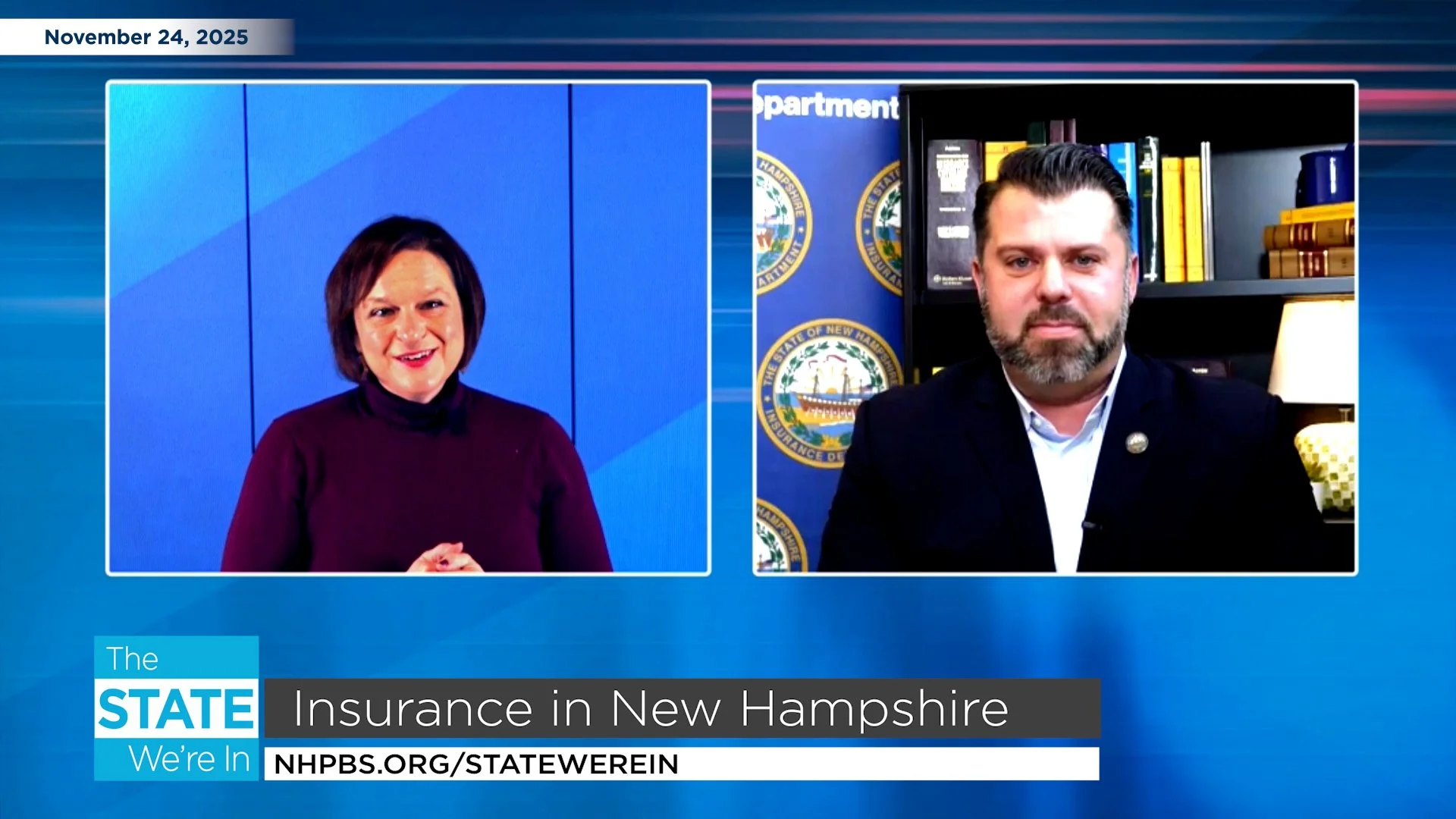
What’s going on with health insurance in the Granite State? If you’re following the local news, you might be confused with talk of subsidies, changes and open markets. Insurance regulations and carriers operating in New Hampshire have been constantly changing within the past couple months, creating confusion for many residents. Here to help us understand everything is D.J. Bettencourt, commissioner of the N.H. Insurance Department.
Melanie Plenda:
Can you tell our audience a bit about the Insurance Department? What does it do? And what is your role as commissioner?
D.J. Bettencourt:
The Insurance Department is the referee of the insurance marketplace. We are tasked with enforcing the insurance laws of the state to make sure companies are playing by the rules, are treating customers fairly, and are financially sound, while at the same time not micromanaging or stifling innovation within our health insurance marketplace. My role as commissioner is to strike that balance. We set clear guidelines and guardrails and let competition do what it does best, which is to increase quality and drive affordability.
Melanie Plenda:
What's new with the insurance marketplace? What changes will people see this year?
D.J. Bettencourt:
There are going to be a number of changes, but I think the highlight for this year is stability in a period of uncertainty. We still are seeing very strong carrier participation here in New Hampshire. There are new plan designs for consumers to choose from, and there is continued rate stability. We feel this is the result of fostering a level playing field in a competitive environment that has multiple insurers competing for consumers.
So while consumers I know are hearing a lot about changes and challenges to affordability, we here in New Hampshire are in a fairly advantageous position, certainly as compared to the rest of the country. Some states use heavy regulation, and the result of that is volatility. What we do here in New Hampshire is take a different approach. We have fair rules, we have transparency, we have robust oversight where it's necessary, and the result is a marketplace where consumers are going to have choices, and insurers are going to have to earn their business by making their plans affordable and offering high-quality coverage.
Melanie Plenda:
What about people on Medicare? In October, the Insurance Department sent out a press release advising New Hampshire residents to be ready for Medicare Advantage market changes in 2026. What are some of these changes Granite Staters should be aware of?
D.J. Bettencourt:
The Medicare Advantage market here in New Hampshire is in a very, very challenging time. There is a lot of disruption in that market. Here in New Hampshire, we are seeing carriers withdraw from that market entirely, and we are seeing the carriers that remain in that market significantly narrowing their plan offerings.
We have found that the more rural counties in our state are being more impacted. By that I mean fewer carriers in the market, fewer plans that are available for those seniors to choose from. It is a very frustrating situation.
The reason this has come about is complicated, but the federal government, in my opinion, has done a poor job over many, many years in terms of creating a stable market. There have been a lot of shifting regulations that have been damaging to the market. In addition, the insurance carriers have made some poor business decisions over the years that have contributed to the unfortunate condition of things at the present time.
It is my hope that Washington will bring the states to the table to offer our perspective as to what reforms are needed to make Medicare Advantage more widely available to make that market more healthy. Until that time, we're going to do our part here at the department to provide those impacted seniors with as much information as we can and to make them aware of the opportunities that they now must consider.
Melanie Plenda:
How have you seen the marketplace evolve during your time with the Insurance Department? What have you learned about navigating it and advising others?
D.J. Bettencourt:
When I arrived at the department, the marketplace was still recovering from years of federal policy swings, tax credits and changing rules that were shifting. There was a lot of uncertainty, and we focused on stability. We designed a state-designed reinsurance waiver that brought premiums down by approximately 25% to 30%. We focused on streamlining regulations and strong consumer protections that did not turn into burdensome red tape.
Now I'm not claiming that the government creates value. I think the competition in the market does that, but what the department can do, and what we have done, is to do our very best to foster an environment where companies want to participate, and as a result of that, consumers benefit from those companies fighting for their business.
Melanie Plenda:
What's going on with the Affordable Care Act subsidies? What are you advising people about them?
D.J. Bettencourt:
I know there's a lot of confusion about the subsidies right now. So the first thing I really want to be clear is that the non-American Rescue Plan tax credits remain in place. All of the tax credits and financial support that were in place prior to the American Rescue Plan — which I believe came online sometime in either 2021-2022 somewhere in that time period — all of those financial supports are still in place.
The current debate that Granite Staters are hearing about are, again, those American Rescue Plan enhanced tax credits. In New Hampshire, our preliminary review of the actuarial work and the carrier filings indicate that, on a statewide average basis, the loss of those enhanced tax credits would translate into roughly a 3% to 4% impact on premiums. That's going to vary, potentially significantly, based on the type of plan that you're looking at. That 3% to 4% is an average.
Certainly, that 3% to 4% is meaningful for families living close to the margin, but it is a very different picture than the idea that everyone’s premiums are going to double and some of the catastrophic stories we’re hearing from other states. I always tell people to choose a plan that meets their long-term needs, with or without the subsidies, because federal policy can change quickly, and at the end of the day, the subsidies can help, but they're not a strategy. The real long-term protection for consumers is a market where insurers are competing on value and price, and that's what we have built here in New Hampshire, and what largely is preserved as we look to 2026.
Melanie Plenda:
As you mentioned, federal policies can change quickly. If Congress changes its mind in December or January about these subsidies, how will that affect people?
D.J. Bettencourt:
We are going to be ready to implement whatever opportunities Washington makes available to the states, and we're going to leverage those opportunities to the maximum benefit of Granite Staters.
New Hampshire utilizes the federal exchange, the healthcare.gov platform, so how quickly we can leverage those opportunities will be dependent on how quickly the federal government opens up the systems that we're going to need to bring those supports online. We're going to be ready to educate Granite Staters about the potential benefit that will be available to them. We're going to make sure there's a lot of information out there. But here's the key point: While some states could face major volatility and major premium increases, New Hampshire is again better positioned than most, because we already have the lowest benchmark premiums, the lowest average premiums in the nation, and so we're going to certainly take advantage of those opportunities to create an even more competitive and affordable marketplace.
But whatever Washington does, again, it is absolutely still worth the while of the consumer to get onto the exchange and see what opportunities are out there.
Melanie Plenda:
Will these changes to insurance have any impact on the state budget or the average taxpayer?
D.J. Bettencourt:
I think what you’re speaking to there is enrollment. We have seen significant increases in enrollment over the course of the past several years — we’re very happy about that. We like to see that people are getting more coverage. Our enrollment in the individual market is approximately 77,000, which is by far the most we have seen in terms of enrollment here in New Hampshire.
In terms of budget impact, obviously if we start to see a significant drop-off of people getting coverage, that could have an impact on uncompensated care, which are people who don't have coverage going into hospitals where the hospitals are obviously legally required to provide them with care, but the hospitals are not going to be paid for that care. The bill largely becomes the responsibility of the state, and so if we start to see a significant amount of people not getting coverage, driving up that uncompensated care cost, it could very well have an impact on future state budgets.
Melanie Plenda:
As someone who knows so much about the ins and outs of health insurance, in your opinion, are there ways to fix our insurance system as it relates to health care? What would you advise lawmakers, if asked?
D.J. Bettencourt:
If Congress were to ask my advice, I always recommend focusing on competition, innovation and consumer empowerment. I don't believe in heavy price controls — I do believe that sound consumer protections are always the way to go. Those heavy regulations — they sound good, but we find that often they rarely produce the results that you want to see. We find that prices fall naturally when the system rewards efficiency, preventative care and new innovations.
I certainly believe the government should intervene and get involved when there are true market failures. But I think the big gains in affordability come from letting companies compete and letting consumers vote with their feet, while again assuring appropriate consumer protection.
We've got a good model here, and I think there are a lot of planks of our philosophy and model that the federal government could very seriously take a look at to improve the overall system.
Melanie Plenda:
What else should people know about getting insurance in New Hampshire? What do you hope our audience takes away from our conversation here?
D.J. Bettencourt:
It is so important to me that people know that they don't have to navigate this system alone. Again, New Hampshire has some of the most affordable coverage options in the United States, but it is still a very complex system, and we understand that. So, we as a department here at the Insurance Department, offer free, unbiased help to consumers. We get no commissions. There are no sales pitches. We are solely focused on making sure that people understand their choices and pick the plan that fits best for them, given their needs and given their budgets.
I think that's the real story of insurance in New Hampshire. When you combine transparency, real consumer support and true competition, a lot of affordability follows from that. That's exactly what has made our state one of the most affordable places in the country for coverage — not only in 2026 but in previous years — and that is obviously something we're very proud of while fully appreciating that there is more work to do. There's going to have to be a lot of dialogue and communication between the states and the federal government to find reforms that are going to strike that appropriate balance between bringing innovation and market-driven solutions to bear to increase affordability while not compromising on consumer protection.
Melanie Plenda:
Thank you, D.J., we really appreciate it.
“The State We’re In” is a weekly digital public affairs show produced by NH PBS and The Marlin Fitzwater Center for Communication at Franklin Pierce University. It is shared with partners in the Granite State News Collaborative, of which both organizations are members. For more information, visitcollaborativenh.org.