Trump proves again that he can’t handle Black excellence

His attempt to fire Fed member Lisa Cook isn’t about fraud – it’s about race

By Shamecca Brown, Columnist, Granite State News Collaborative 

Donald Trump has never hidden his disdain for diversity or equity. He proved it again in August, abruptly saying he would fire Lisa Cook, the first Black woman to ever serve on the Federal Reserve Board. He called her “incompetent” and accused her of “fraud,” but let’s be clear: This isn’t about fraud. This is about race, power and Trump’s long history of targeting Black leaders who break barriers.

Lisa Cook isn’t just another official. She’s a brilliant economist who rose to the highest levels of government despite the barriers Black women face in academia, finance and public policy. Her appointment to the Federal Reserve was historic – a breakthrough moment that inspired many who rarely see themselves represented in these powerful spaces. To Trump, that very representation is the problem.

This is the same Trump who questioned the intelligence of Barack Obama, and who mocked Black journalists for asking tough questions. It’s the same Trump who attacks DEI (diversity, equity and inclusion) programs, claiming they’re “reverse racism,” while ignoring centuries of systemic exclusion. Each move follows a pattern: When Black excellence shines too brightly, Trump does everything he can to dim it.

Firing Lisa Cook isn’t about policy disagreements or fiscal concerns. It’s about control. Trump wants to send a message that Black voices in positions of authority are disposable, that no matter how hard you work or how much you achieve, he can erase it with a smear and a press release.

And the timing matters. His recent remarks about the Smithsonian Institution’s exhibits on slavery were already called out as racist by figures like tennis great Martina Navratilova, who noted his pattern of belittling Black history. Now, with Cook’s dismissal, he’s doubling down on the same agenda: erasing progress, rewriting history and reasserting power over spaces where Black excellence has finally been recognized.

Let’s not forget: Representation at the highest levels isn’t symbolic. It’s systemic change. Cook’s role meant a voice at the table when decisions about interest rates, employment and the economy are made, decisions that directly affect working-class families, including millions of Black households already struggling with inequality. Silencing her isn’t just personal; it’s political.

Donald Trump has always thrived on division. He fuels his base by stoking resentment against women, immigrants, and especially people of color who refuse to “stay in their place.” But the truth is, no firing, no smear and no headline can erase the impact Lisa Cook has already made.

Let me clear the air as well: I’m very sure people know racism when they see it or hear it and, in my opinion and experience, I know firsthand on seeing it and feeling it. I mean, I can walk down my street and see a Trump sign and Confederate flag in someone’s yard and just know that this world is divided. Instead of covering up and saying little sarcastic words or marking up businesses and neighborhoods with Nazi symbols, just be blunt and let us know you’re racist and stay outta my way.

What makes this moment so dangerous is that many folks shrug it off as just “Trump being Trump.” But that’s how erosion happens. First, you fire one Black leader. Then another. Then you rewrite history books and museum exhibits to erase slavery and racism. Then you dismantle DEI programs and make sure the next generation has no tools to even recognize discrimination when they see it. By the time people wake up, the damage is baked in.

We can’t afford to shrug anymore.

This isn’t about partisan politics. You don’t have to be a Democrat or a liberal to see that erasing Black leadership and silencing history is wrong. You just have to believe in fairness, representation and the idea that America is stronger when everyone has a seat at the table.

Trump wants us to believe this is about rooting out corruption or fighting “wokeness.” But when the only people being removed are Black, when the only history being erased is Black history, and when the only policies being scrapped are the ones designed to level the playing field, that’s not coincidence. That’s racism. And you know it.

Lisa Cook’s fight is about more than her seat on the Fed. It’s about whether we let Trump keep rewriting the rules to suit his vision of America: one where Black leaders are expendable, diversity is dangerous, and history is sanitized to protect fragile feelings.

In my opinion we should be standing with Cook. Because if her voice doesn’t matter, none of ours do.

Shamecca Brown is a New Hampshire-based columnist who is family-oriented and passionate about serving underserved communities. These articles are being shared by partners in the Granite State News Collaborative. For more information, visit collaborativenh.org.

Know Your News: A New England-wide effort to promote media literacy and the role local news outlets play in civic life

This article is edited for length and clarity.

By Rosemary Ford and Caitliin Agnew

Your right to know — it’s an almost sacred concept here in the United States, enshrined in the Constitution’s Bill of Rights. What do you know about that right, and the news organizations that keep you informed? Today, we’re talking about something we hope you’re about to hear a lot more of, the Know Your News campaign. 

This New England–wide effort, coordinated by the Granite State News Collaborative and the New England Newspaper & Press Association’s First Amendment Committee, is designed to raise awareness about the First Amendment and the essential role of local news in civic life.

News organizations across New Hampshire and New England will be participating in this endeavor, and to discuss it we have Jeff Feingold, Granite State News Collaborative editor on the project, and Linda Conway, executive director of the New England Newspaper & Press Association. 

Melanie Plenda:

Let’s start with Linda. Can you tell us more about the campaign and the idea behind it? 

Linda Conway:

The annual New England Newspaper and Press Association convention is an annual convention where we have dozens of training sessions for journalists. So this year we had a town hall-style meeting with journalists, editors, publishers, First Amendment advocates and attorneys to discuss the importance of a free press and some of the challenges that the news organizations are facing on the local and regional level.

This was our most popular session this year. The room was packed, and the engagement level was off the charts. It was really energizing. So based on this session, we developed a First Amendment committee to look at ways that our organization can help newsrooms. We came out with a whole list of things to do. One was to develop ways to share stories, editorials and information on First Amendment issues, and the second was to develop a public information campaign to tell the story of how our efforts to dig out public information helps our community.

Melanie, the director of the Granite State News Collaborative and a member of our board of directors, and was elected chair of the committee. The collaborative had already developed a platform that they use in New Hampshire, and being generous enough to allow us to use in our efforts to help connect the entire New England news community.

Melanie Plenda:

Linda, how many organizations do you expect are participating across New England? What was the reaction to it? 

Linda Conway:

I've gotten emails from several people that are really excited about it. We're anticipating a couple of dozen news organizations to begin with. We're still registering news organizations this week, and I anticipate that a few more will probably join the effort after the kickoff, Sept. 17, on Constitution Day. I think that a couple of newsrooms, after they see other newspapers running the stories, will join as well. Ideally, we'd love every newsroom to join.

Melanie Plenda:

Here in New Hampshire, the Granite State News Collaborative produced a lot of stories for the series. Jeff, can you tell us more about that and what it entailed? 

Jeff Feingold:

What we've done is come up with over 30 articles on all kinds of topics, ranging from what local news is, about the role of the press — particularly the role of the local press. That's something that we're really focusing on, local news — because all of the newspapers taking part of this are community papers — and how important the local press is to a strong community. We have articles explaining the First Amendment, media literacy, right-to-know laws and things like that.

What we did was we gathered a group of really good journalists, really strong journalists, who were immediately interested in writing these articles for us. And it was really heartening, because people who have been journalists know how important journalism is, how important understanding what's going on in your community is. This campaign is kind of a way to push back at the unfortunate situation we have now where people aren't quite clear about what the role of the press is. They don’t necessarily turn to newspapers or other media outlets for information, so we're trying to educate people again.

Melanie Plenda:

Jeff can you give us some highlights from these articles?

Jeff Feingold:

We are trying to focus on explaining what local news is and why community reporting is so important. Local news is telling you what's going on in your community and helps you understand more about what it is to be a member of your community. It's telling you about what local businesses are talking about — sports teams and stuff — and it's also telling you about what's going on at the zoning board or the planning board, the selectboard of the city council. Knowing that is important for you as a citizen to understand what's going on because part of the problem we have now is that the lack of understanding about how important news is and turning to professional news organizations for your information means that people are becoming less engaged with their community — which is the whole point of our society. Our job is to be an informed electorate to really make this thing work. This is part of what this campaign is about. It’s kind of reminding people that this is how it works. You have to uphold your end of the bargain by being an informed, educated voter.

Melanie Plenda:

Local news organizations do a lot to inform and educate their communities. But trust in news is at an all-time low. In fact, stories in the series address this. Jeff, can you speak a little about how the media can address the "fake news" narrative?

Jeff Feingold:

I think part of it is getting people to understand what the role of the press is.

What a professional news organization does is collect information, gather information and then disseminate it. We know how to gather information professionally. We try our best to report it. We try our best to avoid bias, to avoid disinformation. 

Disinformation is so widespread now because of social media, because of AI, because of deepfakes and all that other stuff. It's a matter of us as professionals to share this information and to try to get people to understand there's a difference just reading something somewhere that might confirm your own biases, but that doesn’t mean it's true.

Our job is to try our best to not be biased, to be impartial and report it. Other sources are not doing that. They are biased. They are willfully spreading false information, disinformation, and it's important for people as readers or consumers of the news, to understand that there is a difference, and to turn to professional organizations, organizations whose job it is to understand what reality is, to speak.

Melanie Plenda:

Linda and Jeff, this is for both of you. Why is something like this needed now? Let’s go to Linda and then Jeff.

Linda Conway:

Well, as Jeff mentioned, so many people are skeptical of the media right now, especially in today's charged environment, and with the volume of information and misinformation that they find online and through social media it's tough to figure out what's real and what isn’t.

If the public understands how journalists verify their facts, vet their sources, uphold ethical standards, they'll be more likely to trust legitimate reporting and to distinguish it from misinformation, bias, and propaganda. We're hoping that by educating them on legitimate news, promoting transparency, we can empower more people to participate in that democracy. 

Jeff Feingold:

Because so many people are spending their time in the digital world, on social media and the like, the result is we don't have that social connectedness anymore in our communities. We're losing it. It's something that's been happening over quite a period of time, but it seems today even more people are disengaged from their neighbors, from the rest of their community. 

Having a source of information that everyone could turn to to understand what's going on in the community, can help bring back that kind of connectedness. I think it's something that's really important to think about — that's really what local news outlets are doing, is trying to bring the community together.

Melanie Plenda:

Here’s another one for the two of you: When you hear a phrase like Know Your News, what does that mean to you? Let’s start with Jeff and then to Linda.

Jeff Feingold:

I've been thinking a lot about what it means. It's been an unfortunate reality that fewer and fewer people are working to become well informed, or even trying to keep well informed. And I think Americans in general just are failing to grasp the idea of how our society works. The whole thing falls apart without an informed electorate. It's not just being informed about what's going on in Washington or in the state capitol, but at the local level, the county, the school board, all the things that make this system that we have work. Know Your News is basically a campaign by news outlets to say, “We’re here. We've always been here. We know you like your social media. But that's not the only way to stay informed and be engaged.”

Linda Conway:

The average person doesn't know the processes of a local newsroom. We know that local news is essential to a healthy, functioning democracy, and it still keeps communities connected. As Jeff mentioned, it keeps people updated on issues that directly affect them — school board decisions, city council policies, public safety, if your taxes are increased and how they're spent, local elections, crime and a whole host of things. Without local news, citizens may be uninformed about developments that impact their daily lives, so our goal is to make people aware of what's happening locally and the role that newspapers play in their communities, so that they're more likely to vote, attend community meetings, hold leaders accountable — essentially, to be engaged in their communities.

Melanie Plenda:

Linda and Jeff, what do you hope the outcome of all of this will be? Linda, let’s go to you first. Jeff?

Linda Conway:

There are so many news deserts that have come around the country, with corporate companies owning local news. I feel like many people don't understand what the consequences are of losing a local newsroom. The voter turnout drops and there's less transparency, there's more misinformation.

We're hoping that by educating people they will become more engaged in their local newspaper. Perhaps they'll start working at their local newspaper. Perhaps they become community reporters. They will get more involved in civic things, and they'll be empowered to participate in things. They'll go to community meetings. People don't understand that they can just go to meetings — the average person doesn’t. And then they realize that when they can't go, because everybody has busy lives, they're busy with their children and their jobs,and that local journalists are there to cover that information and give it to them.

Jeff Feingold:

I'm hoping that it makes people aware of how important it is to be media-literate, to understand what the media is, what your sources of information are, how legitimate they are, and how important it is to do your own homework on things. It sounds like a big job, but it's not really. Just learn to take a minute to say, “Is this true? Maybe I could find some other place to find out, to see if this information is true.” 

There's also just the idea to be aware of what your source of information is, how valid it is, and how important it is on your part as a consumer of news and as a citizen to understand you have a responsibility. I think a lot of us forget how important that responsibility is.

Melanie Plenda:

That was a great discussion. Linda and Jeff, thank you for joining us.


“The State We’re In” is a weekly digital public affairs show produced by NH PBS and The Marlin Fitzwater Center for Communication at Franklin Pierce University. It is shared with partners in the Granite State News Collaborative, of which both organizations are members. This story is part of the Know Your News campaign — a Granite State News Collaborative and NENPA Press Freedom Committee initiative on why the First Amendment, press freedom and local news matter. Don’t just read this. Share it with one person who doesn’t usually follow local news — that’s how we make an impact. Find out more at collaborativenh.org.

Back-to-school crisis: Are New Hampshire students getting the support they deserve?

Mental health and special education services protect the learning environment for every child, not just those getting help 

By Shamecca Brown, Independent Columnist

As families across New Hampshire settle into the new school year, one crisis continues to loom — and it doesn’t wait for the first bell. Cuts to mental health programs and special education supports are leaving students without the help they need – and that affects every child, every classroom and every family.

As a parent of two teens, I see it firsthand. When mental health counselors and special education staff are reduced, it’s not just kids with IEPs (individualized education plans) or 504 plans who are impacted – it’s the entire classroom. Teachers are stretched thin, students who need extra help may fall behind, and parents are left wondering whether schools can truly support all students while keeping learning on track.

Special education and mental health programs are critical for helping students manage stress, anxiety, learning challenges and trauma. Students with disabilities or those on the spectrum rely on these programs – and on IEPs and 504 plans – to get the accommodations and support they need to succeed.

When these programs are cut or underfunded, everyone feels it:

  • Teachers are forced to manage larger classrooms with more students needing individual attention.

  • Students without proper support may struggle academically and socially, disrupting the learning environment for everyone.

  • Families are left worrying if their children are truly getting the help they need while trying to keep them on track.

Cuts to mental health and special education services don’t just affect individual students, they affect every child in the classroom. Numbers on a spreadsheet don’t show the stress and frustration families are feeling. Teens who once had weekly counseling or learning support may now wait weeks or months. Teachers are doing their best, but they are stretched beyond capacity. Students who need extra help may slip through the cracks, while classmates feel the ripple effect in their own learning experience.

Schools are often the first place students receive help for mental health or learning challenges. Parents trust that professionals will advocate for their children’s growth, safety and success. But when funding is cut, that trust is tested. Families can no longer assume that IEPs, 504 plans or mental health supports will be fully implemented – especially for students navigating social pressures, academic stress or behavioral challenges.

We can’t wait for someone else to fix this. Parents, educators and community members must speak up. Advocate for restored funding, make sure IEPs and 504 plans are being followed, and demand that policymakers understand the real-life consequences of these cuts.

Every voice matters. Every action counts. Supporting mental health and special education in schools doesn’t just help the students who need it most – it strengthens classrooms, supports teachers, and protects the learning environment for every child.

As the school year begins, it’s clear: cuts to mental health and special education programs affect every family in New Hampshire. Parents and students cannot assume the system will uphold IEPs, 504 plans, or other critical supports without active advocacy. To protect learning, mental health and academic success, we must raise our voices and demand the resources our schools and families deserve – before more students fall behind.

Shamecca Brown


Shamecca Brown is a New Hampshire-based columnist who is family-oriented and passionate about serving underserved communities. These articles are being shared by partners in the Granite State News Collaborative. The views expressed are not necessarily the views of GSNC or its partner organizations. For more information, visit collaborativenh.org

These articles are being shared by partners in the Granite State News Collaborative. For more information, visit collaborativenh.org.

The effects of lower spending on higher education in New Hampshire

According to a new study from the nonpartisan, independent research nonprofit, the N.H. Fiscal Policy Institute, New Hampshire spends the least on higher education — and this could have far-reaching consequences for students, colleges and the state’s future workforce. On this episode of “The State We’re In,” Dr. Nicole Heller, a senior policy analyst with the N.H. Fiscal Policy Institute, who is studying the issue.

This article has been edited for length and clarity.

By Rosemary Ford and Caitlin Agnew

Melanie Plenda:

Tell us about your research on higher education. What did you look at? 

Nicole Heller:

We summarized data from the State Higher Education Executive Officers Association, which allowed us to compare New Hampshire's spending for public higher education to other states in a standardized fashion.

We report on New Hampshire state funding for public higher education from state fiscal year 2006 to 2027 — what we have budgeted for that fiscal year. We also examined tuition rates at the three university system institutions, which include Keene State, Plymouth State and the University of New Hampshire, as well as the community college system of seven colleges.

Melanie Plenda:

What were some of your findings?

Nicole Heller:

Our finding that New Hampshire is the lowest funder of public higher education in the country is consistent with our 2019 and 2023 reports on this topic. In this report, we found that the state of New Hampshire spends approximately $4,600 of funding per full-time student enrolled in public higher education institutions, while the national average is about $11,700. These figures are derived from the amount of funding allocated to USNH (the University System of New Hampshire) and CCSNH (the Community College System of New Hampshire) in the state budget, not the amount these systems spend on each full-time equivalent student attending their institutions.

What's different about this most recent report is that it's written in the context of a small 1% increase for the community college system’s budget and a considerable 17.6% decrease in the University System of New Hampshire's budget for state fiscal year 2026 and 2027 compared to the prior state budget.

Melanie Plenda: 

Were any of these findings a surprise to you, and if so why?

Nicole Heller:

In 2024, the public institutions relied heavily on student tuition payments for revenue. So 68% of all revenue was from student tuition. And this is compared to a national average of contributions of 39%. New Hampshire’s public institutions are tuition-dependent, meaning that they’re highly reliant on student tuition to cover their operating budgets. When any revenue of a tuition-dependent institution’s budget is reduced, additional revenue is needed. So this often means tuition increases for students and families so the institution can balance its operating budget.

New Hampshire has seen this in both the community college system and the university system this academic year, with 7% increases in the community college tuition and a range of between 2.5% and 4.9% at the university system institutions.

Melanie Plenda:

Let's talk about some of your key findings. Why is New Hampshire’s spending on higher education a cause for concern? 

Nicole Heller:

This is cause for concern because when we think about New Hampshire, our workforce and population are aging. We need young people to remain in or come to New Hampshire in order to fill positions that are opening as a result of individuals’ retirements.

Additionally, about half of the occupations projected to have the most growth through 2032 require a college degree, and this includes software developers, registered nurses and nurse practitioners. So high tuition rates may make it difficult for individuals to afford degrees required for these occupations and contribute to workforce shortages.

Melanie Plenda:

How is this spending, or lack thereof, expected to affect New Hampshire’s workforce?

Nicole Heller:

High tuition rates for public institutions might result in more students leaving a state to pursue their higher education, and these students may not return to the state after they've completed their degree.

Right now, we have a really tight housing market, even among rental units, it's expensive to live in the state, and additionally, high non-resident tuition rates or out-of-state tuition rates may also deter young people from coming to New Hampshire to pursue their education. They may be able to afford another college within the Northeast that costs less, and that might attract them there. Since we do have a reduced number of students, high school graduates, in the Northeast, and this is a trend that's been predicted over time, and so the institutions, particularly in the Northeast, are competing for fewer and fewer students to attend their institutions.

Melanie Plenda:

You also compared funding at four-year and two-year institutions. What did you find there? And what implications does that have?

Nicole Heller:

New Hampshire invests more funding in students attending two-year institutions than four-year institutions on a per-enrollee basis. The education appropriation for full-time equivalent students was about $9,800 at our two-year institutions and approximately $4,000 at our four-year institutions in state fiscal year 2024. I want to point out that these figures include both in-state and out-of-state enrollees. 

So while there's more investment in the community college system — and that may make accessing education more affordable for individuals pursuing occupations that require two-year degrees — individuals who are pursuing careers that require four-year degrees may find the pathway to their chosen careers inaccessible due to high tuition costs.

Melanie Plenda:

Is there a connection between students who study in New Hampshire and young people who stay in New Hampshire? 

Nicole Heller:

According to a 2023 report from the University System of New Hampshire, students are twice as likely to stay and join the New Hampshire workforce if they attend a four-year public college or university and complete an internship program within the state university system. The university system also reports that about 2,000 USNH graduates join the Granite State workforce every year.

Melanie Plenda:

What other causes of concern did your research find? 

Nicole Heller:

New Hampshire college graduates are experiencing more and higher rates of student loan debt than graduates from other states. The most recent number from 2022 suggests graduates from New Hampshire's colleges and universities who have debt carry the highest average debt at nearly $40,000 compared to all other graduates in the country. New Hampshire also has the second highest percentage of graduates with student loan debt, at 70%.

Melanie Plenda:

Let’s say you are a Granite Stater with no connection to higher ed — not a student, not a university worker, not a parent of a current or future student. Would you still be concerned? Why?

Nicole Heller:

High college tuition rates can have long-term effects that impact the overall Granite State economy. As I mentioned earlier, those high tuition rates can deter individuals from pursuing degrees and careers and high demand occupations, which will adversely affect our workforce, particularly in certain industries.

Additionally, students and families may take on more of that student loan debt that we discussed, which can impact their financial stability and wealth-building over time — for example, saving for retirement, buying a house or having funds for emergencies.

Another option for individuals may be to forgo a postsecondary education or training entirely if they're not able to afford and access that education, which can hinder their long-term earning potential — again lowering the amount of money that they have to save for their retirement, for buying a home, for emergency savings.

In both scenarios, the Granite State economy is impacted when residents don't have enough resources available to spend on goods and services that help build our local and state economies.

Melanie Plenda:

What’s the solution here? What can the average person concerned about this do? 

Nicole Heller:

Additional funding for public higher education may help slow those tuition rate increases and help ensure students can access and afford degrees necessary for in-demand occupations. When our legislators were crafting the current state budget, revenues were considerably smaller than in the last budget cycle, for a variety of reasons. Federal pandemic aid has mostly ended. New Hampshire repealed its interest and dividends tax, so that funding — though it's still trickling in as various portfolios are wrapped up — has drastically decreased and will eventually go away entirely. Then we have reduced combined business taxes related to reductions in those tax rates. 

So while those tax rates were initially reduced and we did see differences, because spending went up — particularly in the pandemic era, as we weren't able to travel, consumer spending went up, particularly with stimulus income that came in from the federal government — that spending has slowed over time, and so now those business tax reductions are starting to be seen in the amount of revenues that are coming in. So as a result of relatively reduced revenues, the Legislature had a lot of difficult decisions to make, and one of them included drastically reducing public support for the USNH budget.

Melanie Plenda:

So interesting. Dr. Nicole Heller, thank you for joining us. 

“The State We’re In” is a weekly digital public affairs show produced by NH PBS and The Marlin Fitzwater Center for Communication at Franklin Pierce University. It is shared with partners in the Granite State News Collaborative, of which both organizations are members. For more information, visit collaborativenh.org.

‘It’s Your Money’: Learning about the forces that affect your own economy

From the cost of everyday items at the grocery store to the ins and outs of financial scams, Maureen Milliken has written about all that — and much more. What can she tell us about where our hard-earned dollars go, and how to hang on to them a bit longer? Milliken, a freelance journalist, writes the award-winning “It’s Your Money” column for the Ink Link Group and has years of experience writing about consumer issues.

This article has been edited for length and clarity.

By Rosemary Ford and Caitlin Agnew

Melanie Plenda:

First, let’s talk about your column. What was the inspiration for it, and what sorts of things have you been writing about? 

Maureen Milliken:

I left the full-time journalism world that I'd been in for 35 years several years ago and was doing some freelance work. One of them, which I still do, is for a nonprofit credit counseling agency, writing web content. So I have become this expert on consumer economics from the consumer end, not the economist. I had all this knowledge and had nowhere to put it.

And a friend of mine, maybe four years ago, said, “I was having all these savings and great things,” and her credit score is 740 but she couldn't get it any higher. I told her your credit score doesn't have anything to do with your savings — it's about your credit and how you use it. And I think, “She’s a smart person with money, but doesn't know these things. And I bet a lot of other people don't know either, but I do.” So I asked Carol Robidoux, the publisher of InkLink — who I'd started doing some work for — if I can write this monthly column where I just explain this stuff to people that they should know about, hear about all the time, but really don’t understand?

Melanie Plenda:

One column you wrote that seemed to resonate with readers was about a financial scam. Can you tell us more about that?

Maureen Milliken:

One of the things I've realized is that most people — and I think it's human nature — think that they’re not going to get scammed. 

A close relative of mine — she lives in Manchester, she has a Ph.D., she runs a three-generation household, she’s smart and did get scammed. It actually began with her Facebook page being hacked and her calling a help desk that looked like a real one that turned out to be a part of the scam. So in this column, I go through how it happened, what her reactions were, what happened, what the fallout was, and of course how to try to avoid this happening to you. 

I tried to put it in a personal way that people would identify with because one of the biggest issues is the ways you can get scammed are just so devious and multiple. I felt that it resonated with people. I still get emails about it – it was a personal story about someone people could identify with. 

Melanie Plenda:

Over the last few months, you’ve also been tracking the cost of items at the grocery store and writing about those changes. Can you tell us more about that?  

Maureen Milliken:

I'm not really a good person with math, but I love making charts and tracking things. One of the big things I preach in my column is budgeting, and I think people are adverse to it for a lot of reasons, but it doesn't have to be some big, complicated, involved thing, and mine certainly wasn't. I have a certain amount I budget for groceries every month. I'm lucky, I live by myself, I don't have to worry about feeding aging parents or kids.

In the beginning last year, people would talk about the economy, and how grocery prices are going up. The more I thought about it — because I didn't really pay attention to the price of things because I would just as I went on through the month, and if I was running out of money, that's one less pizza that I'm going to order. Or go to my reserve coffee in the freezer instead of buying another pound of coffee. 

So I thought it'd be kind of neat to just track my grocery items, or some of them — a variety of them — over the months, especially with the tariffs coming, and see what happens. It's not a big scientific study, and I say that in the study. It’s just a snapshot to look at one person’s grocery bill and see how it’s affected or how it changes.

It's just a snapshot to look at one person's grocery bill and see how it's affected or how it changes. I don't necessarily think my grocery bill is typical, but I don't think any person is typical. It depends on your household — what you like to eat. I thought, “I’m going to track a variety of grocery items over at least the next year every month and see how they change.” And maybe this will make you look at your grocery items with a little more awareness too — or maybe you just like looking at charts, and we'll like to see how things change.

Melanie Plenda:

What items are you tracking? And why did you choose these items?  

Maureen Milliken:

I chose several produce items that I thought might be affected by the tariffs, or ones that people were talking about. So there's bananas, tomatoes, avocado, grapefruit and oranges. Then other things - eggs, milk, rotisserie chicken, coffee. cat food — because I have cats, and I figured a lot of people have pets, and they're buying pet food. Then things like dishwasher detergent, maple syrup, because of the Canada tariffs. So I tried to make it a variety that would give a picture where I'm not just looking at one item that might be affected by one type of tariff.

Melanie Plenda:

What do you hope people take away from all this? 

Maureen Milliken:

I guess my hope is the same thing that I've hoped through my entire journalism career with anything I wrote — is that people coming away from reading something I've done will be better informed and have things to think about that will have an impact on their lives. 

My dream would be that we stop hearing people on TV say, “My grocery bill has gone up, and I blame so and so for it”  and start figuring out what they can do. And in all my consumer columns, I try to stress, “You're the one in control of your money. You're the one in control of your finances.”

When you talk about the economy, you're talking about your economy for the most part, and no matter how little or how much money you have, you're in control of your own economy. You may have to do things you don't like or hard things, and things may not work out, but there's not these amorphous forces that you have no control over. There are some, but you can control what you do and what you buy and how you spend your money. And budget — that's my thing. Everybody needs to budget.

Melanie Plenda:

What do you have planned for future columns? 

Maureen Milliken:

I've started delving into the effects of the so-called Big Beautiful Bill, because I think people really don't understand. My last column on it was what they really mean by no tax on tips, no tax on overtime, no tax on Social Security, because it's not those things at all, what was going on with SNAP and what was going on with the Affordable Care Act. My next one is going to be about Medicaid — how it's affecting you personally as a consumer. I think people are kind of overwhelmed with what they're hearing and seeing and have no clue about the impact it has on them. Also I will continue to write about general things, like financial literacy because I don’t think people are really sure what that is or how it affects them. 

Melanie Plenda:

Maureen Milliken, freelance journalist and author of the “It’s Your Money” column with the Ink Link Group — thank you for joining us. 

“The State We’re In” is a weekly digital public affairs show produced by NH PBS and The Marlin Fitzwater Center for Communication at Franklin Pierce University. It is shared with partners in the Granite State News Collaborative, of which both organizations are members. For more information, visit collaborativenh.org.

This side of the glass: the power of being real when we need help the most

When people seek help from the system, the system doesn’t always see them as people

By Shamecca Brown, columnist

Being off work lately gave me time to really think, to feel. And what I realized in that space is this: I was made to help people. 

It’s in my blood. But I didn’t fully understand how deep that ran until I had to help a family member apply for Social Security Disability insurance. This time, I was on the other side, watching someone I love get treated like they were less than human just for needing help. And that broke me.

I sat in that office and watched how cold it was. Not the temperature, the energy. The looks. The tone. The way the woman behind the glass asked questions like she had somewhere better to be. “Just fill this out and bring it back,” she said, like we were wasting her time. No eye contact. No warmth. Just another number in her day.

I kept thinking: Why are some people in these roles if they don’t care? I get that not every day is easy, but when your job is to serve the public, especially the vulnerable, why show up with apathy? Why weaponize your position to remind others that they’re already down?

They’re dealing with a real person, not a number. A real person going through something hard, probably embarrassing, probably painful. And instead of being met with care or even just basic decency, we got treated like an inconvenience.

They ask for papers, proof, pay stubs, statements, and a million other things that feel like a test. And if you “fail”? You don’t eat. You don’t get help with rent. You don’t get medicine.

It’s wild how you can work your whole life, pay into the system, only to be told you make too much to qualify for help, but somehow, you still don’t have enough to survive.

I’m not gonna lie, I sat there getting hot. Angry. Not just for us, but for everyone who has to sit in that chair. Because it’s not just about forms or documents, but because of how the system makes people feel in that moment. I received the unspoken message: You don’t matter. That was how I was feeling.

And that’s when it hit me –  some jobs require more than just showing up. If working with people, especially those who are vulnerable, is part of the role, then empathy, patience and basic decency should come with it. This kind of work isn’t for everyone, and that’s okay. But choosing it means choosing to show up with heart.

To the workers on the other side of the glass: I know you have a job to do. I respect that. But sometimes the job is all you see – the checklist, the quota, the script. You don’t always see the people. You don’t feel the quiet panic in someone’s chest when they’re told they don’t qualify.

I wonder if they ever had to sit in a chair like mine? Or ever felt like they had to prove their worth just to get the basics needs to survive?

Because for some of us, it’s not just humbling, it’s deeply uncomfortable. Sometimes it feels like you have to be invisible, completely broken down, just to be seen as “deserving.” And that’s a hard truth.

Sitting and waiting for help

What’s even harder is watching how unstable things have become. Rent keeps rising, food prices are through the roof, jobs are disappearing. Yet when people reach out for help, they’re met with judgment instead of compassion. I’m not saying all, but from where I was sitting I witnessed that and it didn’t feel good. 

One of my own family members got $12 in food stamps. Twelve dollars. That’s what they said she was “entitled to.” What are you supposed to do with that? It’s almost more insulting than getting nothing. It’s like the system is saying, “We see you, but not really.”

As I sat in that chair, I even felt like giving up – and I’m strong as hell. So I know how people feel sitting and waiting for that help. 

Sometimes, the people on the other side of the glass don’t even realize they’re holding privilege. It’s not always about money. It’s about comfort. Security. The luxury of never having to ask for help. They don’t seem to understand what it’s like to pray your lights stay on or to stretch a meal or feel the weight of shame while waiting in a line that screams “poverty” to everyone who passes by. When you’ve never had to live like that, it’s easy to see someone like me and think I’m not trying hard enough.

Easy to judge. Easy to say, “Well, if you just…” or “That’s not our policy.”

People say, “I’ve been there,” but not everyone’s been where I’m from. Where asking for help feels like shame, not strength. Where showing emotion gets you judged, and needing support gets you labeled. And I know not everyone on the other side is like that. But I do hope more folks start showing up with compassion. A little more help can go a long way.

This isn’t just about my family member. This is about the system. About morals. About the human part of helping that gets lost when you stop seeing people. I don’t know what the solution is yet, but I do know this: I’ll keep advocating from the other side of the glass. People don’t want handouts. They just want a fair shot. But the way things are set up, sometimes you have to swallow your pride to apply for assistance. And that takes a toll on your spirit.

All I’m asking is this: look up and see the person, not just the paperwork. Because sometimes your kindness is the only dignity we’ll receive that day. And that kind of dignity? It can change everything.

Shamecca Brown,  is a New Hampshire-based columnist who is family-oriented and passionate about serving underserved communities. These articles are being shared by partners in the Granite State News Collaborative. For more information, visit collaborativenh.org.

Defending democracy: How can it be done in a time of polarization?

In recent months, Granite Staters have gotten louder about preserving democracy. With a former president back in office, activist groups across the state have taken action in the streets, and at the State House, demanding democratic preservation. But what does that mean? To discuss this we have Dr. Christina Cliff, associate professor of political science at Franklin Pierce University. Welcome, Dr. Cliff. 

This article has been edited for length and clarity.

By Rosemary Ford and Caitin Agnew

Melanie Plenda:

To start us off, several activist groups in the state say “we need to preserve democracy.” What do they mean by that?

Christina Cliff:

Different people have different meanings at different times. Democracy, by definition, is government for the people, by the people. What they're protesting is what they see as an erosion of things like checks and balances, particularly with executive orders essentially bypassing Congress. That seems to be the democracy that they're concerned about, because those executive orders and those executive decision-making processes seem to cut out the people requirements of U.S. democracy.

Melanie Plenda:

Why do people think our democracy is at stake? What rights are being jeopardized, and who is concerned?

Christina Cliff:

I think there's a variety of different groups and individuals concerned for different reasons. You know, particularly LGBTQ+ organizations are going to be worried about transgender bans that we've seen in the military and in athletics. There's going to be immigrants, both lawful and undocumented, that are concerned, particularly with the recent ICE raids and potentially changes to birthright citizenship. There's a variety of different people concerned. 

There's other decisions that more broadly affect people, like changes to environmental protection policy and changes to tariffs. All of those have the potential to impact various groups of people, and that's really where their concern is coming from — that, individually or collectively, they feel that things are changing, and they don't have what they consider their usual say in those changes.

Melanie Plenda:

Some people say democracy in the U.S. has always been flawed. Are protestors trying to preserve something broken, or trying to reinvent it?

Christina Cliff:

I think there's a variety of groups in the United States that would tell you exactly how flawed U.S. democracy has been, particularly people of color and women, for instance. 

Democracy is fundamentally flawed. It is going to be, because you have people who are fundamentally flawed. Winston Churchill said that democracy was the worst form of government in the world, except for all the others that have been tried. It's going to be messy. It's going to be problematic. Are the protesters trying to preserve a broken system? A little bit, because we don't like change, but are they also potentially trying to fix the broken system? 

I think some people felt like they had made some strides in fixing some of the things that they thought were flawed in our democracy,and now those changes are being rolled back. And I think, really that's where a lot of the concern and the anger comes from that.

Melanie Plenda:

There's been several protests this year, including a nationwide “No Kings” protest on June 14th. What was the purpose, and who is involved?

Christina Cliff:

It was individuals. It was groups. The whole purpose was to sort of collectively let the Trump administration know that they didn't believe he should have or should be taking as much power into himself as he has been, again, primarily with executive orders. It was intended to be semi-reminiscent of the Declaration of Independence and the American Revolution, demanding rights. 

Melanie Plenda:

A number of people believe we are in a time of crisis. What might they be referring to? And how do we navigate what truly is a crisis?

Christina Cliff:

Crisis gets defined differently by different people. Like the Trump administration has argued repeatedly that the reason they're making executive decisions are because there are current, immediate crises. They said this with the immigration enforcement, and just in the last several days, sending the National Guard into Washington, D.C., saying that crime was a crisis there. The Trump administration is arguing that those are immediate, current crises for other folks. 

I think some of the perception of crises outside of the presidential administration is a broader issue of our politics and our society.

One of my bigger concerns is that what we're creating in terms of damaging democracy and damaging the political environment is polarization — not of our elected officials, but of our average citizens. We've been making people pick sides. And if they pick a side that isn't ours, we reject the person — not the idea, not the beliefs. We reject the whole person, and what essentially the average person is starting to see is an extremist approach to politics, where it's not just you have to be on my side, but if you're not on my side you're a bad person and you're a threat.

That's becoming normalized, and that's what has the potential, as much as anything else, to damage our democracy. If you cannot have the people work together towards a common solution, you can't have democracy. You won't have democracy.

Melanie Plenda:

While we are on the topic of protests, when have we seen protests similar to the ones we are seeing today in the U.S.? Was democracy at stake then? And what were they fighting for? 

Christina Cliff:

The United States has a long history of protest and protest movements. Obviously, there have been some incredibly successful protest movements.

The Civil Rights movement, for instance, the protests against the Vietnam War had an effect, and more recently, the Black Lives Matter movements and protests started conversations. These protests have to start conversations, because conversations then lead to discussions. Discussions then lead to decisions, and then you fundamentally get change. But you have to keep in mind, too, the Civil Rights movement was decades long, right? The Vietnam protest took years. 

That's one of the things with the current protest. You had the big nationwide No Kings protest, but if you go to any town in New Hampshire, on the weekend, you might see eight to 10 people in town square with their signs and stuff. You have to appreciate their dedication, but that's not necessarily the kind of protest movement that is going to demand or make change.

Melanie Plenda:

Is there any significant difference between those protests and today's?

Christina Cliff:

I think part of it is that not everybody sees the current environment as a crisis. The number of people that see this as a crisis is significantly different. When you had the Civil Rights era movement, it wasn't just people of color that were protesting — they had allies. When you had the anti-Vietnam War protest, it wasn't just the hippies, it was everyday people coming together and making a statement.

I wonder about whether or not this particular movement can get allies outside of the dedicated protesters. Can they pull people in? I think that's a fairly significant question for the protesters that want change.

Melanie Plenda:

You held an event at Franklin Pierce University called “You Might be an Extremist if …”. You briefly mentioned the polarization of picking a side. Tell me more about that. And how could that contribute to a failing democracy? 

Christina Cliff:

Extremist ideology is basically the idea that there is an “out” group that is a threat to your “in” group, and extremists define those “out” groups however it fits their narrative. But one of the reasons I gave that talk on campus was that one of the questions I wanted people to ask is, “Do you tend towards thinking about politics in particular, in an extremist fashion? Do you base someone on what you find out about somebody's voting habits, judge them and judge their entire character based on that?”

Now, everybody has potentially had these thoughts at one point. That doesn't make you an extremist, but it's something that we need to be paying attention to — are you separating yourself out? Part of the problem is, once you start doing that, you reject any possibility that the other people have valid points. You have convinced yourself that your group, that your ideas are right and necessary and that everybody else's ideas are wrong and dangerous. That’s not a functional place to be if you want to have a democracy.

That's very much what I worry about. It has become normalized to think that way. We have politicians, we have pundits, we have average people on the street thinking that way and talking that way. We need to be aware that we're doing it. 

Melanie Plenda:

Recently, there was a violent scuffle involving a neo-Nazi group and peaceful protestors at the State House. How does freedom of speech fit into a democratic society?

Christina Cliff:

You have to have freedom of speech. Do you have to have the American version? Not necessarily. Freedom of speech is one thing. Fistfighting is another. That's not freedom of speech anymore. That's a physical altercation.

We give hate groups space because we can't come together and condemn the hate speech. Does anybody think that their giant flag and their masks and what should be embarrassing rental truck getaway — did anyone think that was cool? No, they don’t.

But there's a lot of people across this political spectrum that aren't willing to say, “You’ve got freedom of speech all day, but we're not going to tolerate and support and acknowledge that.”

We have a number of organizations in this state that do this kind of thing on a semi-regular basis. We've seen protests at drag story hours. We've seen protests on the street. We've seen banners hung from highway overpasses. It's to get attention.

There was a moment a few years ago dealing particularly with school shootings, called the “No Notoriety Movement” — don’t name them, don’t give them the air time, don’t give them attention. I feel like we’re missing that boat.


It's a polarization. Again, it's people literally feeling like they are right and everybody else is wrong. And not only are they right, but they need to defend and demand change that fits their narrative.

Melanie Plenda:

Dr. Cliff, Can a democracy survive without a shared sense of truth?

Christina Cliff:

Maybe. It’s not going to be a democracy that the vast majority of people want. It's more of an oligarchy, where whoever shouts the loudest and demands that their truth be right would be in charge, and then everybody that follows them would be — but you'd also see that rotate over time. You'd see that fluctuate. I

I do think this goes a little bit along with the polarization. We do have to come back to the realization that there are objective facts in the world. You may not like them, but they exist. I think misinformation and disinformation, accidentally or deliberately, spreading inaccuracies has become so prevalent that we don't take the time to pay attention to whether it exists. It’s helping fuel that there is no truth. 

There are objective truths. We're so bombarded with content that is either misconstrued or just false that we're having a hard time deciphering where that truth exists. That's really about people working on their information literacy, taking the time to take a look and research stuff. Again, we’re all very busy. We don't necessarily have all the time in the world, but if something's really important to you, take the time to make sure you know what it's about.

Melanie Plenda:

Lastly, what can Granite Staters do to help our democracy move forward?

Christina Cliff:

If you want to protest, protest. It's a public effort to draw attention to an issue that is important to you. Get out and try to rally support for your cause. But I do think, on a secondary level, think about how angry you want to be about politics. Do you want to be mad? Do you want to be furious? Do you want to push your kids, their friends away from politics so that we have a whole generation of people who are like, “Oh no, I saw how bad that gets,” and opt out? We already have a low young voter turnout rate.

Think about how you want to engage in politics and do you want to be angry. And the second part of that is — don’t take the easy way out and opt out. Pay attention, because otherwise you may end up in a system that you really, really don't like and isn't healthy for you. So you have to work at it. You have to be engaged, and you have to figure out if you really need to be angry.

Melanie Plenda:

Thank Dr. Christina Cliff for joining us today.

“The State We’re In” is a weekly digital public affairs show produced by NH PBS and The Marlin Fitzwater Center for Communication at Franklin Pierce University. It is shared with partners in the Granite State News Collaborative, of which both organizations are members. For more information, visit collaborativenh.org.

Doctors and patients see a care alternative in concierge medicine

New to N.H, direct primary care offers unhurried, personalized service for a monthly fee 

By Meera Mahadevan, Granite State News Collaborative

Primary care doctors,  feeling the weight of industry-wide changes,  say the pressure from outside forces – such as insurance companies and corporate ownership of hospitals and doctor practices – has forced them to see more patients in a shorter amount of time; spend a good chunk of their day talking to  patients’ insurers to get prior authorization; catch up with electronic medical records; and spend too much time on their electronic portals communicating with patients at the end of the day on their own personal time,  all in the name of their employer’s bottom line. 

Gone are the days when a family physician could spend extended time with their patient and get to know them on a deeper level. The steady shift away from that traditional model has drastically impacted and reduced a doctor’s own quality of life or even resulted in burnout.

“I felt like I couldn’t practice medicine the way I wanted to,” said Dr. Kelly Parker-Mello, a pediatrician in Portsmouth. “I couldn’t make the same impact I wanted to make. It was that hamster wheel all day long. Barely eating, I used my lunch to catch up. I take a lot of time with my patients. I’m really thorough. I wasn’t finishing my notes. I was running late with patients. I felt terrible for my next patient. It was this constant churning and then running out at 6:30 to see my kids. I only worked part time, but I had this constant feeling I was behind on my notes. I worked on my days off. As a mom, it felt horrible.”

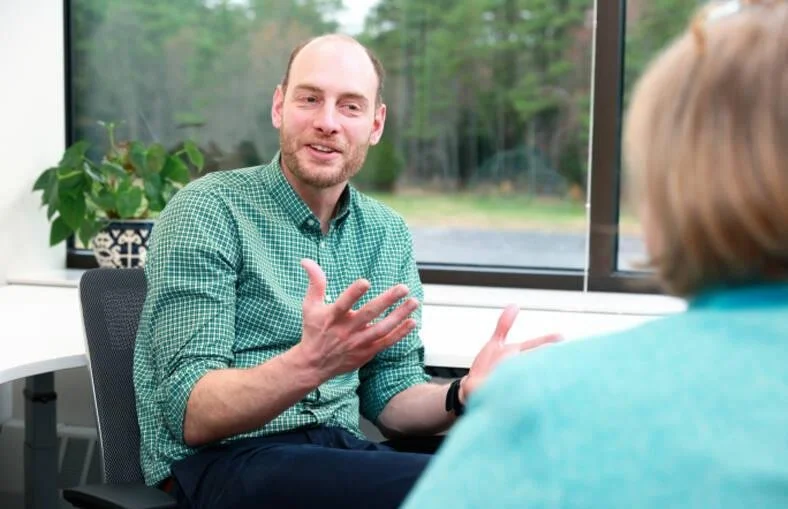
Dr. Kelly Parker-Mello during a home visit. She started Tailored Pediatric Medicine, a concierge medicine provider in Portsmouth, because ‘I felt I couldn’t practice medicine the way I wanted to. I couldn’t make the same impact I wanted to make. It was that hamster wheel all day long.’ (Courtesy photo)

As a result, some doctors, including Parker-Mello, are turning to innovative ways to cut out insurers, and improve their own quality-of-life issues  and going directly to patients through a membership model of payment  known as concierge service or direct primary care. 

Proponents say that under this model, which is relatively new to New Hampshire, patients can have direct access to doctors at every visit, can see their doctor for a longer period of time than they would under a traditional model, and can get seen much sooner for appointments. Concierge medicine also provides the opportunity to develop strong patient-doctor relationships and offers what they say is transparent pricing. Some practices even offer home visits from the doctor for an added fee.

The rates of membership and the services they offer vary at various practices. For instance, at Dr. Parker-Mello’s practice, Tailored Pediatrics, the fee is $315 a month for patients who are newborn to 12 months. For ages three to 22, the fee is $179 a month. The fee is higher for the first year because infants require more frequent visits and more checkups. 

At Winding Brook Direct Primary Care in Wolfeboro, the monthly membership fee is $125 for those 55 and over and $75 for those 18 to 35. Add-on services, such as lab testing or joint injections, cost extra. The doctors say they always let the patient know ahead of time what the services will cost before they are charged.

To be sure, direct primary care doctors still encourage patients to have health insurance in case of hospitalizations or catastrophic illnesses, but opting for the new model can give patients the opportunity to return to the days when a doctor could really get to know a patient and give them the time it takes to treat them. Concierge doctors also say that the membership fee ends up being not much more than what patients might pay in co-pays and deductibles under a traditional insurance model. 

There are currently eight direct primary care practices in New Hampshire, according to the New England Primary Care Alliance, a regional association of concierge providers. In comparison, Maine has 46 such practices; there are none listed in Vermont.

“It has been the best decision I have ever made,” said Winding Brook’s Dr. Rebecca Owen, a primary care doctor who switched over to the concierge model after being employed by two hospital systems for several years. 

Her patients agree. 

Lewis Gurnari, 72, of Gilford, says he is glad he and his wife have chosen Dr. Owen as their primary care doctor after what he described as seeing a revolving door of practitioners after their primary care doctor retired five years ago.

“It’s all about the physician,” said Gurnari. “I don’t care what you call the service. ..  You need to have a physician who becomes your advocate and helps manage scenarios, all of it – - the specialists, the follow-ups, developments and interpreting it. She can define it for me and give me options.”

“It gives you an advocate,” Gurnari added. “It gives you accessibility at all levels, which you do not have in the current system. I can call her tomorrow and get it done. If I call my general practitioner, I’m three to four weeks out unless it’s a critical event. If she calls (for a CAT scan for example), I get moved to the top of the list. What you’re purchasing is accessibility.”

However, some analysts say concierge medicine runs the risk of excluding patients who may not be able to afford the membership costs and does not alleviate concerns over the workforce shortage in primary care.

Dr. Karl Dietrich, director of Dartmouth Health’s family residency program at Cheshire Medical Center in Keene, says the “challenge’ with concierge medicine “is that it is wonderful for a small set of folks, but it doesn’t solve the global issue and it doesn’t create more primary care for everybody. I want to both applaud the emphasis on provider wellness and people setting boundaries around what is reasonable expectation, but at the same time how can we make sure that we’re solving the global problem, because if every doctor moves to direct primary care panels, we are going to need a whole lot more (physicians) than we even need right now. So how can we continue to think about ensuring physician wellness and offer an equitable access to care that would put a family doctor in every community that needs one?”

This story is part of Critical Condition: What hospital consolidation means for care, access, and your community, a special series co-produced by partners in the Granite State News Collaborative. These stories are being shared by media outlets across New Hampshire. We want to hear from you! Take our short survey athttps://tinyurl.com/3au39uctabout your healthcare experiences. For more information, visitcollaborativenh.org.

Are primary care doctors becoming a vanishing breed in New Hampshire?

It’s getting harder for patients to find a doctor as wait times and access barriers grow amid a shortage, other challenges 

By Meera Madadevan, Granite State News Collaborative

About three years ago, Loren Selig, a Durham resident and mother of two college-aged daughters, went from having one family physician for her, her husband and their kids since the time their children were born to receiving medical care from nurse practitioners. The change happened after their doctor’s practice got purchased.

Kylee Rock, 23, moved to Dover from Tilton a few years ago. She is so afraid of not being able to find a local primary care doctor – given negative stories she has heard -- that she still drives an hour to see her doctor in Concord, even though she works full-time and finds it hard to do so.

Rachel Legard, a 63-year-old Lee resident, routinely jots down names of highly recommended primary care doctors whenever she hears about one from friends because, as her own doctor nears retirement age, she too is afraid she’ll be stuck without a doctor soon.

All three are trying to adjust to an acute shortage of primary care doctors that lingers on in New Hampshire and nationally. Some say it is reaching a crisis point.

“We used a family practitioner from when our kids were babies rather than a separate pediatrician,” said Selig. “We had one doctor for all of us, and it was a model we really liked, but our doctor’s practice got swallowed up by [Beth Israeli Lahey-owned] Core Physicians, and the level of personal care we noticed changed at that point, from having one where they would take their time with us to ‘You’ve got 15 minutes’ kind of thing. … It’s been challenging on all sorts of levels.”

Interviews with about a dozen patients reveal nervousness and frustration over not being able to find a doctor who not only is accepting new patients but also over experiencing long wait times to get an appointment. Some patients likened the primary care doctor to the role of the wizard from the Wizard of Oz. “You know he’s there, but you never see him,” said Holly Breton of Rochester.

Access to a doctor is just part of the problem. Primary care doctors themselves are under enormous pressure to see more patients in a shorter time, face mounting administrative burdens, and are paid far less in reimbursements than their specialist counterparts. As a result, some are choosing to leave the field altogether or are turning to innovative ways of bypassing insurers and offering annual memberships to patients much like a gym membership. 

“Things were a lot simpler back then,” said Dr. Sangita Agarwal, a family physician who works in Seabrook and has been a family doctor for 30 years. “It was easy to submit to insurance companies because there were only a handful of insurers back then. We felt we could concentrate more on our practice and our patients. … Now, we are practicing medicine with prior authorizations which have taken on a life of their own.”

She says she now has to contact the insurance company on behalf of her patients to get such tests as a CAT scan or medications approved. While she says she is usually successful in getting them approved, it is time-consuming. “It just makes day-to-day life more onerous. It’s not helping, and it’s an injustice for the patients.”

Industry experts also say an increased number of hospital consolidations in New Hampshire have placed pressure on hospitals to boost their investments on higher-margin specialties, such as oncology and cardiology, rather than invest in primary care. Analysts also worry that drastic federal budget cuts targeting Medicaid and the Affordable Care Act will further impede focus on primary care and prevention. 

A crucial lifeline for patients

A shortage of primary care doctors – amid an overall physician shortage – has been brewing for several years, and the trend does not seem to be easing up. What is new is that the shortage is being exacerbated as health care consolidation intensifies in New Hampshire and corporate ownership of physician practices rises.

In fact, to adequately meet health care needs, New Hampshire will need an additional 333 so-called primary care physicians by 2030 – a 29 percent increase from 2010, when there were 110 so-called PCPs, according to data from the Robert Graham Center for Policy Studies, a primary care research arm of the American Academy of Family Physicians. New Hampshire’s PCP ratio is one doctor per 1,247 people, which is lower than the national average of one doctor per 1,463 people, according to the same report. 

 But compared to the rest of New England, New Hampshire appears to have the greatest need for primary care doctors. The Graham Center report projects that Vermont needs an additional 119 primary care physicians by 2030, a 19 percent increase from 2010. Maine needs an additional 120 PCPs, a 9 percent increase. Massachusetts needs 725 PCPs, a 12 percent increase. Rhode Island needs 99 PCPs, an 11 percent increase. And Connecticut needs 404 PCPs, a 15 percent increase.

While the N.H. Department of Health and Human Services acknowledges the shortage of primary care doctors, it says that the state ranks fifth in the nation when it comes to the number of primary care providers per 100,000 people (a number that includes doctors and other primary care providers, such as nurse practitioners and physician assistants), according to a a study by United Health Foundation, an arm of United Health Group, the nation’s largest health insurer. The state also points to an increasing number of nurse practitioners and physician assistants in the state who are authorized to prescribe medicine and see patients in lieu of a primary care doctor. 

Citing 2022 numbers, the 2024 Annual Report on the NH Health Care Workforce and Data Collection  said the number of physicians in the state grew by a modest 5.5 percent while the number of nurse practitioners grew by 42 percent and physician assistants grew by 16.6 percent. 

Primary care physicians – defined broadly as family physicians, pediatricians, geriatricians and general practitioners – are often the first point of contact and a crucial lifeline for patients. They play an integral role in not only diagnosing and helping to manage illnesses like heart disease, hypertension, diabetes and asthma, but also provide preventive care with routine checkups, risk assessments, screening tests and helping patients maintain an overall healthy lifestyle. They are also often a patient’s link to getting referrals and coordinating care with specialist doctors, who also often have long wait periods for appointments.

“The fact of the matter is that when there’s a primary care doctor in a ZIP code, the life expectancy of the people in that ZIP code increases,” said Dr. Maria Ramas, a family physician and a medical consultant. She is also a member of the state’s Healthcare Consumer Protection Advisory Commission that was recently created to assess the impact of hospital consolidations in New Hampshire. “The presence of a primary care doctor is very important.”

Despite their vital role, primary care physicians are among the lowest paid doctors in the industry. Experts say that needs to change.

“I think there’s a movement to try and figure out how to better compensate for primary care, because we really undervalue and under-invest in primary care,” said Lucy Hodder, director of the Health and Life Sciences Law and Policy programs at the University of New Hampshire’s law school.  “We just pay them peanuts compared to what we pay specialists because of the way we reimburse physician services with RVUs.”

RVU, or relative value unit, is a system used to measure and value the time, effort, complexity of a procedure and expertise required to provide a specific medical service. Government programs such as Medicare and private insurers use RVUs to determine physician reimbursement. They can also be used to track physician productivity and efficiency.

Adding to the complexity of the physician shortage and woeful reimbursement is New Hampshire’s health care landscape, which is changing dramatically, due to mergers and acquisitions sweeping the industry as larger hospital systems, insurers and private equity firms buy up physician practices. 

“If there is a change in ownership, there may be a change in mission and a change in support to reimburse and compensate and invest in primary care, mental health, substance abuse, eldercare, etc,” Hodder said. “We have a real shortage on all of those, and you may see practices that are hospital-owned focusing on higher-end surgeries, cardiac services, inpatient ICU care, oncology, orthopedics. None of that is primary care, so I think that’s why when there’s a hospital merger, there’s a real question about to what extent is there a commitment to invest in primary care.”

In 2024, the percentage of doctors nationwide who were in private practice dropped to 42.1 percent from 60.1 percent in 2012, according to the American Medical Association’s most recent Physician Practice Benchmark Physician Practice Benchmark Survey This means that around 80,000 fewer doctors were in private practice in 2024 than in 2012, growth of the physician population notwithstanding, the association said.

The share of doctors employed at hospital-owned practices increased to 34.5 percent in 2024 from 23.4 percent in 2012. Doctors in the survey cited a need to better negotiate higher payment rates with insurance companies and to lessen costly resources as the top two reasons for no longer owning their own practices.

Even Amazon is seizing on the opportunity with its One Medical platform, which allows anyone with a Prime membership to opt to pay $99 a year or $9 a month, and receive “24/7 On Demand Care” by being able to chat by video or message with a provider for more than 40 common conditions, such as a cold, stomach bug and yeast infections. It also offers the option to schedule next-day appointments with a nurse practitioner, physician assistant, or even a medical doctor in major cities such as Boston, Atlanta, and about 20 other metropolitan areas.

Reasons abound

Experts cite several reasons for the increased demand for and shortage of primary care doctors. Topping the list is New Hampshire’s aging population, which often requires more health care. It is aging faster than nearly every other state, and that shift is already influencing not only health care but also housing issues, according to the NH Fiscal Policy Institute.

As the general population ages, so are primary care doctors themselves. Many are nearing retirement age, and there is concern that there are not enough medical students and residents in the pipeline to replace them. 

There has also been an increase in the number of people with health insurance, due to the Affordable Care Act, which has increased demand. But that could change with current federal budget cuts

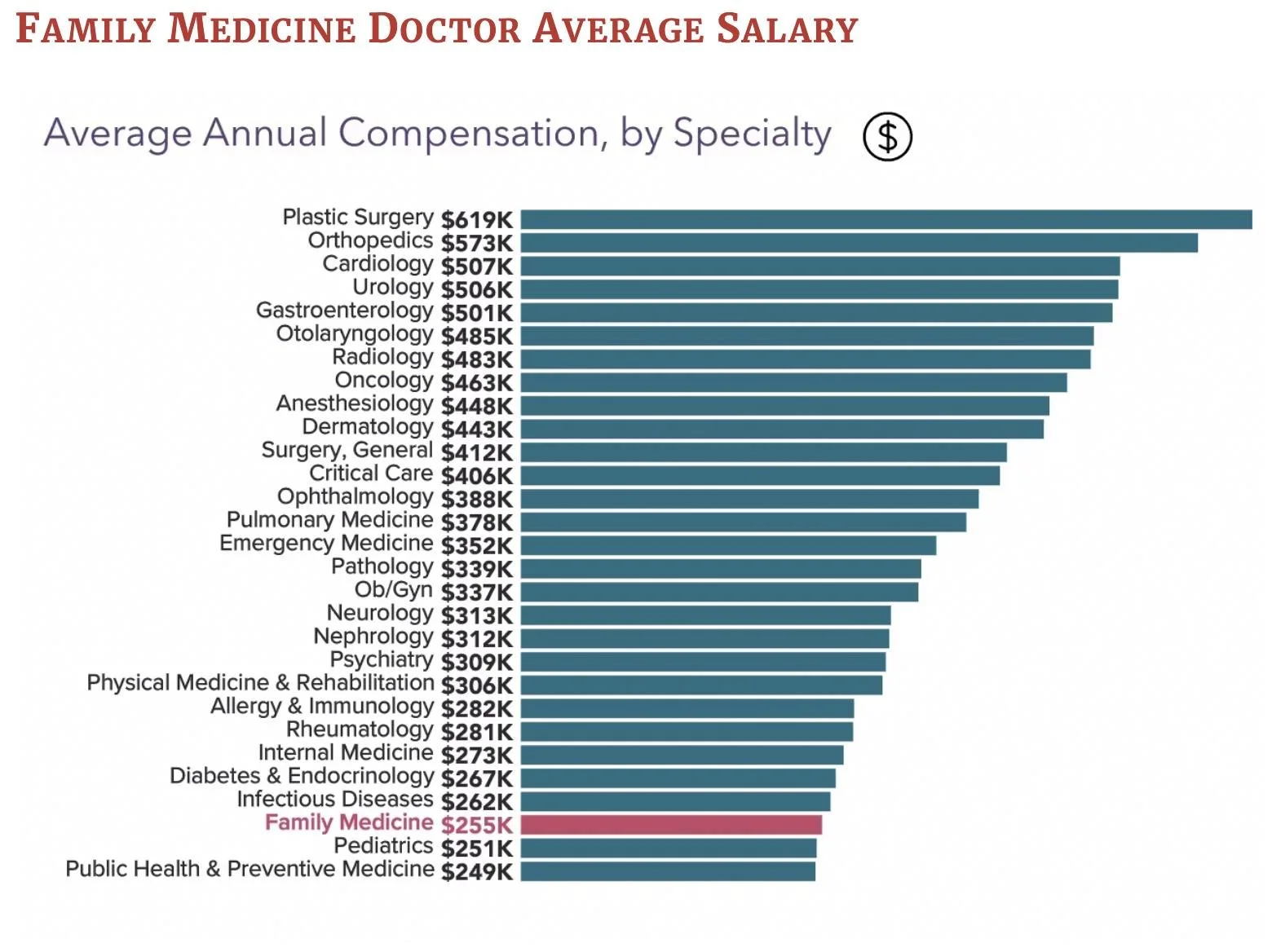
Shown are annual average salaries by medical specialty for physicians in the U.S. (White Coat Investor)

In addition, doctors say reimbursement rates for primary care from insurance companies are dismal, especially compared to rates for higher-end specialties. Many of them, already burned out from the Covid-19 epidemic, are under pressure from insurers to see more patients in a shorter amount of time and choose to leave medicine altogether. And, because it’s not financially lucrative, fewer medical students and residents are opting for primary care, reducing the pool of doctors in the pipeline. 

Possible solutions 

What are state policymakers doing to help alleviate the primary care workforce shortage? Experts say some steps have been taken, but not enough.

In 2010, lawmakers established an ongoing commission called the Interdisciplinary Primary Care Workforce to help assess and recommend policies and programs to strengthen the number of providers serving the state’s rural areas. The 20-member commission – made up of a broad coalition of lawmakers, state officials, a doctor, nurses, a pharmacist and a dental society representative, among others – continues to meet monthly.

According to a 2021 Primary Care Needs Assessment report published by the state Department of Health and Human Services, the state legislative commission said it is prioritizing efforts to create a clinical placement program, a rural residency track and getting additional funding for the State Loan Repayment Program. It is not clear whether the state has made any progress with these initiatives.

The State Loan Repayment Program, which secured $300,000 in 2024, provides funds to health care professionals working in areas of the state designated as medically under-served and who are willing to commit to working a minimum of three years there. However, funding for the program is at the mercy of lawmakers and annual state budget approvals. 

The state also created a Health Professions Data Center to collect data on how many primary care providers actually work in the state. As of 2019, all health care providers – doctors, physician assistants, nurse practitioners and clinical social workers, among others – who apply to renew their medical license with the state’s professional licensing board are required to complete a survey to help the state identify areas of need in the primary care workforce.

“The 2022 data points to an anticipated decline in the primary care physician workforce, especially in rural communities,” the Primary Care Needs Assessment concluded. “Despite these physician workforce challenges, the APRN (nurse practitioners) and PA (physician assistant) workforce demonstrate continued growth and primary care reinforcement.”

That logic, however, falls on deaf ears, for patients who want the expertise and training of a medical doctor.

“I’m not saying nurse practitioners don’t know what they’re doing, but it does seem there’s a level of training I’m not getting if I see a nurse practitioner,” said Ruth Sample, a Lee resident and an associate professor of philosophy at UNH whose family had the same family practitioner for about 15 years and now has been switched to a nurse practitioner. So far it’s been OK because I’m not a sick person, but I don’t have the same level of confidence.” 

She added: “I don’t know what this all means. If doctors retire, is this just how primary care is going to be?”

Hodder, the health policy expert at UNH’s Franklin Pierce School of Law, said nurse practitioners and physician assistants play a vital role in primary care, but “there is no possible way that a nurse practitioner can replace the need for internists and family practice physicians who’ve been trained in medical school,” Hodder said. “But good nurse practitioners who are well-trained and experienced in primary care will certainly help improve access. I think it needs to be a really careful and carefully planned reliance.”

Meanwhile, experts and patients worry that focus has shifted away from prevention and more on high-margin health care services. 

“The question is how are people going to afford the preventative care if we just end up making it more and more expensive,” said Hodder. “If the average working person is not able to get in to see their physician or are burdened with medical bills and not going to get the care, then we’re going to continue to support a system that focuses on specialty bells and whistles and acute specialty care and not prevention.”

And prevention begins with primary care. 

This story is part of Critical Condition: What hospital consolidation means for care, access, and your community, a special series co-produced by partners in the Granite State News Collaborative. These stories are being shared by media outlets across New Hampshire. We want to hear from you! Take our short survey athttps://tinyurl.com/3au39uctabout your healthcare experiences. For more information, visitcollaborativenh.org.


Love stories like this? Help fuel the next one. Donate today — Newsmatch will double it.

Shorter version: Are primary care doctors becoming a vanishing breed in New Hampshire?

It’s getting harder for patients to find a doctor as wait times and barriers to access grow 

By Meera Madadevan, Granite State News Collaborative

About three years ago, Loren Selig, a Durham resident and mother of two college-aged daughters, went from having one family physician for her, her husband and their kids since the time their children were born to receiving medical care from nurse practitioners. The change happened after their doctor’s practice was purchased.

Kylee Rock, 23, moved to Dover from Tilton a few years ago. She is so afraid of not being able to find a local primary care doctor – given negative stories she has heard -- that she still drives an hour to see her doctor in Concord, even though she works full-time and finds it hard to do so.

Rachel Legard, a 63-year-old Lee resident, routinely jots down names of highly recommended primary care doctors whenever she hears about one from friends because, as her own doctor nears retirement age, she too is afraid she’ll be stuck without a doctor soon.

All three are trying to adjust to an acute shortage of primary care doctors that lingers on in New Hampshire and nationally. Some say it is reaching a crisis point.

“We used a family practitioner from when our kids were babies rather than a separate pediatrician,” said Selig. “We had one doctor for all of us, and it was a model we really liked, but our doctor’s practice got swallowed up by [Beth Israeli Lahey-owned] Core Physicians, and the level of personal care we noticed changed at that point, from having one where they would take their time with us to a ‘You’ve got 15 minutes’ kind of thing. … It’s been challenging on all sorts of levels.”

Interviews with about a dozen patients reveal nervousness and frustration over not being able to find a doctor who not only is accepting new patients but also over experiencing long wait times to get an appointment. Some patients likened the primary care doctor to the role of the wizard from “The Wizard of Oz.” “You know he’s there, but you never see him,” said Holly Breton of Rochester.

Access is just part of the problem. Primary care doctors themselves are under enormous pressure to see more patients in a shorter time, face mounting administrative burdens, and are paid far less in reimbursements than their specialist counterparts. 

“Things were a lot simpler back then,” said Dr. Sangita Agarwal, a family physician who works in Seabrook and has been a family doctor for 30 years. “It was easy to submit to insurance companies because there were only a handful of insurers back then. We felt we could concentrate more on our practice and our patients. … Now, we are practicing medicine with prior authorizations, which have taken on a life of their own.”

A crucial lifeline for patients

A shortage of primary care doctors – amid an overall physician shortage – has been brewing for several years. What is new is that the shortage is being exacerbated as health care consolidation intensifies in New Hampshire and corporate ownership of physician practices rises.

In fact, to adequately meet health care needs, New Hampshire will need an additional 333 primary care physicians by 2030 – a 29% increase from 2010, when there were 110 so-called PCPs, according to data from the Robert Graham Center for Policy Studies, a primary care research arm of the American Academy of Family Physicians. New Hampshire’s PCP ratio is one doctor per 1,247 people, which is lower than the national average of one doctor per 1,463 people, according to the same report. 

But compared to the rest of New England, New Hampshire appears to have the greatest need. The Graham Center report projects that Vermont needs an additional 119 primary care physicians by 2030, a 19% increase from 2010. Maine needs an additional 120 PCPs, a 9% increase. Massachusetts needs 725 PCPs, a 12% increase. Rhode Island needs 99 PCPs, an 11% increase. And Connecticut needs 404 PCPs, a 15%  increase.

Shown are annual average salaries by medical specialty for physicians in the U.S. (White Coat Investor)

While the N.H. Department of Health and Human Services acknowledges the shortage of primary care doctors, it says that the state ranks fifth in the nation when it comes to the number of primary care providers per 100,000 people, citing a study by United Health Foundation, an arm of United Health Group, the nation’s largest health insurer. That number includes doctors and other primary care providers, such as nurse practitioners and physician assistants.

Citing 2022 numbers, the 2024 Annual Report on the NH Health Care Workforce and Data Collection  said the number of physicians in the state grew by a modest 5.5%, while the number of nurse practitioners grew by 42% and physician assistants grew by 16.6%. 

Primary care physicians – defined broadly as family physicians, pediatricians, geriatricians and general practitioners – play an integral role in not only diagnosing and helping to manage illnesses like heart disease, hypertension, diabetes and asthma, but also provide preventive care with routine checkups, risk assessments, screening tests and helping patients maintain an overall healthy lifestyle. They are also often a patient’s link to getting referrals and coordinating care with specialist doctors, who also often have long wait periods for appointments.

“The fact of the matter is that when there’s a primary care doctor in a ZIP code, the life expectancy of the people in that ZIP code increases,” said Dr. Maria Ramas, a family physician and a medical consultant. She is also a member of the state’s Healthcare Consumer Protection Advisory Commission that was recently created to assess the impact of hospital consolidations in New Hampshire. 

Despite their vital role, primary care physicians are among the lowest paid doctors in the industry. 

“I think there’s a movement to try and figure out how to better compensate for primary care, because we really undervalue and under-invest in primary care,” said Lucy Hodder, director of the Health and Life Sciences Law and Policy programs at the University of New Hampshire’s law school.  “We just pay them peanuts compared to what we pay specialists because of the way we reimburse physician services with RVUs.”

RVU, or relative value unit, is a system used to measure and value the time, effort, complexity of a procedure and expertise required to provide a specific medical service. Government programs such as Medicare and private insurers use RVUs to determine physician reimbursement. They can also be used to track physician productivity and efficiency.

Adding to the complexity of the physician shortage is New Hampshire’s health care landscape, which is changing dramatically, due to mergers and acquisitions sweeping the industry as larger hospital systems, insurers and private equity firms buy up physician practices. 

“If there is a change in ownership, there may be a change in mission and a change in support to reimburse and compensate and invest in primary care, mental health, substance abuse, eldercare, etc,” Hodder said. “You may see practices that are hospital-owned focusing on higher-end surgeries, cardiac services, inpatient ICU care, oncology, orthopedics. None of that is primary care, so I think that’s why when there’s a hospital merger, there’s a real question about to what extent is there a commitment to invest in primary care.”

In 2024, the percentage of doctors nationwide who were in private practice dropped to 42.1% from 60.1% in 2012, according to the American Medical Association’s most recent Physician Practice Benchmark Physician Practice Benchmark Survey This means that around 80,000 fewer doctors were in private practice in 2024 than in 2012, growth of the physician population notwithstanding, the association said.

The share of doctors employed at hospital-owned practices increased to 34.5% in 2024 from 23.4%  in 2012. Doctors in the survey cited a need to better negotiate higher payment rates with insurance companies and to lessen costly resources as the top two reasons for no longer owning their own practices.

Possible solutions

Experts cite several reasons for the increased demand for and shortage of primary care doctors. Topping the list is New Hampshire’s aging population. It is aging faster than nearly every other state, and that shift is already influencing not only health care but also housing issues, according to the NH Fiscal Policy Institute.

As the general population ages, so are primary care doctors themselves. Many are nearing retirement age, and there is concern that there are not enough medical students and residents in the pipeline to replace them. 

There has also been an increase in the number of people with health insurance, due to the Affordable Care Act, and that increases demand. But that could change with current federal budget cuts

And, because it’s not financially lucrative, fewer medical students and residents are opting for primary care, reducing the pool of doctors in the pipeline. 

What are policymakers doing to help alleviate the state’s primary care workforce shortage? 

In 2010, legislators established an ongoing commission called the Interdisciplinary Primary Care Workforce to help assess and recommend policies and programs to strengthen the number of providers serving the state’s rural areas. The 20-member commission  continues to meet monthly.

According to a 2021 Primary Care Needs Assessment report published by the state Department of Health and Human Services, the state is prioritizing efforts to create a clinical placement program, a rural residency track and getting additional funding for the State Loan Repayment Program. It is not clear whether the state has made any progress with these initiatives.

The State Loan Repayment Program, which secured $300,000 in 2024, provides funds to health care professionals working in areas of the state designated as medically under-served and who are willing to commit to working a minimum of three years there. However, funding for the program is at the mercy of lawmakers and annual state budget approvals. 

The state also created a Health Professions Data Center to collect data on how many primary care providers actually work in the state and where they do that work. 

In a 2024 report, the Division of Public Health pointed to data collected by the Health Professions Data Center and said it pointed to “an anticipated decline in the primary care physician workforce, especially in rural communities.”

It added: “Despite these physician workforce challenges, the APRN (nurse practitioners) and PA (physician assistant) workforce demonstrate continued growth and primary care reinforcement.”

That logic, however, falls on deaf ears, for patients who want the expertise and training of a medical doctor.

“I’m not saying nurse practitioners don’t know what they’re doing, but it does seem there’s a level of training I’m not getting if I see a nurse practitioner, said Ruth Sample of a Lee, an associate professor of philosophy at UNH whose family had the same family practitioner for about 15 years and has been switched to a nurse practitioner.” So far it’s been OK because I’m not a sick person, but I don’t have the same level of confidence.” 

She added: “I don’t know what this all means. If doctors retire, is this just how primary care is going to be?”

This story is part of Critical Condition: What hospital consolidation means for care, access, and your community, a special series co-produced by partners in the Granite State News Collaborative. These stories are being shared by media outlets across New Hampshire. We want to hear from you! Take our short survey at https://tinyurl.com/3au39uct about your healthcare experiences. For more information, visit collaborativenh.org.

Luring medical residents to train, and stay, in New Hampshire

By Meera Mahadevan, Granite State News Collaborative

Educational institutions and hospitals are taking steps to help alleviate New Hampshire’s primary care doctor shortage by trying to expand the pipeline of doctors to help replace those who are leaving. 

Dartmouth College’s Geisel School of Medicine, the state’s only medical school, is among them. 

Just last year, Dartmouth Health began a family residency program at Cheshire Medical Center in Keene with the hope that some of the residents will decide to stay in New Hampshire after they complete the program. The program is currently training 12 residents.

“We help them (residents) learn systems and communities and start to put down roots in a place where they will want to work,” said Dr. Karl Dietrich, director of the family residency program at Cheshire. “Residency training does not require any long-term commitments from graduates.They are not obligated to stay, but they’re with us for three years, and if we can create a wonderful training foundation where they feel grounded, then they’re much more likely to stay with us and practice long term.” 

In fact, the welcome letter to medical residents in the Cheshire program boasts not only that residents will be training with world-class physicians, but also touts that Keene sits at the heart of the Monadnock Region and its quality of life, pointing out its numerous walking trails, museums and restaurants.

A residency program does not necessarily have to be associated with a university or an academic medical center. Hospitals can employ residents as long as the program is accredited by the Accreditation Council for Graduate Medical Education. 

Dr. Karl Dietrich heads Dartmouth Health’s family residency program at Cheshire Medical Center in Keene. The program was started with the hope that some of the residents will decide to stay in New Hampshire after they complete the program. The program is currently training 12 residents. (Courtesy photo)

To that end, Portsmouth Regional Hospital began a family medicine, internal medicine and psychiatry residency program five years ago. Concord Hospital’s Dartmouth Family Medicine residency program has been around much longer, and it has residents serving at its Family Health Center clinical site in Hillsboro. Its residents also work at the health center in Concord, serving immigrants and other under-served populations. 

In all, New Hampshire has four accredited residency programs: the White Mountains Medical Education Consortium; Concord Hospital’s Dartmouth Family Medicine program; Dartmouth Health’s residency program at Cheshire Medical Center in Keene; and Tufts University’s residency program at Portsmouth Regional Hospital. North Country Healthcare – an affiliation of four hospitals in Coos and Grafton counties – is finalizing plans to start a family residency program next year, according to the N.H. Medical Society

In comparison, Maine and Vermont have four and two family residency programs, respectively.   

“Because many physicians remain in the communities where they complete their training, expanding residency opportunities is a key part of the solution” to the primary care doctor shortage, said Cathryn Stratton, chief executive officer at the N.H. Medical Society. “The solution requires an investment in training, recruiting and retaining family physicians, and it needs to include loan forgiveness, better reimbursement and support for rural practices,” she said.

According to the Association of American Medical Colleges’ 2024 Report on Residents which tracks trends among states through the phases of residency training, 422 residents out of 935, or 45.1%, who completed residency training from 2014 through 2023 stayed in New Hampshire. That figure is below the overall rate of 58.6 percent of the individuals who completed residency training in the same period who are practicing in the state of their residency training. The association says retention rates range from 39.4% in the District of Columbia to 78.5% in California.

Data on residency retention? 

“Only time will tell in terms of where folks will practice,” said Dartmouth’s Dr. Dietrich. “We’re not going to solve this issue overnight, but I would love to move towards a place where we have a couple of people every year that want to stay in the surrounding area.”

This story is part of Critical Condition: What hospital consolidation means for care, access, and your community, a special series co-produced by partners in the Granite State News Collaborative. These stories are being shared by media outlets across New Hampshire. We want to hear from you! Take our short survey athttps://tinyurl.com/3au39uctabout your healthcare experiences. For more information, visitcollaborativenh.org.

Immigrants deserve protection, not policing

Gov. Ayotte’s new immigration enforcement law threatens to undo years of trust-building between local police and immigrant communities

By Shamecca Brown, Columnist

As someone who has spent years working directly with immigrant families, I want to speak plainly about Gov. Kelly Ayotte’s decision to sign two laws that require local police departments in New Hampshire to cooperate with federal immigration authorities.

This isn’t just about policy; it’s about pain.

These laws ban sanctuary policies and force local police to assist with federal immigration enforcement. Ayotte signed the two new bills — House Bill 511 and Senate Bill 62 — on May 22.

On paper, some might see this as enforcing law and order. But if you’ve lived the reality, if you’ve worked with people trying to survive under constant fear, you know exactly what this means — more silence, more isolation, and more danger for already vulnerable communities Gov. Ayotte defended the decision, telling the New Hampshire Bulletin: “There will be no sanctuary cities in New Hampshire. Period. End of story.”

She also said, “These laws will ensure that public safety comes first, and that New Hampshire does not become a haven for those who break federal immigration laws.”

But here’s the reality: The people being impacted by this are not criminals. They are caregivers, students, business owners and parents who want nothing more than to build safe lives for their families. This law doesn’t create safety. It breaks trust. And for many of us, especially people of color, there was too little trust to begin with.

New Hampshire has a proud tradition of community care. Nonprofits, churches and local organizers have worked for years to welcome new Americans and help them build strong, stable lives. I’ve been part of that work. I’ve seen what happens when people feel supported instead of surveilled. Support creates trust, and when they feel trust they ask for help, report crimes, enroll their children in school, and engage in their communities. 

But surveillance does the opposite. It creates fear and isolation. People withdraw. They stop seeking services, skip school events, avoid hospitals and feel like they’re always one wrong move away from being torn from their families. This law undermines all of that. It tells immigrants: “No matter how hard you try, you are still seen as a threat.”


Every day in fear

When immigrants finally settle into their real lives, they’re supposed to feel safe, like they can breathe, work, raise their kids, and contribute to our society without fear. 

I’ve seen this with my own eyes. This isn’t just politics — it’s personal. I’ve watched friends who came here to build better lives constantly look over their shoulders, scared that one wrong move could tear their families apart. They work hard, follow the rules, and still get treated like they don’t belong. That’s not freedom. That’s fear dressed up as law and order.

I know this deeply and close to home. My husband's mom and her three siblings all immigrated to the U.S. in their late teens on a lottery and worked hard to find their footing. They didn’t even get to stay together. They were split among different families, forced to change their last names, and grow up without their siblings. That’s the kind of struggle people don’t talk about. Being separated from the only family you know, in a country you don’t understand, with no guarantee you’ll even survive. That’s not just a sacrifice — it’s trauma. And yet, they still show up, still try to belong, even when the system keeps telling them they don’t.

Some people live every day in fear of being separated from their children, of losing everything over a traffic stop or a clerical error. And I’ll be honest: Even I still cringe when I see the police. That’s not just discomfort; that’s fear, built over years of witnessing injustice. The law was never built for people like us to feel safe. And that’s because of everything I’ve seen growing up. When you come from where I come from, you witness things that stick with you. Not all authority is bad; I know that. But I’ve seen enough in different places and situations that hit home to know that trust isn’t always guaranteed.  

Some may say, “If they’re here legally, they have nothing to worry about.” But that’s not the full picture. Many immigrant families are mixed-status. One person’s paperwork, or lack of it, can put an entire household at risk. This law doesn’t just target the undocumented; it terrorizes entire communities.

Let’s not pretend this will make communities safer. It won’t. It will make them quieter, but only because fear will silence them. People will stop calling the police, even when they’re victims of abuse or witnesses to a crime. That’s not public safety. That’s state-sanctioned fear.

History has made one thing painfully clear: When law enforcement is used to control, not to serve, people suffer. Just ask the one in five undocumented immigrants in the U.S. who avoid calling the police, even when they’re victims of serious crimes, because they fear deportation more than they trust justice. That silence isn’t accidental. It’s by design.

To the immigrant families, to the new Americans, to the Black and brown folks who’ve never had the full protection of the law: I see you. I stand with you. And I’m not afraid to say what needs to be said — I’ve been there before. You're not alone. 

Shamecca Brown is a New Hampshire-based columnist who is family-oriented and passionate about serving underserved communities. These articles are being shared by partners in the Granite State News Collaborative. For more information, visit collaborativenh.org.

Genesis HealthCare, owner of 16 nursing home facilities in NH, declares bankruptcy

‘Instability’ in the skilled nursing industry is a concern, but closings not expected

By Kelly Burch, Granite State News Collaborative

Genesis HealthCare, one of the nation’s largest nursing home owners — and operator of 16 skilled nursing facilities in New Hampshire — has filed for bankruptcy protection. 

No facilities are expected to close due to the bankruptcy proceedings, a spokesperson for Genesis told VTDigger

"“There will be no expected impact to patient care as a result of this filing,” the spokesperson said. “Our daily operations remain unchanged, and our commitment to those we serve continues uninterrupted.”

Still, the news is jarring to some in the skilled nursing space in New Hampshire. As Genesis is the operator of 16 of New Hampshire’s 74 skilled nursing homes, "I’m worried about… any instability in the sector,” said Brendan Williams, president and CEO of the N.H. Health Care Association, adding, “I’m not suggesting there will be closures.” 

Langdon Place of Keene, a senior living facility previously owned by Genesis HealthCare, was acquired by a company that purchased two other former Genesis facilities. The national nursing home giant filed for bankruptcy protection July 9. (Hannah Schroeder/Sentinel Staff)

Genesis, which is based in Kennett Square, Pa., filed for Chapter 11 bankruptcy protection on July 9 in the Northern District of Texas. VTDigger reported that the company’s debts include over $12 million owed to the New England Health Care Employees Pension Fund and $8 million per month “in settlement and defense costs arising from alleged personal injury and wrongful death claims, most of which date back many years.” 

Genesis has a widespread presence in the Granite State, with locations in Bedford, Claremont, Concord, Exeter, Franklin, Hampton, Laconia, Lebanon, Keene, Manchester, Milford, Peterborough, Rochester and Winchester. All told, it has 218 facilities in 19 states.

Williams pointed out that any possible impact of the bankruptcy could be felt most acutely in towns in rural areas such as Sullivan County and the Monadnock Region, where Genesis facilities have an outsized presence. 

“If, for example, Genesis were to close its nursing home in Claremont, where would those people go?” he said. 

New ownership at 3 facilities

At least three nursing home facilities previously run by Genesis HealthCare changed hands last year, when locations in Keene, Nashua and Bedford were taken over by 603 Healthcare. The company manages eight facilities across New Hampshire, according to a press release. 

Sean Stevenson, owner and CEO of 603 Healthcare, was senior vice president of operations at Genesis until 2021. State documents show he has a 5% ownership stake in the companies that own the three formerly Genesis facilities, while the remaining 95% ownership is held by two New York-based brothers, Robert and Philip Rausman, who also own skilled nursing facilities in New York.  

In a December 2024 story about the sale of Langdon Place of Keene, Stevenson told The Keene Sentinel, "We plan to enhance services for our customers in any way we can and continuously support our center caregivers."

He added, “We have a tremendous opportunity and responsibility to collaborate with our local healthcare providers and to be a trusted partner in the continuum of care.”

This is a developing story. If you have any tips or concerns about Genesis HealthCare please reach out to reporter Kelly Burch at burchcreative@gmail.com.

These articles are being shared by partners in the Granite State News Collaborative. For more information, visit collaborativenh.org.

Genesis HealthCare, owner of 16 nursing home facilities in NH, declares bankruptcy

‘Instability’ in the skilled nursing industry is a concern, but closings not expected 

By Kelly Burch-Granite State News Collaborative

Genesis HealthCare, one of the nation’s largest nursing home owners — and operator of 16 skilled nursing facilities in New Hampshire — has filed for bankruptcy protection. 

No facilities are expected to close due to the bankruptcy proceedings, a spokesperson for Genesis told VTDigger

"“There will be no expected impact to patient care as a result of this filing,” the spokesperson said. “Our daily operations remain unchanged, and our commitment to those we serve continues uninterrupted.”

Still, the news is jarring to some in the skilled nursing space in New Hampshire. As Genesis is the operator of 16 of New Hampshire’s 74 skilled nursing homes, "I’m worried about… any instability in the sector,” said Brendan Williams, president and CEO of the N.H. Health Care Association, adding, “I’m not suggesting there will be closures.” 

Genesis, which is based in Kennett Square, Pa., filed for Chapter 11 bankruptcy protection on July 9 in the Northern District of Texas. VTDigger reported that the company’s debts include over $12 million owed to the New England Health Care Employees Pension Fund and $8 million per month “in settlement and defense costs arising from alleged personal injury and wrongful death claims, most of which date back many years.” 

Langdon Place of Keene, a senior living facility previously owned by Genesis HealthCare, was acquired by a company that purchased two other former Genesis facilities. The national nursing home giant filed for bankruptcy protection July 9. (Hannah Schroeder/Sentinel Staff)

Genesis has a widespread presence in the Granite State, with locations in Bedford, Claremont, Concord, Exeter, Franklin, Hampton, Laconia, Lebanon, Keene, Manchester, Milford, Peterborough, Rochester and Winchester. All told, it has 218 facilities in 19 states.

Williams pointed out that any possible impact of the bankruptcy could be felt most acutely in towns in rural areas such as Sullivan County and the Monadnock Region, where Genesis facilities have an outsized presence. 

“If, for example, Genesis were to close its nursing home in Claremont, where would those people go?” he said. 

New ownership at 3 facilities

At least three nursing home facilities previously run by Genesis HealthCare changed hands last year, when locations in Keene, Nashua and Bedford were taken over by 603 Healthcare. The company manages eight facilities across New Hampshire, according to a press release. 

Sean Stevenson, owner and CEO of 603 Healthcare, was senior vice president of operations at Genesis until 2021. State documents show he has a 5% ownership stake in the companies that own the three formerly Genesis facilities, while the remaining 95% ownership is held by two New York-based brothers, Robert and Philip Rausman, who also own skilled nursing facilities in New York.  

In a December 2024 story about the sale of Langdon Place of Keene, Stevenson told The Keene Sentinel, "We plan to enhance services for our customers in any way we can and continuously support our center caregivers."

He added, “We have a tremendous opportunity and responsibility to collaborate with our local healthcare providers and to be a trusted partner in the continuum of care.”

This is a developing story. If you have any tips or concerns about Genesis HealthCare please reach out to reporter Kelly Burch at burchcreative@gmail.com. These articles are being shared by partners in the Granite State News Collaborative. For more information, visit collaborativenh.org.

Hospital consolidation threatens New Hampshire’s health care safety net

Mergers can affect funding, staffing and patient populations at state’s federally qualified community health centers

By Kelly Burch-Granite State News Collaborative

Since Catholic Medical Center in Manchester was purchased by the national for-profit HCA Healthcare in February, Manchester’s low-income patients have faced some uncertainty. 

In the past, patients seen at Amoskeag Health, Manchester’s community health center, could get approved for reduced copays based on their income. Catholic Medical Center would honor those reduced copays, removing a hassle and streamlining patients’ access to affordable care at the hospital, said Kris McCracken, president and CEO at Amoskeag Health. 

Since the merger, the use of that program has been paused.

“I hope we can establish a similar arrangement with HCA … [but] I haven’t even met with them yet,” said McCracken. “You’ve got to rebuild that relationship.”

That’s just one example of the way that hospital mergers around the state are affecting New Hampshire’s 11 federally qualified community health centers. They are seen as the safety net of the health care system, providing primary care to everyone, regardless of their ability to pay. The centers are funded primarily by federal grants and Medicaid reimbursements, but also rely on community benefit grants from local hospitals — some of which disappear after a merger occurs, FQHC leaders say. 

In addition to affecting the grants, hospital mergers can lead to higher employment costs for the health centers, create a higher proportion of patients who are unable to pay (since for-profit organizations can decline to provide care for those people) and erode a sense of community cooperation between hospitals and the centers. 

“As some of these mergers occur, it feels like the senior leadership gets a little further away from the community,” said Gregory White, CEO of Lamprey Health Center, a federally qualified health center with locations in Nashua, Newmarket and Raymond. “Sometimes when that happens, instead of doing things with you, [things] happen to you.”

While the challenges are real, leaders of the health centers also emphasize that, with work, there can be functional and cooperative relationships with larger hospital systems. 

“Just because they’re a big health care system doesn’t mean they’re not a good partner,” McCracken said. 

Loss of local control and local grants

One of the touchiest subjects when it comes to hospital mergers and federally qualified health centers involves community benefit grants. These grants are provided by hospitals to serve a specific community need. They also are a way of acknowledging the role that the community health centers play in the health care system, McCracken said. 

If a community has two or three private practices, often linked to larger health care systems, the local community health center is “kind of taking the leftovers,” she said — patients who are uninsured or unable to pay for care. For the community health centers, there’s often no balance between paying patients and charitable care, she said. 

“You’re the safety net for the folks who are the neediest in the community,” she said. 

While that’s the role of the health centers, McCracken said, it requires support from the hospital systems that are benefiting from serving more profitable patients. 

“We’re here to be the safety net … but if all we have is safety net patients, that means we need more community investment,” she said. 

Amoskeag Health never received a community benefit grant from Catholic Medical Center, due to the hospital’s religious guidelines, and doesn’t anticipate receiving one from HCA, McCracken said. Amoskeag Health does receive grants from Dartmouth Health and Elliot Health System, which also gives a grant to Lamprey Health. 

In the past, however, when hospitals have gone through mergers, “it felt like we lost touch with them,” and community benefit grants have gone away, White said. He, like many community health center leaders who spoke to the Granite State News Collaborative, declined to elaborate; some of them expressed concern about jeopardizing their relationship with hospitals, and thus access to future grants. 

Changing patient populations and cost concerns

Ed Shanshala, CEO of Ammonoosuc Community Health Services Inc., has concerns about larger hospital organizations, especially for-profit companies, buying into the New Hampshire health care system. The ethical obligations to patients and legal obligations to shareholders are too difficult to balance, he said. 

Ammonoosuc Community Health Services Inc. has locations in Littleton, Warren, Whitefield and Woodsville. The organization recently announced its Franconia location will close soon because of funding concerns. 

Jillian Peabody of Amoskeag Health with a patient. Low-income patients at the federally qualified health center in Manchester have faced uncertainty about their health care since the for-profit HCA Healthcare’s acquisition of Catholic Medical Center. (Courtesy of Amoskeag Health)

If for-profit hospitals are "going to carve out the most beneficial and profitable [patients], those of us who serve the collective are going to be left unable to serve the most vulnerable population,” Shanshala said. 

Mergers can also affect where patients choose to receive care, and the services they have access to, said Robert MacLeod, CEO of Mid-State Health Center in Plymouth.

“We sometimes see increased costs and fewer choices, especially when systems prioritize keeping patients within their own network,” he said. “That can limit our ability to refer to the most appropriate or affordable specialty care, and in some cases, services like maternity care or certain specialties may be reduced based on financial pressures.”

MacLeod has another concern: that the buying power of large hospital systems could ultimately exclude federally qualified health centers from working with certain insurers. 

“As larger systems gain more negotiating power with payers,” he said, federally qualified health centers “may find it harder to compete or collaborate under the same terms. We may face tighter reimbursement rates or be excluded from certain payer networks, even when we offer high-quality, cost-effective care.”

Shanshala is likewise skeptical of the widespread claims from hospital systems that mergers reduce costs. 

“Although there’s been a promise of efficiencies through aggregation of health care, it’s not clear they’ve ever delivered on economies of scale, delivering on a lower price point for patients,” he said. “I’ve personally never experienced lower prices.”

Personnel costs are a massive burden for federally qualified health centers, taking up about three-quarters of operating budgets. Large health systems can make things even worse.

“With consolidation, especially very large players like Mass General, there’s pressure on salaries that we just can’t compete with,” said White. (Boston-based Massachusetts General Hospital acquired Dover’s Wentworth-Douglass Hospital in 2017.)

McCracken used an analogy: If federally qualified health centers are kayaks on a bay, large health care systems are like giant ocean liners, throwing such a wake that the kayaks are often rocked. 

“It’s not that they’re trying to do anything to any of us,” she said, “but their presence is so overwhelming in the health care space.”

This story is part of Critical Condition: What hospital consolidation means for care, access, and your community, a special series co-produced by partners in the Granite State News Collaborative. These stories are being shared by media outlets across New Hampshire. We want to hear from you! Take our short survey athttps://tinyurl.com/3au39uctabout your healthcare experiences. For more information, visitcollaborativenh.org.

Amid a ‘proliferation in services,’ N.H. lacks a thorough way to track health care industry’s growth

After scrapping its Certificate of Need Board, state has no ‘window’ into what drives ever-rising costs

By Paul Cuno-Booth-Granite State News Collaborative

Over the past decade, larger health systems — many based out of state —  have snapped up community hospitals in New Hampshire, touting flashy new investments, even as some residents voice concerns about other services being cut. 

Regional hospital groups have formed, and split up. Urgent care clinics, outpatient surgical centers and other independent facilities have proliferated. 

When the Certificate of Need Board was scrapped in 2016, New Hampshire also lost a key source of transparency into the state’s health care market, says Lucy Hodder, a professor at the University of New Hampshire Franklin Pierce School of Law who focuses on health law and policy. (Franklin Pierce School of Law photo)

What does all that mean for patients, employers and their ever-growing health care costs? It’s hard to say — because no one is really keeping tabs in a systematic way, some New Hampshire health care experts said.

“We have seen a proliferation of services that no one is even tracking,” said Lucy Hodder, a professor at the University of New Hampshire Franklin Pierce School of Law who focuses on health law and policy. “That results in duplication, high cost, patient frustration. We see investment in services that aren’t needed as opposed to those that are. We lack any real look into the future as to how we want to use our health care resources.”

Hodder and others say that lack of transparency hinders efforts to figure out how to preserve access to essential health services while controlling costs, which remain a major concern. In a 2024 survey from New Futures, a health policy organization, more than two-thirds of Granite Staters said they’d recently put off going to the doctor, skimped on medication or otherwise delayed or skipped medical care because of cost.

New Hampshire used to track the growth of health care services more closely, through a regulatory body known as the Certificate of Need Board, which reviewed proposed capital investments by hospitals and other providers.

Most agreed that the board process was flawed, and critics said it failed in its primary mission of containing costs, because it quashed competition from new market entrants that could offer care at lower prices. The Legislature dissolved the board in 2016.

Hodder agreed the Certificate of Need Board had issues — but, by scrapping it, New Hampshire also lost a key source of transparency into the state’s health care market

As part of its work, the board tracked metrics on everything from MRI machines to open heart surgeries, shedding light on where those services were located, whether they were enough to meet the community’s needs, how affordable they were, what wait times looked like, and whether services were being duplicated in a way that could drive up costs.

Today, no one is tracking that data in a coordinated way, she said. She worries the result has been a “clandestine arms race,” as large health systems try to stay afloat by investing in the most lucrative services, regardless of need.

“Our entire economy is reliant on accessible and affordable health care, and this [board] provided a window into whether we have it and what it looks like in New Hampshire,” Hodder said. “And we don’t do that anymore.”

‘It prevented competition’

The idea of requiring health care providers to obtain a “certificate of need” to justify major construction projects or service expansions stems in part from the work of a pioneering Dartmouth College researcher, Dr. Jack Wennberg. Wennberg found the supply of health care resources in an area — such as having more hospital beds — could lead to higher utilization, and therefore higher costs, without necessarily producing better outcomes. 

By the early 1980s, spurred by since-repealed federal requirements, nearly every state had a certificate of need process. But it’s questionable whether they had the intended effect, and more than a dozen states have since repealed their certificate of need laws. 

A systematic review published in 2020 in the journal BMC Health Services Research found the evidence is mixed on whether certificate of need laws reduce health care spending, but the costs — including the potential to restrain competition — generally outweigh the benefits.

In 2010, a legislative study committee concluded that New Hampshire’s certificate of need process was flawed in various ways. The dominance of large health care providers on the board created conflicts of interest, and loopholes sometimes allowed them to evade review, and there was no consistent consumer advocate voice. The report also found the board’s support staff was underfunded, and it lacked a larger plan for improving affordability and access.

The committee recommended replacing the board with a more robust, independent body. Lawmakers instead voted in 2012 to sunset the board four years later.

Nick Vailas, a health care entrepreneur and former state health and human services commissioner, says the Certificate of Need Board — which he at one point served on — ‘prevented competition.’ (Screenshot)

Nick Vailas, founder and CEO of the Bedford Ambulatory Surgical Center and a former state health and human services commissioner, cheered that decision. He had been appointed to the board, he said, for an unusual reason — the governor at the time wanted his help getting rid of it.

Vailas described the board as beholden to hospital interests that had an incentive to keep out lower-priced competitors. He experienced that firsthand, when HCA Healthcare — the country’s largest for-profit health system and parent company of Portsmouth Regional Hospital — fought his plans to open a freestanding surgical center in the area. The case eventually made it to the  state Supreme Court, where Vailas prevailed.

“It prevented competition, which we all know is a natural check and balance for keeping prices in check,” he said.

He credits the board’s repeal with ushering in a wave of imaging centers, labs and other independent facilities that offer patients lower-cost options. 

“You want the high-quality, highest-valued providers to survive,” he said. “So we need more free market in health care.” 

The problem, Vailas said, is there’s too little transparency about prices, so consumers have a hard time making informed decisions about which providers offer the best care for the lowest price. It’s something he’s trying to address through a private company he started, Delphi.

“Could we do better health planning and reviewing? Absolutely. It’s all based upon data collection,” he said. “Then what do you do with data? I don’t believe the government is sophisticated enough at this point to do that, and nor do I believe it’s absolutely necessary.”  

Bearing the brunt of rising costs

Without a body like the Certificate of Need Board, no one’s taking a hard look at how the growth of health care services is affecting costs in New Hampshire, says N.H. Sen. Cindy Rosenwald, D-Nashua. (Courtesy photo)

State Sen. Cindy Rosenwald, a Nashua Democrat who sat on the 2010 legislative study committee, said she thought the board should have been overhauled rather than scrapped. Without it, she said, no one’s taking a hard look at how the growth of health care services is affecting costs. 

“As a result, any hospital that wants to start doing X, if they can make their own business case for it, they’re free to do it,” Rosenwald said.

‘’We can have it all — but then we can’t keep saying, well, why is health care so expensive?’ says Maria Proulx, president of Anthem Blue Cross Blue Shield in New Hampshire, who served on the Certificate of Need Board briefly before it was disbanded in 2016. (Courtesy photo)

To Maria Proulx, president of Anthem Blue Cross Blue Shield in New Hampshire, the question is not whether the Certificate of Need Board was good or bad. It’s whether the state is addressing the questions it was set up to address — such as what services are actually needed and what’s unnecessarily inflating costs. 

“We can have it all — but then we can’t keep saying, ‘Well, why is health care so expensive?’” said Proulx, who served on the board briefly before it was disbanded.

For example, she said, it might be nice to have a lab every 5 miles, or a large array of services at every local hospital. But “in health care, convenience can be very expensive.”

The Certificate of Need Board may or may not have been the right way to wrestle with those tough questions of need versus convenience, she said — often, the market can sort those things out. What’s important is that those discussions happen. Otherwise, employers and patients will continue to bear the brunt of rising costs.

“Sometimes I feel like I can only get the attention of people when there’s a crisis, or when a hospital merger is proposed, then it’s like everybody cares,” she said. “But then it happens, and we all go on, and we sort of lose sight of it again until another big event happens.”

Hodder said the state’s launch of a new Health Care Consumer Protection Advisory Commission is a step in the right direction. That commission was set up by the New Hampshire attorney general’s office, with a mission to better understand the state’s health care market and how to make it work better for consumers. The commission recently announced it is funding a new center at the University of New Hampshire to study those issues.

“The attorney general decided, as it was reviewing bigger and bigger mergers and hospital consolidation, that it needed to fund an entity to look at the impact,” she said.

At the same time, she expressed concern about the recent elimination of the Prescription Drug Affordability Board in the recently approved state budget. It was formed in 2020 to look at the drivers of high drug costs and recommend ways the state can save money. 

Rosenwald sees that as a “missed opportunity” to control costs for taxpayers and, ultimately, patients.

“That is the only entity in the state that’s actually taking a comprehensive look at what the taxpayer dollars are paying for prescription drugs,” she said of the affordability board. “And that’s a significant driver in cost.”

Hodder said she wants state officials to declare that affordable and accessible health care is a priority, and set goals. 

“There are a lot of hidden incentives in health care,” she said. “The patients right now are left holding the bag.”

This story is part of Critical Condition: What hospital consolidation means for care, access, and your community, a special series co-produced by partners in the Granite State News Collaborative. These stories are being shared by media outlets across New Hampshire. We want to hear from you! Take our short survey athttps://tinyurl.com/3au39uctabout your healthcare experiences. For more information, visitcollaborativenh.org.


Love stories like this? Help fuel the next one. Donate today — Newsmatch will double it.

‘Critical Condition’: How has consolidation affected N.H. hospitals and patients?

The Granite State News Collaborative and its partners have undertaken a new series that explores who owns the hospital in your area, how that impacts your health and what kind of care hospitals offer. In addition to hosting “The State We’re In,” Melanie Plenda also serves as executive director of the Granite State News Collaborative, a group of more than 20 news organizations covering every corner of New Hampshire that tells stories that matter. The collaborative and its partners have been working on a new series, called “Critical Condition,” and it looks at the state’s hospitals, exploring how financial conditions impact the care we receive. Here to talk about the series is collaborative editor Jeff Feingold. 

This article has been edited for length and clarity.

By Rosemary Ford and Caitlin Agnew

Melanie Plenda:

Jeff, tell our audience about the series and what it will take a look at. 

Jeff Feingold:

It started with what's been going on in New Hampshire and all around the country actually — consolidation. In New Hampshire, larger hospital systems have been buying up hospitals over the last 20 years, but even more recently it's been more concentrated.

There used to be 26 independently owned acute care hospitals in New Hampshire, and now there are only five that are not affiliated. The rest are owned by Dartmouth Hitchcock, which has five other hospitals besides Dartmouth Hitchcock Medical Center,  and HCA Healthcare, which is a giant for-profit corporation that owns hundreds and hundreds of hospitals and other health facilities around the country. They own four hospitals in New Hampshire. Other hospitals are owned by Beth Israel in Beth Israel Leahy and Mass General as well as Concord Hospital, which owns Laconia, which previously bought Franklin Hospital. So we're in that situation now where there's just more and more concentration of ownership of hospitals.

Melanie Plenda:

Why does it matter who owns a hospital? Or how many hospitals are owned by the same parent company? 

Jeff Feingold:

There's a reason that these hospitals are merging. There have been financial problems in healthcare, as I'm sure all the viewers out there understand. The costs involved in health care have gone through the roof, and many hospitals can't really make it on their own anymore. So they find buyers, or buyers find them, and that's why there's consolidation. The consolidation allows them to streamline their services and look for more efficiencies with the goal of lowering costs and things like that. The issue in some cases, the owners are also making decisions to eliminate services at the hospital that they've acquired. 

A perfect example is what happened in Rochester with Frisbie Hospital, which was being acquired by HCA. What they did was, after two years, eliminate labor and delivery services. That means that all those patients in need of labor and delivery services or another service that was eliminated have to travel to Portsmouth, which also happens to be an HCA hospital, or another hospital and find a new doctor. They also might have transportation issues, cost issues, because the hospital that they were used to is no longer offering the same services or the services that they require. That can make a big difference in a patient's life.

Melanie Plenda:

How has New Hampshire been affected by these hospital consolidations already? 

Jeff Feingold: 

That is what the project is about. There was a piece in The Boston Globe not too long ago about how EMTs and other first responders are being trained in labor and delivery techniques up in the North Country, because there's no obstetric care there. As we know, New Hampshire is infamous for having an inadequate transportation system, so it's really difficult for someone who has a lower income, who doesn't have a car, is elderly or is a disabled person to obtain services when a hospital no longer provides those services that they used.

Melanie Plenda:

What does this mean for those seeking health care in the state?

Jeff Feingold:

It's making it more difficult. It also is making it more expensive, because what happens is that when a service is more concentrated in an area, the prices will go up. That's one of the major concerns of people who watch hospital consolidation trends — the cost of health care — and it is continuing to rise even with these supposed synergies, as they say in the business world, the streamlining of these efficiencies. 

Another concern is that insurance rates might also rise, because as these hospitals gain more power with the hospital systems they can negotiate rates differently than other hospitals with the insurance companies, and that means it's very hard to just keep track of that kind of stuff.

Melanie Plenda:

What role does the state government play in all this? 

Jeff Feingold:

That is a major piece in our series. The initial story was written by Meera Mahadevan on how this whole consolidation thing works. It is an excellent piece — I recommend everybody to read it. 

What she found is that one of the things we just don't know enough about is this hospital consolidation phenomenon because the state basically doesn't track this stuff. We used to have a process called a certificate of need process, and we had a Certificate of Need Board, which would approve all major acquisitions of technology, the big-high priced items, expansions and additions to hospitals. But back in 2016, the state eliminated it saying there were issues with the certificate of need process. 

But what happened is the state no longer has an entity that keeps track of all that’s going on. What that has left us with is basically all the oversight of health care systems is provided by the attorney general, John Formella. 

Melanie Plenda:

How is recent news impacting the series — or is it? For example, the recent cuts to Medicaid.

Jeff Feingold:

Unfortunately, New Hampshire hospitals rely on Medicaid funding because that's a steady flow of income. It's not as much money as they would get from a patient that has commercial insurance or can pay out of pocket, but it's still a steady flow of money. 

With Medicaid cuts, that flow of money will be lower, and that'll affect hospital finances once again. What would happen is it may risk putting another hospital in the kind of position where it has to be acquired — or the worst case would be if it has to close — because they don’t have an adequate stream of income. I'd say it's another pitfall for hospital financial people to get through. It's not a good thing. It's a stream of income that is going to be lower, and that's not what the hospitals need right now, especially hospitals on shaky ground.

Melanie Plenda:

What stories have been done so far? What’s coming next? 

Jeff Feingold:

The stories that have been done so far are the piece by Meera, and a second piece on the Health Care Consumer Protection Advisory Commission. She did a really thorough look at that, and that actually inspired us to do future stories, such as what's the deal with primary care in New Hampshire? Because a lot of primary care practices have shut down or there's just not enough primary care physicians in New Hampshire to provide for people to make appointments. She's  also looking at the state of primary care in New Hampshire and what is basically happening with labor and delivery and other services as they are being cut. 

Another piece that's coming up is an article by Paul Cuno Booth, formerly of New Hampshire Public Radio. We're lucky to have him working with us now. He's writing about the demise of that Certificate of Need Board, and, more specifically, what's going on with oversight. How is New Hampshire going to be able to get this information?

Another piece that we're working on is on the role of urgent care facilities, which is really interesting because it turns out because of this shortage of primary care physicians, people are going to urgent care, or they're even encouraged to go to urgent care, for what they used to go to for primary care support. That's a really interesting topic all by itself.

Melanie Plenda:

How can people follow these stories?

Well, they can certainly go to our website and check out our Critical Conditions page. But many of our partners are picking these stories up. I would encourage them to look there because I know that several of them pick up everything we've been writing on this, and just judging by the interest in these they're really eager to publish our work. 

It's a story that affects a lot of people. A lot of people are interested and I think that we're coming up with some great information that people will be happy to find out about.

Melanie Plenda:

Interesting! Jeff Feingold, editor with the Granite State News Collaborative, thank you for joining us. 

“The State We’re In” is a weekly digital public affairs show produced by NH PBS and The Marlin Fitzwater Center for Communication at Franklin Pierce University. It is shared with partners in the Granite State News Collaborative, of which both organizations are members. For more information, visit collaborativenh.org.
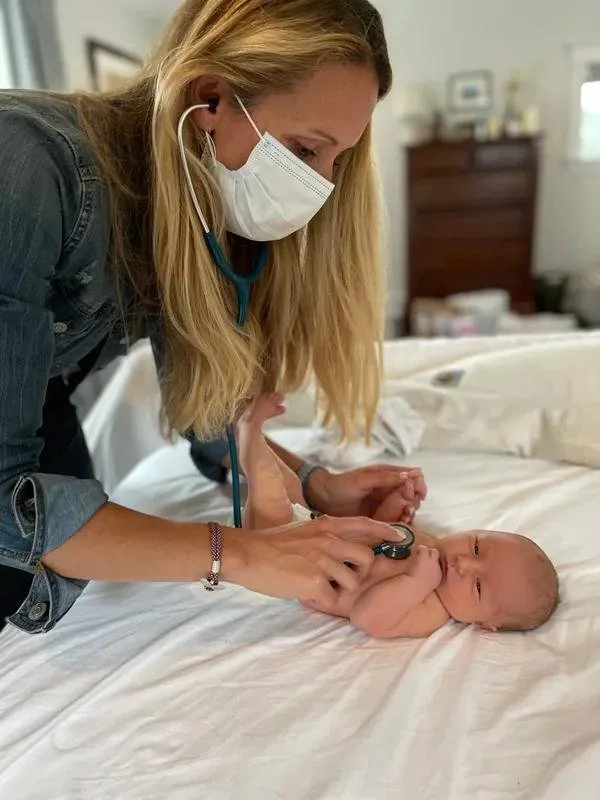
The state of mental health care amid an effort to end ER boarding

In 2023, the N.H, Department of Health and Human Services launched Mission Zero, promising to eliminate emergency department boarding — the practice of holding admitted patients in the ER while they wait for an inpatient bed to become available — by March of this year. Because of those practices, patients requiring care for mental illness often go to hospitals, with their experience resulting in hours, days and even weeks awaiting an inpatient bed. Have New Hampshire hospitals been able to fulfill this tall order of eliminating boarding? To discuss that are Lisa Madden, president and CEO of Riverbend Community Mental Health and vice president of behavioral health for Concord Hospital, and Susan Stearns, executive director of NAMI New Hampshire, the National Alliance on Mental Illness.

This article has been edited for length and clarity.

By Rosemary Ford and Caitlin Agnew

Melanie Plenda:

Lisa, to start us off, could you please tell us who is affected by emergency department boarding?

Lisa Madden:

What we have historically encountered is folks that are in the midst of a psychiatric crisis who come to the emergency department looking for some acute level of help. There haven’t been sufficient resources in the community to serve them, so they've been waiting in the ED for extended periods of time.

This had to do with not having sufficient number of beds to be able to meet the demand, but it also had to do with making sure we had the right community support programs to try to have places where people could go after they received the acute level of care they needed in the hospital and could be supported in the community. These are folks that are really dealing with an acute crisis and need a higher level of care, as would anyone else going to an emergency room for a medical condition that needed that level.

Melanie Plenda:

Susan, one of the reasons people go to NAMI NH is to get support, including support for ED boarding. As someone who has heard personal stories related to boarding, what are people going through in these situations?

Susan Stearns:

There are 26 critical access hospitals across the state, so I will give you a sense, but it isn't specific to any one hospital, and it's going to vary slightly from hospital to hospital.

The really common themes we hear are individuals who are considered to be at some risk to themselves or others, are there involuntarily so they're not able to leave, unlike you or I. They report having their personal belongings for safety removed from them. The very lucky ones have a television in the room where they're waiting, usually behind Plexiglass, but that isn't standard. I've heard from folks who tell stories of how a security guard actually proved to be their lifeline during an extended stay in the emergency department, because that security guard talked to them about movies that they liked in common. So we hear a lot of these real challenging stories. 

Another really common theme is the inability to choose, like when you might take a shower and practice your own basic hygiene — things that most of us don't think about when we think about someone who may be spending an excessive time waiting in an emergency department. These are folks who have really very limited things to pay attention to. We do hear from parents of kiddos who report restraints being used sometimes, and we certainly hear about that from adults as well. So these are experiences no one would want to go through. And I would say that our hospitals would agree — these are not experiences anyone wants to go through or watch your loved one go through, and that's why we’ve had so many folks being willing to try and make New Hampshire a real leader in reducing and eliminating this problem.

Melanie Plenda:

Lisa, as president and CEO of Riverbend Community Mental Health, can you please tell us more about what community mental health centers and certified community behavioral health clinics offer in New Hampshire?

Lisa Madden:

Community mental health centers are designated centers within regions of the state, and the catchment areas are designed by the state. I can speak to Concord, which is Region 4. We have nine other designated areas throughout New Hampshire. We provide the state-supported services for people who are acutely ill, for young people or adults — and that means people who are living with severe and persistent mental illness or severe emotional disturbance.

Our system of care is comprehensive. So not only are we able to do therapy, be it individual, group, family, couples, work, but we are also able to provide extensive case management and community support services, often referred to as functional support services. That's where folks can actually go into the community with the folks we work with and help them achieve the goals they need to be able to stay living in the community.

For young people, it means we're heavily involved in schools. We also have services for adults in which we help them get some employment through our supported employment program, and we have lots of different group activities to try and help people learn how to successfully manage their symptoms and stay in the community. 

We have everything from education and teaching people about mental illness all the way up to residential programming, where we, in fact, are part of the network of support for people who need to live in structured housing, and all the treatment in between. 

Melanie Plenda:

If people don't need as much help as what is offered at a hospital, a community mental health center or a certified community behavioral health clinic, what is available to them, Susan?

Susan Stearns:

Our community mental health centers offer a broad array of services, but if someone's in a crisis, there’s the 988 crisis system and our Rapid Response System. That is a resource that is available for everyone and can provide you with access. So it's a critical resource. 

We have crisis stabilization units in our state. Those are also available for folks who might need to not be alone but haven't reached that point where they really need to be under the supervision that you might see in an emergency department. We also have some places in our state where we have peer respite available that are run by peer support agencies. There are a number of alternatives for folks if they aren't meeting that level of acuity that they absolutely need to be in an emergency department. 

We don't think it should be a one-size-fits-all model. There should be multiple ways to access the care you need. NAMI New Hampshire offers various support groups. Our peer support agencies are wonderful resources in the community. We want to make sure, again, that folks are able to access support they need, but absolutely get that clinical care that our community mental health centers and now certified community behavioral health clinics are truly the experts in providing. 

Melanie Plenda:

Lisa, behavioral health doesn’t receive as much funding as other departments. Why, in your opinion, is that?

Lisa Madden:

I've been doing this for a really long time, and I wish I could answer that question. I mean, my passion is to give people access to health care that takes care of the whole person. My particular area of expertise tends to be within the behavioral health world, but I just think it's part of who you are. Why we don't get the same support, I think, still falls under people not understanding the full scope of the illnesses. There's certainly still some stigma. We're trying to work to educate people to understand medical conditions that require appropriate medical care. But you know, it's taken us a long time to be able to be seen and heard in a way that says this is an important element of whole person health, and we need to fund it appropriately and unfortunately.

Behavioral health is often one of the elements of treatment that's not adequately funded and is cut early in the process of cuts. I will say our state is very committed to our care and is very committed to the treatment of people with mental illness and addictions. Our work with the department has been very, very collaborative to try to find ways to keep people served, but I honestly don't know the answer why people won't fund us appropriately.

Melanie Plenda:

So, Susan, if someone is struggling, what should they do? What should their steps be?

Susan Stearns:

The best life skill is to be able to ask for help. Absolutely, there's not one of us who gets through this life without having been at a point in our lives where we have to ask for help. So I often tell parents, if your child is struggling, helping them reach out and access care is a really good life skill to have. So yes, absolutely, tell someone that you're struggling. Maybe you might pick the wrong person who doesn't know what to do with that, but try not to be shut down by that.

Also, if you have someone that you know, that you're concerned about — maybe it's a co-worker or a neighbor — ask them how they're doing. That communication is so critical. It doesn't mean you have to have a solution. I can tell you, if you're really concerned, anyone can call 988 so you can access assistance, so there's no reason to hesitate to engage in that conversation. 

I would tell anyone who is even thinking about calling 988 to do it. As soon as you question if you're at a place where you should call 988 the answer is yes. You can also chat with them online, and you can text 988, so it's a really critical resource. But remember that you're not alone, that there are folks who are there to help, and that there are many folks who are walking this walk as well, and that treatment is available for most people. 

Lisa Madden:

What Susan said is just so spot on, that nobody is alone, there are multiple avenues for support, and people exist in order to be able to offer guidance to recovery. That is why they’re there.

I’ll reflect a little bit on even my role as a parent. What I used to say to my son, and still say to my adult son anywhere along the line, is that when you feel like you don't have any choices or if there's any reasons to believe that, ask somebody who can help you see your choices. But never feel like you do not have choices, because you do, and you just might not see them that day, and someone else may be able to help you see them. 

Melanie Plenda:

Thank you to Lisa Madden, president and CEO of Riverbend Community Mental Health and vice president of behavioral health for Concord Hospital, and Susan Stearns, executive director of NAMI New Hampshire. If you or someone you know is struggling, help is available 24/7. Call, text, or chat 988, the national suicide and crisis lifeline.

“The State We’re In” is a weekly digital public affairs show produced by NH PBS and The Marlin Fitzwater Center for Communication at Franklin Pierce University. It is shared with partners in the Granite State News Collaborative, of which both organizations are members. For more information, visit collaborativenh.org.

The impact of massive federal Medicaid cuts on New Hampshire hospitals and patients


President Trump’s Big Beautiful Bill — recently enacted by Congress and signed into law — made sweeping changes to Medicaid, the government program that provides health insurance to low-income adults and children. These changes will affect not only the estimated 184,000 people on Medicaid in New Hampshire, but also every resident who accesses health care in the state. What are those changes and what will they mean for you? Here to discuss that is Matthew S. Houde, system vice president of government relations at Dartmouth Health. 

By Rosemary Ford and Caitlin Agnew

This article has been edited for length and clarity.

Judi Currie:

First, let’s talk about what Medicaid is. Who’s on it and why?

Matthew S. Houde:

Medicaid is a health insurance program that is essentially a partnership between the federal government and state governments, and it's administered by the states. It covers approximately 72 million Americans, as you said, about 185,000 in New Hampshire. It does cover categories of people — so children, pregnant women, those with disabilities, as well as people based on income level, pursuant to the Affordable Care Act expansion provision which New Hampshire adopted as well. I'd also say, though, that it serves, or has served, as a vehicle to ensure coverage for most of the vulnerable population. So it's a really important health insurance program.

Judi Currie:

The new law charges premiums for those making more than 100% of the federal poverty line, and families making 225% of the federal poverty line. Those monthly premiums for an individual vary from $60 to $100, and $190 to $270 for families. It also raises prescription drug prices. What do you feel the impact will be?

Michael S. Houde:

I'm going to step back just a little bit. It's a major tax bill that has sweeping implications for health care, right? So I'd put the continuation of those tax cuts, plus increases in defense spending and increases in border security, cost a lot. In order to find the savings to implement the continuation of the tax cuts from the first Trump administration, Congress had to find significant dollars in terms of savings. So the place that they looked at was the Medicaid program. They're actually estimating up to a trillion dollars in savings from the Medicaid program over the next 10 years, which would be roughly a 10% cut. 

In terms of what it does, I'd put the implications into two buckets. It has beneficiary implications. You talked about the premium contribution or co-pay requirements. It also has new eligibility sequencing, so someone would have to prove their eligibility twice a year now, instead of once a year, if you're in the expansion population. It also has work-in-community-engagement requirements. So those are some of the beneficiary implications or changes in terms of financing. 

The financing bucket — I'd say there are pretty significant implications there as well. One is that it limits the amount that states can charge provider taxes in order to generate revenue for the Medicaid program. New Hampshire has a Medicaid enhancement tax to help fund its Medicaid program, and that tax is a 5.4% charge tax on net patient service revenue assessed on all hospitals. The state then takes that money, shows it to the federal government, and the federal government then matches those dollars, which helps further fund the Medicaid program. So there's that front-end limitation that's going to take the provider tax down to 3.5% over time. 

On the back end, it also limits the amount of the federal contribution in a way that I won't get into, other than saying state directed payments are going to be reduced, as well from what's an average commercial rate to an average Medicare rate. So there will be less dollars coming from the federal government to support the state's Medicaid program.

I guess the final piece that I put in that payment bucket would be the limitation on the amount of time that you can look back after someone qualifies for Medicaid. It's 90 days today, and in the future, it'll be either 30 days for some populations and 60 days for other populations. So that you will have potentially been providing care for people who have been sick — they get eligible, qualified for Medicaid, but you can't get reimbursed for the cost of that care. So those are kind of the big buckets that I put it in.

Judi Currie:

Let's focus on that 90-day look-back — that just means that the service that you've rendered is not eligible for reimbursement or they have sort of a lag till they can resume care?

Matthew S. Houde: 

When I refer to that, I refer to the time period from which a provider will receive reimbursement. So you can look back to say, today again — 90 days you've been providing care, or you provided care 90 days ago. Then someone gets eligible for Medicaid, and you get reimbursed. You could submit for reimbursement for that coverage, so that will change to a shorter window of time once someone becomes eligible.

Judi Currie:

You mentioned the expanded Medicaid pool. My understanding is that a lot of the benefit was going to be helping people dealing with substance use disorders. That kind of ties into the two questions of whether you know whether they'll be able to afford the premiums or meet the work requirement. Can you look at that expanded pool? Does it feel like this? This new bill is just going to sort of decimate that or wipe it out?

Matthew S. Houde:

Well, I'm really concerned about the implications for coverage for beneficiaries. We know that Medicaid, including Medicaid expansion, provides really lifesaving care for people — substance use disorder treatment, mental health treatment, primary preventative care, in addition to emergency care. So the implications of individuals — up to a third of New Hampshire’s expansion population that would be affected. According to the Kaiser Family Foundation's estimates on looking at the state's prior attempt to do work requirements, those people wouldn't have access to those coverages. 

Judi Currie:

What does that mean — not just reimbursement for the providers who would be providing that care, but for those people who need that care and would try to seek that care? Do they then delay? Do they then decide that they're not going to seek the care because they know they don't have insurance anymore or they can't afford it? And what are the implications of that? 

Matthew S. Houde:

I think it exacerbates problems, health problems, for people I trust. We're going to talk about this shortly, but there are also significant implications in terms of when people delay care, the condition can become significantly more acute. People still need care, and they will come to the emergency department or be brought to the emergency department to seek care. And what happens is that's probably the worst place to seek care because it's the most expensive and it's also considerably backlogged. There are access issues with respect to that care. So I hope that answers your question. 

Judi Currie:

We also often hear about people not being able to find care because organizations don't want to take on new Medicaid patients, and I think from the perspective of the hospital, they often don't have a choice in that. Are there differences between how the large southern New Hampshire hospital chains or connected affiliates are going to be impacted versus the rural hospitals up north?

Matthew S. Houde: 

I think there are significant concerns for rural providers. For Dartmouth Health, the proportion of patients that we serve that are Medicaid beneficiaries, is roughly 15% of the patients that we serve — that's a combination of New Hampshire and Vermont. Obviously, the medical center is located on the border of New Hampshire and Vermont, but I think about some of the further geographically located member hospitals and health care providers. Do they have a mix? What's their mix of patient population? 

I talked about the stressors with respect to access. I'll just elaborate a little bit on that. Today, hospitals are roughly at 90% capacity. Dartmouth Health, or Dartmouth Hitchcock Medical Center here in Lebanon — we’re over capacity. What does that mean? It means that we have patients who are waiting in hospital beds. They no longer need the acute care that we provide, but there's not an available post-discharge facility, long-term care unit that either has the capacity to take them, or if they're not Medicaid-eligible upon discharge, the willingness to take them take them because they can't survive based upon no reimbursement. So those people who no longer need to be in our beds really are taking up a considerable number of beds so when that accident happens on I-91 or I-89, do we have the ability to take that patient or do we have to send to a much further place — Albany, Austin, wherever?

So yes, I have genuine concern for what's going to happen in rural facilities. I think about the contraction of service lines. We know that there are maternity care deserts in the northern parts of New Hampshire and certainly parts of the northern New England region. That's only going to be exacerbated by the implications and the rollout of the bill, in my opinion.

Judi Currie:

There’s another part of this — the Rural Health Transformation Program. Can you tell us how that will affect New Hampshire?

Matthew S. Houde: 

As part of the act, there was $50 billion allocated to help anticipate the challenges to the rural health care system. They wanted the Congress to allocate some dollars to alleviate those concerns. Let's compare, however, $1 trillion over 10 years to $50 billion over five — just doing the math, the numbers available for those dollars aren't going to cover the holes that are created.

I'll use the New Hampshire example. The way that I understand that that provision works is 50% of those dollars go to the states equally. So say New Hampshire gets, per year, 1/50 of $5 billion because the second component of the relief is determined at the discretion of the administrator of CMS with a rural lens. So it's not a full $10 billion per year. It's $5 billion per year divided by 50. It's like $100 million per year. If the spend for New Hampshire Medicaid is over 10 years — call it $30 billion, so $3 billion a year. The two don't meet — the size of the bucket of the rural relief program just won't be able to plug the holes that are created by the shortfall that the underlying act creates. Do I think it will sustain some of the rural programs that we just talked about being in jeopardy? I hope so. Do I think it will do so completely? I'm skeptical.

Judi Currie:

What can you tell us about how you're preparing to have to take on this additional role or responsibility?

Matthew S. Houde:

You had suggested this earlier about hospitals not having a choice in terms of their federal laws that require, for example, when people show up in emergency departments — that you provide care regardless of care regardless of coverage. But we also are a nonprofit health care system whose mission is to provide, among other things, health care to people. We're not going to stop providing that health care, and we're going to help our communities and our region figure out how to navigate that space. It's going to be challenging, and more challenging to do so with fewer resources. 

When I think about this, I think of New Hampshire Medicaid. The state didn't reduce Medicaid reimbursement by 3% right? That proposal in the state House was rejected by the Senate and was accepted at the end of the day as flat rates — but it's flat rates. So it's not like costs aren’t increasing. Reimbursement is flat on the state level, and it's going to be shrinking and reducing on the federal level. So that just creates huge tensions and challenges to continue to meet the needs of the communities that we serve, including serving as a resource for the northern part of the state, and we have clinics in the southern part of the state, so to maintain the services that we do will be challenging. You're not going to expand them to meet rising access, because you're just not going to have that ability.

I think about programs that our obstetrics unit has implemented, for example, with federal grant support to equip EMT providers to know what what they need to know in order to deliver babies in the North Country, if they show up in an emergency department. It's going to be more and more important for us to work with the state and any of the federal resources that we might get through this rural fund as part of the bill to make sure that we just continue to provide resources for people, so that if people have to travel, at least they're stable locally before they travel. Can keep care local by using telehealth to connect with providers in the North Country and elsewhere? All of those are going to be really important things for us to consider as we pivot to addressing the new reality under the Medicaid program that this bill has instituted.

Judi Currie:

Matthew S. Houde, system vice president of government relations at Dartmouth Health — thank you for joining us.

As deadline gets ever closer, lawmakers try to agree on a new state budget

-By Rosemary Ford and Caitlin Agnew

This article has been edited for length and clarity.

Every two years, lawmakers approve a state budget. These laws do more than decide where your money goes. They also set policy ideas and objectives. What is in this year’s budget bills? Judi Currie discusses that with Phil Sletten, research director for the N.H. Fiscal Policy Institute, a nonpartisan, independent research nonprofit that looks into the financial well-being of the state and its residents, and Anna Brown, executive director of Citizens Count, a nonprofit and nonpartisan organization dedicated to educating voters about the political process. Brown is also executive director of the Warren B. Rudman Center for Justice, Leadership, and Public Service at the University of New Hampshire’s Franklin Pierce School of Law.

Judi Currie:

Anna, can you talk about the recent history of state budgets? What sorts of things have been in them and what have they accomplished? 

Anna Brown:

The first thing to keep in mind is that New Hampshire is pretty different from the federal government in that we have to pass a balanced budget, so we have to keep our spending limited. In the past few budget cycles, there was a lot of federal money coming in, and business tax revenue was coming in strong. So we saw a lot of state spending and also some tax cuts, some business tax cuts. They also repealed the interest and dividends tax in New Hampshire, we're losing out on a lot of that federal funding that has been drawn down, clawed back, cut, and we're seeing some slowing on some of that business tax revenue. So that's a challenge that is different from previous years.

It's also worth noting, though, that a lot of what happens in the budget happens in a trailer bill, House Bill 2. There's policy changes in there that can be pretty significant. So, for example, we've seen a restriction on abortion after 24 weeks. We've seen a ban on e-cigarettes for people under a certain age, and so on. So that policy part of the bill has become more important in recent years. Ten years ago, it was maybe around 30,000 words, and this year we're looking at close to 100,000 words.

Judi Currie:

Phil, where are we at in the process with the current budget?

Phil Sletten:

We’re  in the last planned stage in the state budget process. That process actually formally began last year. New Hampshire, as you noted, Judi, has a two-year state budget. The majority of states actually have single-year state budgets, but New Hampshire is one of about 20 states that has a different timeline. 

The state agencies actually put together their budget requests last summer. This process has been going on for about half of the duration of the current state budget, which is in effect from July 1, 2023, through June 30 of 2025 — so the end of this month is when the current state budget expires. The governor looked at those state agency requests and then put together her version of the state budget that she introduced back in February. The House considered the governor's version, made the changes that it wanted to see and then passed its version in early April. 

The Senate was the next part of the process. The Senate looked at the House budget, made the changes that it wanted to see, and passed a different version, its own version, earlier this month. Now the House and the Senate have these two different versions of the state budget, and they have to reach agreement on them, because there can't be two state budgets that pass. There can only be one version. So the House didn't agree to the Senate's changes, and as a result they asked for a committee of conference. What that is a group of seven legislators, four from the House and three from the Senate, and they negotiate a final version of the state budget — or at least in the usual process what is a final version of the state budget. And that version is being negotiated right now in the committee of conference, and is going to go then for a vote ahead of both for both chambers. 

Both the House and the Senate have to agree on that one version and pass it, because it is a state law like other state laws. Then the governor would have to approve it before it became state law. Now we're towards the end of the process, because we're running out of time on the clock. The current state budget is only in effect through the rest of this month, so we are in the final stages of what you might consider the regular state budget process.

Judi Currie:

Anna, what have budget talks been like? Republicans hold the governor’s office, as well as majorities in the House and Senate. Did the Democrats get any proposals in? 

Anna Brown:

As you mentioned, there is party unity, technically, but there were divisions between Republicans in the House and Republicans in the Senate, as Phil noted.

For example, the House was interested in adding some policy changes — ending annual car inspections, limiting vaccine requirements, and so on. So it's not this perfectly unified vision under Republicans of what it should look like in the budget going forward. That being said, there are priorities in the budget that Democrats do support. I know that, for example, the Senate version of the budget restored Medicaid reimbursement rates, and that looks to be something that there's agreement on going forward. 

In New Hampshire, the budget is such a big piece of legislation — there usually are wins and losses for everyone. But the question is going to be: Can Republicans all get on the same page right at the end? It's interesting to note, Governor Ayotte has actually criticized some in the Legislature for their low revenue estimates and saying that that's not enough to cover what we need to pay for in state government and that it’s basically playing into the Democrats' hands by setting us up for tax increases in the future. So that was kind of an argument that I didn't expect to hear come forward, and it can show that it's not always party lines where things break down.

Judi Currie:

Where do things stand with reconciling those differences in the committee of conference?

Anna Brown:

As I said, the House has moved up on their revenue estimates. They're willing to meet the Senate — not quite at the fully high level that the governor was proposing, or even the Senate was proposing — but still much higher than they were.

A lot of tension, though, is over this Group 2 retirement benefits for police and fire. There's tension among the Senate, and I think that we will also see potentially in the House — is there enough money in the budget to do this? Is it the time to do it? Of course, if we can't come to an agreement on the budget in our state legislature, that's a real problem, because the fiscal year is ending, so then we'd have to be looking at some sort of continuing resolution or temporary holdover, which is pretty rare in New Hampshire.

Judi Currie:

What kind of impact will these proposals have on the state? 

Anna Brown:

One thing that I think we should talk a little bit about here, because it's been in the House version, the governor's version, the Senate version in some form, is expanded gambling and legalizing slot machines for New Hampshire. That is going to be a good source of revenue for the state going forward, and also a large cut of that revenue goes to nonprofits as part of the existing charitable gaming system.

But it's interesting to reflect. I remember less than a decade ago, there was huge resistance to expanded gambling in New Hampshire, and now we've sort of arrived there, and it doesn't even seem to be a central part of the debate. So people might be noticing, is that slot machine a real difference in New Hampshire's landscape or not? I don't know. So that's just something I think is worth highlighting.

On the immediate level, I think people might also notice tax and fee changes. You might notice a higher fee when you're registering a vehicle, but a lot of these changes are more long term when you're looking at changes to Medicaid or what's going on with university system funding, that has long term changes in terms of how our economy is moving, how much debt people are carrying, and so it wouldn't be an immediate impact.

Phil Sletten:

One of the places where there hasn't been a resolution yet in the committee of conference is around developmental services funding. That's a place where the Department of Health and Human Services identified — if developmental services were to be funded in the House version of the state budget — 278 people who are expected to need services over the next two years of the biennium who would then be on a waitlist for those services because there wouldn't be funding available. Now, the proposed versions of the state budget do allow, if there's revenue available, DHHS to seek additional funding during the biennium. However, we haven't seen a significant waitlist for developmental services in the state for most of the last decade because those services have been funded at levels needed to fund those budgets. That's not to say there aren't people waiting for those services, but those tend to be workforce challenges, as opposed to the nominal state funding challenge.

The university system component is, I think, important as well, because most of the funding that goes from the state budget to the university system is used to offset tuition for in-state students. So if that were to be reduced, that could have an impact on what tuition for in-state students does look like. 

There's a couple other areas of the budget that are specific to particular services, particularly those that the House is proposing cutting and the Senate is proposing folding back in some way that may be difficult to either duplicate or replicate in other parts of the economy. I’m thinking about things like the Office of the Child Advocate, which provides oversight over the Division of Children, Youth and Families, and the Human Rights Commission. These are organizations that the state funds that could have those operations shifted to other services within the array of services that the state provides or to other entities in the state that aren't funded by the state or aren't as directly funded by the state, but those could have particular impacts on specific populations that are served.

Judi Currie:

What else are you two following at the State House in the next few weeks? Let’s start with Anna, then to Phil. 

Anna Brown:

There's absolutely a lot of final bill negotiations happening in other conference committees, and those bills — whether they reach agreement or not in the Conference Committee —still would need to go before the full House and Senate again to agree with the committee recommendation.

A couple of issues that I'm watching allow evictions at the end of a lease. Right now, you have to have some sort of cause — you can't just say, “Hey, it's been nice knowing you. Goodbye.” That's been a major priority of Rep. Bob Lynn, the former chief justice of the New Hampshire Supreme Court. It's been a long brewing debate.

 And other bills — for example, outlawing puberty blockers or hormone treatments for minors. That's been another sticking point in how it might be implemented between the House and the Senate. 

Phil Sletten:

I'll be watching to see if the legislative chambers do also pass a House joint resolution that's a clear sign that they think that the budget may not be resolved by July 1, and to see in these last stages of committee of conference which separate policy bills as well as funding proposals are included or not included within the state budget, and how that might affect the committees of conference for other bills that are being wrapped up, in terms of developing their final proposals

But I’m really watching what happens in the budget and what the full Legislature considers, or what considerations the full Legislature has with regard to the committee of conference version of the state budget. Because, remember, it's a small group of legislators who are on a committee of conference, and then they have to convince their fellow legislators in both the House and the Senate that the committee of conference budget is something that they could support. That's a key variable, I think, going forward, but it'll all be wrapped up, or at least we'll know a little bit more by July 1.

Judi Currie: 

Interesting as always. Phil Sletten, research director for the N.H Fiscal Policy Institute, and Anna Brown, executive director of both Citizens Count and the Warren B. Rudman Center for Justice, Leadership, and Public Service at the University of New Hampshire’s Franklin Pierce School of Law, thank you both for joining us today. 

“The State We’re In” is a weekly digital public affairs show produced by NH PBS and The Marlin Fitzwater Center for Communication at Franklin Pierce University. It is shared with partners in the Granite State News Collaborative, of which both organizations are members. For more information, visit collaborativenh.org.