By Rosemary Ford and Caitlin Agnew
This article has been edited for length and clarity.
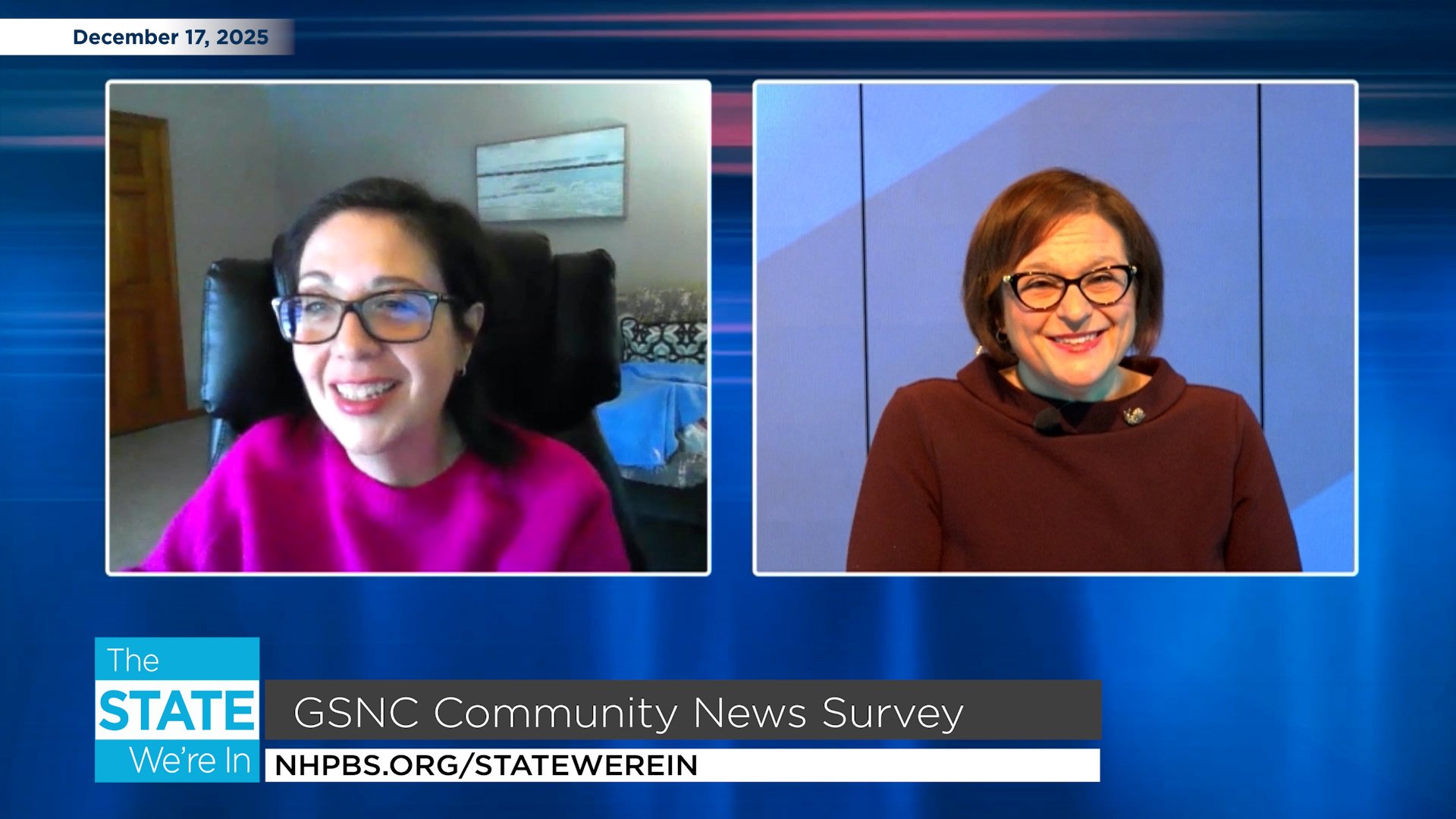
The Granite State News Collaborative, a network of local news organizations, is conducting a Community News Survey to take the pulse of news consumers in New Hampshire. Melanie Plenda, host “The State We’re In” — who’s also executive director of the collaborative is here to tell us what the survey is, why it’s being done and why you might want to participate.
Rosemary Ford:
Melanie, what is the Community News Survey, and why is the collaborative doing it?
Melanie Plenda:
It is exactly what it sounds like. It is a very short — we promise — series of questions just trying to get at the heart of what people want from their news. What are they missing? What do they care about? We want to know what you're concerned about and how you get your news.
The whole reason for doing this is not only to shape the coverage across the state from all of our local news partners, all of whom will have access to the survey results. It’s not only to make sure that we're covering the things that people actually care about and we're answering questions that people actually have, but we also want to assess, “Are we delivering news in a way that people are consuming it?” Because it’s great that we have amazing coverage and amazing reporters and they're doing all this great work, but if we're not delivering it in a way that people are wanting to receive it, then that's a real problem. So it's really going to help us to better understand how people are interacting with news, — whether they're even consuming local news, and if not, why not? And how we might bring them back to local news.
Rosemary Ford:
What sorts of questions does the survey have?
Melanie Plenda:
We tried to keep it very straightforward and also a little open-ended because we wanted to let people really kind of not just be relegated to some multiple-choice questions.
We do ask, “What kind of news do you consume?” Where do you get your news? If you do consume local news, what outlets are you reading, listening, or watching? What concerns you? What questions do you have about those sorts of things?” We do understand there's lots of surveys out there, and people have a lot of demands on their time, so we wanted to be mindful of that. So we wanted to keep it short and sweet, but really still be able to get to the heart of what would help us better serve our communities?
Rosemary Ford:
How will this survey help the Collaborative better serve the community? What will the answers help you do?
Melanie Plenda:
All of our 20-plus partners will have access to the survey results. So from there, individual outlets can assess where their coverage is relative to what people say they want. They may be able to see that a lot of people are actually getting their news on social media. So how can they do a better job of disseminating that information out on social media?
From the Collaborative perspective, I can help gather up that information, disseminate it out to the partners. And then once they've had a chance to assess what their needs are, what resources do they need in order to be able to get the news out in a way that will satisfy community members? If it turns out they do need some additional resources, or if they need a larger project then that's where I come in, and GSNC as an organization, can try to fill in those gaps or try to coordinate projects that will better help the partners do the work that they are best at.
Rosemary Ford:
Can you tell us about some of the challenges the Granite State’s news organizations are facing in these times?
Melanie Plenda:
This is nothing new that local newsrooms — not only across the state, but across the country — have really taken a hit in the last couple of decades. And by that, I mean they've lost reporting staff. Let's say, they have 20-plus communities in their coverage area, and only two or three reporters — sometimes only one — there to cover it. What happens then? A lot of that watchdog piece that we are supposed to be there for, a lot of community connection pieces, aren't able to happen and that's a real shame.
It takes a toll on communities when local newsrooms go away altogether. Then really people are only left with national news, or the sort of doomscrolling that we all do on social media, and that can lead to people being more polarized, that can lead to local decisions being made that really impact everyone's daily lives without local people having a say on that.
Now that said, I will say, and I will brag about our local news partners a bit. While everyone has struggled with maintaining a staff that can do the job they need to do, I'm really and just humbled every day by how dedicated our local reporters, editors and publishers are here in New Hampshire. They don't use it as an excuse that they don't have as full of staff as they would like to have. They just keep going, and they keep serving their community as best they can.
Rosemary Ford:
According to the Pew Research Center, 70% of U.S. adults have trust in local news while only 56% have trust in national news. Why do you think there is such a significant difference between the two? How is that playing into what local news organizations are doing?
Melanie Plenda:
The only way I really know how to answer that question is by looking at how local news reporters conduct their business.
Local news reporters live in the communities or near the communities that they cover, which means they are not just taking in information about their community or learning about their community in the eight or 10 hours that they're on the job. They're living there. They're going to restaurants. They're going to local businesses. They send their kids to the local schools. They are part of the community there. They have a vested interest in the community, and I think that absolutely makes a difference in coverage. I think that means that maybe you have a vested interest in providing just straight-up information to your neighbors so that people can make decisions.
I have a lot of respect for a lot of the national news outlets, and they do present information. But I also think that a lot of times, the coverage is more about horse races and it's more about conflict and less about actual policy and information about those things that people need to make their decisions.
I do think that there's a difference in the way people feel when they read local news. I think most people pick up on that. I think they know that if they have a problem with something that's written in the local newspaper or their local online news outlet, they can call that person up and have a conversation with them and talk it out. There is the connection with local news that you don't get from other news resources.
Rosemary Ford:
According to the Pew Research Center, 38% of adults regularly get their news from Facebook, and 55% of TikTok users get news updates there. What’s the impact of this on local news?
Melanie Plenda:
People get a lot of their news on social media. I don't see that, in and of itself, as a bad thing. I do think that we should give people more credit than we do. I think many of them can tell the difference between very obvious disinformation, and that’s not what I worry about. There are sources that present themselves as legitimate or who play just a little bit fast and loose with facts,and people not being able to discern the difference — or worse, and probably more likely, don't have time to go do their own research to suss out whether that is true or not.
In my perfect world. I think that local news — and maybe this is kind of what I'm hoping we might learn from our survey — is that if this is where people are getting their news, then I kind of feel like we need to flood the zone with accurate local news. If more of us were finding ways to innovate and bring local news to where people are getting their news — whatever the platform, I think we'd be doing the community a great service. Then kind of screaming it from the rooftops that we’re there. That's what I would like to see. A lot of outlets are doing that, they just need to do it more and get more creative.
Rosemary Ford:
Could you tell us more about that? How are local outlets adapting to that kind of social media environment?
Melanie Plenda:
I have noticed a lot more outlets embracing things like the idea of starting a podcast, or they're doing vertical videos for online or they're giving quick hits from meetings — just like a quick result, saying the story will be out later. So really interacting one-on-one through social media with their audiences. I've seen that over the past few years for sure, and I think that that's only going to increase.
People are picking up on these sorts of innovations and new technologies and new media, and bringing those into their newsrooms and integrating them more into their day-to-day. And I think that's only a good thing.
Rosemary Ford:
So beyond the community news survey, how else can New Hampshire residents support local news organizations?
Melanie Plenda:
I would say, first and foremost, if everyone who is scrolling their social media shared one local news story a day, just imagine how many more people would be able to get connected to their local news. I think that is one of the best things you can do — not only to support local news, but to support your communities. You can be confident that those stories are written by people who live here, who care about your community and are trying to do right by it. I feel like that is one of the best ways to support local news and to help your community.
You can also get a subscription to your local news outlet. You can give gift subscriptions during the holidays, for a birthday, why not? You can also donate to news funds that accept donations. You can also just reach out to your local news organization and see if there's opportunities to contribute, either as a writer or a volunteer, or if you have a special skill that you might want to share — all of those things help keep local news strong and keep our community strong right along with it.
Rosemary Ford:
Thank you Melanie.To take the Community News Survey, you can visit collaborativenh.org/communitysurvey.
“The State We’re In” is a weekly digital public affairs show produced by NH PBS and The Marlin Fitzwater Center for Communication at Franklin Pierce University. It is shared with partners in the Granite State News Collaborative, of which both organizations are members. For more information, visitcollaborativenh.org.