By Rosemary Ford and Caitlin Agnew
This article has been edited for length and clarity.
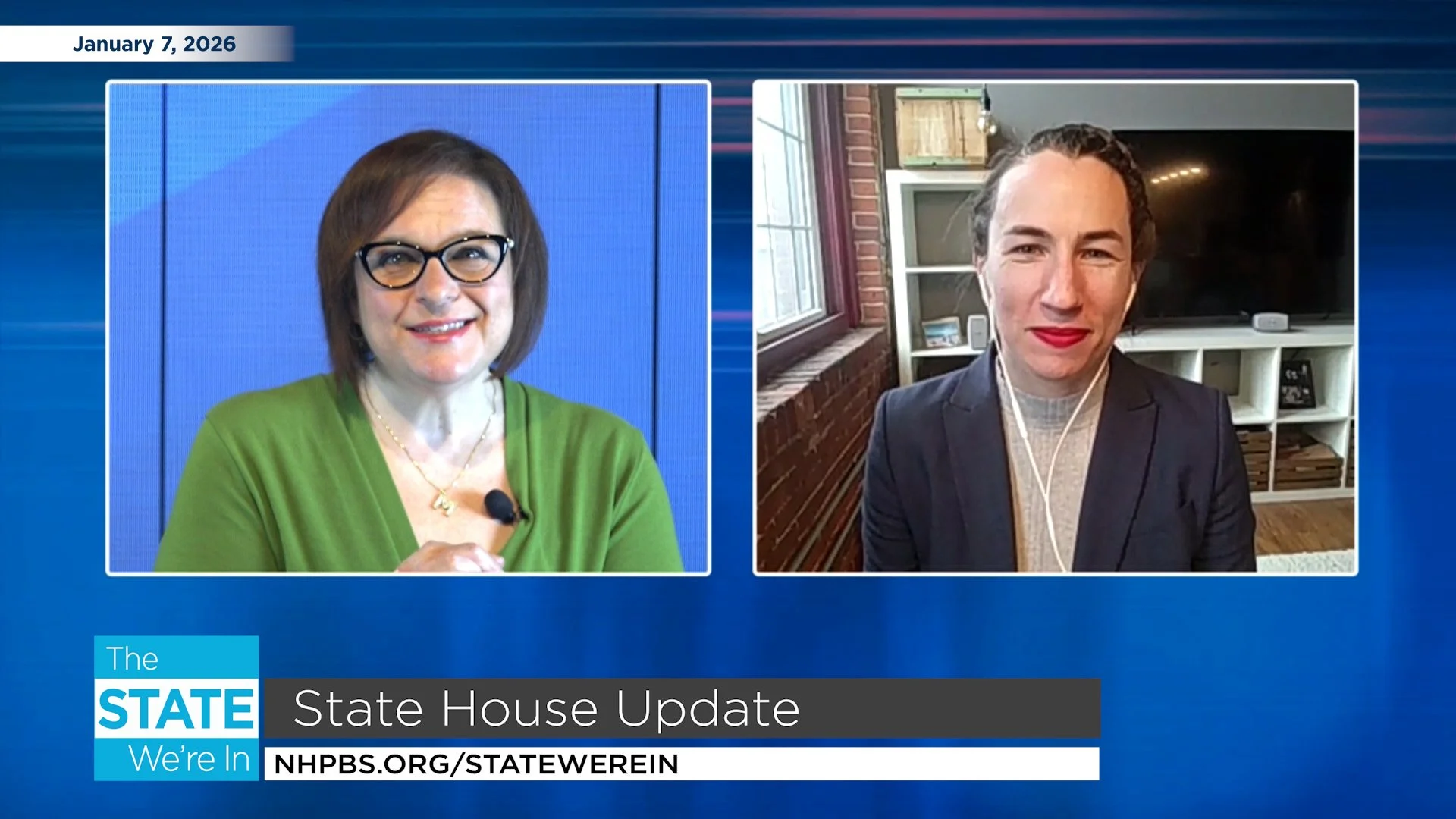
Our state Legislature has been hard at work. New laws passed in 2025 have just gone into effect, and the 2026 legislative session has just started. Here to explain what’s going on is Anna Brown, executive director of Citizens Count, a nonprofit and nonpartisan organization dedicated to educating voters about the political process. Brown is also executive director of the Warren B. Rudman Center for Justice, Leadership and Public Service at the University of New Hampshire’s Franklin Pierce School of Law.
Melanie Plenda:
Can you give us a brief overview of some of the new laws that went into effect on Jan. 1?
Anna Brown:
The biggest headline was an end to mandatory car inspections, and there has been some litigation around that, but that was a big change that a lot of people were probably watching. We also have a new ban on certain gender-related care and treatment for minors and a ban on sanctuary cities, which are towns and cities in New Hampshire that would otherwise not cooperate with ICE and immigration enforcement from the federal level.
Melanie Plenda:
Let’s dig a little deeper. Tell us more about what the gender-affirming care law for minors entails. How will that affect people?
Anna Brown:
This is looking at surgeries, hormone therapy, such as puberty blockers, and other interventions that minors would get related to a gender transition. Any minors that were getting procedures prior to Jan. 1 will be able to continue them — that was an amendment to the bill that got some more support on board — but going forward, there won't be the opportunity to do that in New Hampshire for those under 18.
Melanie Plenda:
What about sanctuary cities? How will this ban affect the state and its residents?
Anna Brown:
The definition of sanctuary city is a little subjective, but basically, a sanctuary city would have a policy in place that they're not going to cooperate with ICE detainers, that's Immigration and Customs Enforcement. When local law enforcement cooperates with ICE detainers and a person is arrested, they would hold that person up to 48 hours for ICE to come and move forward with immigration enforcement proceedings.
In New Hampshire, this wasn’t a widespread issue. There has been one town, Hanover, that had a policy against cooperating with ICE. They were at risk of losing state funding if they didn't change that policy. So they have changed their policy coming into the new year. New Hampshire’s big cities, not to mention all of the small towns, this wasn't really something that was happening, so there shouldn't be big differences in terms of what law enforcement is doing.
Melanie Plenda:
Another law has to do with ambulance costs. Can you tell us more about that?
Anna Brown:
Yes, this is a ban on balance billing. What that means is if you're calling an ambulance to the hospital — it’s an emergency, you're not going to ask them the network they're in or the rates. But when the ambulance submits to your insurance, there might be a disagreement. The ambulance might want you to be paying more than what your insurance is willing to cover, so the individual would get a bill for the balance — that’s why we say balance billing. It was also sometimes called surprise billing because if you're taking the ambulance ride and you have insurance, you're not expecting to get a big bill after the fact. So this law blocks that and sets rates for ambulances providers in terms of what they are allowed to charge insurers.
Melanie Plenda:
What about the law involving AI chatbots and minors? What’s behind that?
Anna Brown:
This is an interesting one, as AI is just constantly evolving, and it's a really strange legal landscape in terms of determining who is responsible when bad things happen.
This bill is looking at what happens when an AI chat bot or similar tool encourages suicide, makes sexual suggestions or encourages other harmful behavior. This law adds civil penalties, such as a fine, though the law that's going into effect says specifically that the owner or operator must know that they are intending to facilitate, engage or encourage this harmful behavior.
Realistically, most of these AI technology developers are not sitting there with the intention to encourage harmful behavior among children. So I am not convinced that this law is going to have a really big impact at the moment, but there was hesitation among legislators to go farther than that, because it is such a rapidly changing landscape. Again, it's hard to assign blame and responsibility when it's so complex that people aren't even sure where some of this information is coming from.
Melanie Plenda:
Parents now have a right to see their children’s library records. How did that come about?
Anna Brown:
This is related to a lot of general concern around certain books about sex and gender, in particular, that minors have access to.
Previously, if a minor had their own library card with their name on it, the parent did not automatically get access to see what that child was checking out. There was an argument that this is a concern. The counterargument was, “OK, then a parent doesn't have to allow their child to have their own library card.” But after a few years of debate, legislators ultimately decided that we want all parents and legal guardians to be able to go to a library and say, “I would like to see the books that my children have checked out.” There are still some questions in terms of what libraries are going to be able to do to verify if someone is definitely a child's parent and if they should be having access to that child. Because, of course, we do have some scary and unfortunate situations in this world when a parent is not a safe person for a child.
Melanie Plenda:
There’s also a new law about returning confiscated firearms. Can you tell us more about that?
Anna Brown:
This law basically is shifting the default in courts towards immediately returning a person's firearm after a protective order expires. I do expect there to be ongoing debates around this. In the upcoming legislative session, there are some bills that are looking to change what's going on with the return of firearms after protective orders.
Melanie Plenda:
Let’s look ahead, what about some of the things coming up in the Legislature this year. What about housing?
Anna Brown:
For every zoning change that was passed at the state level last year, I am pretty much seeing a bill in 2026 to roll it back or hem it back in.
For example, there was a law that allows multifamily residential development in commercial zones — they’re looking to repeal that this session. There was also an expanded right to accessory dwelling unit development, which puts accessory dwelling units, or ADUs, completely back under local control. Given what I've seen in the past, it seems unlikely that the Legislature will immediately repeal a law that they just passed the previous year.
There are a couple bills that are looking to add extra taxes on second homes. I feel like new taxes don't have a lot of success in the Republican-led Legislature, but it's a novel idea. There's bills that are looking to transfer surplus state-owned property that would be suitable for housing to developers for very low amounts. Then there are ideas about special assessment districts or tax increment financing for housing development, which, to keep it really simple, would be basically allowing special taxes or fees in certain areas that would go specifically to that infrastructure development and other supports that can really encourage housing.
Melanie Plenda:
How about school funding? Any chance the state will start helping towns fund their educational needs?
Anna Brown:
There are many proposals this year that are looking to change how the state law defines an adequate education and many bills that are looking to change the funding formula, particularly related to special education, because those costs have been going up a lot, and there's a limit on how much the state currently reimburses at the local level. But there's also an interesting sort of side debate that's happening about if schools can take out loans from the state.
I don't think there's going to be major changes to the school-funding formula this year. I think the Legislature is likely to start talking about it. Since this has been an intractable issue for decades, I don't see any quick changes. In fact, some legislators have explicitly said they think the Supreme Court overstepped its bounds and they shouldn't make any changes in the Legislature. I am expecting to see maybe some changes around how budgeting happens for school districts at the local level.
Melanie Plenda:
What about the death penalty in New Hampshire? Do you think that will come up in 2026?
Anna Brown:
There are a few bills that are looking to reinstate the death penalty for capital murder. There's also interest in doing that for child sexual abuse.
This is really related to the fact that Gov. Kelly Ayotte was attorney general when Michael Addison's case came up — he is the only inmate we currently have on death row. New Hampshire does not have a death chamber. It does not have the capability to implement the death penalty. We repealed it about a decade ago. If it was reinstated, Governor Ayotte has said she's open to that. So this is really going to be a question of the legislature.
I think we can all agree, whether you're for or against the death penalty, that this is an issue that really touches everyone. There are very strong ethical, legal and financial questions about this. I will say last time we repealed the death penalty, it was a squeaker vote. It barely went through. A lot of legislators changed their mind throughout the process of how they were voting. So I would also encourage people, if you have an opinion on this, to be engaging with your legislators.
Melanie Plenda:
What else do you expect to come up in the next few months?
Anna Brown:
We’ve touched on school funding — that's really huge, along with gender and housing. I’d say those are probably the top issues that I'm going to be watching, along with child care. As for some other issues, a lot of legislation is looking at whether a site evaluation committee for landfills is needed.
Then there are two constitutional amendments that I think are intriguing, because the whole thing with a constitutional amendment is it doesn't go to the governor, it has to pass the Legislature with a supermajority, and then it goes to voters at the polls in November. The first one is a constitutional amendment that would legalize marijuana. This is an issue we've seen again and again. The governor has put a block on this. The House frequently has passed some version of marijuana legalization. I'm not sure if the Senate would be on board.
The other constitutional amendment that I think is interesting would be protecting the right of same-sex marriage, interracial marriage, and so on. This relates to recent U.S. Supreme Court rulings, and there's concern that same-sex marriage is is not just a given. We need to aggressively protect this in New Hampshire, not just in state law, but the constitution itself. I think this is interesting, because at one point, not too long ago in our history, same-sex marriage was a very controversial issue. Now we've seen generally widespread acceptance of that among the public. But does that rise to the level where people are going to agree this needs to be in the state constitution? I'm not sure. But the fun thing about constitutional amendments is, as I said, voters will potentially have a chance to weigh in on the issue in November, so I'll be watching those debates closely.
Melanie Plenda:
Interesting as always. Thank you for joining us.
“The State We’re In” is a weekly digital public affairs show produced by NH PBS and The Marlin Fitzwater Center for Communication at Franklin Pierce University. It is shared with partners in the Granite State News Collaborative, of which both organizations are members. For more information, visit collaborativenh.org.