By Rosemary Ford and Caitlin Agnew
This article has been edited for length and clarity.
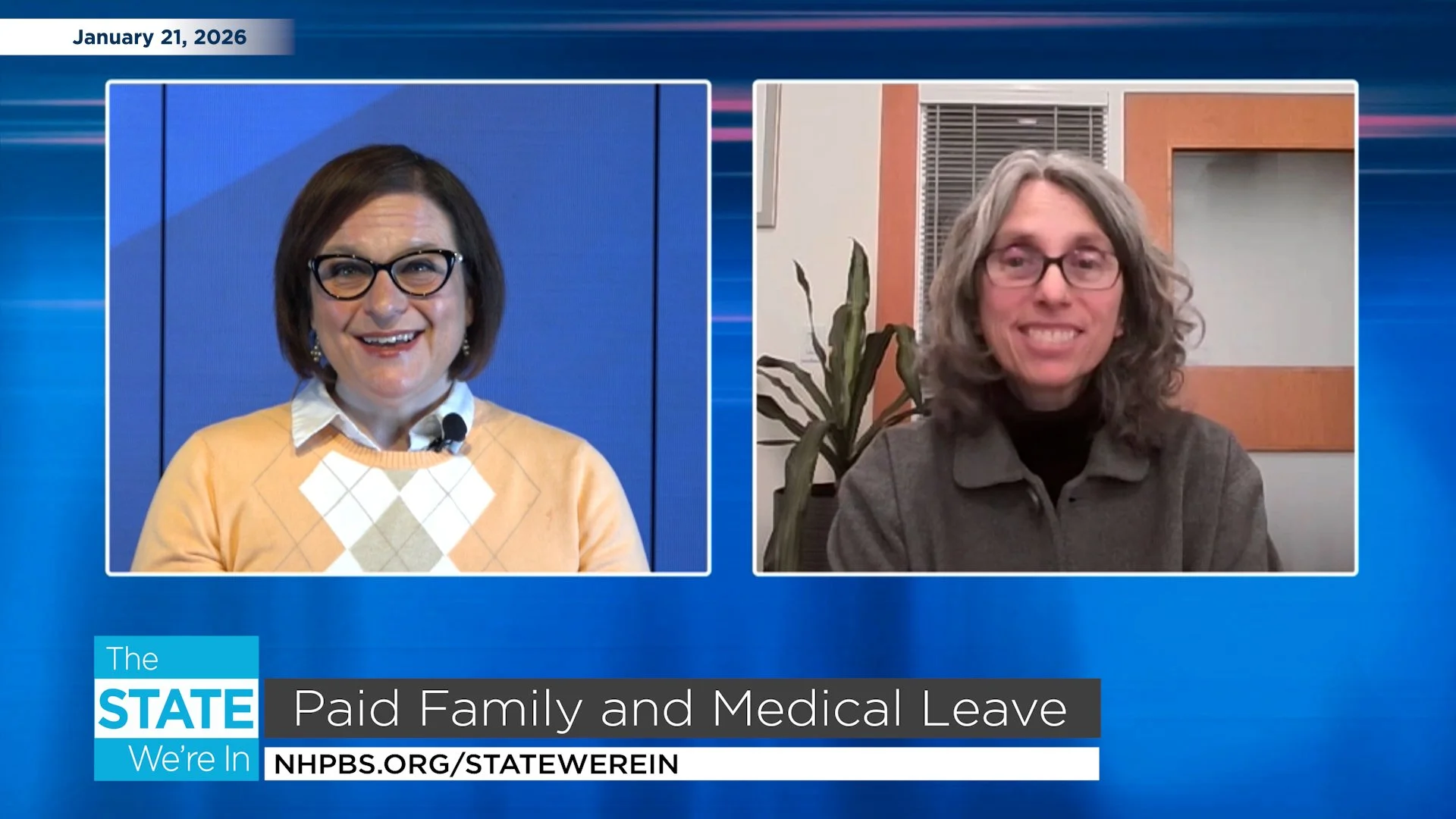
If you are one of the lucky few with paid family or medical leave insurance in New Hampshire, you likely know how valuable it is. But despite the state’s efforts, few workers have this benefit available. Why do so few people in New Hampshire have it, and what does that mean for the state’s efforts? Joining us to discuss that is Dr. Kristin Smith, an associate professor of sociology and director of the Policy Research Shop at the Rockefeller Center at Dartmouth College. She is also a senior fellow at the Carsey School of Public Policy at the University of New Hampshire.
Melanie Plenda:
What inspired you to research this topic, and why is it important?
Kristin Smith:
I have been researching working family policy for 25 years. One of the things that's really important is how families can manage their work and family responsibilities — what policies are available to help families? And paid family and medical leave is one of those policies.
Melanie Plenda:
Tell us about your recent policy brief and what it covers. Where can people find it?
Kristin Smith:
My recent policy brief is at the Carsey School of Public Policy. It was published through the Carsey School of Public Policy in one of their series on New Hampshire.
This brief came about because, in 2021, there was a paid family and medical leave program that was passed in the state budget bill, and there was coverage to be offered, beginning in January 2023. Since I had been studying paid family and medical leave since 2016, I decided to collect some data in 2022 just prior to the launching of this program, and then again in 2023 and 2024. This was so that I would be able to track the impact of this program on the workers' access to paid family and medical leave in our state.
What this brief is covering is a look over time from 2016 to 2024 at how access to paid family and medical leave has changed, and whether there's been a change during the time since the enactment of this policy.
Melanie Plenda:
What were your findings, in a broad sense?
Kristin Smith:
One of the major findings is that, in New Hampshire, workers lack paid family and medical leave overall. They did in 2016, and this program has had very little impact in changing the access overall for the whole state.
About 3% of workers in our state have access to paid family and medical leave through the voluntary, opt-in paid family and medical leave program. That doesn't mean that only 3% of workers in our state have access to paid family and medical leave, because employers are also offering their workers paid family and medical leave. The issue is that not all employers are offering it.
The state wanted to offer a chance for workers to opt in to a program if their employers were not offering it, and also offer employers a way to get paid family and medical leave through the insurance company that the state has contracted with, MetLife.
There are three plans within this voluntary paid family and medical leave program. The first is that state employees were automatically offered paid family and medical leave through this program. So roughly 9,000 state workers now have access to paid family and medical leave through this program. Then private employers can opt in to the program. If you're a worker and your employer doesn't offer paid family and medical leave, you can buy into the program and pay that insurance premium yourself.
Melanie Plenda:
For those who are unfamiliar, how does paid family and medical leave work in New Hampshire?
Kristin Smith:
Employers can offer paid family and medical leave as a benefit to their employees, and some of them have been doing this for many years. Typically, it's the larger firms that are offering paid family and medical leave through the employer, as well as employers that have sort of higher-educated and higher-earning workers. That's one way you can get paid family and medical leave through your employer.
Another recent addition is this voluntary paid family and medical leave program. This is the first. It's a very unique program because it's allowing employers and workers to opt in to the program. That's a second way that you could get paid family and medical leave in our state.
In other states, there are two different models. One is that the states don't offer any paid family and medical leave at all, and it's just through employers that workers can get paid family and medical leave as a benefit. Another model is Comprehensive Universal Paid Family and Medical Leave, which is offered in 14 states. Those states have eligibility criteria for workers, but in general, most workers are eligible, and they have benefits that they can take if they have a qualifying medical reason.
Melanie Plenda:
Your recent paper looked at who has paid family and medical leave across different demographics. What were some of those findings? Who is more likely and less likely to have this benefit?
Kristin Smith:
Overall, workers who are in larger firms have paid family and medical leave compared to workers that are in smaller firms. That's a really important point, because in New Hampshire, we have a lot of small firms — like over 90% of our firms are small businesses with less than 50 workers. So that translates into a lot of workers not having access to these benefits. Workers who have higher education, workers who have higher earnings typically have paid family and medical leave, which means that those that don't have those characteristics are less likely to have that. As well as women — women typically are in occupations that don't offer paid family and medical leave, and therefore, as a whole, women have less access to these benefits.
Melanie Plenda:
Did New Hampshire’s recent efforts to team up with MetLife to offer more paid family and medical leave have any impact on the state’s workers?
Kristin Smith:
About 3% of workers in New Hampshire have covered for paid family and medical leave through the voluntary paid family and medical leave program through MetLife. That translates into about 18,000 workers. So 18,000 workers are probably pretty happy that they have access to paid family and medical leave through this program.
But in terms of moving the needle on a state level, this program, it's really falling short in terms of making an impact. There are a lot of reasons for that.
I think the main reason is that workers don't know about this program. About 18% of workers have heard of this program, which means that 80% haven't heard of it. Despite the state's efforts to get the word out, there’s just not a lot of knowledge about the program — that’s probably the largest reason.
There are some other reasons as well. The program offers six weeks of paid family and medical leave at a reimbursement rate of 60% of the workers wages up to a cap. In comparison to some other states that offer paid leave programs, almost all the states offer 12 weeks of leave. That might be a reason that some workers aren't signing up and taking the leave, as well as the 60% wage replacement level that is a bit lower than the other states.
Many states have adopted a progressive scale. If you are a lower-wage earner, you would be able to get wage replacement for up to 90% of your wages, and then that would decrease up to usually around 67% or 70% for all workers. So having a low replacement level really has been shown in the research to be a deterrent for workers taking the leave if they have the leave, and I think it's probably a deterrent here in terms of joining the program among those workers who are joining as individuals. So men and lower-income workers typically give the reason of a low replacement rate as one of the main reasons they're not taking the leave, even when it's paid.
Melanie Plenda:
Isn’t there also a long waiting period to get the benefits? Does that also play a role?
Kristin Smith:
Individual workers are required to pay in for seven months before they are eligible to make claims. That’s a bit longer than some of the other programs, although programs do typically have a waiting period, it's not often seven months.
The other thing that might be a deterrent or difficult for individuals who are thinking about joining the program is that there is a two-month enrollment period in December and January. If there was sort of a sliding enrollment period, they might see more individuals joining. Employers can join whenever they want. They don’t have a two-month enrollment period, and they don't have a seven-month waiting period. So those two factors are really more important in thinking about the individual workers, if you want to increase access for those workers.
Melanie Plenda:
What are the consequences for those who don’t have paid family and medical leave?
Kristin Smith:
There are some really important consequences that have a real impact on families.
If a worker doesn't have access to paid family and medical leave, they may leave the labor force because of the demands on their time to care for their loved ones. That's an important piece to think about in New Hampshire, where we have a pretty low unemployment rate right now, and we're always looking to have a robust workforce. Not having this type of benefit can sort of deter people from moving to our state as well as in terms of recruitment and retention of workers — those are the two pieces that at the state level policymakers may want to be thinking about in terms of having a robust paid family and medical leave program. In other states, we've seen that this has been a way for states to retain and recruit workers.
Melanie Plenda:
What’s the solution here? What would that look like?
Kristin Smith:
There are several things that one could contemplate. We in the United States don't have a national paid family and medical leave program. The most efficient way, but least likely way, would be to pass the Family Act, which has been introduced into Congress in this legislative session. The New Hampshire Legislature could pass their own Comprehensive Universal Program for Paid Family and Medical Leave, and that would increase access for all workers, regardless of whether your employer is offering this benefit or not.
New Hampshire could also consider ways to improve the program that they currently have. The voluntary program could be improved, and those are some things that I've already talked about — offering 12 weeks of leave instead of six weeks, raising the wage replacement level from 60% to something higher, having a higher wage replacement for workers that are lower-wage workers, and expanding the job protection.
We didn't really talk about this yet, but the job protection piece in the voluntary program that is linked to the federal Family and Medical Leave Act — which is the act that provides unpaid leave in our state and in the nation — is linked to the size of your employer, and because we are a state that has a lot of small employers, about 60% of our workers lack job protection when they take either the unpaid or paid family and medical leave. So having job protection that is more for the workers would be another thing that policymakers could consider.
Melanie Plenda:
Interesting food for thought — thank you Dr. Smith.
“The State We’re In” is a weekly digital public affairs show produced by NH PBS and The Marlin Fitzwater Center for Communication at Franklin Pierce University. It is shared with partners in the Granite State News Collaborative, of which both organizations are members. For more information, visitcollaborativenh.org.