
Nationwide 1960s redevelopment program had devastating impacts on the city’s working class
By Paul Cuno-Booth-Granite State News Collaborative
When Jim Splaine was growing up, Portsmouth’s North End was a diverse, working-class neighborhood settled by generations of immigrants. His family lived above his grandfather’s beer parlor, one of dozens of local businesses. His neighbors included veterans, service workers and people employed at the shipyard.
“As a pup, I used to remember walking up the streets around dinnertime and smelling the different dishes of the different cultures,” said 79-year-old Splaine, who went on to serve as a longtime state legislator and city councilor. “It was a wonderful place for a little guy to live.”
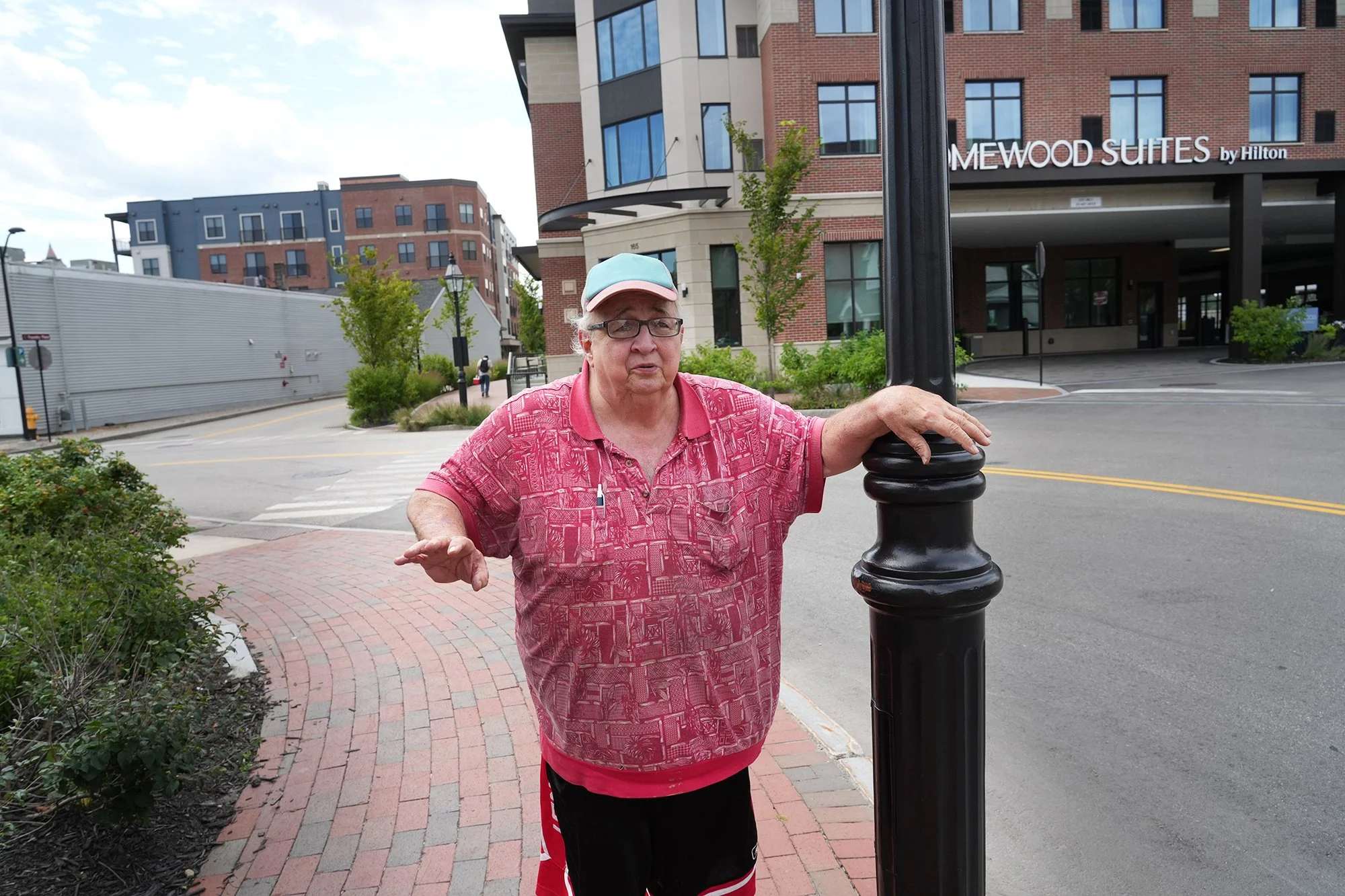
Jim Splaine, whose North End neighborhood was razed during urban renewal over 50 years ago to make way for hotels, condos and office buildings, recalls the area as a collection of mostly small apartment buildings, boardinghouses and neighborhood businesses. (Deb Cram/Seacoast Online)
But that place would soon disappear. In the 1960s, city officials decided to raze most of the neighborhood to make way for a shopping mall and other commercial development, one of a wave of federally funded “urban renewal” projects around the country at that time. Three hundred families would be displaced.
Splaine still remembers the night the Portsmouth City Council voted to move forward with the project.
“Walking home that night, to our home in the North End, my father cried for the first time in my life because his house was going to be torn down,” Splaine said.
Over the past 60 years, Portsmouth has transformed from a working-class port city to one of the state’s most expensive places to live, pushing low- and moderate-income people farther and farther out in search of an affordable place to live.
The city’s housing crisis has gotten increasing attention in recent years, as rents and home prices have skyrocketed. But concerns about the loss of affordable housing — and the displacement of Portsmouth’s low-income residents — go back decades.
As Portsmouth emerged as a hub for arts, dining and tourism over the past half-century — drawing new residents and money to the area — the city’s stock of affordable housing was steadily eroded, first by government-backed “urban renewal” projects, then by successive waves of redevelopment and gentrification.
Portsmouth resident Merrill Aharonian got involved in advocating for affordable housing in the 1980s, when her housing complex was slated for conversion to high-end condos. She said the issues being raised today — including concerns that high housing costs are depleting Portsmouth’s workforce — echo discussions from 40 years ago.

Portsmouth resident Merrill Aharonian got involved in advocating for affordable housing in the 1980s, when Mariners Village – the housing complex where she lived – was slated for conversion to high-end condos. She says the issues being raised today, including concerns that high housing costs are depleting Portsmouth’s workforce, echo discussions from 40 years ago. (Deb Cram/Seacoast Online)
“Portsmouth was losing hundreds and hundreds and hundreds of units that were viable housing,” she said. “Perhaps not the best quality housing, but they meant that people who really, really cared about Portsmouth could stay.”
A neighborhood destroyed
Today, Splaine’s old neighborhood is a mix of offices, stores, restaurants, hotels and luxury condos, extending roughly from the Sheraton Portsmouth Harborside Hotel on one end to the Bridge Street Parking Lot, a stone’s throw away. Apartments in a brand-new building on the edge of the neighborhood, advertising their proximity to Portsmouth’s “Historic North End,” have sold for as much as $5 million.
It was a very different place 60 years ago, Splaine recalls — a collection of mostly small apartment buildings and boardinghouses with some neighborhood businesses mixed in. About 1,000 people lived there.
But the city officials of that era viewed it as a problem, an overcrowded neighborhood filled with deteriorating structures. In the 1950s and ‘60s, federal policy encouraged cities to identify “blighted” neighborhoods that could be torn down entirely and redeveloped in the name of “urban renewal,” with the U.S. government footing most of the bill. It was a policy that led to the displacement of over 1.3 million people in cities across the country from 1950 to 1971.
The Portsmouth Housing Authority, which city officials created in the 1950s to pursue such projects, had already initiated two smaller projects. Forty-five families were forced out of Portsmouth’s South End for what at first were going to be garden apartments. When it became clear the finances on that plan wouldn’t work, the land and some remaining buildings were turned over to a historical-preservation nonprofit to create what’s now Strawberry Banke. Another “blighted” area became the Hanover Street garage.
But the North End project, at 30 acres, would be the city’s biggest. The goal, as an appraiser’s report put it at the time, was “to remove a blighted area adjacent to downtown Portsmouth and provide new access to downtown, additional parking facilities and new commercial development.”
Across the country, urban renewal projects were generating widespread backlash for their devastating impacts on low-income communities, particularly communities of color. Portsmouth was no exception. The plans met with fierce pushback from North End residents and others who objected to the neighborhood’s wholesale destruction.
The project left a bitter taste, and its economic benefits were murky, as former Portsmouth City Planner Robert Thoresen recounts in his recent book “Reinventing Portsmouth.” Many parcels sat vacant for years. The newly built Parade Mall faced bankruptcy within years of opening.

Jim Splaine, 79, recalls the North End neighborhood where he grew up as a “a wonderful place for a little guy to live.” (Deb Cram/Seacoast Online)
The neighborhood “had been replaced within 10 years not by housing, but by businesses,” Splaine said. “Since then, it’s been replaced by hotels, by offices, by condominiums. Very little housing, and the housing is very expensive.”
Most North End residents moved to other parts of the city that were still considered affordable. Splaine’s parents bought a house for $22,000. Others settled in Seacrest Village, a cheap if poorly maintained housing complex off Market Street with hundreds of units.
‘The last remaining place’
Originally built as temporary housing for workers during World War II, Seacrest Village — later renamed Mariners Village — was for many years a haven for low-income families who were increasingly being priced out of the rest of Portsmouth.
Merrill Aharonian moved there in 1981. The wood-clad structures had little insulation and walls thin enough to hear the neighbors. But the owner had kept the rents low, and Aharonian, who then went by Merrill Black, quickly felt at home there.
She remembers a close-knit community of working-class families who threw lawn parties and looked after each other’s children. The neighborhood school held a Halloween parade each year. It was also one of the city’s most diverse areas, with 16% of residents in one survey identifying as Black.
“It was my favorite place that I ever lived,” she recalled recently. For most of that time, she was a single mother working a job at the University of New Hampshire. Even back then, she recalled, people were leaving Portsmouth for places like Rochester and Farmington in search of affordable housing. If not for Mariners Village, “I wouldn’t have been able to stay in Portsmouth.”
By the 1980s, Mariners Village was one of the few options left for low-income residents of Portsmouth. The city and region had been undergoing drastic change. Rockingham County’s population swelled in the 1970s and ‘80s, pushing up land values. Portsmouth was attracting new industries and jobs as its economy — historically dependent on two giant military employers, Pease Air Force Base and the Portsmouth Naval Shipyard — gradually diversified. A focus on historic preservation, efforts to revitalize downtown, new restaurants and a burgeoning arts scene were attracting new residents to Portsmouth.
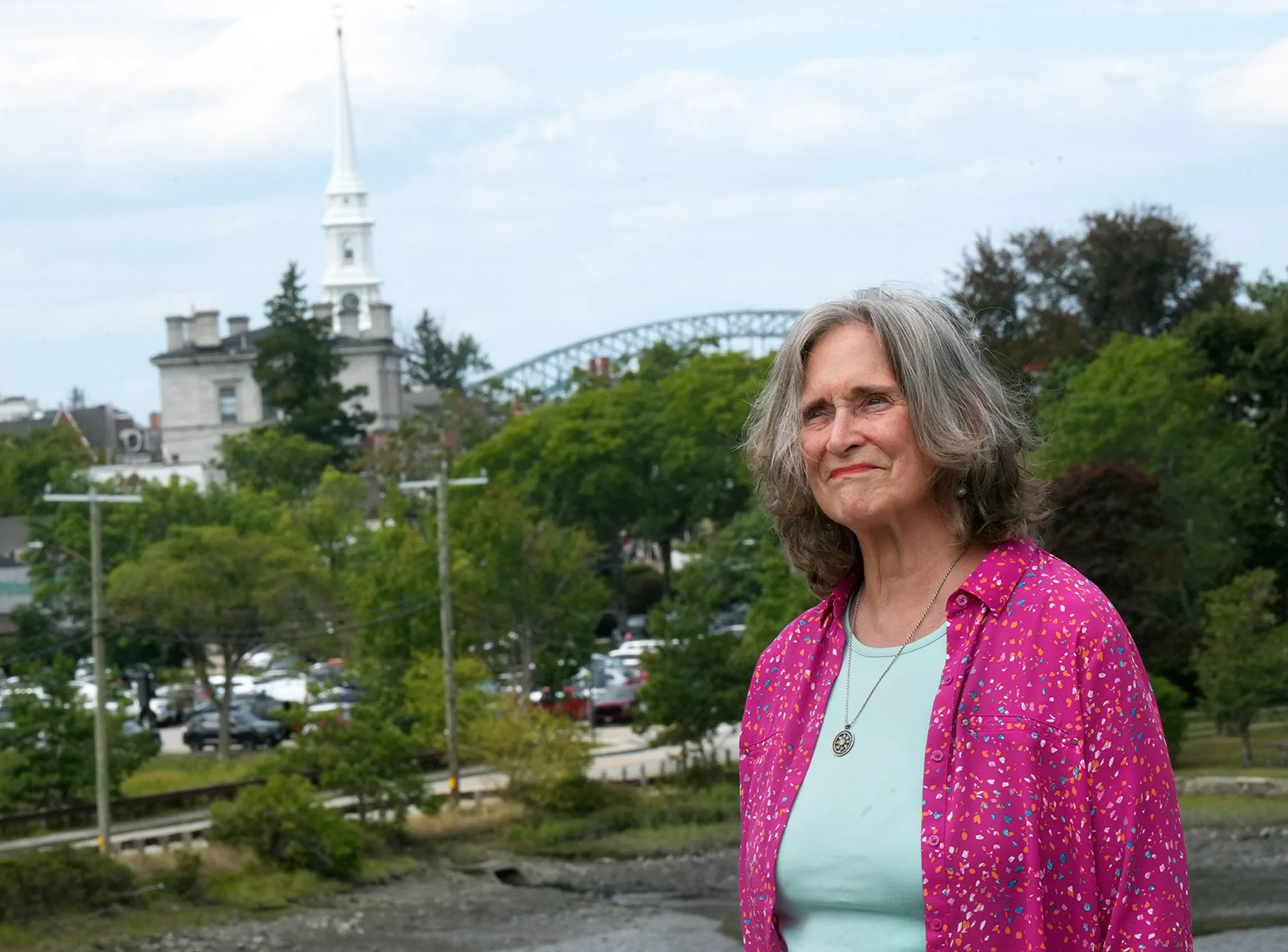
Merrill Aharonian remembers living at the former Mariner's Village, which for many years was a haven for low-income families who were increasingly being priced out of the rest of Portsmouth. They eventually lost that option when a developer bought the property and turned it into condos. (Deb Cram/Seacoast Online)
As the city’s stock rose, once-affordable rental properties were increasingly converted to expensive apartments or condos, leaving low-income residents with fewer options.
“Beginning in 1983, an increasing number of high-priced, restricted-access (no children, no pets) townhouses and condominiums are listed for rent,” the nonprofit Women’s Education and Resource Center noted in a 1986 report. Meanwhile, the wait times for subsidized housing had stretched to two years or more.
So it sent shockwaves through Mariners Village when a New York-based development group bought the community in 1985 and began converting it into condos. Aharonian and her neighbors were among the first to receive eviction notices giving them 30 days to leave — or to move to another unit in the complex at a much higher rent.
Residents fought back, forming a group called SOHO — the Save Our Homes Organization — and teamed up with legal aid lawyers in an effort to delay the evictions and preserve some affordable housing at the site.
Mariners Village “was pretty much the last remaining place that low-income residents of Portsmouth could live in if they weren't in federally assisted housing,” said Elliott Berry, one of the attorneys who worked with tenants. “And so when we began to hear about the plans for the village, we realized that, you know, this is going to end up displacing an awful lot of people.”
“The city was losing something incredibly vital and important to its economy and its culture and its heart,” he said. “And it didn't even realize that it was losing something of value.”
The battle over the future of Mariners Village dragged on for more than a year. Many residents left, but others remained. Aharonian was moved from unit to unit as different parts of the property were redeveloped. (At one point, she told a reporter she had been relocated to an apartment that was one room smaller, and cost $130 more per month.) Some residents claimed they were being harassed in an effort to get them to vacate early, charges the developers’ attorney denied.
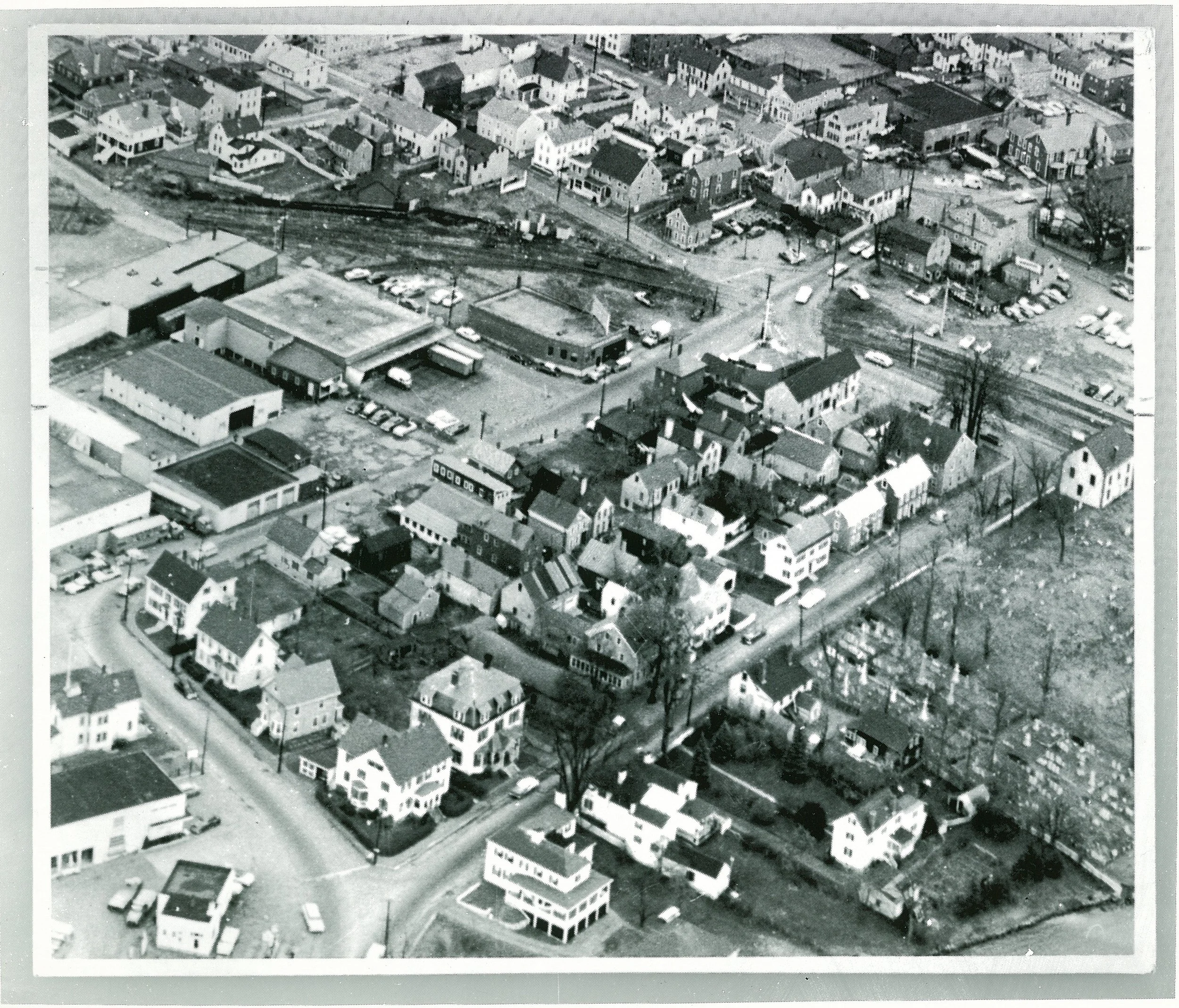
An aerial view of Portsmouth’s North End, taken in the late 1950s or early 1960s, about a decade before almost the entire neighborhood was razed and eventually replaced with a shopping mall and other commercial development. The demolition was part of a wave of federally funded urban renewal projects across the country. (Portsmouth Atheneum Collection)
After lengthy negotiations with the city, the developers agreed to keep renting about 200 units to current tenants at subsidized rates for up to five years, in exchange for a zoning change that allowed them to build an extra 250 condos on the property.
It wasn’t everything SOHO wanted, but it at least gave some residents a reprieve. And the advocates’ efforts brought more attention to the issue of affordable housing in Portsmouth. At one point, Jesse Jackson, while running in the New Hampshire presidential primary, met with residents in a show of solidarity.
In the end, the developers declared bankruptcy after converting just 42 units to condos, which are now known as Spinnaker Point. The rest of Mariners Village was taken over by a different developer, John Madden, in the early 1990s.
Berry said Madden agreed to honor Section 8 housing vouchers for any existing tenants who chose to stay, so they wouldn’t be displaced.
“It was getting harder and harder to place vouchers already in Portsmouth because of how high rents had gotten,” Berry said. “So Madden's commitment to keep those who wanted to stay with vouchers was significant.”
The resulting development, Osprey Landing, still has some of its units set aside as income-restricted affordable housing.
The fight over Mariners Village hinted at what was to come. In the following decades, Portsmouth’s working class would keep getting priced out as the population became more affluent, housing construction slowed, and older buildings continued to be bought and converted into higher-priced units.
For those who were able to stay at Osprey Landing, “the result wasn’t terrible,” Berry said. “What is terrible is that no low-income people can afford to live in Portsmouth anymore, unless they have some kind of federal subsidy.”
This article is part of the Granite State News Collaborative’s “Invisible Walls: Seacoast” project, a series produced in collaboration with Seacoast Online that looks at how zoning laws, housing and other public policies have resulted in historically high rents and home prices, which have had consequential economic and social impacts on the area’s communities, residents and businesses. The series is a continuation of the original “Invisible Walls” project, which focused on how Manchester’s exclusionary zoning laws reinforced areas of persistent poverty, impacting many aspects of community life, including crime, public health, affordable housing and access to economic opportunity. For more information, visit collaborativenh.org.