By Rosemary Ford and Caitlin Agnew
This article has been edited for length and clarity.
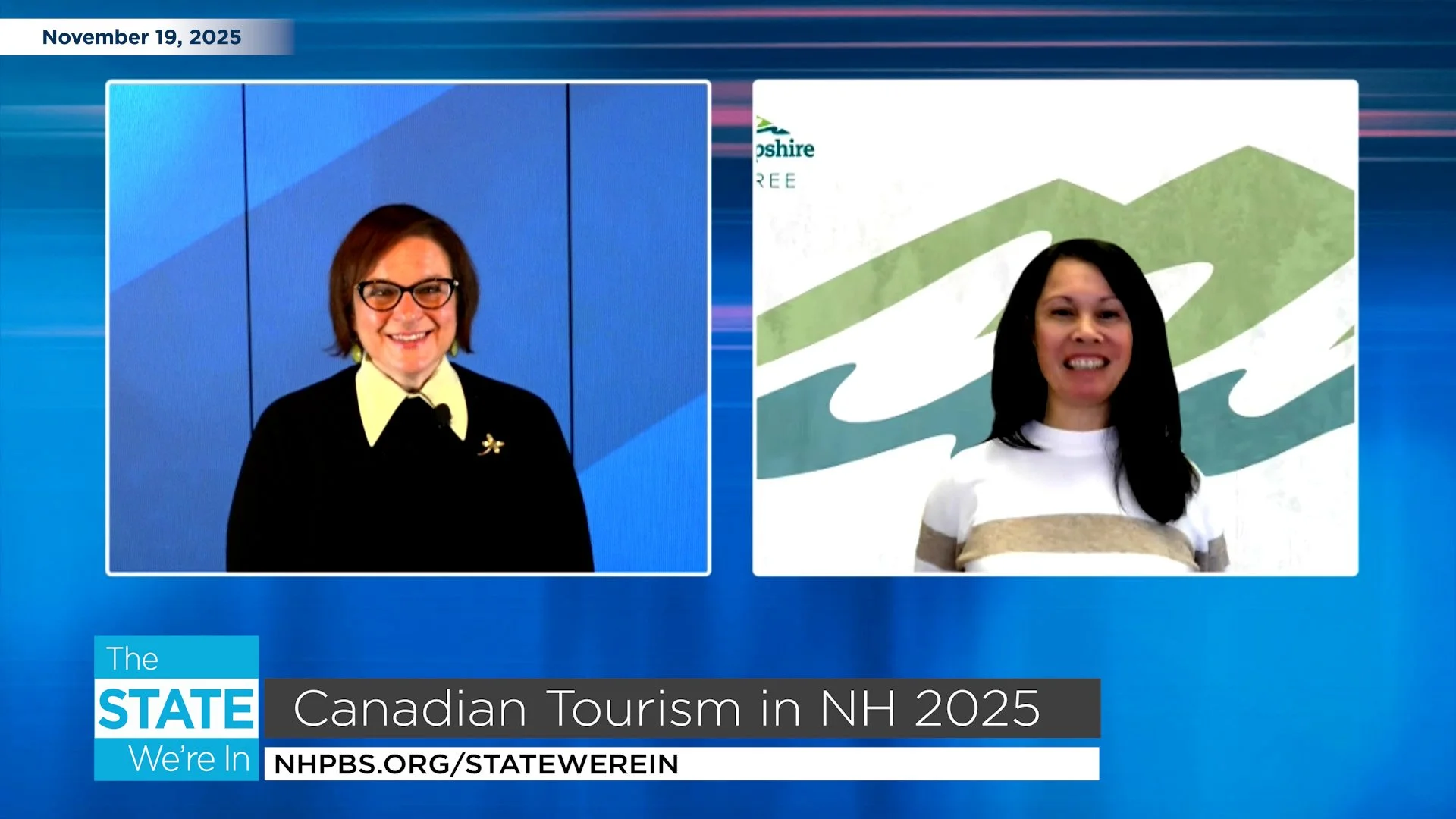
Despite the state’s efforts to encourage tourism, New Hampshire saw a decrease in visitors this summer, especially when it comes to visitors from Canada. Tourism is one of New Hampshire’s main industries, and when there are fewer visitors to the state, its revenue suffers. What is going on, and what’s the state doing about it? Here to discuss that is Michelle Cruz, director of the N.H. Division of Travel and Tourism Development.
Melanie Plenda:
Michelle, what can you tell us about how tourism has gone this past year here in New Hampshire? Let’s start with the summer season, but also talk about fall and look a little bit ahead to winter and ski season.
Michelle Cruz:
Right now we don't have research, so I won't be able to provide some real-time, up-to-date data for summer and fall, but I'll be able to provide what I'm hearing from the businesses and our partners. The way our contracts work is that we do need to have approval from the Executive Council. So right now, the Division of Travel and Tourism doesn't currently have an active research partner because we haven't received approval for that contract.
But what I do know from talking with our partners, around the state and in the White Mountains, there are 17 major attractions collectively welcoming visitors. This past season, what we've heard is that they welcomed about 1.3 million guests from May through October, and most reported being slightly up. There were some reported being flat or that they were a few percentage points lower compared to the previous year. What they shared with us is that food and beverage and retail performed well. Most attractions noted that there was an increase in spending in both areas. While we know that the beginning of the summer was a little bit of a challenge, just because of the consistent weekends of rain — it was a hard start and a slow start to the summer. But as that weather dried out, there were some upticks with visitors being here. They took advantage of the weather that was more in their favor, which helped to work out for vacations that were being planned.
So while there were some moments where visitation may have been down, I think what happened is the season and the weather shift was in our favor for visitation.
Melanie Plenda:
I know that, especially at the beginning of the summer, there was a lot of concern that tourism was going to take a hit because of the issues between the U.S. and Canada. Did they play out this season? Were you hearing that from local businesses?
Michelle Cruz:
We did. We were hearing it from the Seacoast that they were about 30% down. We heard it from other areas too. I think what we were all trying to do was pivot. We were working with them to see what else could be done. We looked at our marketing initiatives and went beyond our core markets, which are the New England states, New York and eastern Pennsylvania. We were actually targeting about 60 million people east of the Mississippi, and this was based on why people are interested in visiting New England — so we went beyond to reach those visitors to entice them to come here.
Melanie Plenda:
What are your hearing and what are you seeing so far for the winter and skiing season?
Michelle Cruz:
Again, typically during this time, we would be releasing our winter seasonal forecast, and that includes project visitation numbers and estimated visitor spending. We don’t have that information right now because that would come with working with a research partner. But what we do know is that winter is an incredibly important season for New Hampshire's tourism economy. It consistently is the third busiest season, right behind summer and fall. It’s essential for businesses, from ski areas to snowmobile operators to restaurants, lodging properties and retail. Winter brings a significant influx of visitors who support thousands of jobs, especially in our rural and northern communities
So we are looking for a positive winter, and I’m staying optimistic that we’re going to see snow.
Melanie Plenda:
Were there sectors or areas that were hit harder than others?
Michelle Cruz:
So there's always a challenge with weather. When we saw the rain hitting, there were attractions that might have been hit hard just because it was focused on outdoor recreation. When that happens, I hear from retail that they're doing well because people are staying inside. Same thing with dining, and vice versa.
When the weather changes to be more favorable for sunny, cooperative weather days, people are staying outside more. They're enjoying nature and the beauty and the reason why they come to New Hampshire. We're very weather-dependent, but we are a four-season vacation destination, so it's always looking at what's ahead, and how to be able to work with the weather that we're provided.
Melanie Plenda:
Why is tourism so important here in the state? Can you explain that to our audience?
Michelle Cruz:
Tourism is the second largest revenue-generating industry. It plays a central role in driving the state's economy and quality of life. We hear that a lot about people being here because of the work-life balance. Every year, millions of people visit the state of New Hampshire from all over the country and around the world. They come for our natural beauty, outdoor experiences. They're looking for the rich history and that small-town charm is what they love, and it's what we can provide. And we have unique attractions that make this state so special.
So in our fiscal year 2024, what we were able to see is that we had about 14.6 million visitors who generated $7.5 billion in spending. So that's money spent at restaurants, hotels, shops, attractions, ski areas, our campgrounds, arts and culture venues and businesses all throughout the state. We're talking about our large and small businesses.
Another thing about tourism is that tourism supports 70,000 jobs in the state of New Hampshire, so that includes our seasonal and year-round hospitality jobs — restaurant employees, guide services, retail staff, lodging operators. Again, it impacts all of those small and large businesses, and it helps to keep the communities vibrant.
But what's really important for us to all keep in mind is that tourism doesn't just benefit visitors. It's going to benefit us — everybody who lives here in the state, because with the visitor spending, it helps keep the local businesses open, supports towns and the cities, and also strengthens our rural communities. So it helps to reduce that tax burden for our New Hampshire residents in many communities.
Tourism dollars make the difference between a business keeping their doors open or not. So tourism is definitely very important to the state of New Hampshire
Melanie Plenda:
You mentioned that research piece, and it sounds like maybe that might be in flux. What do you do if you don't have that research? How do you kind of make that plan going forward, and do you have a sense of what that plan is going to be going forward, even without the research?
Michelle Cruz:
We're looking at how to manage that and stay connected with our businesses and our tourism partners and leaders throughout the state. It is challenging — research is a key component when you're marketing. You're looking at effectiveness, but you're also looking at where people are traveling from, where they're going to, where they're staying, how long they're staying for, how much money they're spending, what that economic impact is. So it's a really key component in understanding visitation to any area in New Hampshire.
Melanie Plenda:
You’re kind of flying blind without a research partner, but going forward, what is your plan into 2026?
Michelle Cruz:
It would be great to be able to have a solid plan for research, so looking at having a research partner is going to be really key in being able to know if our marketing plan is working. It supports the state to stay front and center. We have momentum right now, and it helps to keep us moving forward, supporting our industry, supporting the business community and the residents of the state. It's something that's really crucial in making sure that we're staying ahead.
You know, there are reports of states who have had contracts like this pulled or are unable to market their state as need be, and it was a tremendous impact of not being in the markets they needed to be in and being able to promote their state. and the recovery from it would be years. We want New Hampshire to be front and center. We want to be able to support the tourism that helps to support our economy and then provides the quality of life for residents.
Again, this is something that’s not just bringing visitors here, but it's looking at when visitors come here, they're making their memories, they make their traditions, and then they come here year after year. Eventually, some relocate here, some may take the opportunity to move their business here, and that's through marketing the right way. It's through being able to have research and making sure that we're hitting on all those components to be a strong, competitive state, to be an innovative state, and that's what's really important.
Melanie Plenda:
Is there anything else that can be done, or any other help that's needed?
Michelle Cruz:
It's definitely getting the research, because this maximizes the impact of the strategy that we need to have reliable and up-to-date data. It's the research that tells us about traveling and where people are coming from. It's something that helps to look at the spending — where money is being spent, and the amount of money that's being spent that’s coming into the state.
That's really important, and we're doing the best we can with the tools that we have right now. We're dedicated, but having a dedicated research partner would really allow the work to be next-level. It helps to ensure every decision that we make is grounded in data and helps to keep New Hampshire continuing as a strong tourism destination. It's really important to be able to keep that message and move forward with that.
Melanie Plenda:
What happens if New Hampshire can’t generate that interest, and bring people back?
Michelle Cruz:
Like I mentioned, I think the amount of the $7.5 billion in spending, which was such a support and it's a revenue generator, and if we don't see that, we take a hit as a state, and we're hoping that that doesn't happen.That's not what we want to see — we want to work towards being able to market and generate the revenue, but also keep New Hampshire front and center. It's not just tourism for visitors, but it's for our residents too.
Melanie Plenda:
Michelle, thank you so much for joining us today.
“The State We’re In” is a weekly digital public affairs show produced by NH PBS and The Marlin Fitzwater Center for Communication at Franklin Pierce University. It is shared with partners in the Granite State News Collaborative, of which both organizations are members. For more information, visit collaborativenh.org.