But questions have been raised on oversight of GO-NORTH’s funding process, long-term impact
By Meera Mahadevan-Granite State News Collaborative
New Hampshire has received an additional $204 million as it enters the second year of a historic five-year federal financial investment in rural health care.
The annual award, which brings the state’s funding to $408 million so far, is intended to strengthen rural hospitals, address workforce shortages and support other initiatives in rural communities facing enormous healthcare challenges.
But as the state’s ambitious initiative, the Governor's Office of New Opportunities & Rural Transformational Health — known as GO-NORTH — moves forward, questions are emerging about how quickly the money is reaching communities, how much oversight the state has over its distribution, whether smaller projects are being prioritized over larger ones, and whether the investments will produce lasting improvements in a rural healthcare system facing mounting financial and operational pressures amid the looming backdrop of drastic Medicaid cuts.
The latest round of funding is part of a $50 billion, five-year federal Rural Health Transformation Program that was tacked on to the 2025 federal budget reconciliation bill, known as the One Big Beautiful Bill. The Centers for Medicare & Medicaid Services awards the money to states annually based on need and performance requirements.
Half of the $50 billion is awarded competitively to states, while the remaining $25 billion is divided equally among them. New Hampshire is entitled to $100 million annually, or $500 million over five years. How the state will allocate this equal-share funding remains unclear, with attention so far focused largely on the competitive awards.
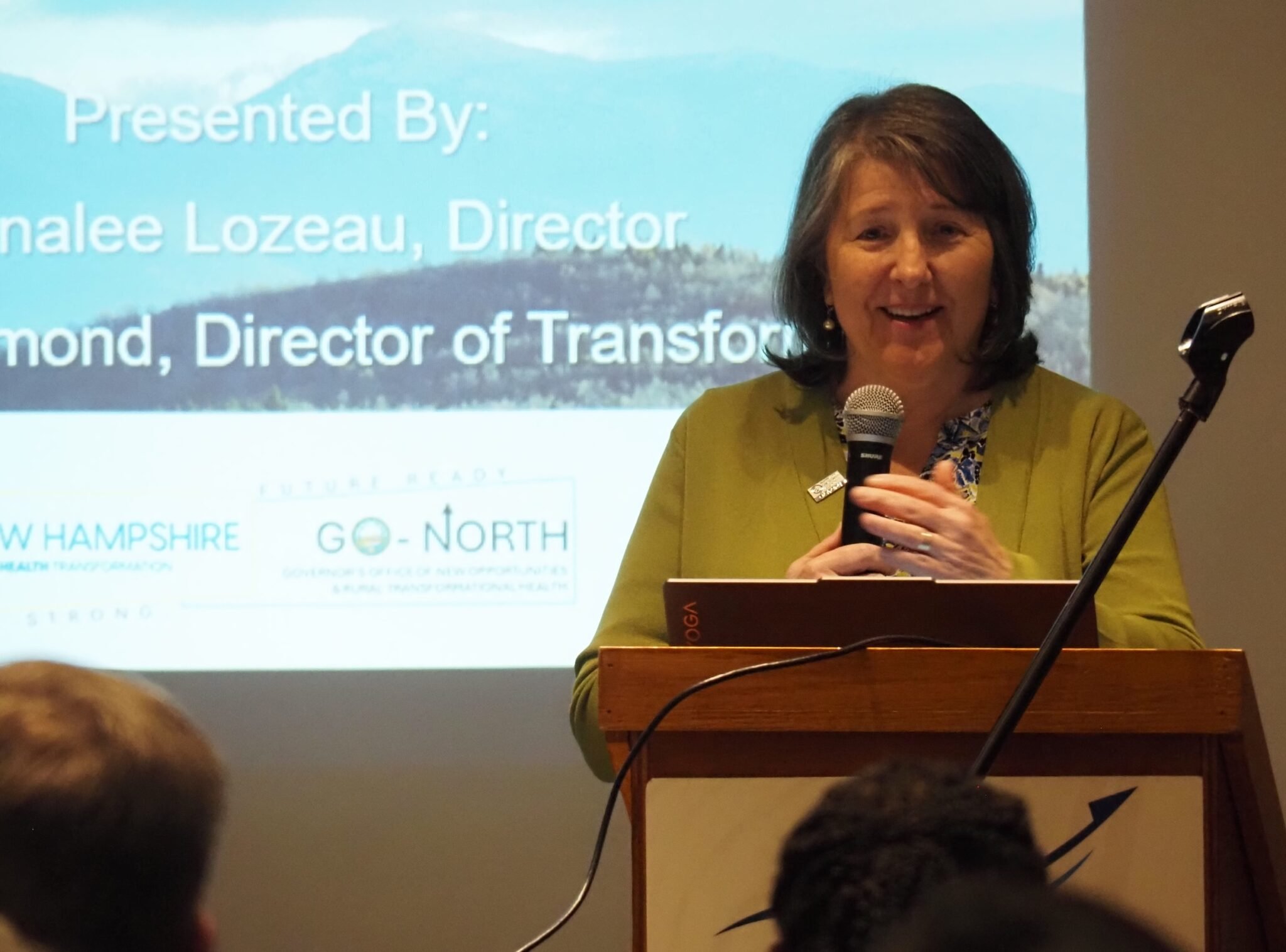
GO-NORTH Director Donnalee Lozeau speaking at a N.H. Public Health Association event in Concord in April. She describes the hundreds of millions of dollars going to the initiative as “a significant opportunity to have something impactful in New Hampshire.” (William Skipworth/New Hampshire Bulletin)
GO-NORTH’s director, Donnalee Lozeau, said the initiative is progressing “very well” so far. She described growing enthusiasm and a “buzz in the air” across the state’s healthcare community. She also said New Hampshire’s funding is the largest among New England states and is one of the states that is furthest along in implementing the federal program.
“We were among the first states in the country to have our first-year budget fully approved and obligated” by the Centers for Medicare & Medicaid Services, Lozeau said.
GO-NORTH has allocated all of its first-year funding. For instance, Lozeau said the state has awarded more than $11 million to rural emergency medical services organizations to expand emergency services and launch Mobile Integrated Health programs. The programs are aimed at bringing healthcare services directly into patients’ homes and communities and can help prevent avoidable emergency department visits.
One such initiative is a partnership between Concord Hospital and local EMS agencies that seeks to establish the state’s first North Country Mobile Integrated Health program, serving communities from Berlin to Pittsburg. Funding opportunities for a school-based oral health program are also expected to be announced soon.
Slow start, then a wave of funding opportunities
Despite the state’s progress, some local officials and emergency medical services organizations have grown frustrated with the pace of implementation.
District 2 Executive Councilor Karen Liot Hill, a Democrat, said she has heard concerns from her constituents and EMS organizations that have been waiting for opportunities to apply for funding. Although the five-member Executive Council approved GO-NORTH’s first-year budget distribution plan in March, many requests for proposals were not released until October and November, she said.
“People have been a little frustrated with the process,” Liot Hill said, citing concerns about delays.
Gov. Kelly Ayotte established GO-NORTH as an independent entity under the governor’s office in January, rather than having the state’s Department of Health and Human Services administer the federal funding. That decision required creation of a new organizational structure, additional staffing and other administrative work, contributing to delays in getting the program fully operational early on, Liot Hill said.
GO-NORTH ultimately established five funding hubs responsible for distributing money across areas such as health care services, workforce development and capital projects.
The five hubs have received or been allocated $161.2 million of the $204 million in the first year:
Foundation for Healthy Communities, an affiliate of the New Hampshire Hospital Association, which represents the state’s 31 hospitals, including 13 rural hospitals: $66.5 million.
Community Development Finance Authority: $48.3 million.
Community Behavioral Health Association: $21.6 million.
University System of New Hampshire: $15.7 million.
Community College System of New Hampshire: $9.1 million.
The remaining $43 million does not fall under any of the hubs but is distributed by GO-NORTH:
GO-NORTH and DHHS personnel, travel, supplies, and other: $2.1 million.
Health Strategies — Endowment for Health: $20 million.
National Research Opinion Center at University of Chicago: $1.7 million to provide independent evaluation.
North American Family Institute and Cheshire County Connected Families for care management of youth with complex behavioral needs: $1.8 million.
Planning grants: $1.5 million.
Finance and web consultants: $18,000.
It was not immediately clear what “TBD Healthcare System Pilot, DHHS contract for Medicaid Pharmacy, and DHHS contract for Hospital Payment” totaling $14.7 million refers to in GO-NORTH’S line item budget for the first year.
CMS breaks down New Hampshire’s first-year competitive award somewhat differently in its state-by-state report, allocating the $204 million among six categories:
Population health: $14.5 million.
Rural health care access: $74.7 million.
Rural workforce recruitment and retention: $34.6 million.
Rural health technology: $29.9 million.
Rural financial solvency: $29.9 million.
Program operations and administration: $20.4 million.
Exactly how much of the $204 million award has actually been spent and a breakdown of which specific projects, hospitals and organizations have received or will receive the money remains vague and unclear. But one thing is certain: According to CMS rules, the first year’s money must be spent by Sept. 30, 2027, and its second-year funding by Sept. 30, 2028. Funding for the fifth and final year must be spent by Sept. 30, 2031. Otherwise, the money returns to the U.S. Treasury.
Balancing state needs with federal deadlines has been a challenge, Lozeau said.
“New Hampshire is small and close-knit, and we want to keep doing this work the New Hampshire way: in-person, town by town,” she said. “But we also have to move at the speed and scale this program requires.”
Liot Hill said the timeline and the hub system model itself remain concerning, particularly because federal officials expect states to demonstrate measurable progress to maintain their annual funding.
“We were told that time was of the essence,” she said, recalling a March meeting called by Gov. Ayotte. “This money needs to already be put to work. We’re still just releasing RFPs (request for proposals).”
Liot Hill said she has been assured by GO-NORTH leadership that federal officials are pleased with New Hampshire’s reported progress. While she finds that encouraging, she believes the state needs to move more quickly to get the money into the hands of organizations that can put it to use.
Oversight and transparency questions
Beyond the pace of spending, Liot Hill’s primary concern is whether the state’s distribution structure provides sufficient oversight of such a large amount of public money.
In New Hampshire, expenditures exceeding $10,000 ordinarily require Executive Council approval. Under the GO-NORTH model, however, the five funding hubs and GO-NORTH have considerable authority to distribute millions of dollars without returning to the council for individual approval.
Liot Hill said that is a significant departure from the state’s traditional approach to financial oversight.
Beginning in January, the incoming Executive Council will have an unprecedented 5-0 Democratic majority, potentially creating an opportunity to review the distribution process, she said.
Lozeau, a former eight-term Republican state representative and a former mayor of Nashua, said she welcomes the incoming councilors. She noted that some have healthcare backgrounds that could be valuable as the program moves forward.
“This is not controversial work,” she said. “This is work that’s going to change the lives of people who live in the state. I think everybody is on board with that.
“I’ve spent the majority of my adult life having been an elected official,” she added. “I’ve been through many changes and know how political winds go. I don’t think that there’s any issues surrounding this work on either side of the aisle.”
However, Liot Hill said that, while some of the projects approved by GO-NORTH have been great, she is worried that pressure to demonstrate quick results to federal officials could favor small, more easily measured projects, such as small equipment purchases, over larger initiatives that take longer to develop.
“Buying robots to help provide CPR is helpful, but it’s not the kind of transformational change that we need on the ground,” she said.
Impact of Medicaid cuts
The debate over how New Hampshire uses its rural health funding is unfolding against the backdrop of anticipated drastic federal Medicaid reductions.
Over the next decade, New Hampshire could lose about $3 billion in Medicaid funding, and CMS has explicitly stated that the Rural Health Transformation Program money cannot be used to directly offset Medicaid cuts.
Rural hospital executives in New Hampshire said the ripple effects of upcoming Medicaid cuts will have dire impacts, but added that even relatively modest grants could make a big difference for now.
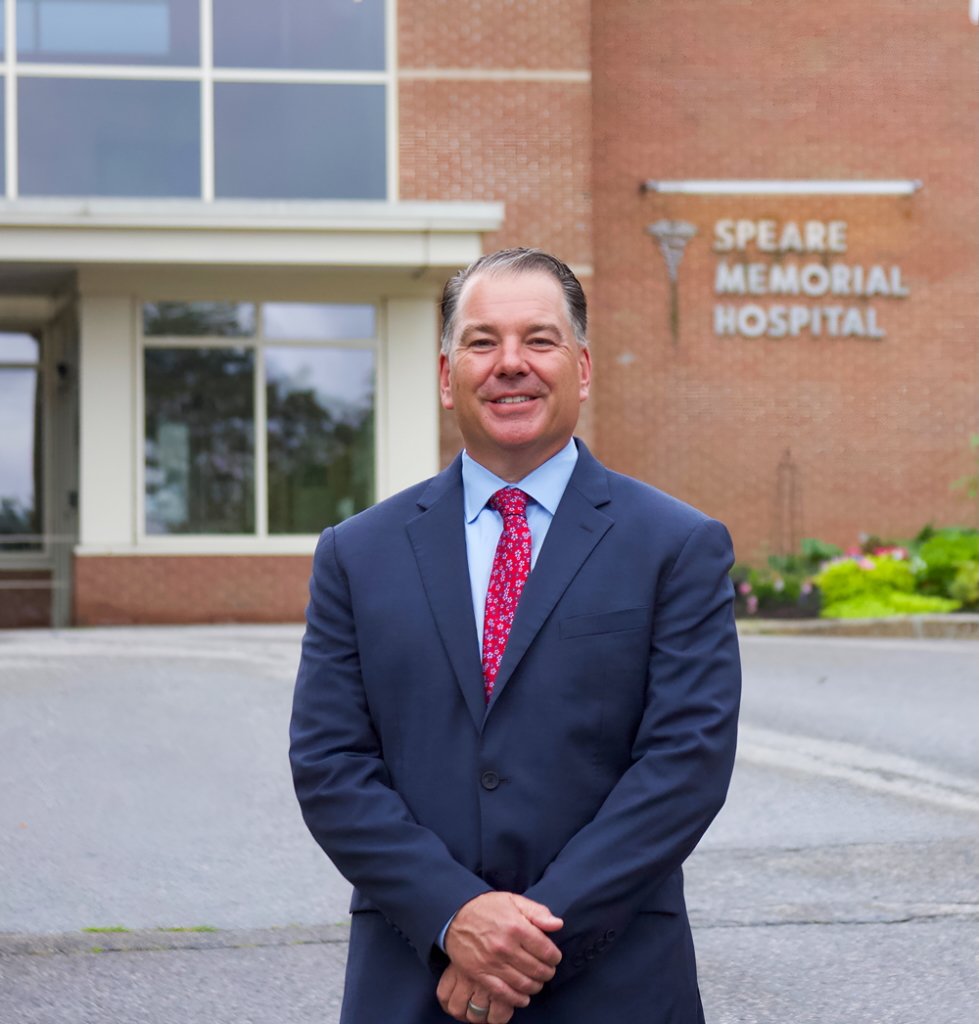
Craig Williams, president and CEO of Speare Memorial Hospital, a 25-bed rural hospital in Plymouth, said he is pleased with the $50,000 planning grant the hospital received from GO-NORTH to evaluate its physician compensation models. (Speare Memorial Hospital photo)
One of them — Craig Williams, president and CEO of Speare Memorial Hospital, a 25-bed rural hospital in Plymouth — said he is pleased with the $50,000 planning grant the hospital received from GO-NORTH to evaluate its physician compensation models.
Williams said recruiting and retaining physicians in rural communities is a significant challenge. Speare employs about 30 primary care and specialty physicians, and the funding will help the hospital evaluate whether its compensation structure is competitive with current market rates.
“The way we compensate providers has been the model we have used over the last 20 years,” Williams said. “We want to make sure we are positioning the organization to be most successful to be able to recruit new talent and also just keep people engaged in the work they’re doing today.”
He said Speare is also working closely on medical records with Mid-State Health Center in Plymouth, a nonprofit community health center that is designated as a federally qualified health center.
“We are working closely around medical record interoperability so that when referrals are going back and forth from us and Mid-State, we don’t have to do duplicate entry and will create a more seamless access to care between the two facilities,” Williams said.
Year two: Expanding the initiative
GO-NORTH, In its first-year progress report, said it has had to focus on building the agency’s foundation — hiring staff, establishing governance, negotiating agreements with the funding hubs and developing a system for soliciting, evaluating and distributing the federal money. In that time, the agency has grown to 11 employees, which includes an internal leadership team — directors of transformation, legal compliance, finance and budget, and initiative-specific leads — according to the agency’s year-one progress report.
But as it enters its second year, the state is looking to broaden investments in areas that include transportation, workforce recruitment, electronic health records, telehealth, childcare and healthcare facility improvements.
The state is also seeking approval for Dartmouth College to receive $4.6 million during GO-NORTH’s second budget year. Dartmouth will set measures and establish benchmarks against which GO-NORTH will be judged by CMS. It was not immediately clear how the University of Chicago’s role as an evaluator would differ from Dartmouth.
Meanwhile, Lozeau said she’s going to keep the agency focused on its mission. “I’m not going to complain about receiving this kind of money for this kind of opportunity, even if the timeframe might be shorter than we would like,” Lozeau said. “To me, it’s a significant opportunity to have something impactful in New Hampshire.”
These articles are being shared by partners in the Granite State News Collaborative. For more information, visit collaborativenh.org.