By Rosemary Ford and Caitlin Agnew
This article has been edited for length and clarity.
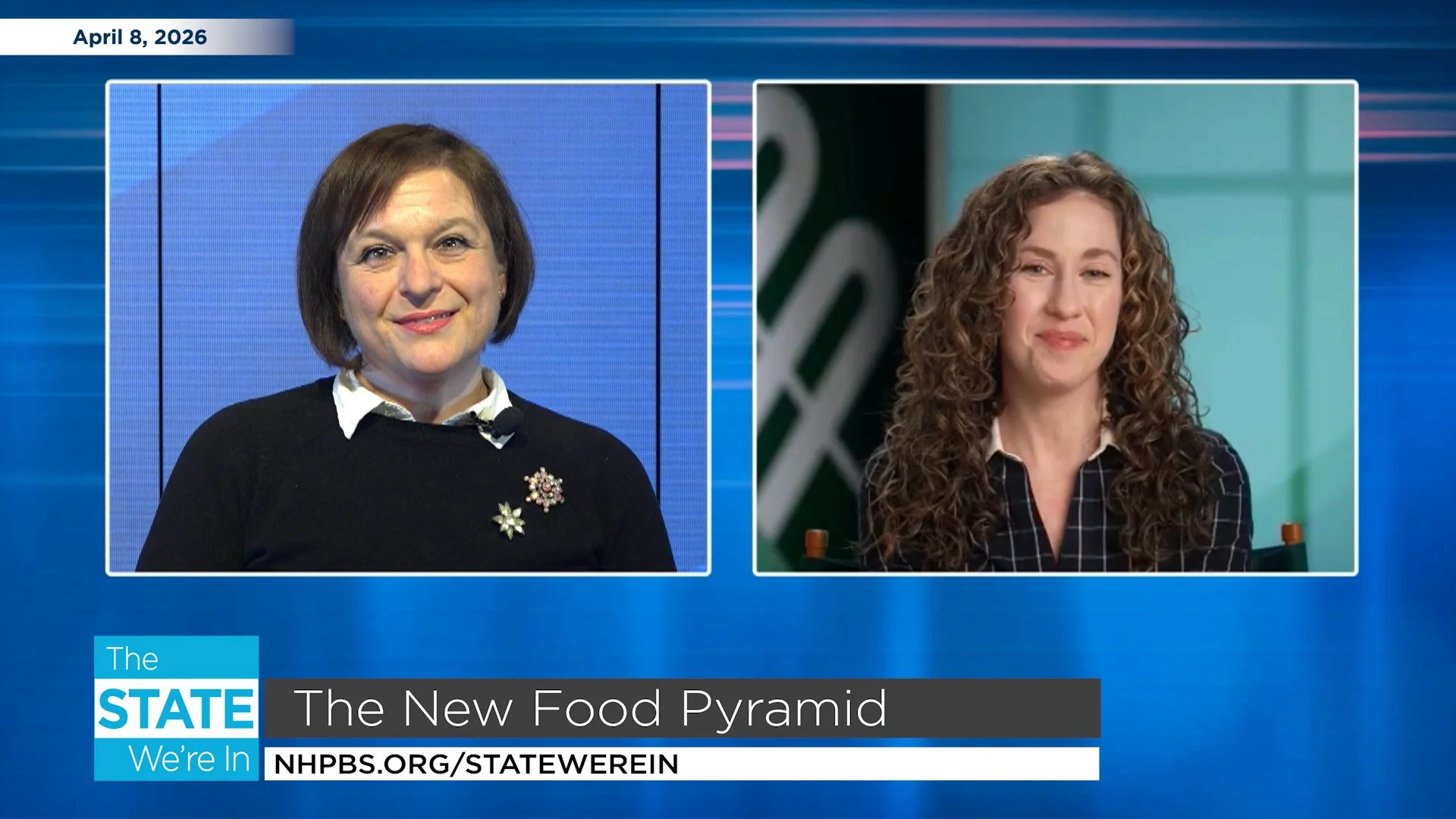
The Centers for Disease Control and Prevention found that 70 percent of U.S. adults are overweight or obese, and “nearly 1 in 3 adolescents has prediabetes.” As a way of combating these staggering numbers, the U.S. Department of Health and Human Services, along with the U.S. Department of Agriculture, recently released new dietary guidelines. What are the guidelines, and what do they mean for healthy eating? Here to discuss that is Hannah Brilling, a clinical dietitian at Dartmouth Health’s Walter and Carole Young Center for Digestive Health.
Melanie Plenda:
What does this new pyramid look like, and what changes have been made?
Hannah Brilling:
It looks like an upside-down pyramid. A couple of iterations ago, there was a regular pyramid, and now they've turned it in the opposite direction. There are some changes, especially visually, from the balanced plate — which was the last version of the dietary guidelines. The shape is different, but so are the pictures that are on there, such as a big piece of steak and a bottle of whole milk.
Melanie Plenda:
For people who aren't familiar with the original food pyramid, briefly explain what that was and once we invert, what does that mean?
Hannah Brilling:
The pyramid really tells us what things to have more of. The idea with the older version was that the larger base was more grains and starches, and then you get to the smaller top, with more meats, sugars, and proteins. So when they flip it, they're really saying that protein is a larger component of the things we should be eating more of. There is more of a focus on meat, this variation, than there has been in the past.
Melanie Plenda:
What do you think about these new guidelines?
Hannah Brilling:
There are some really great updates. There’s a focus on whole foods, on less processed foods – those aren't so much updates, but they are given higher importance than maybe in past dietary guidelines. There's also a new focus on the microbiome, which is really important, and something that is emerging with scientific evidence that's not very clear yet, but we know it's important for health. Those are all great.
I don't necessarily find that the focus on red meat as a healthy fat aligns with the breadth of scientific evidence we have about heart health and healthy fats.
Melanie Plenda:
You mentioned protein intake. Based on these guidelines, how do you think that will affect people?
Hannah Brilling:
I don't think it's going to change a whole lot. I think this does align with current cultural trends and also scientific guidelines and guidance in terms of protein being a really important part of our daily intake, especially when we think about folks who might be actively losing weight, it's important.
I clinically work in obesity medicine, so that's a big part of the conversations that I have every day — about the importance of protein — but it's also something that we know that Americans already consume in really high numbers. I think it mostly reflects what people are already doing, and most Americans already eat a lot of animal products. So I don't think it's going to change a whole lot there.
Melanie Plenda:
Public schools are subject to USDA regulations that require them to implement these nutritional guidelines in their school meals. With these new changes, how can we expect school lunches to change?
Hannah Brilling:
School lunches also have budgetary constraints, so I imagine they're going to use the best tools they can to use whole grains, and they'll probably have a shifting of the percentage. They have very strict targets for different proportions of the different nutrients for each meal for each age range, so they're going to have to implement those just like they do with the current guidelines. Each school struggles to plan meals and to execute these on a budget, so they're going to have to implement these in a budget friendly way.
Melanie Plenda:
Eat Real Food, an official site of the U.S. government, states the old pyramid gave Americans misleading dietary guidance, causing high rates of chronic disease. Is this accurate? How will the new guidelines change things?
Hannah Brilling:
I think it's a really big stretch to say that the pyramid caused high rates of disease through misleading information. I think nutrition has been around to guide people for a long time, but the ways that people end up eating are influenced by their culture, by their knowledge of cooking, by their budget, by the time that they have to cook at home or to shop, or the access that they have to this nutrition information.
I think all of these factors play a role in how we eat, and it's really important to remember that the way that we eat does not completely control the outcomes of our health. We have genetics, we have environment, we have other lifestyle factors, like chronic stress, that influence our rates of disease and how our individual health plays out. So nutrition is important — I’ve devoted my life, my career, to this — but it is not the number one thing or the only thing that determines our health.
Melanie Plenda:
If Granite Staters were to follow these guidelines in their daily life, would they likely see a large improvement in their overall health? Why or why not?
Hannah Brilling:
I think the really big takeaways that are supported by these dietary guidelines — of trying to eat less processed food and focusing on the different food groups and how our daily balance plays out, those are fundamental aspects of good nutrition that have been around for a long time. If people focus on those — yes, I think that health can be supported and improved as much as nutrition will play a role in how our individual health can be influenced. So less processed food is always going to be a good idea, and if you have the means to follow home-cooked meals with fresh fruits and vegetables or canned or frozen, that will support health.
Melanie Plenda:
Many Americans do not follow a healthy diet due to the high cost of nutritious foods. This new pyramid outlines a high-fat, high-protein, and low-carb diet, which can be quite expensive. How can people adapt? What should they do?
Hannah Brilling:
As I briefly mentioned, frozen vegetables, frozen fruits. are a great, nutritious tool to eat healthy on a budget. Canned tuna, canned beans and chickpeas — those are all very minimally processed foods, even though they come in a package.
We also can keep all things in moderation so we can use low-cost whole grains, like brown rice that we cook from scratch. It's not “no carbs.” No one ever needs to have zero carbohydrates. So we use our low-cost foods to balance out the plate, and we do the best that we can. That's all anyone can do when feeding themselves and feeding their family. So we're all going to live our lives and try to feed ourselves every day. That's all we can do.
Melanie Plenda:
Do you expect that local produce across New Hampshire will see an increase in demand and consumption due to these changes to the guidelines?
Hannah Brilling:
I can't tell the future — they do highly encourage fruits and vegetables — but I would say that's not any different than the nutrition guidance that's been around for a long time. So I don't know that there's going to be a big change there.
I think the barriers of cost, access, education, cooking skills — they’re still going to be there. Nothing has changed in that sense, however, anecdotally, I have seen whole milk sold out at the supermarket in my own grocery shopping experience more than I have in the past. I think that that change in the dietary guidelines might be making a difference on the grocery store shelves.
Melanie Plenda:
Do you think encouraging whole milk will have an impact?
Hannah Brilling:
When I counsel families, I actually have not typically focused on dairy in my own clinical work in the past, because there is some mixed evidence in the nutrition research, while animal fats from things like meat, steak vs. chicken, skin on, skin off — that evidence was pretty clear. But when it comes to dairy, there is some mixed evidence, so I haven't really ever changed what people did for their dairy percentage.
So, skim vs. 2% vs. whole — I had never changed that in the past, so I don't really care one way or another in my own clinical work, if folks switch to whole milk because I think that can be part of a healthy diet, even if they go from skim to whole.
Melanie Plenda:
Robert F. Kennedy Jr., the secretary of Health and Human Services, recently came under fire for some comments about Dunkin’ and Starbucks’ sugary drinks. He said, "We're gonna ask Dunkin’ Donuts and Starbucks — show us the safety data that show that it's OK for a teenage girl to drink an iced coffee with 115 grams of sugar in it. I don't think they're gonna be able to do it." What do you think about that statement? And what do you advise people about sugary drinks?
Hannah Brilling:
Again, I think this conversation about sugary drinks has been around for a long time and holds merit. I don't think that 115 grams of sugar is supporting anyone's health, but in America, we're free to choose and let people make the decisions that they want to make. So being more clear about what is in foods and telling people what the risks might be, I think, can be valuable. In the end, people do have the choice to put tasty, sugary drinks in their bodies if they want to. A soda tax in different cities, historically, hasn't been very popular, so it hasn't worked all that well because people don't like it. So I'm curious to see where that goes. If we remove sugar from drinks, I'd be for that.
Melanie Plenda:
What kind of things do you recommend when people ask about eating healthy?
Hannah Brilling:
It's highly individualized. What you like to eat might tend to be most successful if you're going to make a plan — just like if we make a plan to exercise, it shouldn't be something you hate doing.
I start with when we eat throughout the day. That's really important to manage hunger, to have enough opportunities to put nutrition into your body at different times so that you can absorb everything and stack up the grams of protein that you might want to get by the end of the day. You’ve got to put that in multiple times per day. So I talk about, when I talk about the food groups, just getting a variety of different food groups, getting some fruits and vegetables during the day, and then maintaining relatively healthy eating patterns, rather than trying to do perfect eating that may not last very long. Try to take small steps, make small changes that are likely to be sustainable over your lifetime.
Melanie Plenda:
Thank you, Hannah, for joining us today.
“The State We’re In” is a weekly digital public affairs show produced by NH PBS and The Marlin Fitzwater Center for Communication at Franklin Pierce University. It is shared with partners in the Granite State News Collaborative, of which both organizations are members. For more information, visit collaborativenh.org.