By Rosemary Ford and Caitlin Agnew
This article has been edited for length and clarity.
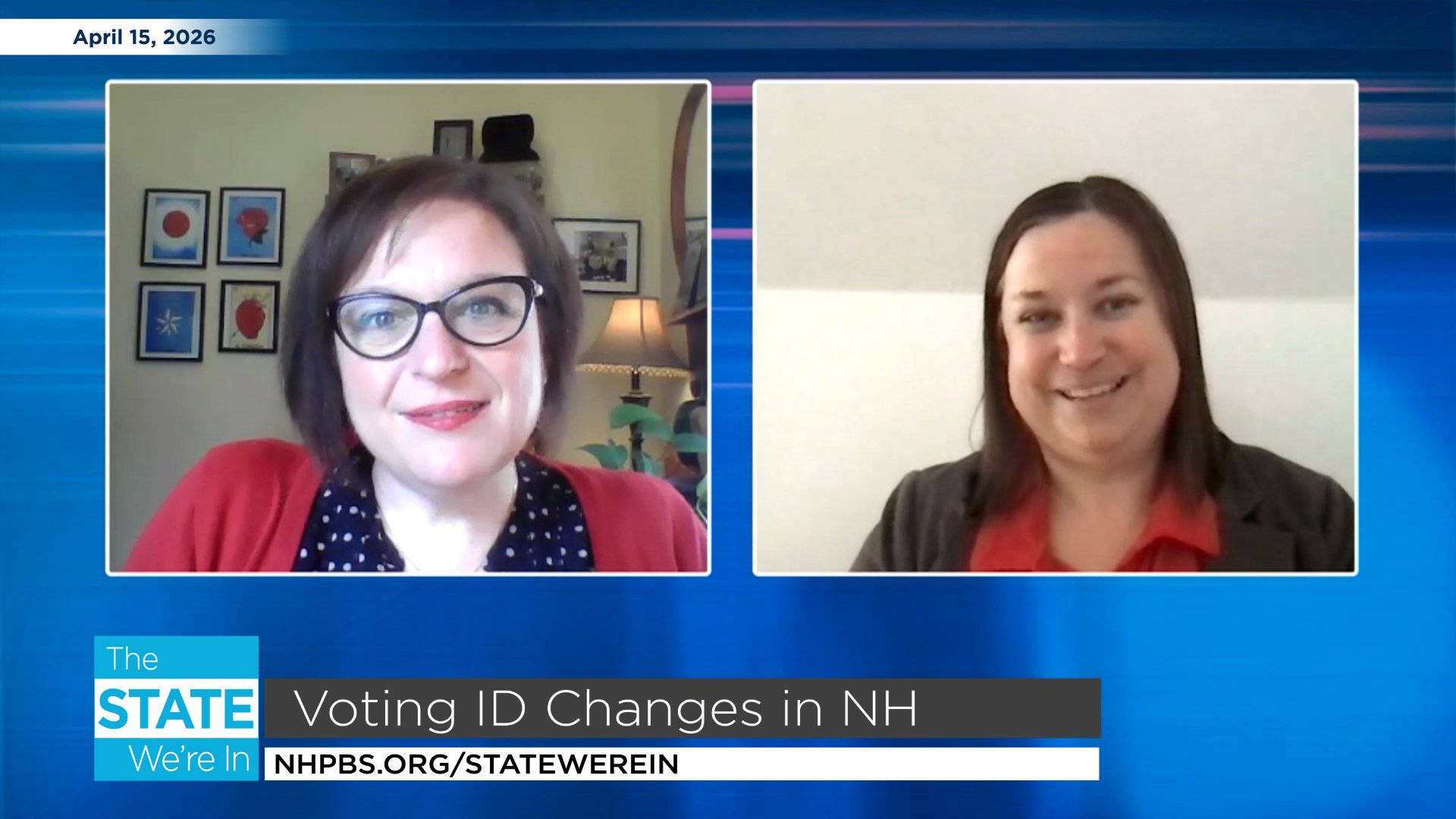
What does a new law that removes student identification as a valid form of ID for voting mean for Granite Staters? Here to discuss that is Olivia Zink, executive director of Open Democracy, a nonpartisan nonprofit focused on political equality in New Hampshire.
Melanie Plenda:
To start, can you tell us more about what Open Democracy does, and what the organization’s goals are?
Olivia Zink:
We were founded by Doris "Granny D" Haddock, who walked across the country to get money out of politics. So our focus is sort of campaign finance reform, ensuring the freedom to vote for all Granite Staters and ensuring that we have a fair and functioning democracy that works for everybody.
Melanie Plenda:
Can you give us some background on the new photo ID law and what it does?
Olivia Zink:
House Bill 323, which will go into effect on June 2 is a law that prohibits the use of high school IDs and college IDs as legal identification to vote in an election. So your driver's license or passport or a government issued-photo ID from another state, is what you can use to check in and receive your ballot.
Melanie Plenda:
This law reverses the 2013 law that allowed student IDs at polls. What’s the reason for the change?
Olivia Zink:
Prior to 2012, nobody had to show an ID to vote. In 2012, they passed a law that required identification. In that 2012 law, it said you can use a student ID. So they've actually just taken that out of the law, saying that you no longer can use those identifications to check in to obtain a ballot. The governor has signed it.
I think the debate was very confusing. I felt when you watched the Senate debate, they really talked about what you need to register to vote — and to register to vote, you do have to prove your citizenship, your domicile, your age and your identity. So when you register to vote, you're showing your birth certificate and something that has your address on it, and all the other documents you need to register. If you’re already registered to vote, you’re just checking in to obtain a ballot, but the law has now changed.
Melanie Plenda:
Why are voter ID laws such a contested topic between the parties? Why is this such a contentious dispute?
Olivia Zink:
There's a lot of disinformation about voting in general. The people who check us in are ballot clerks, our neighbors and friends, like the moderators at polling places. My moderator used to be my science teacher. They're our friends and neighbors. The people who are running our elections are doing a really phenomenal job in New Hampshire, ensuring that all eligible voters are voting there.
There's just a lot of information out there that there might be some people who are ineligible who are voting. I can tell you that there's probably a lot of 16- and 17-year-olds that want to vote, but they're not voting. You have to be 18, and you have to be a U.S. citizen in order to vote.I think there's a lot of integrity in New Hampshire's process.
What makes me sad is these laws that may make somebody question whether they should participate or not. I think all Granite Staters want all eligible voters to participate. We see that 18-year-old age group as a younger age that's not necessarily participating fully. And I think some of that is because they're discouraged by the process of not knowing how.
Melanie Plenda:
So what should Granite Staters make sure they have when voting?
Olivia Zink:
If you're brand new — if you've just recently moved — you should bring proof of citizenship. That’s your passport or your birth certificate. Also, something to prove your identity — a driver's license, a passport, a government-issued photo identification with your name, your photo, and domicile, which is really a fancy way to say your address.
Melanie Plenda:
What impact will this have on upcoming elections?
Olivia Zink:
I'd love to know how many 18-year-olds have a driver's license. We have seen nationwide data that shows that not all 18 year olds are getting driver's licenses when they turn 18. I don't know actually how many Granite Staters don't have a government-issued ID. I know that it's challenging. For example, if you live in Hanover, going to Dartmouth College, the nearest DMV is in Newport, a 45-minute drive. So it might be more challenging for students that live further away from a DMV. If you live in Keene, the DMV is right there in downtown Keene.
If you are already registered to vote and don't have a driver's license, you can get a voucher from your city clerk, and that voucher allows you to go to the DMV and get a voting ID for free. They are working right now on a change in that law to allow anybody who wants a voting identification to be able to attain a voucher from their town clerk. But we'll see what happens with that law as it goes through the process.
Melanie Plenda:
Do you foresee this change discouraging New Hampshire college or high school students from voting?
Olivia Zink:
It's going to impact high school students more than college students. I think high school students know it is expensive to go through the driver's ed process, or their parents may not have money to put them on car insurance and those are the young adults that I think are eligible and should be participating in our elections
I think it's important for people to participate in our civic dialogue, but it does bother me, especially because the 26th Amendment of the U.S. Constitution says we can't discriminate based on age for voting purposes. Yes, you can go to college and or be a student at any age, but most of the students — especially high school students — are that sort of brand-new voter, and I get worried that many of them may be discouraged by this law and won’t participate in the process. But their voice is as important as anybody else's voice in the political discourse of the Granite State.
Melanie Plenda:
How can Granite Staters stay up to date on this and other issues at the State House?
Olivia Zink:
I feel like our New Hampshire election laws have changed dramatically in the last three years. There used to be processes — if you didn't bring your photo ID to check in, they could take your picture and you sign a form. Those all have been repealed, so right now, it's really more important than ever to check the Secretary of State's website, or you can go to places like opendemocracynh.org or the League of Women Voters to just get real good basic information about what you need in order to register to vote.
If you're a senior citizen who is in a nursing home, who wants to vote by absentee, the law has recently changed, and you need to produce an identity ID to show that you are who you say you are. We've seen seniors, especially around the state, that didn't have driver's licenses because they're not driving anymore that weren't able to vote, but there is a notary option. So we've found volunteer notaries who are helping voters that might need a notary application on an absentee ballot, but a lot of laws have changed that make it much harder to vote.
When I met a woman at a polling place, she brought her birth certificate and her driver's license, so she thought she was all set. But she was married, and so her driver's license had a different name than her birth certificate. She said she should have known that she needed her marriage certificate, but how would she have known the law just changed?
It's important not to blame us as individuals, that we all collectively need to do our part to get the word out that the laws have changed in the last couple of years, and more documents are needed when you go to vote. The last time I went to vote, I just bought everything. I brought my passport, I brought my deed to my house, I brought my birth certificate, just to make sure all my bases were covered. So I was over-prepared. I think that we sort of need that message of being prepared for the midterms this year, and maybe showing up over-prepared is the best way to do that. If you need to request a birth certificate in order to register to vote — or a marriage license, if your name has changed — there are resources to help you get those documents. You just can't do it the same day. You have to do it ahead of time.
Melanie Plenda:
On May 18th, you’re giving a talk on New Hampshire voting laws in Moultonborough. Can you tell us more about it? And are there other events from Open Democracy that we should be aware of?
Olivia Zink:
I've been on a public library tour around the state. I think this is my eighth or ninth public library that I've been to in the last couple of weeks. Up in Moultonborough, a group of people have invited me to speak about the changes of voting laws. The Secretary of State also has been on a sort of New Hampshire road show, doing public talks about the new laws. So there's lots of people trying to inform voters, but we have a lot more work to do.
The group of probably already informed voters are going to show up at the library to hear my talk, but hopefully they inform others in their community about what we need in order to participate in this year's midterm elections.
Melanie Plenda:
Thank you for joining us today, Olivia.
“The State We’re In” is a weekly digital public affairs show produced by NH PBS and The Marlin Fitzwater Center for Communication at Franklin Pierce University. It is shared with partners in the Granite State News Collaborative, of which both organizations are members. For more information, visit collaborativenh.org.