By Rosemary Ford and Caitlin Agnew
This article has been edited for length and clarity.
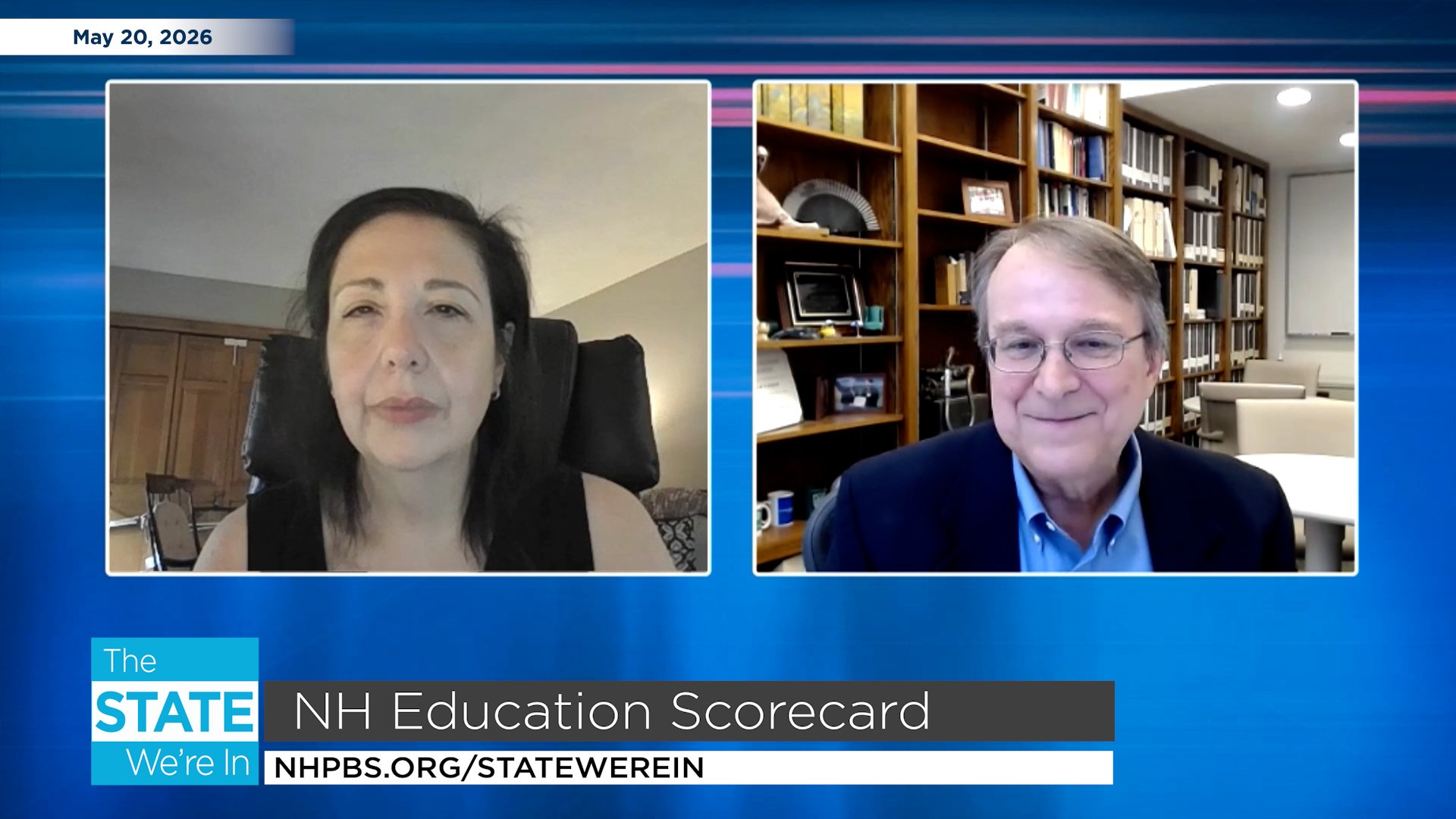
Elementary school students’ progress in reading and math has been quietly stagnating and even eroding for more than a decade across the nation. What’s going on and how can we fix it? Dr. Douglas O. Staiger, a professor at Dartmouth College who focuses on the economics of education and healthcare and one of the authors of the recently released Education Scorecard, discusses education outcomes across the nation and in New Hampshire.
Rosemary Ford:
What is the Education Scorecard?
Douglas O. Staiger:
This is a collaboration with the Harvard Center for Education Policy Research, the Stanford Equal Opportunity Project and me here at Dartmouth. We're trying to address a need for timely and comparable evidence on achievement across states and over time. Part of the problem is that every state has a different test; they have different standards for what's proficient. And we've used the nation's report card, the National Assessment of Educational Progress to kind of calibrate and put all the states on the same scale.
The goal of this project was to really get down to the level where we would be able to show people how their district has been doing, and every year since the pandemic, since 2022 we've been releasing the new annual data. Now the 2025 spring test is out, so people can look and see how they are doing. You can pull up your own district and a district report and see how you're doing relative to similar districts. For each district, we find four or five similar districts within the state, and relative to your state average.
We had 40 something states last year, but a few states we had to drop because of changes in their tests and we couldn't quite use their new data yet, so we have 37 states now. But it's pretty representative of the country.
Rosemary Ford:
What are some of the key findings?
Douglas O. Staiger:
The big picture is that many people don't know that we had an incredible growth in student achievement based on the nation's report card in the last two decades. Leading up to about 2013, many people have attributed that to the accountability in No Child Left Behind and similar state programs, and average achievement rates across the nation increased about two grade levels. So that means if students in the state were averaging about fourth grade level, if their fourth grade students were at that level in 1993 by 2013 on average they were at about a sixth grade level, an unbelievable improvement. Nobody would have guessed that was possible, but then starting around 2013 it's turned around.
The increases were two grade levels in math and about one grade level in reading over that time period, but since 2013 both math and reading have steadily declined by about a grade level. So in math, we've lost half of the gains that we had in the prior two decades, and in reading we're back to where we were in the early ‘90s on reading scores. I think people haven't fully appreciated that there was this turnaround — that’s what we're calling the “education recession,” or the “learning recession,” and it was accelerated during the pandemic. We had some reports on what happened during the pandemic, but especially in math it had started before the pandemic. Since the pandemic, math has recovered a bit, reading has not — it's been flat or even declining.
We've been looking at what's associated with these declines — especially since 2019 the pandemic and post-pandemic period — and we tend to see some things that maybe aren't surprising. Districts that spent more time in remote or hybrid learning during the pandemic had larger declines, and that was especially true in high-poverty districts. There were really two main things that seemed to be associated with which districts had the fastest recovery. One was all the money from the pandemic relief, the ESSER [the federal Elementary and Secondary School Emergency Relief Fund] money, some especially high-poverty districts were getting on average about $8,000 per student in recovery money — so real money that could be used for academic recovery. And what we see from 2022 in the recovery period until 2025 is actually fast recovery in the poorest districts. I think the wealthy districts have their own resources. The poorest districts got the pandemic relief, and it's the middle-range districts, the middle-income districts, that are still quite a bit behind and have had a very slow recovery from the pandemic.
Rosemary Ford:
How is New Hampshire doing?
Douglas O. Staiger:
New Hampshire has been in the middle of the pack for states across the country. They had a similar decline since 2013 and a similar decline over the pandemic since 2019. One interesting thing is at this point — both math and reading in New Hampshire have declined a similar amount since 2019 about four-tenths of a grade level., but they got there in different ways.
Math fell more during the pandemic, so by 2022 we were down about six-tenths of a grade level in math, and then it's recovered about two- tenths of a grade level in the last three years. Reading fell a little less, and then continued to decline. So now they're kind of both about four-tenths of a grade level behind where they were in 2019. So there's still a lot to do both in math and reading.
Rosemary Ford:
Based on your research, what would make a difference when it comes to education outcomes here in New Hampshire? For example, what advice would you give to policymakers?
Douglas O. Staiger:
There are a couple of things that jumped out. One is that I mentioned the ESSER money. That money, if spent wisely, can really matter, and right now those middle-income districts that didn't get a lot of ESSER money and didn't have their own resources have not recovered so well. Spending wisely at the state level — the state has limited resources, but the ability to somehow support those districts to improve, whether it's through resources or connections to other districts,
What is it that will make the most difference for your kids' achievement? Looking at evidence, looking at what other districts have done that seem to work, thinking about teachers are so critical. Thinking about what you can do to support your teachers to help them. My mantra is always, “A better teacher for less time.” They're being really heroic in the amount of time they put in teaching, so you can't expect them to put in more and more hours, you have to make them better teachers for the time they have.
Another thing that came out of our research is that it's very clear that absences went way up during the pandemic. Chronic absences about doubled from 2019 to 2022. They've come down a bit since, but they're still elevated. We found that with higher absence rates your students' test scores are more likely to be declining. Our estimates were roughly that if a student misses 10% of the days, which is chronic absence, they lose about 10% of a grade level. Now we found that if people got back to their old absence rates, where they were in 2019, it would make a noticeable difference. It wouldn't get you all the way back, but it would definitely have made a difference. So that's something I think many districts are focused on. There’s no magic bullet anyone's found on absences. A lot of things can make a small difference, and you have to kind of keep whittling away at it.
Rosemary Ford:
Let’s talk a bit about the economic impact of some of these outcomes. There are people who may think, “I don’t have a kid or grandkid in the schools, why should this concern me?” How would you explain why this is important for everyone?
Douglas O. Staiger:
This is an investment. Economists call this an investment in human capital. There's good evidence that investments you make when kids are in school pay off later in life. You see their longer-term outcomes — not just things like earnings and working, which benefit the entire community, but also things like teen childbearing, crime and being in prison, being on income support. All those things people have found that when the test scores are rising in the state, — like for example that period where test scores increased so much from in the late in the ‘90s and 2000s — you could see the cohorts of kids who went through those schools later in life, and you really saw aligned changes in their life outcomes. People who are going to be adults, and these are going to be adults living in the community in 10 years. You want them to be successful, right? So, I think it will pay off for everybody in every dimension — not just earnings but there's a lot of other things, and all those things will be better if we make the investment now.
Rosemary Ford:
What’s next for the Education Scorecard?
Douglas O. Staiger:
We'll have more test scores. We'll be able to bring more states in for a variety of reasons. Each year we try to focus on some causes, what might be behind, and what are the current likely things that are causing the decline, or why some districts are rising.
One of the next things is social media. The rise of cell phones and social media use in schools and by young people has gone way up, and that timing is right around when test scores started declining. So many people are concerned that maybe that is part of the cause. Like in New Hampshire, about half the states have some form of a ban on cell phones in public schools. Many others are working 24/7 trying to get evidence on this, because we don't really know about the effect of cell phones — there's met a lot of anecdotal evidence about how disruptive they are in the classroom and how they affect students' mental well-being, but there's not great evidence on whether these policies of banning cell phones have been able to reverse those effects.
Rosemary Ford:
Thank you for joining us.
“The State We’re In” is a weekly digital public affairs show produced by NH PBS and The Marlin Fitzwater Center for Communication at Franklin Pierce University. It is shared with partners in the Granite State News Collaborative, of which both organizations are members. For more information, visitcollaborativenh.org.