The State We're In

Legislative Session Recap: Housing, School Funding, Gambling, and Marijuana Legalization in Focus,

 By Rosemary Ford and Caitlin Agnew,

 NH PBS and Granite State News Collaborative

Housing, school funding, gambling, and marijuana legalization. All these and more were tackled by the legislature this session. This week, Anna Brown, Research and Analysis Director for Citizens Count and host of the podcast $100 Plus Mileage, talks about what was and wasn't accomplished this legislative session . 

Melanie Plenda:

Let's start with the unusual makeup of the house this session. How did having such a close split between Democrats and Republicans impact the legislature?

Anna Brown:

Well, originally, I suspected there would be a lot of partisan rancor. Maybe those hardcore on the right or hardcore on the left would be able to really drive a wedge on some issues. But I was wrong. Most of the hot button highly partisan bills were in fact set aside in favor of focusing on legislation that was more likely to get bipartisan support, or was a top priority for legislative leaders. So for example, the House Education Committee had many bills related to the so called Education Freedom Account Program, which allows students to take a per pupil share of state education funding and spending it on private or homeschool expenses. There were many bills related to that people on the left wanted to limit the program or increase oversight. People on the right wanted to expand eligibility or the mountains of money that were going into the program. The education committee actually recommended tabling the vast majority of those bills, which is a way to set aside a bill without having debate without having a full vote. And just basically moving on to other issues. There was also a really bipartisan lead from the majority and minority leaders, Jason Osborne and Matt Wilhelm. They started the session with a co-sponsor bill for marijuana legalization. And I think that, them working together really set the tone, “What about the amount of legislation that was affected by the makeup? How productive were they?”. There was slightly less legislation than I expected this year starting in the session. And I think that legislators edited themselves a little bit because they knew those very partisan fringe issues. We're not going to move forward. So it seems that there was like I said, a little bit of self editing going into the legislative session. Wow. That's interesting. So as you mentioned, the two party leaders Jason Osborne and Matt Wilhelm, work together 

Melanie Plenda:

What about the amount of legislation was that affected by the makeup? How productive were they?

Anna Brown:

There was slightly less legislation than I expected this year starting in the session. And I think that legislators edited themselves a little bit because they knew those very partisan fringe issues. We're not going to move forward. So it seems that there was like I said, a little bit of self editing going into the legislative session.

Melanie Plenda:

Let's talk about the budget bill that was passed this session. Budget bills seem so innocuous, but they never are. So especially here in New Hampshire. Can you tell us about some of the highlights in that bill? And what does it mean for people?

Anna Brown:

Sure, this was an incredibly historic budget, because it was very popular among both Democrats and Republicans. It actually passed on a voice vote at one point, which basically means it was so popular that legislators could pass it just by saying yay, in a chorus, which was notably louder than the nays, so they didn't even need to count the votes. Overall, lots of wins. Here, there's a new school funding formula that increases state support for schools. There's more money for housing development, a pay raise for state employees, seven year authorization for expanded Medicaid, a repeal of the interest in dividends tax, and more. Those are just the big highlights. And then there are some smaller policy changes that didn't get as much news coverage, but are also really interesting. There's a new requirement for law enforcement to post notice on their websites before setting up an immigration checkpoint. This is particularly relevant near the northern border with Canada. There are also new limits on the governor's power to declare an emergency. That's a response to the ongoing emergency related to COVID-19, which went on for several months in I believe, even years, there's also $1 million to develop a civics tech textbook for New Hampshire students in grades K through 12. And lastly, the budget looks and lastly, the budget lifts some campaign donation limits as well.

Melanie Plenda:

What about housing, an issue plaguing New Hampshire and the rest of the country with the high cost of housing and the low stack available, what initiatives that the legislature put forward?

Anna Brown:

First of all, the state budget does include 25 million for the Affordable Housing Fund, and then an additional 10 million for the InVEST New Hampshire Housing Development Fund, which has fewer restrictions related to affordability. So the idea is you can just increase housing stock across the board. The most interesting provision to me, though, is what's called a housing Champion Program. This was very popular in the Senate, less so in the house. The idea is that if cities and towns adopt certain land use regulations, water infrastructure, public transportation, and so on, that helps the development of workforce housing, those towns and cities could get preferential access to state funds. So the idea is this is basically a carrot for the state to say, Hey, how about you work on that infrastructure and zoning to welcome more housing critics in the house, we're concerned that this was a way for the state to play favorites among cities and towns. But ultimately, the program was included in the budget because we all acknowledge housing is a crisis right now in New Hampshire.

Melanie Plenda:

One of the more controversial proposals in the legislature this session was the parental bill of rights that didn't get through to the governor's desk. What did those proposals entail and what happened?

Anna Brown:

There were two big parent rights bills, we had HB 10, which was the House version, and SB 272, which was the Senate version. HB 10 is interesting, because it actually made no mention of gender as introduced. It laid out many existing parental license rights and state law and then added some more enforcement, some oomph to those existing laws. SB 272, on the other hand, specifically would have required teachers to disclose information about a student's gender identity or sexuality if a parent asked, and opponents were concerned, this would threaten the privacy rights of students, especially if they had a hostile parent. 

And that's one reason why SB 272 also had an exception if school personnel had quote, unquote, clear and convincing evidence that a student might be abused or neglected by a parent. Ultimately, both of these bills were defeated in the house, however, with the very slim majority, arguing that we need to protect the safety of students and their privacy. And this bill is inviting attacks on teachers and schools. Those were the general arguments, just a couple of Republicans broke with their party to vote against the bills, and the Democrats mustered enough attendance so that neither bill ultimately passed. It's interesting Governor Sununu did not really weigh in on either bill. He's open to them as a concept. But I think that if we're going to see these bills, or some version of these bills reappear next year, for example, in the state senate, then I would think they probably need the support of Governor Sununu to really get across the finish line.

Melanie Plenda:

And there were also bills addressing gender equality. This session, though nothing was passed. So what were some of the proposals discussed and how might they come up again,

Anna Brown:

There were actually several bills that were retained in committee in the House, which means that these committees can work on the bills over the summer, and then they'll issue a recommendation in the fall. So then there will be a vote often right away when legislators come back in January. So four of those bills for example, HB 264, would allow a sex chain on a birth certificate without a court order. hB 368 would add protections for gender affirming health care, HB 396 would protect differentiation between male and female sex and HB 619 would ban gender transition, care for minors and ban gender identity conversations in school. So as I said, the retaining committee, these bills aren't dead. They are absolutely coming back next year. So I think the parent Bill of Rights was just the very tip of this conversation, and there's going to be a lot more next year.

Melanie Plenda:

So the perennial favorite marijuana legalization came close this session, though all the states around New Hampshire are legalizing cannabis. It's not legal here. Despite the fact as you mentioned, it had support of both party leaders. What does that mean for the next session? Do you think

Anna Brown:

There was a real game changer near the end of the session, when Governor Sununu announced ‘surprise surprise’ he would support marijuana legalization if it was a state run model similar to how we do our liquor stores. So there's a study committee of that issue over the summer. There's also a bill that's in a House committee that would set up state run marijuana stores basically. So this issue is absolutely going to move forward. And the house we know is on board. The House has voted for all sorts of versions of marijuana legalization state run private with taxation legalization without any sales. So now the question is really whether the Senate will get on board and I do think they will have a lot of pressure now that Sununu has finally said with the right bill, this is the way we can do it.

Melanie Plenda:

Let's look ahead to the next session. What are your predictions? What do you think will come up again, there?

Anna Brown:

I'm definitely looking at the housing and childcare issues, because there were those special committees that were set up. We've also touched on some obvious ones like marijuana legalization, gender issues. But one thing that didn't get as much attention this year as I thought it might was energy related bills. Yes, there were some bills that went forward related to bio power related to residential solar panels related to what appears on your electricity bill. But I'm very interested in what the state is going to do related to the renewable portfolio standard, for example, which is set to expire in 2025. Or is there going to be something related to Reggie, the Regional Greenhouse Gas Initiative, something else with offshore wind? Let's not forget a year ago, we were all hit with a huge increase in our electricity bills. And it looks like those bills are going to be coming down for most of us in August. Now that there's new rates coming in, but like I said, this was an issue that I expected more on. So I think that they'll dig in next year.

The State We’re in a weekly digital public affairs show is produced by NH PBS and The Marlin Fitzwater Center for Communications. It is shared with partners in the Granite State News Collaborative, of which both organizations are members.

Juicy Garland; Protests and Intimidation: Drag Story Hour Targeted by NSC 131, Community Responds with Resilience and Solidarity

By Rosemary Ford, and Caitlin Agnew

NH PBS, Granite State News Collaborative

Click here to watch the full conversation on The State We’re In

On The State We’re In, Juicy Garland who performed at the Teetotaller Sunday Drag Story Hour as well as capturing clips of the group protesting before and during her story hour talks about what happened.

Melanie Plenda:

Thank you so much for being here. So Juicy. Can you tell us about your background? How did you get into drag performance? And how did you come to do the story hour on Sunday? 

Juicy Garland:

Yeah, so I had always been interested in drag. I was always a fan of Drag Race. But I actually held off from doing drag for a long time. Part of that was limited resources. Part of that was limited time. But I had friends who started doing drag and who encouraged me to do it around 2018, 2019. So I really took a deep dive in 2019. And then, over the pandemic, I really took a deep dive, started sewing and started working on my makeup and started performing as soon as the pandemic started to ease up. And then, as I was performing, I started doing brunch at Teetotaller. And they invited me to start doing story hours because they felt like my drag was family friendly. And they had been looking for someone who could be family friendly, and who could tailor what they were doing to a different kind of audience than an adult audience. So I was eager to do it. Because I love working with kids, I used to work with kids with disabilities, I used to want to teach and I went into the industry instead. And because of that, I was thrilled to be able to do it and started doing that in November of last year.

Melanie Plenda:

Excellent. And let me ask a little bit about it sounds like you sort of got into drag in 2018. Over that time, what did you learn about drag? I mean, it really is an art form. And I think sometimes that gets lost in these conversations. So maybe we can talk about that a little bit like what is it as a form of expression or as an art form? What is it for you? 

Juicy Garland:

Yeah, so I've always struggled with my self image and my self expression. And I saw it as an outlet for me to really find an alternative way to be myself. But also, I don't know, I'm the kind of person who likes to find boundaries and find out where the edge is, and then push that boundary every single time. And I don't know, my favorite drag queens in history are people like Devine, who really do extreme things with their art and just go well beyond that boundary of acceptability. But also, I don't know, I also love camp. And I love Queens like Ben dilla crem, a famous Drag Race Queen, who really do goofy smart things, aesthetically. And that's something that I've always really just wanted to be able to do. In addition, I don't know, I see gender as a big old joke. We all put ourselves into neat and like convenient boxes. So we're comfortable with the roles that are assigned to us. And I think that often, these labels that we apply to ourselves are really for the convenience of other people. So they're comfortable knowing where we stand. And there's something I think useful and important and interesting, about challenging what those neat little boxes, say about us and say about other people. And drag is a way to challenge those ideas and find new ways of reshaping them. 

Melanie Plenda:

So that kind of brings us to Sunday, so what happened during the story hour on Sunday. And when did you become aware of the protests? 

Juicy Garland:

Yeah, so I show up early. When I get ready for this particular event, I put my face on. And then I drive up to Concord because I don't live in Concord. And it's tough to drive an hour and so I drive up in my face, I take my suitcase with my drag queen in a box. And I then go into the cafe and I get into the rest of my costume. Then I go downstairs and most of the space is set up there's a microphone with an amp. And then there are the chairs arranged, the cafe has excellent management so I don't have to worry about a thing. 

And then I go sit down, I arranged my books at that morning, there was this amazing small family there was this mother with her adult kids, they had just moved to New Hampshire I believe last week, the two kids were adults, the younger had just matriculated into Dartmouth College in to study I believe genetics and biology. The older had just finished school in genetics, and was actually going to work doing genetics research at Dartmouth College. And they were there, moved in from the Bay Area to just be at Dartmouth, and they wanted to see a drag queen. So they came to my show as we were talking because I come from a background in the sciences in my day job. 

These organized men in khaki cargo pants, the goal of them to wear cargo pants, and their uniform T shirts with their little Neo Nazi symbols and their masks and their hats started to make noise and bang on windows and start shouting obscenities and slurs. So immediately this family of three left the space smartly. I am glad they did. And I decided to immediately document what these goons were doing. So I took a brief video, which is what I ended up posting online. And then I stopped that video and immediately sprung into action to touch base with Liam, the manager of the cafe, which we immediately discussed, how do we keep these kids safe when they arrive because none of the other families had arrived yet. And then we assessed we could keep them safe. We made a plan on how we would modify the event. We executed that modification, I remained downstairs to maintain the attention of the fascists outside as they were seen heiling and shouting obscenities. And then after we had arranged the event, we had confirmed with the families who had arrived that they did want to continue with the event. I moved to the alternative space within the cafe. And we hosted the event. 

And despite the noise that these fascists made, after the police arrived, they were moved away from the windows to make sure that they didn't cause any damage to the cafe. They were moved to the front sidewalk where the street is. So that way while they could execute their First Amendment rights, as stupid as they are for these people, they have that right. They were disruptive, but we were able to keep these kids effectively oblivious of the problem. Although they were aware of the noise. We kept these kids safe, the most important part because the event is of course about them. And I was able to not only entertain these kids and read stories about family to them, because it was Father's Day, and that was the theme we had chosen. But I was also able to make sure that the parents were comfortable, and that the parents felt safe as well. And we read through every single story I brought. And I was able to have a great time with these families, and they left happy and thankful. 

Melanie Plenda:

So what was going through your mind? I mean, I know I hear you kind of went into action mode where you were taking care of these different steps. But what was going through your mind either as it was happening, or even once the dust settled? Like, what were you thinking about?

Juicy Garland:

Honestly, for me, and maybe this is a uniquely weird thing for me. And this might come from my background. For me, when I'm faced with a crisis, I immediately go into problem solving mode. And this is something I saw in Liam, the manager of the cafe, he did exactly the same thing. We met with each other, we both had the same, like look on our face, which was, let's solve this problem and figure it out. We did that. And then I think the biggest struggle for me was maintaining the compartmentalization to execute on that. There was a moment I distinctly remember, I don't remember which story it was. But I was like turning a page. And the fascists outside were loud. So I could hear individual words, they were chanting, they were chanting things, like, get off our streets get off our streets, they were clearly organized. These were different people than who had protested before. Before the protesters were effectively lazy is the best word, we had to describe them previously. 

Liam and I had ultimately joked about it. We had been less worried about our safety and organizing anything to like, prevent them from arriving because they had stopped arriving. These were different people. But then also, they chanted, F, slur, F, slur, F slur, that was, in the back of my mind, like part of my mind, recognize that consciously. At the same time I'm reading, like, the first book I read was like, Heather Has Two Mommies, which I did as a joke to myself, I do that a lot, where I'd have a joke that only I know. And no one else gets it. And I'm thinking it's funny. So that's fine. But I'm like turning a page in one of these books. And I'm making a funny voice and entertaining the kids. And I'm like, saying something to make sure that the parents are laughing along with their kids, and that everyone feels good and happy and is having fun. And in the back of my mind is just that word being chanted at me. And like maintaining the compartmentalization to be able to execute on making sure people are safe and feeling safe, was tough. 

But I had a very busy day. So not only did I have the event that I had to execute on successfully, which we did, and then immediately everyone left, one family stayed for a little while, and I chatted with them. And it was wonderful. I love these people, the community of Concord is amazing. I immediately got out of drag, I packed everything away, I got a bite to eat. I planned the next event with Liam like, he and I are both like the same people. We both immediately had the conversation. Not do we do this, again, that never once was discussed. It was when do we do this again. And then immediately after I got in my car, I drove right home as fast as I could to my partner in Massachusetts. I finally sat on my couch in the dark, and was able to have the space to just sort of emotionally react to the whole day. And at that point, I was allowed to feel rage. 

And I just did that for an hour just being angry at the goal that these idiot fascist goons had to think that they could stop me from just letting some kids have fun and hear stories about different kinds of families. Like they even had the power to achieve that end. And they did not. And I won. Yeah. Well, and you talk about doing this again. But I mean, you know, are you talking about keeping the family safe, keeping the kids safe? Or were you afraid for your safety and even going forward? I mean, of course, like that has to be a consideration Right? Like, I'm not dumb. Like I'm a smart person. I know that my safety is at risk. These are violent dangerous people who were dumb enough to put that at risk, clearly. But at the same time, we live in a dangerous time where there's never been more important for me to be an advocate for my own and other people's rights when other people are in a similar position to me. 

And I am already putting myself out there as a loudmouth stubborn person in a wig. Just sticking out like a sore thumb being queer and brightly colored. And I'm not about to stop that. Because even if I tried, I couldn't, I tried that when I was 13, struggling with the fact that I was gay, and it didn't work then. And it's not going to work now, no matter how hard I try. And, ultimately, I feel like it's an obligation for all of us to recognize that Fascism is a problem. And it's not going to go away if we stop pretending to be gay. And passive activism isn't enough. Like we have to put ourselves out there and show them that we're not going to stop being queer because they want us to. And obviously, if the families of Concord don't want to show up, I can't make them. But I'm going to continue putting myself out there to welcome them if they want to keep coming back.

Melanie Plenda:

What, if anything, would you say to this NSC 131 Group and the other groups that are like them,

Juicy Garland:

Ultimately, their views, their fascism has no business in Concord or anywhere else in this country. We fought a war about 80 years ago over this. And I think we settled that pretty harshly with them, then. And I don't think that has changed. There is no space for that kind of bigotry, or that kind of violence anywhere in our culture. And there is no room for tolerance of that kind of viewpoint. We cannot allow that kind of fascism to inhabit any kind of space in our country. It does not belong here. My grandmother lost brothers to that fight. And how many of our grandparents lost family because of that fight? We're not about to tolerate that kind of violence and nonsense now, when we still have family missing because of it. 

Melanie Plenda:

So what generally should people know about attending story hour and what would you like to say to parents and kids who might be thinking of coming?

Juicy Garland:

So, ultimately, I do not broadcast when it's happening again, publicly, online. And that's ultimately because it's meant for the local community and I don't want to publicize it, to keep it as safe as possible, right? So if you are local, go to Teetotaler and make sure that if you are interested in going seek that information out from the cafe itself. I let them manage that information directly. And I have every ounce of trust in Teetotaller to do what they can to keep this event as safe as possible, ultimately use your own discretion. But I have no doubt that there will be additional support and resources from the local peacekeepers, and I'm assuming the local police as well after the last event. There will be plenty more advanced support in order to make sure that this group and others can't disrupt the next event like they did this one. And I am eager to see the next one, simply because I know it will be far more safe and secure than the last one because we will be far more prepared. 


The State We’re in a weekly digital public affairs show is produced by NH PBS and The Marlin Fitzwater Center for Communications. It is shared with partners in the Granite State News Collaborative, of which both organizations are members.
The State We're In: Proposed Asphalt Plant Raises Concerns Among Nashua Residents and Community Members

The State We're In: Proposed Asphalt Plant Raises Concerns Among Nashua Residents and Community Members

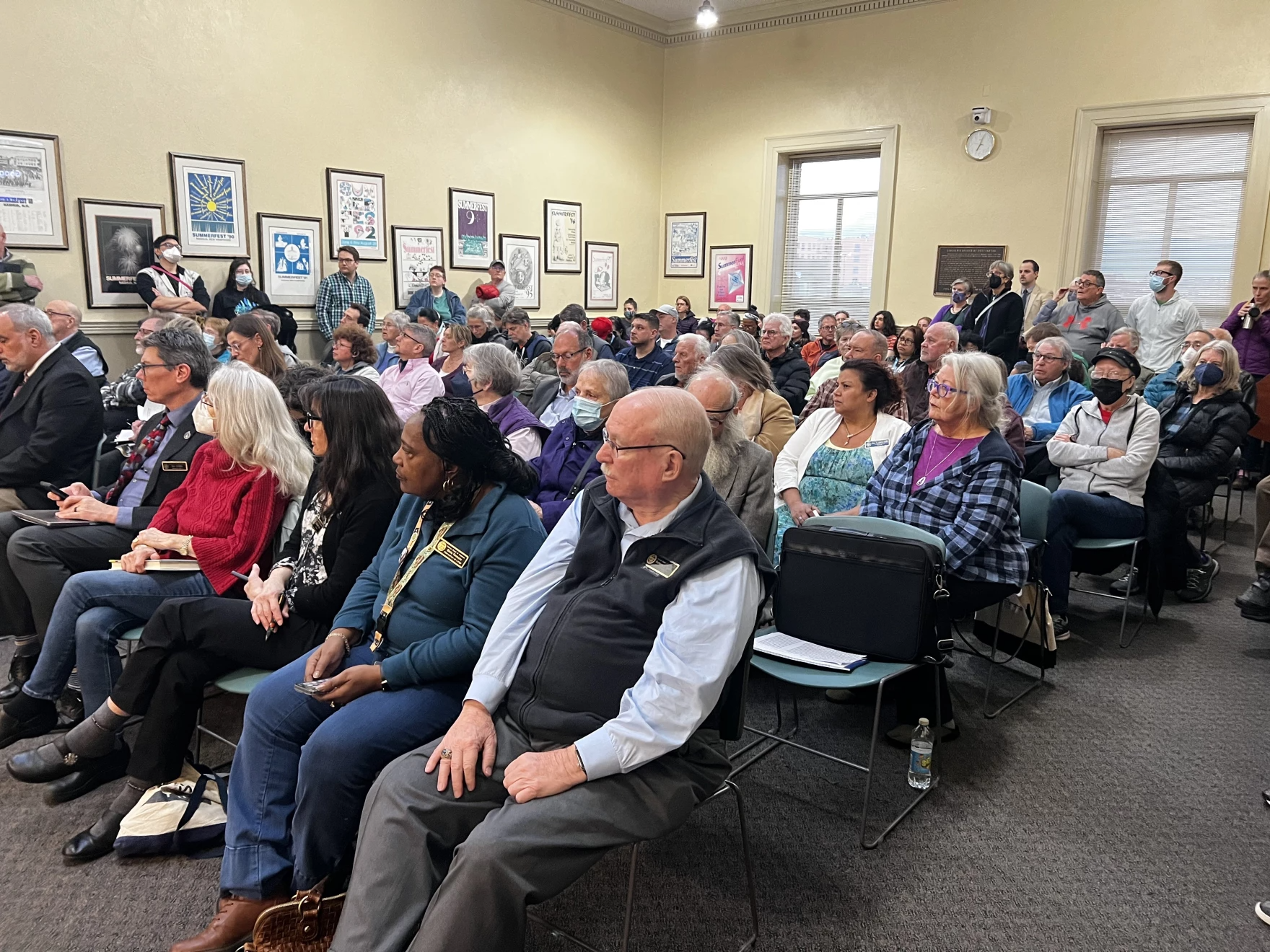
On this week’s episode of The State We're In, we discuss a proposed asphalt plant near downtown Nashua and the concerns of residents and community members around it. Joining us to talk about the issue are Gabriela Lozada, a reporter from New Hampshire Public Radio who has been following the issue, Heidi Trimarco, a staff attorney with the Conservation Law Foundation, and community organizer Kristy Besada. 

Empowering Nonprofits to Make a Difference in New Hampshire Communities

Empowering Nonprofits to Make a Difference in New Hampshire Communities

New Hampshire has a lot of nonprofits that do amazing work to help people from all walks of life. Occasionally, those organizations need some help too — specifically in fundraising so they can keep doing what they do.

On this week’s episode of The State We’re In we talk about NH Gives – a 24 hour period where nonprofits across the state get together to raise funds to aid their work. Joining us to share more about NH Gives and what happens on that day is Kathleen Reardon, the CEO of the NH Center for Nonprofits, and Mary Jo Brown, former Board Member of the NH Charitable Foundation, and the founder and president of Brown & Company and Big Brown Books. Disclosure: The Granite State News Collaborative and NHPBS are participating in NH Gives and GSNC is a media sponsor.

The State We're In: Navigating the Digital Age: Finding the Right Balance for Children's Technology Use

The State We're In: Navigating the Digital Age: Finding the Right Balance for Children's Technology Use

Our relationship with technology is fraught with contradictions. It has the potential to do so much good, and make our lives so much easier. Yet there are dangers and pitfalls to almost everything we do online – especially when it comes to our kids. At what age is it appropriate for a child to have a phone? When should they be allowed to be on social media?

On this week’s episode of The State We’re In, we meet with school psychologist Dr. Nate Jones to discuss all things children, technology, and mental health, and get his recommendations on technology use and talking to your children about the pitfalls of using the internet.

The State We’re In: Experts discuss tick season and tick-borne illnesses in New Hampshire.

The State We’re In: Experts discuss tick season and tick-borne illnesses in New Hampshire.

Tick season has officially begun. If you like going out into nature, then you’ve likely encountered them, and these tiny bugs can cause huge problems for both people and their pets. Where are the little critters in New Hampshire and what kind of trouble do they cause? 

On this week’s episode of The State We’re In, we speak with Concord Monitor science and tech reporter David Brooks, Dartmouth Hitchcock Medical Center infectious disease and tick-borne illness expert Dr. Jeffrey Parsonnet, and Dr. Kaitlyn Morse, founder and executive director of BeBop Labs, a nonprofit that, among other things, is collecting and testing ticks. Dr. Morse was a principal author of a recent study about ticks, called “Passive collection of ticks in New Hampshire reveals species-specific patterns of distribution and activity,” in the Journal of Medical Entomology.

Survey finds young people in New Hampshire satisfied with quality of life, but identify areas for improvement in housing, childcare, and transportation

Survey finds young people in New Hampshire satisfied with quality of life, but identify areas for improvement in housing, childcare, and transportation

It’s no secret that the average age of a Granite State resident skews a little older than most states. That  has an impact on New Hampshire – and not always a positive one. It affects several sectors of life here, from housing and education to the economy. For years, several organizations and government entities have tried to find ways to welcome more young people to the state or get the ones here to stay.

On this week’s episode of The State We’re In, we dive into this issue with Will Stewart, Executive Director at the nonprofit Stay Work Play NH. Will’s organization recently teamed up with the Saint Anselm College Survey Center to conduct a survey checking in with young residents about their quality-of-life. Are young people satisfied with their quality of life in New Hampshire? Is the Granite State welcoming to young people and young families? We discuss the study’s interesting findings and what our state can do to lower the average age of our citizens. 

The State We're In: By Degrees Climate Summit: Exploring Solutions for New Hampshire’s Warming Climate

The State We're In: By Degrees Climate Summit: Exploring Solutions for New Hampshire’s Warming Climate

Spring is a time of rebirth and renewal — and the season seems to arrive a little earlier in New Hampshire every year. A look at temperatures recorded since 1900 by the National Oceanic and Atmospheric Administration shows New England is warming faster than any other region of the world. Winters are shorter, summers are longer and these shifts in temperature are expected to wreak havoc on the New England economy, ecology and cultural heritage. The question is – what can be done?

People of Color in NH share ‘Real Talk’ about the Culture of Policing in the Granite State

People of Color in NH share ‘Real Talk’ about the Culture of Policing in the Granite State

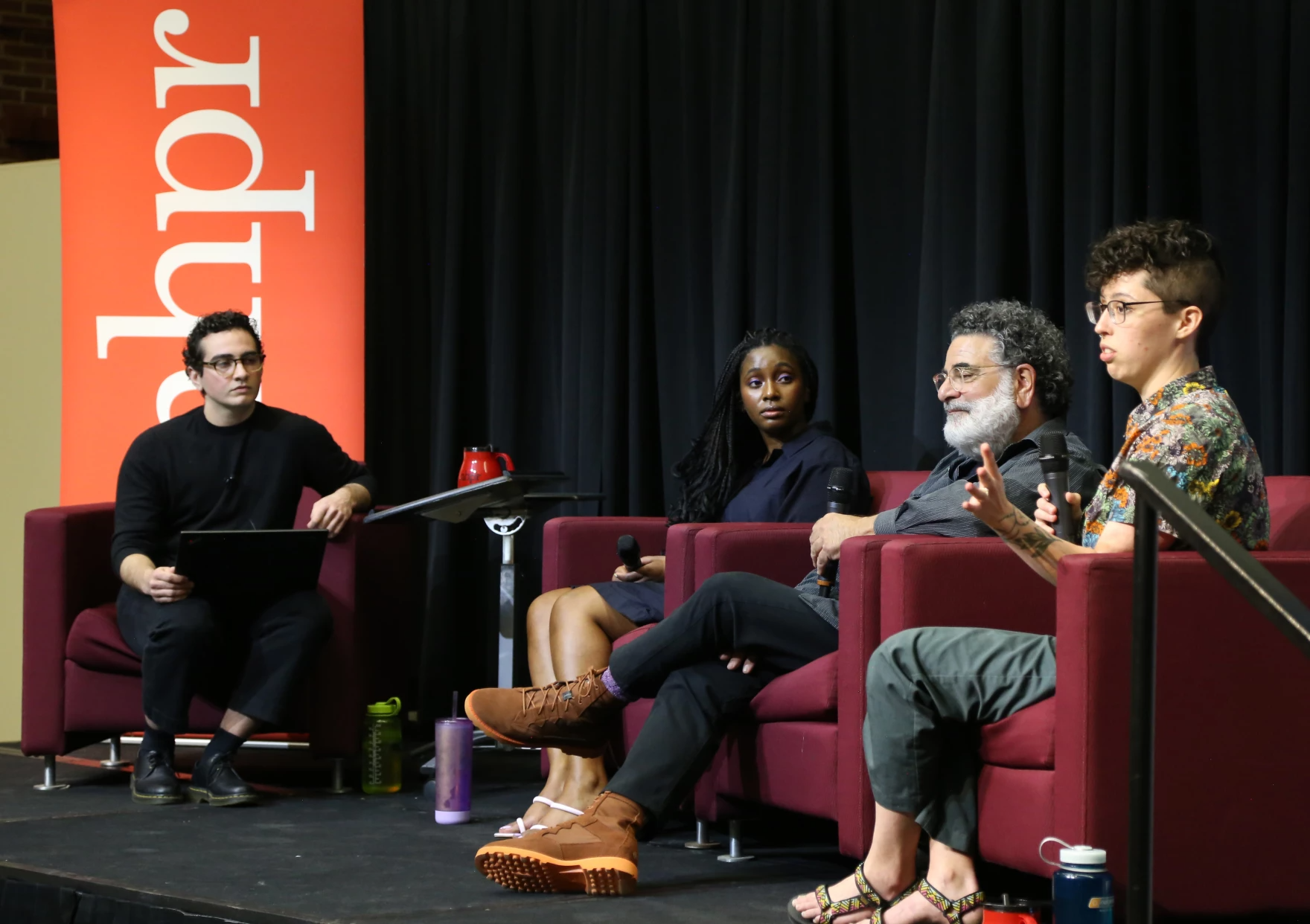
The evening of March 6th was a full house at the UNH Franklin Pierce School of Law’s  Warren B. Rudman Center for Justice, Leadership & Public Service in Concord, NH, where more than 50 people gathered for a Community Conversation on the Culture of Policing, and 36 others joined online. After a moment of reconnecting and conversations in the lobby, the enthusiastic crowd settled into the auditorium.

The State We're In: Banking on Trust: making sense of recent bank closures, bailouts and stock swings

The State We're In: Banking on Trust: making sense of recent bank closures, bailouts and stock swings

Bank problems have dominated newscasts in recent weeks. Headlines about banks being closed, bailouts, and stock price swings can create a lot of anxiety for the average person. Should we be concerned?

On this week’s episode of The State We’re In, host Melanie Plenda talks to Tom Sedoric, Executive Managing Director of the Sedoric Group, and journalist Michael Kitch, a regular New Hampshire Business Review contributor, about the what's really going on in the banking industry and whether or not we should be worried.

The State We're In: We All Have a Role to Play

The State We're In: We All Have a Role to Play

It’s no secret that New Hampshire is in a mental health crisis. The National Alliance of Mental Illness in New Hampshire (NAMI) reported that 221,000 adults in New Hampshire have a mental health condition. That’s more than five times the population of Concord. But there aren’t enough providers to address those conditions, or beds available for those experiencing a crisis. 

In this week’s episode of The State We’re In we discuss the current mental health crisis facing New Hampshire, why these issues are so important to New Hampshire residents, and what solutions and resources are available for Granite Staters. We also look at a year-long mental health awareness series done in partnership with the Seacoast Media Group and The Union Leader. Joining us is Seacoast Executive Editor Howard Altschiller, Union Leader President Brendan McQuaid, NAMI New Hampshire Executive Director Susan Stearns, and the “guiding spirit” of the series, Senior Director of External Affairs Dartmouth-Hitchcock Health and former Chief Justice of the New Hampshire Supreme Court John Broderick.  

The State We're In: Book Ban or Local Control?

The State We're In: Book Ban or Local Control?

Lawmakers are considering a bill, HB 514, which would remove exemptions to state obscenity laws from K-12 staff and teachers – a move that would potentially lead school officials to remove books proactively or face misdemeanor charges. Advocates say this puts more educational power in parents' hands, while opponents contend this amounts to a book ban that will silence minority perspectives. 

In this episode of The State We’re In, we dig into the history, impact, and ramifications of a bill that would require each local school board to develop policy for responding to parental complaints of obscene material and remove some protections for K-12 school officials in state laws against obscenity. Joining us is bill sponsor, State Rep. Glen Cordelli from Carroll County District 7, and New Hampshire Bulletin Reporter Ethan DeWitt, who has been following the topic closely.

The State We're In: Be Warned: Town Meeting is Coming

The State We're In: Be Warned: Town Meeting is Coming

Town Meeting is a quintessentially New England form of government tracing back to colonial times. Residents would gather together to discuss, debate, and vote on the biggest issues in town — especially how to spend money. While Town Meeting has evolved with the times, it still functions in much the same way as it did in the colonial era.

On this week’s episode of The State We’re In we discuss the ins and outs of Town Meeting with Jack Rooney, the Managing Editor for Audience Development at The Keene Sentinel, and Margaret Byrnes, Executive Director of the New Hampshire Municipal Association. 

The State We're In: Changes in Medicaid. What we know so far.

The State We're In: Changes in Medicaid. What we know so far.

Whether or not to renew recent efforts to expand Medicaid insurance coverage for Granite Staters is back before the state legislature. At one point this was a tough sell in the legislature. Fiscal conservatives were concerned it would create increased dependence on the government, while advocates said it improves insurance coverage, health outcomes, and saves lives. Lawmakers have voted twice to continue the program which was vital during the pandemic, and must decide whether to do so again this year. If they don't, benefits are set to end for tens of thousands of people according to officials. 

On this week’s episode of The State We’re In, Paul Cuno-Booth, who covers Health for New Hampshire Public Radio, insurance expert and president of Market Health Connect Keith Ballingall, and Amber Macquarie, one of the thousands of Granite Staters affected by the expansion will discuss what Granite Staters can expect.

The State We're In: Tripledemic - Q&A w. Dr. Aalok Khole

The State We're In: Tripledemic - Q&A w. Dr. Aalok Khole

COVID-19, itself, was bad enough. But this season we’re also dealing with a tough flu variant and RSV. What should you know? And what can you do to keep yourself and your family safe? Host Melanie Plenda speaks with Dr. Aalok Khole, an infectious disease specialist at Cheshire Medical Center in Keene.

The State We’re In - Milford School Board Weighs Bathroom Procedure and Trans Rights

 The State We’re In - Milford School Board Weighs Bathroom Procedure and Trans Rights

Milford citizens recently discussed a topic that has come up in several communities across New Hampshire and the country. It concerns policies for transgender students using school facilities like bathrooms and locker rooms. Host Melanie Plenda speaks with 603 Equality activist Linds Jakows and chair of the Milford school board member Judi Zaino about a recent Milford School Board meeting that turned into a rally in support of transgender students and a discussion of the district's policies concerning those students.

Election Connection: Q&A w. Anna Brown, Steven Porter , Andrew Sylvia, Daniela Allee, and Rick Green

Election Connection: Q&A w. Anna Brown, Steven Porter , Andrew Sylvia, Daniela Allee, and Rick Green

What are the differences between the candidates for governor or US Senator? Where do candidates stand on the issues that matter to you? The midterm election is next week, and there's a lot of information to sift through. The State We’re In host Melanie Plenda and a panel of journalists and state political experts talk about some of the major candidates and races on the ballot.

Midterm Voter Guide: Q&A with David Scanlan and Eva Castillo

Midterm Voter Guide: Q&A with David Scanlan and Eva Castillo

The stakes are high in this year's midterm election, taking place November 8th. It will determine who represents New Hampshire in a variety of offices, from Congress to the State House. What should residents know about voting in the upcoming election? Melanie Plenda, host of NH PBS’s The State We’re In, speaks with New Hampshire Secretary of State David Scanlan and Director of the N.H. Alliance for Immigrants and Refugees and voting advocate Eva Castillo about voting in the midterm election.

Volunteer-powered NH elections buoyed by national campaign

Volunteer-powered NH elections buoyed by national campaign

Keene resident Steven Geller was just looking for an interesting way to connect with people in his community.

The 75-year-old retiree said he has made a habit in recent years of signing up for one-time gigs that are likely to put him in new situations with a variety of people. He’s volunteered, for instance, to deliver Valentine’s Day flowers and Christmas poinsettias. And now, for the first time, he’s signed up to help run a city election.