Under current rules, only single-family homes can be built on more than 75% of zoned residential areas
By Paul Cuno-Booth-Granite State News Collaborative
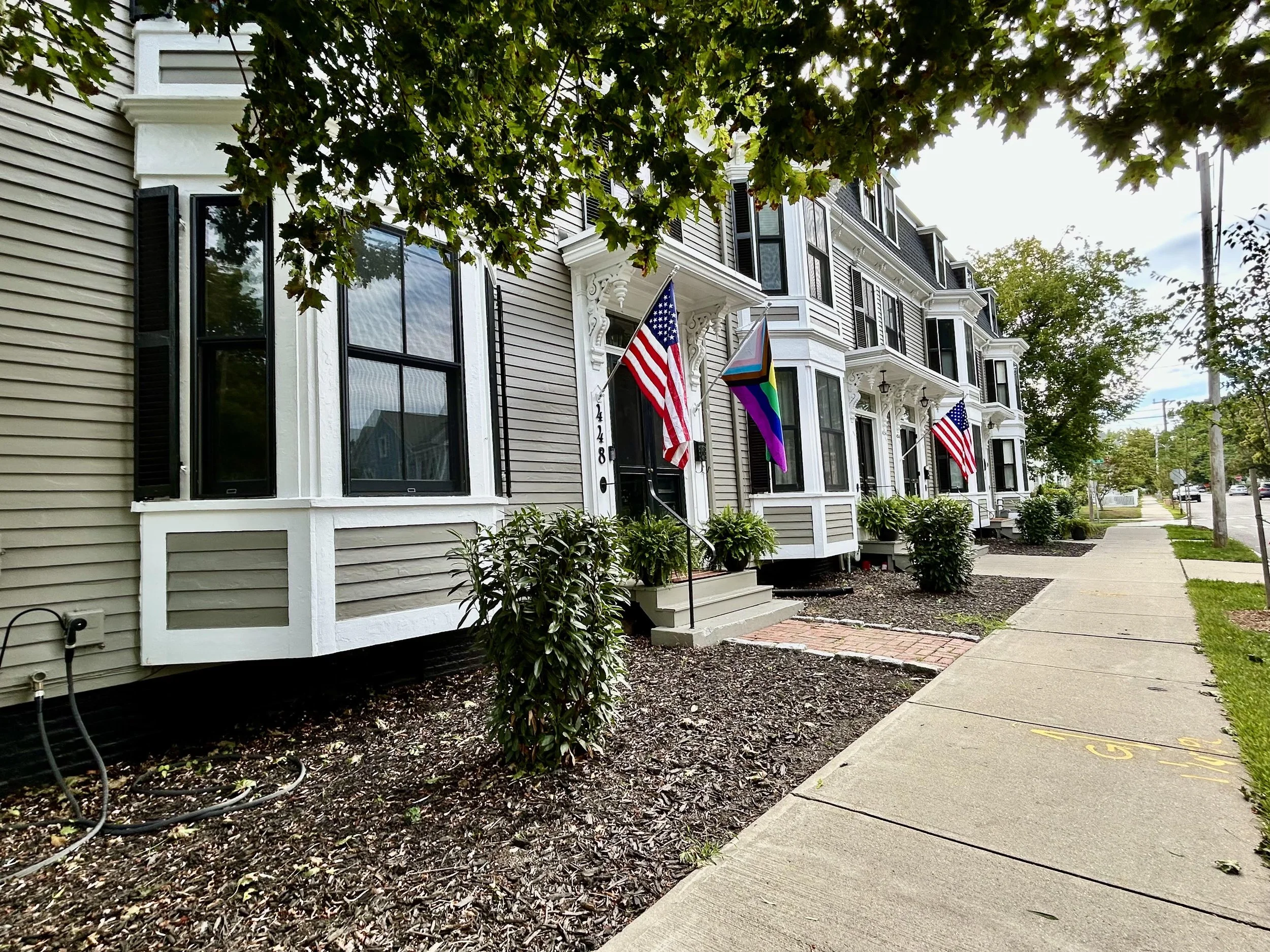
Gerry Duffy, a longtime South End resident and housing advocate, points to the four Lincoln Street townhouses as an example of buildings “where you think, ‘If we could build more of those — if the zoning allowed us to build more of those — that would be a really good thing.’” Deb Cram/Seacoastonline
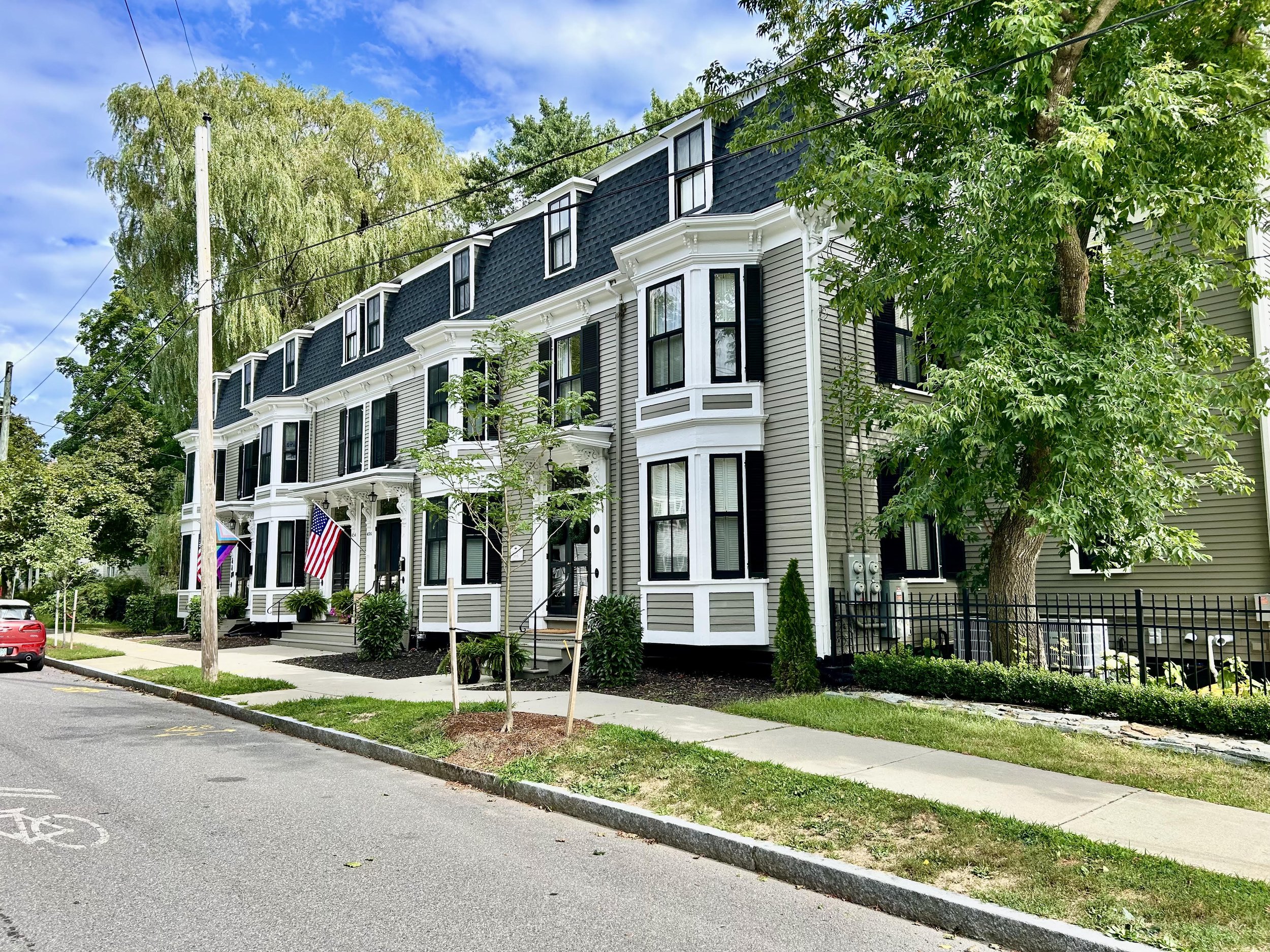
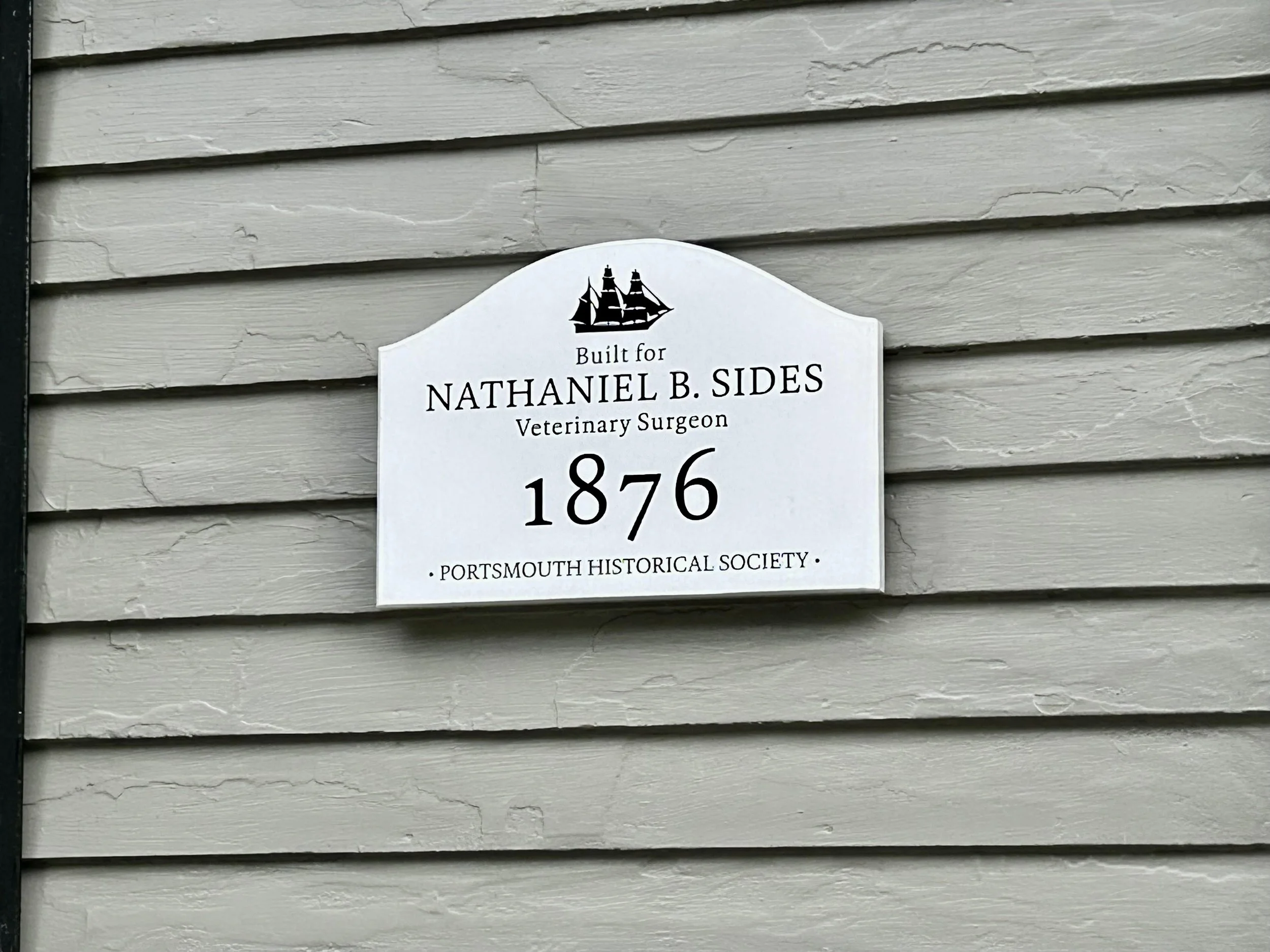
South of Portsmouth’s downtown, on tree-lined Lincoln Avenue, is a stately row of four townhouses built in 1876. It’s the kind of old building that gives historic New England neighborhoods their charm: bay windows, elegant cornices, a row of brick chimneys, antique lamps in doorframes.
And it probably would be illegal to build today.
It’s a small example of what housing experts and advocates say is a bigger problem: restrictive zoning laws that have contributed to Portsmouth’s housing shortage by limiting how much can be built.
Zoning isn’t the only thing that affects the cost and availability of housing. Labor and material costs, interest rates, economic cycles and other factors also play a role. But it’s the factor that local policymakers have the most control over.
And in many cities and towns, zoning regulations passed in the second half of the 20th century have restricted the supply of housing by limiting density and favoring single-family homes on large lots, rather than more affordable options like duplexes, starter homes and apartments.
Historical changes
Portsmouth is not unique, but its history is illustrative.
The Granite State News Collaborative’s review of historical zoning records, many of which are preserved at the Portsmouth Athenaeum, shows how the city’s zoning laws grew more restrictive over the past century.
The city passed its first zoning ordinance in 1927. It allowed dwellings with up to four units in most residential areas, and larger apartment buildings close to downtown. Only one section of the city — an area beginning south of Portsmouth’s urban core and stretching to Elwyn Road and the Rye border — was set aside exclusively for single-family homes.
That changed in 1951, when officials rezoned most of the city’s outlying areas to single-family-only districts.
That established the pattern that more or less holds today. According to an analysis the Collaborative commissioned from the Sunlight Research Center, more than three-quarters of Portsmouth’s residential areas are off limits to anything other than detached, single-family homes.
After the initial change in 1951, city officials further limited how much housing could be built in those areas by requiring larger and larger lots.
In the 1950s, you could build a home in one of Portsmouth’s single-family neighborhoods on 4,500 square feet, about a tenth of an acre. Today, those areas require that lots be a minimum of 15,000 square feet, 1 acre or 5 acres, depending on which of the city’s three single-family districts you’re in.
Setbacks — the amount of space required between a structure and the front, back and sides of the property — have also generally increased.
A group of townhouses that were built on Lincoln Avenue in 1876 could not be built under today’s zoning rules. Deb Cram/Seacoastonline
It’s a similar story in the city’s medium-density “general residence” districts, which required a minimum of 2,500 square feet of land per unit in 1951. Today, depending on the neighborhood, it’s anywhere from 3,500 to 7,500.
In most of those medium-density neighborhoods, it’s also gotten harder to build three- and four-unit structures, which were once allowed by right, but now require a special exception from the zoning board in two of the city’s three general residential zones. (The third, known as General Residence C, still allows triplexes and fourplexes by right and five- to eight-unit buildings by special exception.)
Encouraging housing
The result is that many of the city’s existing homes couldn’t be built today, said Gerry Duffy, a longtime South End resident and housing advocate who co-founded the group Progress Portsmouth.
Duffy cites the example of the four townhouses on Lincoln Avenue, which are in the General Residence A district. According to city records, the property is less than half the size of what would be required today to build four units in that district. And even if it were big enough, building townhouses in that district now requires special permission from the city’s zoning board.
“There are specific examples around town where you think, if we could build more of those — if the zoning allowed us to build more of those — that would be a really good thing,” he said.
In recent years, as the urgency of the housing crisis has become impossible to ignore, city officials in Portsmouth have passed zoning changes meant to encourage more housing.
In 2024, the City Council created a Gateway Neighborhood Overlay District along parts of Commerce Way and Portsmouth Boulevard, allowing apartments to be built in an area of mostly office parks. The rezoning — an outgrowth of litigation between the city and developer The Kane Company, which owns many of the parcels in that area — allows four-story, 24-apartment buildings by right, and developers can unlock additional units by making improvements to public space and renting some units below market rate.
Last year, the city changed its zoning ordinance to allow “co-living” — private rooms with shared common areas — downtown, and the first such development, with with 83 units that could house up to 125 people, is in the works. The city has also partnered with Portsmouth Housing to turn the former Shelburne School site into affordable housing and created a housing trust fund.
The city is now in the midst of a building boom, with hundreds of new units in the pipeline. But some advocates want to see the city go further, including easing restrictions that have limited new housing in single-family districts.
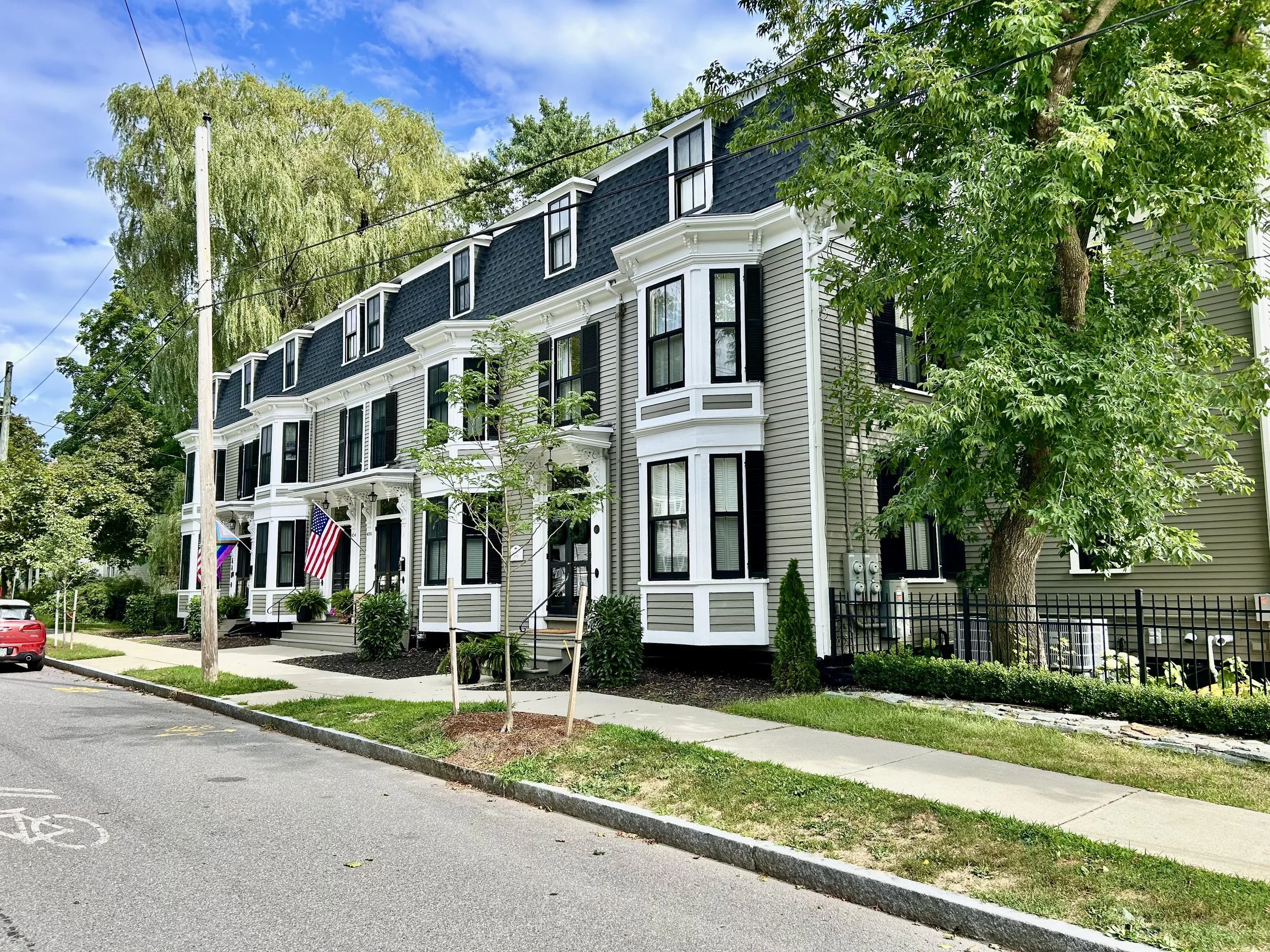
These four townhouses in the General Residence A zoning district on Lincoln Avenue in Portsmouth were built in 1876. Under current city zoning law, they could not be built on the site today without special permission from the zoning board because the property it sits on is less than half the size of what would be required today to build four units in that district. Deb Cram/Seacoastonline
“We have dedicated six times more residential land to single-family-only development than to zones that permit the housing types most residents can actually afford,” Byron Matto — a school board member and co-founder of Progress Portsmouth — wrote in a memo to the City Council earlier this year.
Matto added that his analysis of city land-use data showed that at least 70% of parcels in single-family districts are out of compliance with current zoning regulations, because their lots are too small or they have a use that’s no longer allowed. He argued that puts a “de facto freeze on housing evolution in the majority of our residential neighborhoods.”
Duffy said simply updating the zoning in those areas to bring into compliance what already exists — by reducing setbacks and lot sizes and allowing things like duplexes or small multifamily structures — would create opportunities for more “gentle density,” helping the city meet its housing needs without radically altering the character of those neighborhoods. It’s one of the changes he hopes to see in the city’s forthcoming housing action plan.
“There would be relatively small changes in themselves, but together they would make a big difference,” he said.
This article is part of the Granite State News Collaborative’s “Invisible Walls: Seacoast” project, a series produced in collaboration with Seacoastonline, that looks at how zoning laws, housing and other public policies have resulted in historically high rents and home prices, which have had consequential economic and social impacts on the area’s communities, residents and businesses. The series is a continuation of the original “Invisible Walls” project, which focused on how Manchester’s exclusionary zoning laws reinforced areas of persistent poverty, impacting many aspects of community life, including crime, public health, affordable housing and access to economic opportunity. For more information, visit collaborativenh.org.