By Rosemary Ford and Caitlin Agnew
This article has been edited for length and clarity.
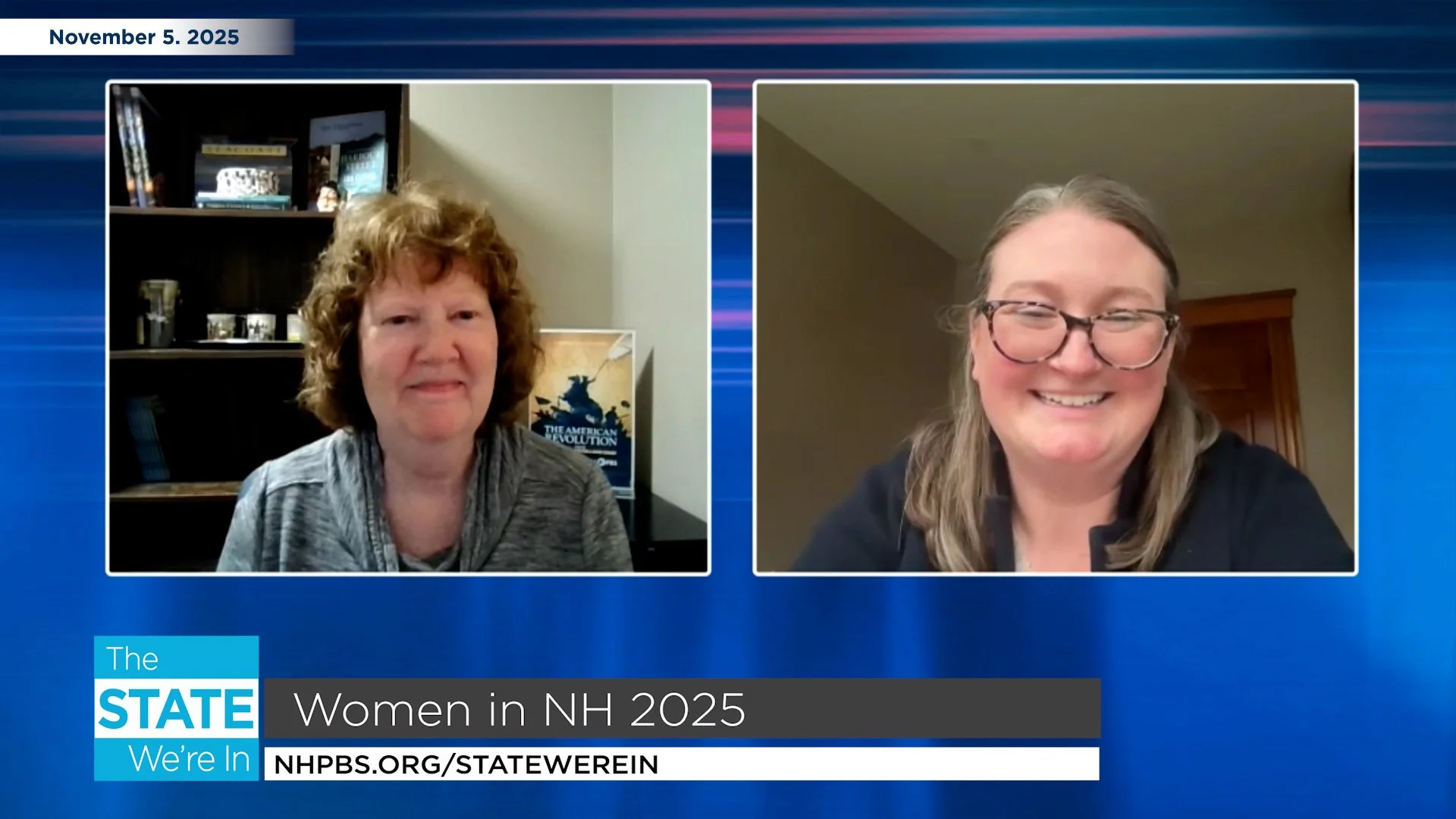
The N.H. Women’s Foundation has released the fourth edition of its biannual report, “The Status of Women in New Hampshire 2025.” This report provides data on barriers women face in the Granite State and highlights several programs that aim to support New Hampshire’s women. How are New Hampshire women faring, according to the report? Here to discuss some of their findings is Devan Quinn, director of policy at the N.H. Hampshire Women’s Foundation.
Judi Currie:
Why does the N.H. Women’s Foundation feel it’s important to release this biannual report?
Devan Quinn:
The Women's Foundation invests in opportunity and equality for the women and girls of the Granite State through research, education, advocacy and grantmaking. We know that when communities, individuals, leaders and our legislature have adequate data broken down by gender, race, ethnicity, age, geography, income and parenting status, people can make better decisions about how to support women and girls in our community. We are focused on being a trusted source of data that people can rely on — not just our community members and our leaders, but also the organizations that are directly serving women and girls that we also provide grants to as well.
Judi Currie:
Why should all residents care about the status of women in New Hampshire?
Devan Quinn:
Half of New Hampshire is women. Women are vital to our economy, to our care economy, and to the thriving communities all across our state. Investing in women is investing in our state, and we know that there is an under-investment in women and girls. A very small percentage of philanthropic grantmaking goes to women and girls. So when we can uplift what's going on just below the surface of some headlines, we can see where those needs are and opportunities for investment.
Judi Currie:
Last year, we discussed the “Status of Girls in New Hampshire” report, and this year we’re discussing the status of women. What are some of the main differences in what women in New Hampshire face versus what girls face?
Devan Quinn:
What we are seeing actually is, unfortunately, a parallel between what women and girls are facing. We reported last year that we were facing a mental health crisis, and particularly for girls. This year, in the release of the “Status of Women,” we're also seeing that women are much more likely than men to experience poor mental health, specifically depression and anxiety. The factors that go into poor mental health for girls are uniquely gendered, and the factors that go into that for women are also uniquely gendered. And so in fact, we want to highlight the opportunity to focus on the issues that we see with a gender lens.
Some of the differences in the report, of course, is that the “Status of Girls” also talks about education and how girls are doing in K through 12 and in college, and the “Status of Women” covers leadership in our elected representation of women.
Judi Currie:
Some things are still the same. The gender wage gap is still present, abortion laws are in flux, and child care remains expensive. What are some of the biggest differences in this report from the last “Status of Women” report, in 2023?
Devan Quinn:
It's important to notice the trends that have not changed. Things that have changed, I would say, are the outside impacts on these inequities on women.
We've heard the high cost of living impacts people across the Granite State, but it has a disproportionate burden on women. So what we know, from a headline type of standpoint, is that New Hampshire has a very low poverty rate. The poverty rate for adults in the nation is low, but when you look at the cost of living, that actually indexes New Hampshire much lower, to 11th, so that high cost of living is having a disproportionate burden on New Hampshire women because the costs of things are much higher, including child care, and it's more likely that women are paying those high child care costs, particularly among single moms.
Also, it's a cost to women and their careers, because women are much more likely to leave the workforce entirely if they can't access or afford child care at all. We also know that access to programs that support families, and particularly women, are not being taken advantage of as much as we would like to see. There's an under-enrollment — the number of women who qualify for programs like WIC or SNAP, we don't have all those who qualify actually enrolled, which could really help them.
And then, of course, women are doing that all along the gender wage gap. So whatever men are earning, women who are in the same type of job and role and responsibility are earning less than men. So when all these things are combined, the new thing this year that we're talking about, is the high cost of living, that burden particularly being on women.
Judi Currie:
Why are these statistics important to highlight, especially during the government shutdown?
Devan Quinn:
It's so important to focus on the precarious position we are in when our systems are not working in a federal government shutdown. Certainly, we're feeling the impact of not having access to SNAP or the potential instability of WIC, or the lack of income from all furloughed workers.
So one thing that we also want to highlight is that SNAP, WIC or Medicaid — none of these programs cover the cost of menstrual products. So when families have additional burdens of not having their SNAP benefits and having to pay out of pocket for things that SNAP would normally cover, that exacerbates the tightness on their budget and they already can't access menstrual products through SNAP, WIC and Medicaid. Now it's an additional thing in their budget. These are the things that particularly impact women when we talk about menstrual product insecurity or “period poverty.”
What we also want to highlight is that these are not luxury items. These are absolute requirements to live. We would never have this conversation about toilet paper or paper towels in public bathrooms and having access, but we do have to advocate for access to menstrual products, which are health and a dignity issue.
Judi Currie:
Another focus of the report is women in leadership positions. The report states that “39% percent of towns have zero women on their select board.” This percentage has decreased from the 2023 report by 3%, but it still is a prevalent issue. Why is there such a significant gender gap in women being elected for local-level municipal representation?
Devan Quinn:
So what we know, and what we're very proud of, is the women's representation we have at the federal level. At the top of our leadership is a lot of women — our two senators, one of two of our congresspeople and our women governor. We are so proud of that in New Hampshire. But, unfortunately, what we see is that as we look at the more local levels — at the state level and then the municipal level — that drops off. The trend actually reverses, and that is very important for our pipeline of women serving in office.
One of the reasons we see that is because women need to be encouraged to run for office. It is more likely that women don't see themselves as potential elected leaders, and they are more likely to run when people encourage them to run. So that's something that we all can do right now. To take action is to think about the women in your life and encourage them to run for office.
This is especially important for all these issues we just talked about — from child care to SNAP benefits to mental health — because we know that when women are elected to office, regardless of what party they're in, they are more likely to support policies that benefit women and girls. They're more likely to support policies in health care, in education, in support of the things that we're talking about. We also know that women are more likely to reach across the aisle and be bipartisan and get things done. So it's not just about seeing women in office, which is very important for girls, to see women leading, but it's also important because women can fix these issues.
Judi Currie:
The report also highlights programs that are doing important work to support women in New Hampshire. What were some of the programs highlighted, and how are they helping women?
Devan Quinn:
Because of this opportunity to increase women's leadership we run the Women Run! program, which is the Granite State's only nonpartisan program that encourages and trains women to run for office at the local and state level. We actually had 15 alums this year run for municipal or citywide office, and we're so proud of all the positions they are in and have earned to be in and all of the people who are more likely to run in the future after attending our program.
This is something that we can all be part of. We can encourage women to run for office. Think about the women in your life — ask them to run. Oftentimes, the women who are looking for people to run for office and saying, “You should run for office” actually need a mirror to look at themselves and say that they should run for office.
Judi Currie:
What else can be done to help support women in New Hampshire?
Devan Quinn:
We need to first be aware, and part of this report is an education effort. It is for people making decisions about investments in the programs that support women and girls. We will give this report to every single legislator. We'll send it around to many partner organizations, state agencies and our grantees. We provide grants to support women and girls, and they use this data as well to apply for grants, and that's how we can encourage more philanthropic giving to organizations that support women and girls.
If you want to take action right now, give to the organizations in your community that are serving women and girls. Not enough money goes to organizations supporting women and girls. Reach out to your legislators and tell them about the issues that you care about. We have a volunteer legislature who wants to hear from you and really values your thoughts and is accessible to you via call or an email. They usually absolutely respond and think about what you have to say and consider running for office.
We need more representation, more diverse representation, because we know that when a diversity of perspectives are in a room — whether it’s a hearing room or a community organization — the group is going to come up with better solutions when there is diversity of perspectives. So jump in and get involved and run for office.
Judi Currie:
Thank you Devan, for joining us today.
“The State We’re In” is a weekly digital public affairs show produced by NH PBS and The Marlin Fitzwater Center for Communication at Franklin Pierce University. It is shared with partners in the Granite State News Collaborative, of which both organizations are members. For more information, visit collaborativenh.org.