By Rosemary Ford and Caitlin Agnew
This article has been edited for length and clarity.
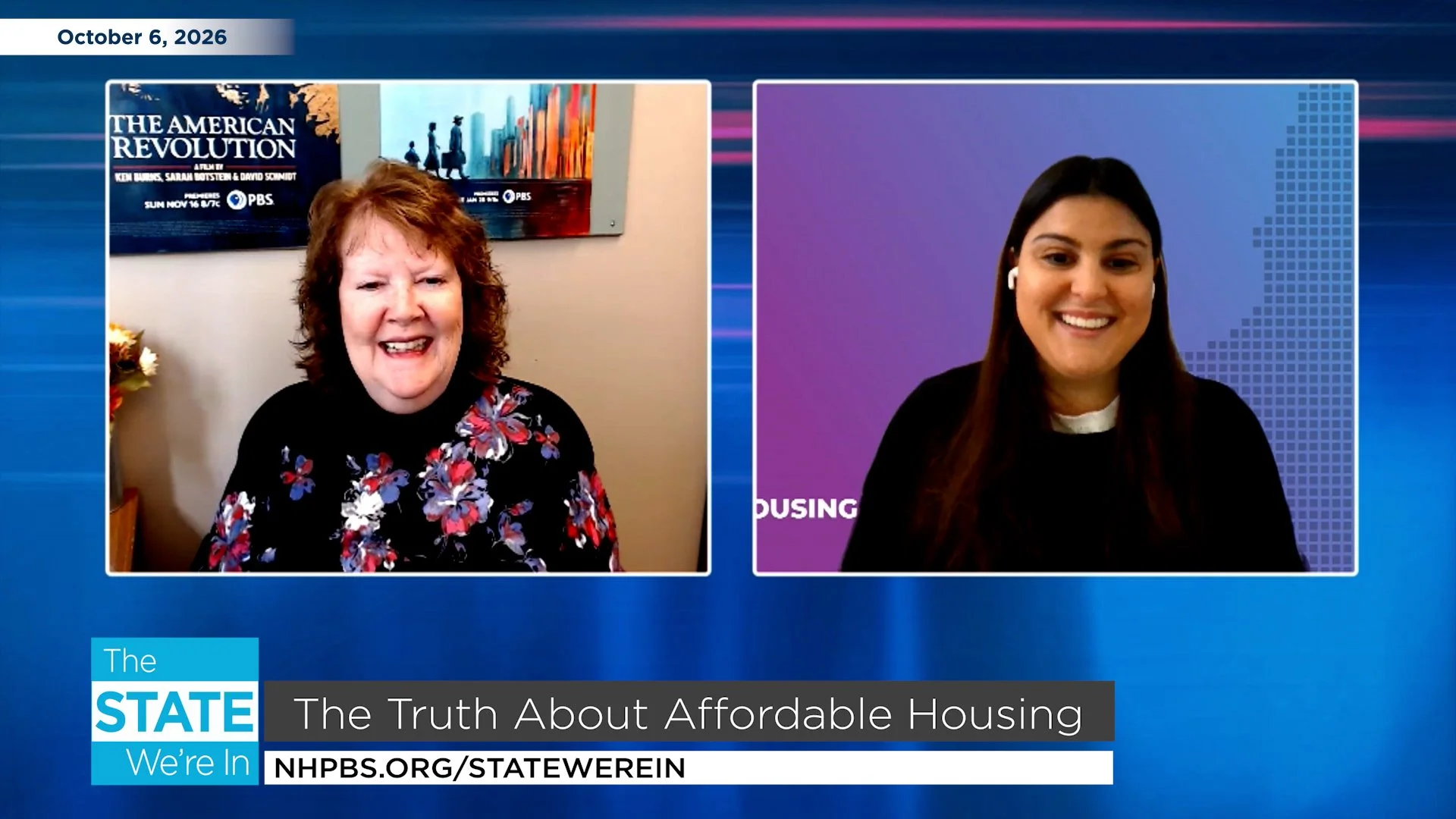
More affordable housing in New Hampshire would solve many problems for Granite Staters, so why are some communities reluctant to allow developments to come to fruition? They might be operating under some misconceptions, according to a new study from New Hampshire Housing that may go a long way to dispel those myths. Here to discuss that study is Alexsandra Galanis, New Hampshire Housing’s manager for research and data analytics.
Judi Currie:
For people who aren’t familiar with it, can you explain what New Hampshire Housing is?
Alexsandra Galanis:
New Hampshire Housing is a self-supporting public corporation that promotes, finances and supports housing solutions for people across the state. We work in a number of areas, including home ownership, rental assistance, financing affordable multifamily housing, and research and data. We were established by the state in 1981, but we do not receive any operating funds from the state government.
Judi Currie:
Why did New Hampshire Housing decide to commission this study?
Alexsandra Galanis:
One of the concerns we hear repeatedly when affordable housing is proposed in a community is that it will lower the value of nearby homes. That is an understandable concern because for many households, their home is their largest financial asset. But while that concern comes up frequently in local discussions, it had never really been tested using statewide New Hampshire data. We really wanted to move the conversation from assumptions to evidence.
A second point worth emphasizing is that there was already research for parts of the country, but New Hampshire, as you know, is very different, and our market is very different compared to metropolitan markets like New York City, L.A. etc. We wanted a planning board to have an actual evidence-based report that is New Hampshire-specific. We wanted to know what actually happened here and make sure that the data that's being shown from other studies is actually being held true in New Hampshire communities.
Judi Currie:
Did the results match your expectations?
Alexsandra Galanis:
We went to the study wanting to answer four major research questions, and we knew that the existing literature showed that adding affordable housing either had no measurable impact or had, in some cases, a modest positive effect. So the overall result was consistent with the broader research, but what was important to us was seeing whether that held true in New Hampshire.
What I found particularly interesting was how consistent the main result was when Community Scale, the consultant we hired to do the study, tested it in different ways. We wanted to have a research firm that designed a quasi-experimental design — what I mean by that is having a study that is completely unbiased and making sure that they're using evidence-based methods to show the causal effect, not just a correlational study.
Judi Currie:
What were the key findings?
Alexsandra Galanis:
A little bit about the context of what the data is. The study looked at 93 affordable housing developments containing 3,124 units. These connected those developments with more than 68,000 open market home sales from 2008 through 2025. They were able to compare the results with 136 market-rate multifamily developments.
We had four major questions. The first question was: Does affordable housing lower nearby property values? This was our biggest finding of the study, and we found no measurable average decline in nearby home values associated with affordable housing development in New Hampshire.
The second question was: Does affordable housing have a different effect than comparable market-rate multifamily housing? Again, we found no reliable evidence of a property value penalty specific to affordable housing.
Third was: Does the result change depending on how close you are to the development or how much time has passed? Community Scale tested different distances and different periods before and after completion, and did not find any opening shock, a construction period decline or delayed decline.
Lastly: Does the result differ depending on the community or project type? Most of the analysis found no measurable effect. So what was striking was the consistency of the finding across a number of different ways looking at the data.
Judi Currie:
How do myths get perpetuated and start to feel like facts?
Alexsandra Galanis:
We know housing is very personal. I think people care deeply about their homes, their neighborhoods and their communities. So when something new is proposed, there are naturally questions and concerns, and I think the belief can become accepted as fact when they hear it repeated often enough, particularly when there has not been local data available to test it.
Anecdotes can also be very powerful. Someone may point to one property or one neighborhood and just generalize that experience to every affordable housing development. That is why research like this is so useful. It lets us take a claim that people have heard for years and ask, “What does the evidence actually show when we look across the entire state?”
I just want to reiterate that New Hampshire Housing wants to build more housing, so it was important that we hire a consultant who really has no stake. They're just using the data and they are really applying all of the statistical models and applying the actual experiments and making sure that the data is robust and testing it to ensure that the results are replicable. It's important that we also want to make sure that we're putting evidence-based data that's unbiased out there, and then we're able to have Community Scale do the analysis.
Judi Currie:
What other kinds of housing myths would fall into this category?
Alexsandra Galanis:
Another good example is the concern that building more housing, particularly multifamily or workforce housing, will overwhelm local schools and significantly increase education costs. New Hampshire Housing actually has studied that question several times over the past two decades, but most recently, we commissioned Urbanomics to conduct a study called, "From Homes to Classrooms.” I definitely recommend checking that report on our website. They did a great analysis, and they looked at the relationship between new housing development and public school enrollment in New Hampshire. What the study found was pretty interesting.
Statewide, the number of public schools to students per housing unit has actually declined over time, from about 39 students per housing unit in 1990 to 29 today. When they look specifically at housing built between 2014 and 2023, new housing generated about zero to 16 public school students per unit statewide. I think that, on average, housing built between 2014 and 2023 generated an estimated net fiscal benefit of about $1,700 per unit for local school districts. I won't go into much more detail, however, I think this type of study also really helps to debunk some myths about what it can mean to add more multifamily housing and the impacts on school districts and communities.
This type of study is very similar to the property values question because these are understandable concerns. People are thinking about their schools, their property taxes and their communities, but sometimes an assumption gets repeated for years until it becomes accepted as fact. What studies like these allow us to do is actually look up the New Hampshire data and see where the assumptions hold up. That doesn't mean new housing never brings additional students. Of course, some new households have children. The point is that the data does not support the assumption that every new housing unit equals a new student, or that multifamily housing automatically overwhelms the school system.
Judi Currie:
What else would you like our audience to know about the state of New Hampshire’s housing stock?
Alexsandra Galanis:
The bigger overall picture is that New Hampshire still does not have enough housing that people can afford at different stages. Even myself — I mean, I'm still a renter. I'd love to be able to buy a home. I just unfortunately cannot afford it given my income levels. I really recommend looking at our recent 2026 housing report publication that we put out last month. The median single-family home price reached $575,000, and only about 15% of New Hampshire households can actually earn enough to afford that priced home.
Housing availability is also increasingly connected to our workforce and economy, because employers need workers. They need to be able to find housing within a reasonable distance of their jobs. If you're a nurse, you may need to be on call. You don't want to be living an hour away from the hospital. You need to be at least 30 minutes and be able to come in at an appropriate time rather than having to live further away because that may be more affordable.
When we talk about needing more housing, we're not talking about one type of housing. We need starter homes, apartments, workforce housing, affordable housing, housing for older adults, and opportunities for people who want to downsize. A healthy housing market has choices, and I think that right now we're still in a seller's market. Right now, we're at like 2.3 months supply. Anything under six months is considered a seller’s market, so I think the connection back to the study is that if we're going to address that shortage, communities need good information when they are considering new housing, and we want those conversations to be based on what the evidence tells us rather than assumptions that may prevent needed housing from being built.
Judi Currie:
So interesting! Thank you.
“The State We’re In” is a weekly digital public affairs show produced by NH PBS and The Marlin Fitzwater Center for Communication at Franklin Pierce University. It is shared with partners in the Granite State News Collaborative, of which both organizations are members. For more information, visit collaborativenh.org.