
More candidates from outside the two main parties are running in NH, but they still face a range of obstacles
By Kelly Burch-Granite State News Collaborative
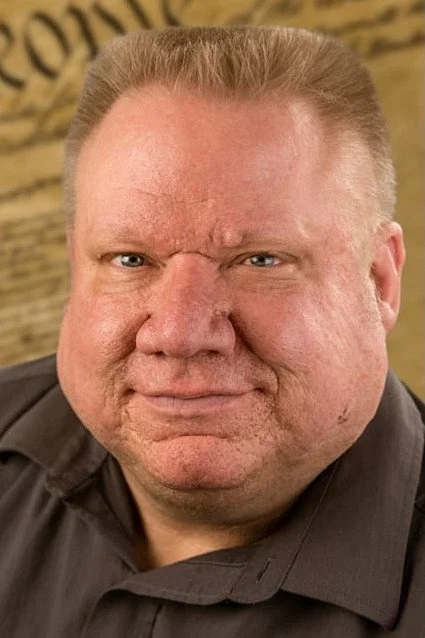
Third-party candidates receive very limited media coverage and are usually denied access to debates, and ‘that’s frustrating,’ says Edmond Laplante, the U.S. Senate candidate for the N.H. Constitution Party. (Edmond Laplante campaign)
This year, Edmond Laplante spent hours standing outside grocery stores across the state, collecting the 3,000 registered voter signatures that would allow him to run for U.S. Senate as a third-party candidate.
“It was tough, to be honest with you,” said Laplante, a Richmond mechanic and member of the Constitution Party. “In a way it was a good thing, because I got to talk to people of different points of view. … I got a good sense that a lot of them aren’t happy with their pick.”
Many voters in New Hampshire and nationally have expressed frustrations with the two major political parties, and as of September roughly 35% of Granite State voters were registered as undeclared, according to the Secretary of State’s office. This election, experts report an uptick in the number of independent and third-party candidates running, with representation in the races for governor, U.S. Senate and U.S. House, as well as local and state races.
Yet, the bar for independent and third-party candidates to get on the ballot, compete in debates and receive media coverage remains frustratingly high, those candidates report.

‘There’s nothing defensible about how the state is doing things nor how the media is doing things,’ says Robbie Mahrou, a Walpole independent running to represent the state’s 2nd Congressional District. (Robbie Mahrou campaign)
“There’s nothing defensible about how the state is doing things, nor how the media is doing things,” said Robbie Mahrou, a Walpole independent running to represent the state’s 2nd Congressional District.
NH’s high threshold for ballot access
New Hampshire law (specifically, RSA 652.11) defines a party as a political organization that received at least 4% of the total votes cast in the previous election.
“That’s a little high compared to other states,” said Dante Scala, professor of political science and international affairs at the University of New Hampshire. Nationally, the average is around 2 percent, he said.
Currently, the Democratic and Republican parties are the only ones recognized by the state.
The Libertarian Party had access to the ballot from 1990 to 1997 and achieved it again in the 2016 election, when gubernatorial candidate Max Abramson received about 4.3% of the vote. However, the party did not maintain ballot access by meeting the 4% threshold in the 2018 election.
“For a third party, it’s tough to hit that mark every two years,” Scala said.

‘There is no shortcut’ for a third party to get access to the ballot except to garner a minimum of 4% of the vote in the general election, says Stephen Villee, the Granite State Libertarian Party’s candidate for governor. (Stephen Villee campaign)
Stephen Villee of Hampton is running for governor as the candidate of the Granite State Libertarian Party — the official New Hampshire affiliate of the national Libertarian Party — with the explicit goal of getting his party on the ballot, and helping it stay there.
“Barring some miracle, I’m not going to win, but I want to get 4%,” Villee said. “What I hope to do is run every two years for governor so we continue to be a major party in New Hampshire.”
While the process is daunting, it’s necessary, in Villee’s eyes.
"I realize this is the only way,” he said. “There is no shortcut.”
Challenging signature requirements
New Hampshire maintains the 4% rule because it has an interest in making sure that anyone whose name appears on the ballot is a “legitimate candidate,” said Deputy Secretary of State Brendan O’Donnell. This helps keep ballots clear for voters, he noted.
Parties that are recognized by the state can hold a state-run primary process, through which their candidates have access to the ballot.
For people not affiliated with the two major parties and who want their names printed on the ballot, the state has an alternative process. A candidate must declare their intent to run, pay filing fees and collect a number of signatures (called nomination papers) from registered voters.
The number of signatures increases, depending on how high an office a candidate is running for. A candidate not affiliated with a major party must collect 150 signatures to appear on the ballot for the N.H. House of Representatives; an unaffiliated candidate for governor or the U.S. Senate must collect 3,000 signatures. Those numbers are not “intended to be a high burden,” O’Donnell said.
The fact that unaffiliated candidates regularly meet that threshold indicates that state law isn’t holding people back from running independently, said Anna Brown, executive director of Citizens Count, a nonprofit that provides voter information in New Hampshire.
“Every election year, there are a good number of candidates that are going to meet that hurdle,” she said, noting that this election has “roughly double” the number of independent and third-party candidates as the 2020 election did.
Yet candidates say meeting state requirements is incredibly time-consuming. At one point, Mahrou thought, “There’s no way we’re going to get there,” he said.
Signatures must be verified by town clerks, and then the Secretary of State’s office. Signatures from people whose information doesn’t match their voter registration — for example, people who have moved or changed their name since registering to vote — are discarded, so candidates must collect more than required to have a buffer.
Despite the intensity of the process, both Laplante and Mahrou said that collecting signatures was a positive experience. According to Mahrou, the process is “what democracy should be.”
“Every candidate should be forced to do it,” he said. “To look people in the eye, and have a conversation instead of retreating into their safe rooms, with their safe little political parties.”
Another barrier: media, debate access
Getting on the ballot is only one challenge facing independent candidates — and it’s perhaps not even the biggest one, according to Brown. Party-endorsed candidates have access to fundraising, training and other resources, while independent candidates “don’t have a big infrastructure behind them,” she said.
In addition, third-party and independent candidates don’t receive the same media coverage and debate access that mainstream party candidates do.
“It takes an awful lot to be seen as a viable third-party candidate,” Scala said. “The dilemma is you’re not seen as viable, and the media has a bias toward competitive races.”
Candidates unaffiliated with a major party are excluded from most debates, including those hosted by the Granite State News Collaborative.
“Not being able to do debates, not getting equal air time … that’s frustrating,” Laplante said.
Mahrou thinks the exclusion is a disservice to voters, saying, “That obligation to make sure that there’s a breadth of voices within the conversation is completely suppressed within the media.”
Options for inclusion, hindered by status quo
But, overall, while the state has certain barriers to third parties, Scala said, it doesn’t have the same barriers to diverse political ideas. Many politicians who identify as libertarian-leaning have successfully run for office within the Republican Party, he noted.
The state’s primary system, which encompasses the majority of candidates, allows independent voters to participate, O’Donnell said. In addition, he noted, a candidate doesn’t have to be on the ballot to win – a write-in candidate could take office if he or she received enough votes.
However, there are policy changes that could make New Hampshire more open to independent and third-party candidates, election reform advocates say.
One is a ranked choice voting system, in which voters select candidates by order of preference. Maine adopted this policy in 2018, becoming the first state to use the system in a federal election. (Massachusetts voters rejected a 2020 measure to adopt rank-choice voting.)
This system addresses a common concern in voting for third-party and independent candidates: the idea you’d be “throwing away” a vote, Scala said.
In a ranked-choice system, any candidate who receives more than half the vote is declared the winner. If no candidate achieves that number, votes for the lowest-ranked candidate are dropped, and a voter’s second choice is applied.
Another, more “outside-the-box,” option is a system of proportional representation, common in European democracies, Scala said. Under that system, representation is allocated based on what percentage of the vote a party received. That would require a change in federal law, but not a constitutional amendment, according to Scala.
Any changes are hindered by the fact that the majority of politicians in elected office represent the two major parties, and thus have an interest in maintaining the status quo, experts say. In New Hampshire, as in many states, even the Ballot Law Commission is a political entity, Mahrou points out.
“I don’t imagine either [major party] … would be too thrilled about the idea of having several political parties that are viable,” Scala said.
Discontent could lead to change
What’s clear — both from the increased number of third-party and independent candidates, and from voter polling — is that many people are frustrated with the two major political parties.
"I feel confident that it’s an unbiased opinion to say most people are fed up,” Brown said.
Historically, there have been periods of intense discontent when Americans have opted to change the political system dramatically, Scala said.
“There’s a lot of unrest, even chaos, in U.S. politics these days,” he said, “and maybe something will result from that, that could change the system.”
Laplante would love to see that. In the meantime, he’s hoping to win a U.S. Senate seat, working to the best of his ability within the existing system.
“Ultimately I’d like there to be no parties,” he said, “but I don’t see that happening anytime soon.”
These articles are being shared by partners in the Granite State News Collaborative. For more information, visit collaborativenh.org.