By Rosemary Ford and Caitlin Agnew
This article has been edited for length and clarity.
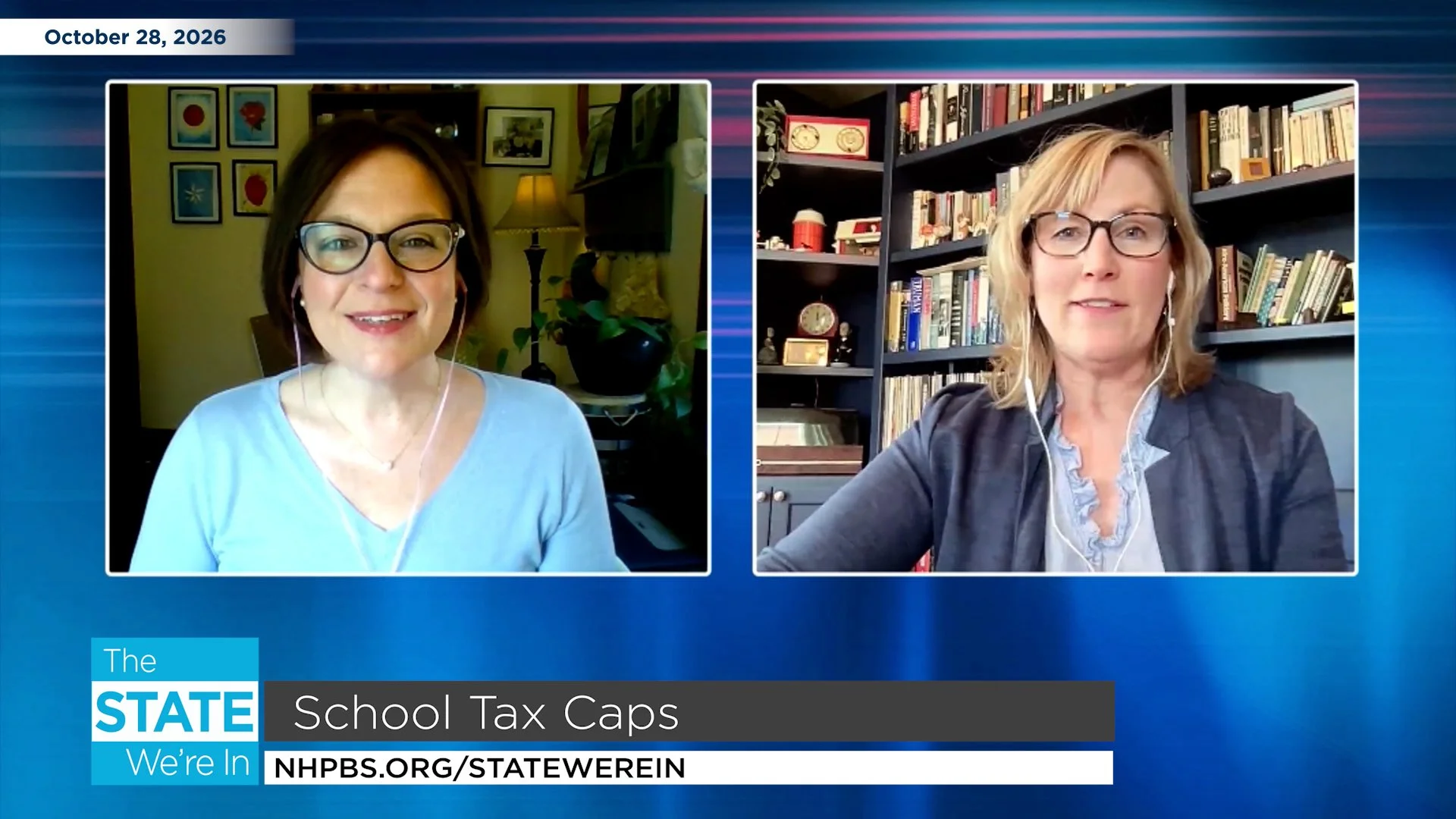
New Hampshire voters are faced with a number of choices when they hit the polls on Nov. 3. Among them, they are being asked whether they wanted to limit the growth of local school property taxes and place a cap on school administrative costs. Supporters say the proposal could help provide relief to property taxpayers. Opponents worry it could leave school districts struggling to cover rising costs. Discussing how the proposal would work and what it could mean for schools is Annmarie Timmins, who covers youth and education for N.H. Public Radio.
Melanie Plenda:
Let’s start with the basics. What was Question 2 asking voters to decide?
Annmarie Timmins:
It asks voters two questions within one question, which is part of the confusion. The first part of the question asks if they want to limit the growth of their property tax levy. That translates to do they want to see their tax bill increase only to the rate of inflation? So it would limit the amount of the increase each year to inflation plus new construction. The second part of that question asks if they want to limit the administrative expenses within the superintendent's office to just 6% of the budget? So those are a lot of numbers. There are a lot of caveats. So it's confusing, but those are the two impacts voting ‘yes’ would have.
Melanie Plenda:
You mentioned the two different limits: one on the local school property tax levy and one on school administrative unit — or SAU — central office spending. How would each work?
Annmarie Timmins:
Voting ‘yes’ on the question would not cap their taxes, so to speak, but it would sort of allow them to predict how much their tax bill would increase year to year. The school tax rate could not increase beyond the rate of inflation and new construction. So they would know that we're not going to see an 11% or a 7% increase, so it could not increase more than 3%. So, that's the first piece of it.
The second piece of it is the harder one to understand and explain. Within a school budget, the superintendent's office represents some small portion of that. In a lot of districts, it might be 3% to 5% of the overall budget, for things like the superintendent's salary, legal fees, payroll, directors of curriculum or special education directors. It's a little unclear what that would include, and that's part of the confusion.
This cap would say your superintendent's budget can't be more than 6% of your overall budget. And the reason that is in there is because the question's proponents said if you need to find savings in your budget to meet a tax cap, that's where we want you to look. But what I've been hearing is that in a lot of school districts, their superintendent's budget doesn't approach 6%, so they're already below that amount.
Melanie Plenda:
If voters approve the caps, how long would they be in place? And what happens if a district needs to raise more money than the cap allows?
Annmarie Timmins:
This cap would be in place for two years, and then it would expire unless voters approved it again.
A school budget depends on local property taxes, which is the bulk of the school budget, some state revenue, and some federal revenue. So if costs increased, the school district may have to look at cuts. A lot of things could drive the increases to reach beyond the rate of inflation. We've seen transportation costs go up, health insurance has spiked, special education costs are a bit unpredictable. So there's a lot of things that drive potential increases in a school budget that are sort of non-negotiable. Schools have to cover these costs.
There's another question about revenue. If state revenue goes down or federal revenue goes down, local taxpayers are going to have to pick that up. I think the easiest way to say that is your school might not increase its spending, but if it gets less state revenue or less federal revenue, you're going to have to pay more in taxes.
Where does this leave everything? It's really hard to know right now. But if a school budget requires a tax rate that would go over a cap, they'd have to find savings somewhere. If they couldn't find them in the superintendent's office, they'd have to look in other places. Maybe they cut extracurriculars, or maybe they have fewer buses and kids are waiting longer to get to school. Maybe they cut a teacher, so classes are bigger. I think one thing that's really confusing about this question is it says very clearly that this cap would only affect the central office spending and would not affect classroom instruction or student services, and people have raised concerns and said that's really not something you can promise because of uncertainty with school budgets.
Melanie Plenda:
What are supporters hoping the caps will accomplish? And what are opponents most concerned about?
Annmarie Timmins:
I guess I should start by saying both sides of this question agree that property taxes in New Hampshire are too high and taxing some people out of their homes. So that's the place to start with this.
It was passed in the Legislature by Republican lawmakers, and they say: “Your school budget drives the biggest part of your property tax, so we need to rein in school spending.” That’s the most direct way to control increases in your property taxes, and so that's the proponent side of this argument. The other side would say,”We agree property taxes are way too high. We think the state should step in and subsidize public education more than it is right now.”
Melanie Plenda:
As you mentioned, the ballot question says the caps do not affect classroom instruction or school-based services. To summarize, what do voters need to understand about that statement?
Annmarie Timmins:
They need to understand that the question would allow them to control the increase of their property taxes, limit what their superintendent's office is spending in relation to the whole budget. But I think opponents of this question have made a good argument that you can’t promise that student services and classroom instruction won't be affected, because if the school budget has to increase because of transportation or special education or health insurance, or the school district gets less money from the state or the federal government, that's going to require the district to look somewhere for savings.
A lot of things are non-negotiable. That leaves school districts a few places to look for money, and that's the areas they can cut, which we've seen come up before in budget discussions. It could be music. It could be art. It could be cutting a teaching position. So that's where opponents of this question say you can't make a promise that school instruction and student services won't be cut.
Melanie Plenda:
There was a lawsuit challenging the ballot question’s wording. What did the people who brought the lawsuit argue, and what happened in court?
Annmarie Timmins:
This is a good question because it comes up again and again.
The people who sued said what we just discussed, which is you can't make that promise because we don't know if classroom instruction will be cut. So that's a false promise, according to the lawsuit. Second, you're asking two questions here: Do you want to cap your tax levy, and do you want to cap your superintendent spending? But you can only vote on those together. You don't get to vote on those separately, and the wording is confusing. So that's another question they raise — this is too confusing for voters to really process and understand on the ballot in the voting booth.
The judge dismissed that lawsuit. But I think what's been lost in the discussion is that the judge did not say those arguments failed. He said this is not the time to bring that forward. If school districts are concerned about voters understanding or misunderstanding this question, they can hold public hearings and explain that to their voters. We've seen a number of school districts do that, to help voters understand what a ‘yes’ vote could mean and what a ‘no’ vote would mean.
Melanie Plenda:
Annmarie, for someone who is still trying to decide how to vote, what are the most important things to understand before they get to the ballot box?
Annmarie Timmins:
I think this would require some homework, but I think it's the best way to learn more. One is you may want to call your superintendent's office or search online. Perhaps your school district has had a public hearing on this. I've found links to many that are on school district websites. There's been a number that I've watched, and that's been helpful for me. I guess the other is: look at the school portion of your tax bill, and look at that over the last few years. Has that been increasing beyond the rate of inflation, and what do those increases look like? And so, I think you just need to ask more questions.
Melanie Plenda:
Thanks so much for joining us, Annmarie.
“The State We’re In” is a weekly digital public affairs show produced by NH PBS and The Marlin Fitzwater Center for Communication at Franklin Pierce University. It is shared with partners in the Granite State News Collaborative, of which both organizations are members. For more information, visit collaborativenh.org.