By Rosemary Ford and Caitlin Agnew
This article has been edited for length and clarity.
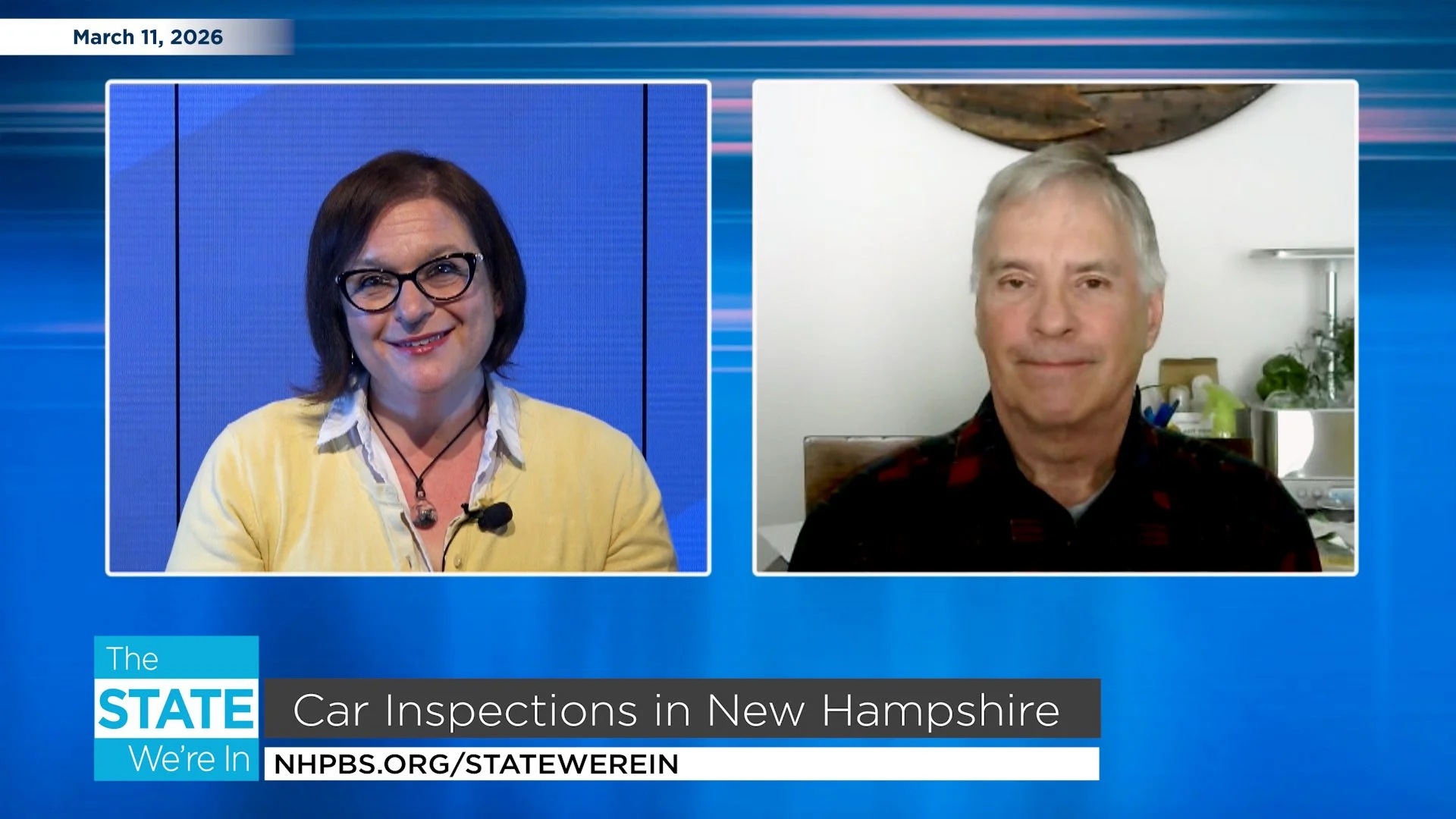
The changes surrounding car inspections in New Hampshire have been causing confusion for many Granite Staters over the past few months. People are rightfully bewildered about what the future holds when it comes to that formerly dreaded sticker. How did we get here, and what does that mean for New Hampshire? Rick Green, a reporter from The Keene Sentinel, who has been following this story closely.
Melanie Plenda:
Can you walk us through where we are now with car inspections? What’s the latest?
Rick Green:
The latest is that you don't need to have car inspections. According to the state Attorney General's Office, there's been a lot of back and forth on this question, particularly since there's litigation involved and legislation that ended the program. It gets to be quite a complicated picture — but right now, the inspection program is off.
Melanie Plenda:
Tell us more about the lawsuit with Gordon Darby, the company that ran the state's vehicle inspection program. Where do things stand?
Rick Green:
We have to go back a little bit to when the Legislature passed a budget trailer bill last year that ended this program – and they did so without asking the feds . It turns out the state has a requirement under its plan for complying with the Clean Air Act that it inspect cars, because part of that inspection goes into the emission system, and air pollution is a concern. So it never asked for federal approval, and the state contractor that runs this program, Gordon Darby, said, “You can't end this program without getting approval for a waiver under the Clean Air Act from the federal government.” The state had never done that, so the moment it ended this program, it was out of compliance with that act.
Melanie Plenda:
Rick, tell us more about how we got here. Where did this all start?
Rick Green:
It's kind of been a perennial issue at the state Legislature. These inspections rankle people who feel like it's inconvenient. They get their cars into the mechanic periodically anyway, and they don't want to be told by the state that they have to inspect their cars. They make the point that most vehicle accidents are not caused by equipment breakdowns, but by driver error. So there are a lot of people who are upset with the program, and it always comes up in the Legislature.
But, on the other hand, there are safety concerns. We live in a state where there's a lot of salt that's applied to roads, and that leads to corrosion in cars – brakes, wheels, undercarriage – and the opposition’s argument is that we need our cars inspector from a safety basis.
Melanie Plenda:
While car inspections are not necessary now, could this change again?
Rick Green:
A federal judge has ordered that the state continue with its inspection program, but the state is not complying with that federal order. The state is appealing that order right now, and meantime it's out of compliance with the federal court. So whether more ramifications come down from that, we'll see, but potentially the judge could fine the state for not complying with her order.
Melanie Plenda:
Now, without New Hampshire, only 13 states require them. Are there any major differences in road safety between states that have inspection programs and those that do not?
Rick Green:
There are different arguments on both sides of that. It really depends on the state, too. We're in a part of the country that gets really bad weather and uses a lot of salt on the roads. So is it fair to compare that with a state that's on the West Coast, where they don't have such deterioration of vehicles, or is that apples to orange? There's nothing definitive in terms of being able to say for sure that this is going to harm road safety by getting rid of this.
But that’s certainly what advocates like AAA say – that these inspections pick up a lot of problems that wouldn't otherwise be addressed, at least in the short term. With an inspection program requirement people have to get that sticker, and so they bite the bullet and make repairs that they otherwise might not make.
Melanie Plenda:
U.S. Sen. Jeanne Shaheen said that she disagrees with the elimination of car inspections, adding that not having these inspections will create greater risks to those traveling. What about other Granite Staters? Where do people stand on the issue, based on your reporting?
Rick Green:
I think there's really a loud group of motorists who have weighed in to the state Legislature and said that not only is it onerous having to get vehicles in for inspection and may be not necessary because we see our mechanics periodically either way. But there's a big group that says that they're unfair – particularly to people who might have a check engine light on. It's kind of a problem that's hard to track down. It can take hundreds and hundreds of dollars to clear that light — even to diagnose it can be expensive.
So I think there was a lot of built-up antipathy toward this program anyway. But it never was able to advance through the Legislature, so it got thrown into this budget trailer bill, which is a way of getting things done that might not otherwise pass in the regular legislative method.
Melanie Plenda:
Should Granite Staters still be looking to get their cars inspected, even if the inspection is no longer necessary?
Rick Green:
You're probably not going to go in and get an official sticker right now — you might be able to, but just on the general question of, “Should I have a mechanic look at my car periodically?” I think the answer everybody agrees is yes. Things like brakes and suspension need to be looked at from time to time – again, particularly with the conditions we have out here.
The other aspect is an environmental one. There are people who say that our cars should be looked at from an emissions standpoint. We shouldn't be polluting the air anymore than we need to.
Melanie Plenda:
Could getting rid of this program have long-term impacts on the environment? You mentioned its connection to the Clean Air Act, for example.
Rick Green:
It's hard to answer that kind of question. New Hampshire isn't a place you would ordinarily think about that has a lot of air pollution, but there are some parts of the state — particularly the southern areas off of the main interstate corridors — where there have been indications of some pollution. New cars are made to reduce that kind of pollution. These inspections look at onboard diagnostic systems that monitor your emission controls. So, theoretically, it could have an impact on the environment if people are not keeping their cars maintained properly.
Melanie Plenda:
How can New Hampshire residents stay up to date if anything changes with car inspections in the next few months?
Rick Green:
The Attorney General's office has been pretty good about putting out news releases, and of course, they have their website, and they've been advising the public about changes. The advice has ranged from we're going to hold these in abeyance for a few months to we're not doing it at all to at one point you should continue getting it up to a certain day. But right now, everything’s on pause while this thing is being fought out in court.
Melanie Plenda:
Thank you Rick for joining us today.
“The State We’re In” is a weekly digital public affairs show produced by NH PBS and The Marlin Fitzwater Center for Communication at Franklin Pierce University. It is shared with partners in the Granite State News Collaborative, of which both organizations are members. For more information, visit collaborativenh.org.