By Rosemary Ford and Caitlin Agnew
This article has been edited for length and clarity.
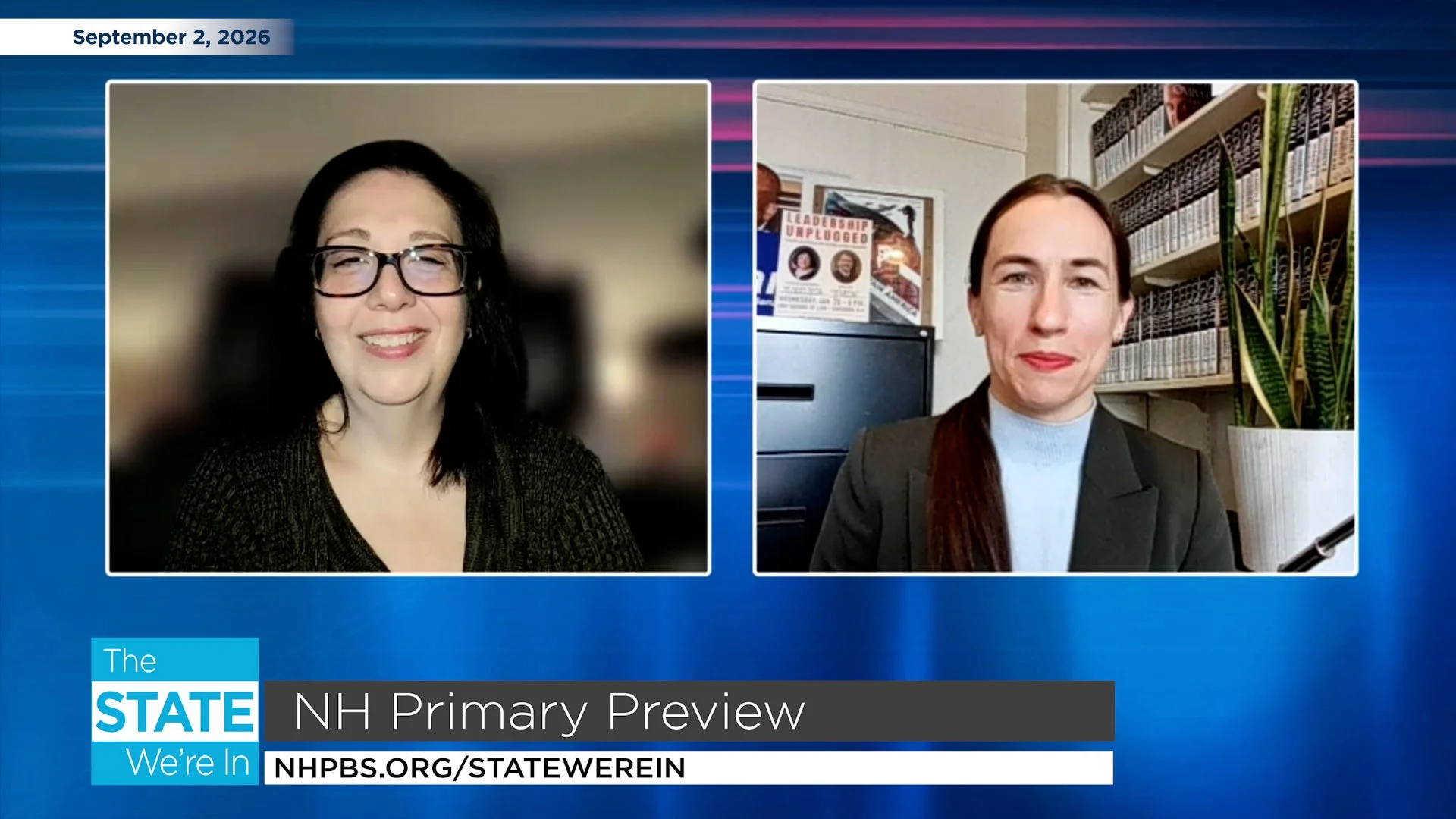
New Hampshire’s election season is here. Offices from U.S. senate to state representative are up for grabs. Here to talk about the primary election and where to get information about the candidates is Anna Brown, the Executive Director of Citizens Count, a nonprofit and nonpartisan organization dedicated to educating voters about the political process.
Rosemary Ford:
The state primary is on Tuesday. Lots of high-stakes races this year. Let’s start with one of the more exciting races: U.S. Senate. Jeanne Shaheen is not running for re-election, leaving a wide-open field. Let’s start with the Democrats. Who’s running? Who looks like they might win?
Anna Brown:
Chris Pappas, the current representative for District One for Congress in New Hampshire, is running for the U.S. Senate, and thus far he has been the favorite to win the Democratic primary. He has a long political history in New Hampshire. He served on the Executive Council before he went to Washington. His family has a well-known Manchester restaurant, the Puritan Backroom. But he does face a challenge from Karishma Manzur, who is running a campaign to the left of Chris Pappas, for example, challenging him on issues related to Israel and foreign policy.
She's definitely a more left-leaning progressive candidate, and she's gained some momentum in recent weeks. Polls are showing that she is gaining that name recognition. That was really a big uphill battle against someone like Chris Pappas. So I still think Chris Pappas is going to win the primary, but I think that we are going to see a surprising turnout for Karishma Manzur, and we'll have to see how Pappas navigates that moving towards the general election, attracting those farther-left voters as well as the moderates that are usually his strong voting base.
Rosemary Ford:
What about the Republicans? Some recognizable names there too. Who’s looking good there?
Anna Brown:
We have John E. Sununu, who used to serve New Hampshire in Washington a couple decades ago. He is the brother of former Gov. Chris Sununu and the son of another former governor, John H. Sununu. He is running a campaign endorsed by President Donald Trump, despite criticizing Trump in the past.
He was sort of the early favorite to win, and he's still the favorite to win. But he's being challenged by Scott Brown. Scott Brown, funny enough — even though he did not get the Trump endorsement — does have the support of some farther-right Republicans in New Hampshire who see him as less part of quote “the deep state” as sort of an alternative candidate, more independent thinker.
So the Scott Brown/John Sununu primary, as I said, is probably going to go to Sununu. Things got a little interesting this week when Sununu turned down a WMUR debate with Scott Brown and said that he'd done enough public conversations with Scott Brown. So he got a little heat for that, but he's definitely started focusing on the general election and Chris Pappas as opposed to this primary.
Rosemary Ford:
When folks head to the polls, they will also be choosing folks for state rep and state Senate. Can you explain the importance of these roles for our audience? What do they do?
Anna Brown:
In New Hampshire, the governor is actually a very weak office. The governor doesn’t have a line-item veto. She can only sign or veto the bills that come to her. It's really up to the Legislature when we're talking about setting the state budget, deciding on school funding, spending on the roads you're driving on. So it’s much of what happens to you on a day-to-day basis that's related to the government is really driven by the House and the Senate. In fact, Governor Ayotte did veto quite a few bills this year, and then the Legislature overrode several of those vetoes.
These are the elections that I really encourage voters to pay attention to. There's so much noise about the national level — and I'm not saying that's not important, but these state races, as I said, are really going to impact you
Rosemary Ford:
Are there any state rep or state Senate races that you are following?
Anna Brown:
First of all, there are some state representative primaries in the Lakes Region that I think are very interesting.
The Lakes Region overall saw a lot of population growth during COVID-19 and has moved to the left during the same time. It’s more open to Democrats, perhaps. There's also a really interesting movement to support independent and moderate candidates around the Gunstock Mountain issue, which is sort of this local controversy about wanting to privatize that, and there was some criticism that this was a Free Stater sort of action, and that really rallied moderates.
Now there are some moderate Republicans in office who are having primary challenges from more conservative, more Trump-oriented Republicans. If those more conservative, Trump-oriented Republicans win, they may be facing a harder win in the general election. Democrats may have more of an opening there, whereas if the moderate Republicans win the primary, they may be more likely to hold on those seats. So that Lakes region in general is really open to some political change, and I'm going to be watching that.
I'm also watching races around Manchester. We saw in recent election cycles a definite move towards the Republican Party in Manchester. That was true with the mayoral race and with the state Senate race. Now for some state senators in Manchester, we have primaries on both sides. So I'm definitely going to be curious to see who is victorious there, and we're looking at voter turnout.
Rosemary Ford:
What about uncontested races for state rep and state senate? How many are there?
Anna Brown:
The interesting thing is in the House and Senate, contested races are more rare in the primary than uncontested. Usually, it's actually really hard for parties to recruit enough candidates to fill every seat on the ballot. There are plenty of districts in New Hampshire where one party or another wasn't able to fill the full slate of candidates. So that's another reason why these contested primaries can be so notable, because it means there's that much interest, and overall, there were a lot fewer candidates who stepped up to run at the state level than in the past few election cycles.
I think we can speculate about a lot of different reasons for that. I know that a lot of us are really frustrated by the tone in politics. I can see why people wouldn't want to step up. I think there's also conversations between the two parties about how they support or don't support local candidates. But definitely, even if there is a blank space on your ballot, don't rule out the chance for there to be a write-in campaign, because I have also seen in New Hampshire candidates get just enough write-ins that they end up on the general election ballot after the primary. So your vote really does count in New Hampshire. It's often decided at that state level by a dozen or fewer votes — so definitely make sure to learn who's on your ballot and get to the polls.
Rosemary Ford:
Tell us about the work Citizens Count has been doing to keep voters informed about the candidates.
Anna Brown:
Citizens Count creates a profile for every candidate who appears on the ballot at that state level — for your state representative, your executive councilor, state Senate, governor, all these races we've talked about. Then we send a survey to every single candidate. We follow up by phone, by email, and I tell them, “We don't endorse. Whatever you want to put on that profile page, however you want to answer these questions. If you want to tell us you hate our questions and you’d rather we ask something else. We'll put it on the page.” We truly just want to make it that one-stop shop for voters to see where their candidates stand.
We've had over half of candidates respond to us. Those that haven't, that are in office, we still have their full voting records. We've tried to fill in as much as we can, so please do take advantage of our website. We want this to be a resource for both candidates and voters to connect.
Rosemary Ford:
Thank you Anna, interesting as always.
“The State We’re In” is a weekly digital public affairs show produced by NH PBS and The Marlin Fitzwater Center for Communication at Franklin Pierce University. It is shared with partners in the Granite State News Collaborative, of which both organizations are members. For more information, visit collaborativenh.org.