By Rosemary Ford and Caitlin Agnew
This article has been edited for length and clarity.
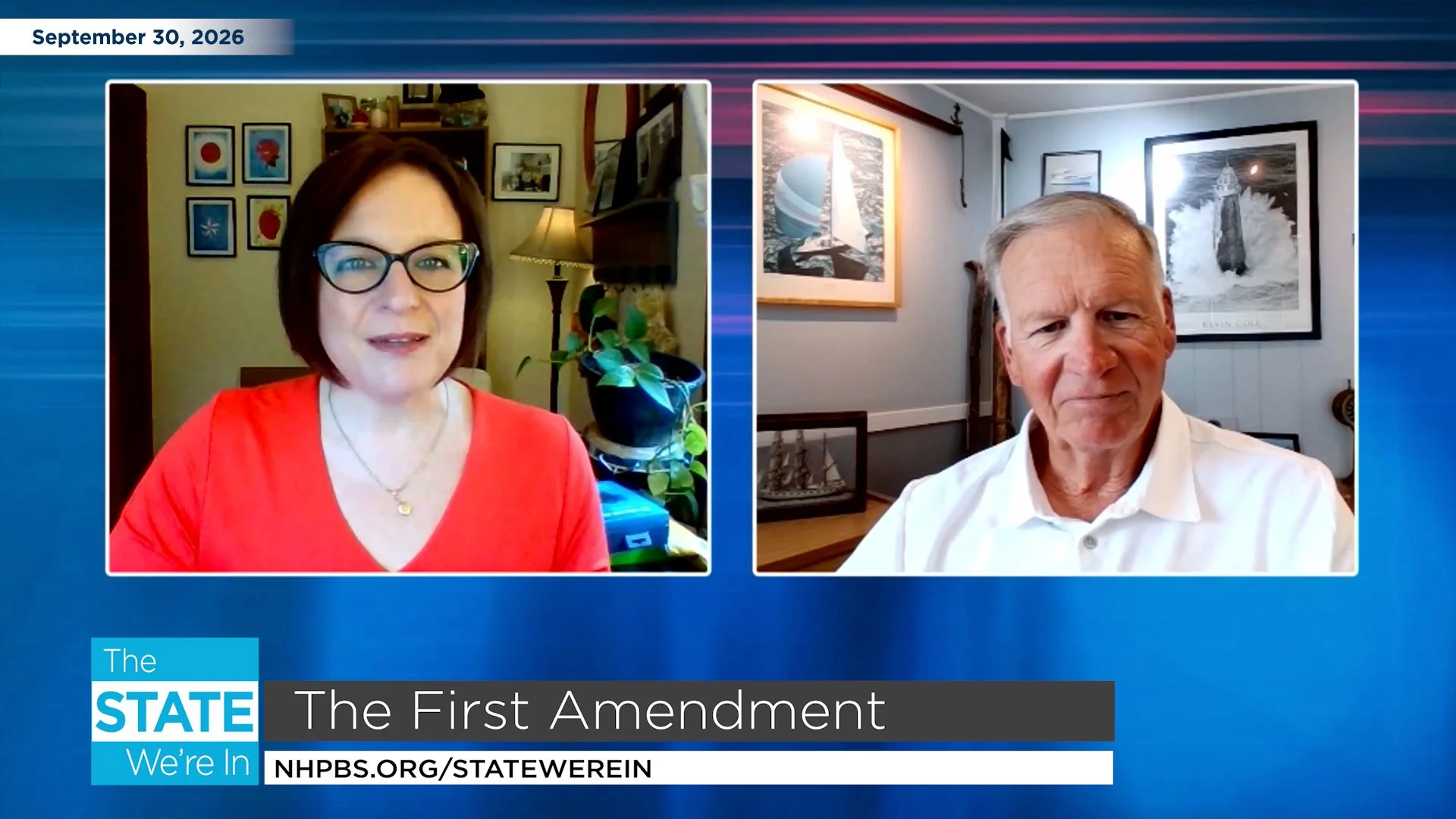
What freedoms does the First Amendment grant us? It says, “Congress shall make no law respecting an establishment of religion, or prohibiting the free exercise thereof; or abridging the freedom of speech, or of the press; or the right of the people peaceably to assemble, and to petition the Government for a redress of grievances.” As great, and as revolutionary, as those words are, we have been fighting about what they mean — and protect — almost as long as they have been around. Here to discuss the First Amendment, the White House journalist ban and its impact is attorney Gregory V. Sullivan, the President of the New England First Amendment Coalition and Malloy and Sullivan.
Melanie Plenda:
What were your thoughts when you learned about the White House ban on CNN, MS NOW and Politico?
Gregory V. Sullivan:
Oh, thoughts went to places like Red China, Russia, and Iran. That's where the government controls the media and what the people get to see and hear. I called it at the time a disgrace, and I certainly don't shy away from using that word again.
I obviously am someone who believes deeply in the importance of the First Amendment. I often say it's the cornerstone of our democracy, our rights to five freedoms guaranteed by the First Amendment, as you recited them, are sacred and should be held sacrosanct by every government official as well as every citizen, but particularly those with a responsibility to administer the government.
Under the current administration, this is not something new. They've been attacking our five freedoms, particularly freedom of speech and press, on an ongoing basis throughout both terms of President Trump, but particularly during this second term. It's not just the press corps that's being abused by the government — colleges, libraries, law firms, across the board.
The rule of law, and particularly with respect to the First Amendment, is just ignored and abused by this administration. I said the other day, either they're ignorant of what the First Amendment means, or they're willfully choosing to disrespect it, and that costs all of us.
Melanie Plenda:
As you mentioned, this isn’t the first time something like this has happened. What happened with former CNN reporter Jim Acosta?
Gregory V. Sullivan:
The difference between that case and this case is Acosta was an individual reporter, and Trump didn't like the way he posed his questions. So he revoked his credentials, but not CNN as a whole, and not CNN and other reputable media organizations.
What happened with Acosta and what's happening now is viewpoint discrimination, which is prohibited by the First Amendment. When the government designates a forum, such as the press room, such as Air Force One, when they invite members of the public — and when I say public, I mean press when I say press, I mean public, I don't make a distinction there. But when they open up an area for public discussion or public listening, they cannot discriminate based upon who they like to deal with. They’ve got to open it up to everyone.
Melanie Plenda:
Have other presidents tried to ban media outlets?
Gregory V. Sullivan:
I don’t believe any president — at least since 1914, when the White House Correspondents Association was cared — no. No president has tried to ban an organization. Richard Nixon tried to ban the Washington Post from parts of the White House during the Watergate investigations, but aside from that, from my knowledge, this is unprecedented in terms of what the current administration is doing and trying to do.
Melanie Plenda:
You mentioned viewpoint discrimination, let’s talk about that.
Gregory V. Sullivan:
In the law, we have a concept called forums — public forums and non-public forums. The traditional, quintessential public forum are our parks. Boston has the Boston Common. Virtually every city and town in the country has their park or their common. Speakers at those locations are only subject to restrictions that relate to time, place and manner. In other words, you can't use a loud amplifier at 2 o'clock in the morning in a residential area. The government can employ time, place and manner restrictions if they're reasonable, but viewpoint discrimination in a public forum, no.
Then there's what's called a limited, or a designated, public forum, and that's what we have in the White House. They've designated an area, the press room, in the White House, for members of the press who are credentialed, as opposed to Joe Citizen walking in, armed or unarmed.
But once you let organizations in, you can limit them based on space availability. For example, a reasonable place and manner restriction, but not because of the way they report the news. That's just totally violative of the First Amendment. We, the people, have a right to hear various views and opinions. We see in the news coverage that not every organization plays a story or reports a story the same way, and that's fine. That's what we call the marketplace of ideas, but for the government to say, "I like this organization, I like the way they report what I'm doing, but I don't like this one, so keep them out”. That's just not allowed under our Bill of Rights, i.e. the First Amendment.
Melanie Plenda:
How does a case like this affect media access to government officials? What does it mean for local journalists or the average citizen?
Gregory V. Sullivan:
We all rely on certain news outlets because not every news outlet, not every local publisher, has access to mass media. Reliable wire services, reliable press organizations are where we get our news, whether we are local reporters or we are the average citizen.
Local publishers cannot cover worldwide and national stories the way organizations such as the AP can. So the news filters down, and fortunately, because of the internet, it filters down with rapidity these days, and we rely on it. Whether you're watching Fox News or whether you're watching CNN, you're at least getting some perspective on current events, and that's critical.
Melanie Plenda:
Do journalists and citizens have protection at the state level for access to public officials?
Gregory V. Sullivan:
Absolutely. It's the same concept that we've been talking about. I say often that the rights to free speech and free press are eviscerated, absent the corresponding right to know what the government is up to. Here in New Hampshire, because of our constitution and because of our right-to-know law, we are able to know what the government is up to. And when government officials don't respect that we have people who want to know what the government is up to, we have the courts. And I've been obviously impressed with the Supreme Court of New Hampshire in the past 20 years versus in previous years. We've really expanded the sunlight that is shown on governmental action because of the decisions of the N.H. Supreme Court.
Melanie Plenda:
Is there a better solution to protecting access to public officials? Besides duking it out in court, is there a legislative solution or something else that would make this issue easier to resolve?
Gregory V. Sullivan:
The rights guaranteed by the First Amendment and by the constitutions of the various 50 states — but particularly New Hampshire, which has very strong constitutional provisions — should be enough. Government officials need to understand what the role of the press is and what the role of the First Amendment is with respect to their conduct, and we're just not seeing it from the current federal administration. Unfortunately, yes, it takes court orders these days to guarantee those rights.
There's a judge in Boston named William Young, who the New England First Amendment Coalition recently recognized for his work in ordering the president of the United States, the Department of Homeland Security, and all the government agencies to abide by the law. It's a decision where, unfortunately, the young woman who was a graduate student at Tufts University in Medford, Mass., was detained by ICE for months wrongfully, and ultimately she chose to leave the United States.
She's a bright young woman who wanted to flourish in her career here, but because of the actions of the federal government, she's now back in Turkey. And Judge Young wrote a tremendous decision, just pointing out the fact that the government in that case acted terribly with respect to that woman's civil rights, her right to free speech. Citizens and non-citizens alike, if they're here in the country lawfully — which she was — enjoy the same free speech rights, he ruled. That case has been appealed by the government.
MelaniePlenda:
So interesting, thank you Greg.
“The State We’re In” is a weekly digital public affairs show produced by NH PBS and The Marlin Fitzwater Center for Communication at Franklin Pierce University. It is shared with partners in the Granite State News Collaborative, of which both organizations are members. For more information, visit collaborativenh.org.