By Rosemary Ford and Caitlin Agnew
This article has been edited for length and clarity.
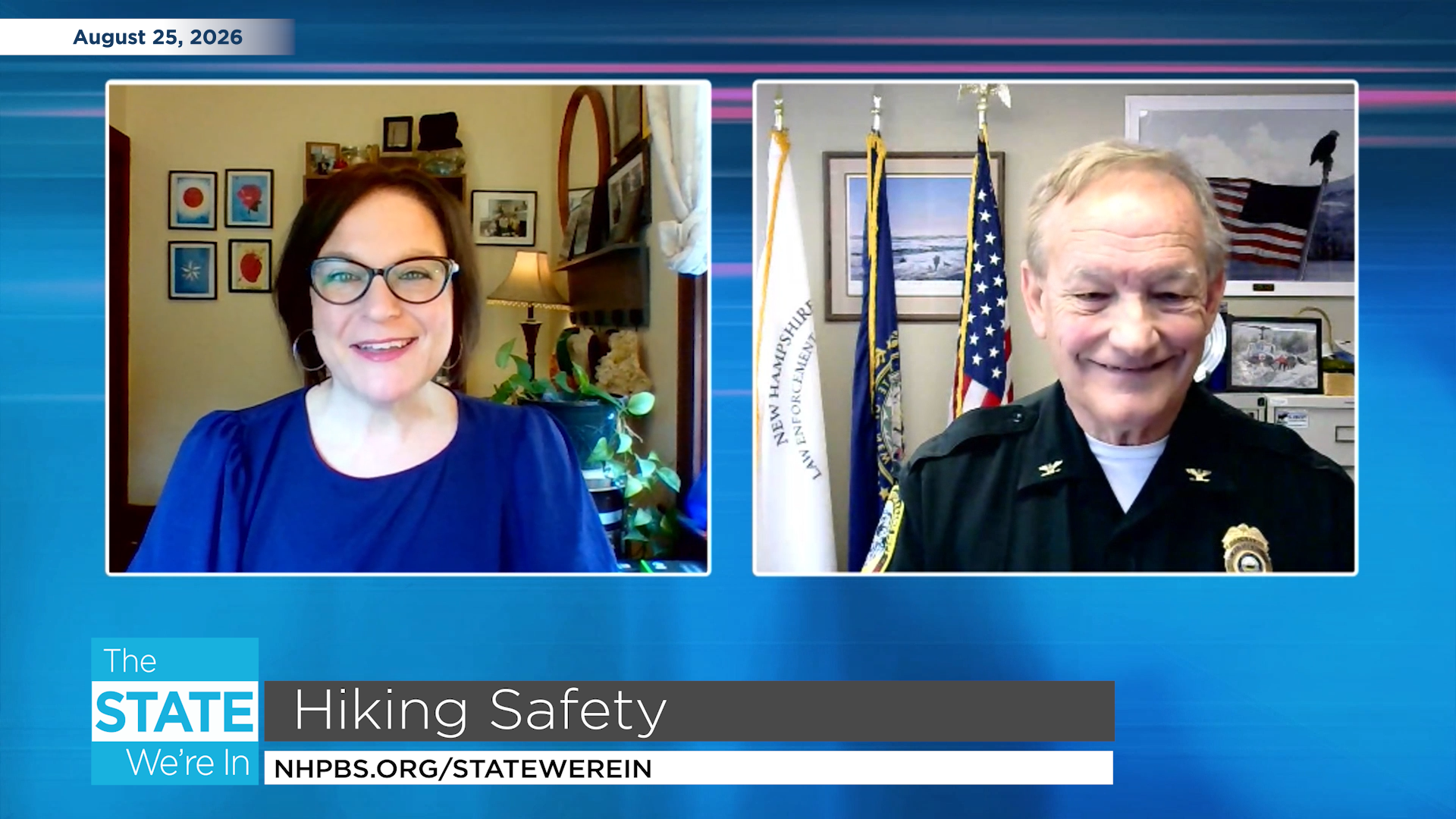
The N.H. Fish and Game Department does an average of 180 search-and-rescue missions a year, rescuing ill-prepared or injured hikers. On Aug. 14, Fish and Game rescued four New Jersey teens — who were underprepared for their hiking adventure — from Franconia Ridge in the White Mountains. As we move into the fall, it’s important to be aware of how hiking safety can change as the days get shorter and colder. Here to discuss that is N.H. Fish and Game’s chief of law enforcement, Col. Kevin Jordan.
Melanie Plenda:
To start, can you tell us more about what happened during that rescue in Franconia?
Kevin Jordan:
We received a call late in the evening on Aug. 14. The weather at the time of the call had really deteriorated through the day. We had higher winds, and the temperature had dropped a bit. We received a call from four young individuals from New Jersey that were above treeline on a Franconia Ridge trail, and they were experiencing difficulties coming down.
The initial report said there was a hiker struggling to breathe. That changed to an injured lower leg, which later would change to they really were above their skill levels and unprepared, and so we made the decision based on the weather conditions and the fact that they were unprepared to initiate a search for them, to go and get them, and bring them down.
Melanie Plenda:
What does the rescue process typically look like?
Kevin Jordan:
The N.H. Fish and Game Department has 48 officers statewide. On any given day, probably half of those are off, so we've reduced our field force to about 20 to 25. The trails in the White Mountains are known as some of the most challenging parts of the entire trail system, and they present all kinds of physical and weather challenges because of the height of our mountains and the exposure to the weather.
When you do a typical carryout under those conditions, you are going to need 16 to 20 people. So if Fish and Game were delegated to be the only agency doing this, we would not be able to succeed — it would be very difficult for us to do that. We rely a lot on what I call “professional volunteers.” These are groups of hikers who have decided that they want to contribute to the hiking community, so they have expended time training with us. They're part of five different teams located strategically throughout the state. Those teams are well-prepared. They have good hiking equipment. They train with us on a regular basis. We reach out to them for these search missions.
Now when we do that, what a lot of people don't realize is that there is a risk every time they leave the trailhead. Those risks include things like falling, injuring themselves — volunteers can take one wrong step and be out of work for eight weeks with no salaries. They're going above tree lines, above 4,000 feet in the dark, in usually adverse weather conditions, so anything can happen. That is something that we take very seriously, so we take careful consideration when we get these calls to make sure that risk is worthy of the call. And in this case, people were put at great risk for something that, really in my opinion, could easily have been avoided.
Melanie Plenda:
What are the most common scenarios Fish and Game receives when getting calls for search and rescue?
Kevin Jordan:
The two things that lead the calls for us are unpreparedness — believe it or not, people without flashlights or headlamps are the majority of our calls. I don't know what I’ve got to do to get people to carry a flashlight. It's one of our 10 essentials in the Hike Safe Card program. We promote it publicly every chance we get. I think the thought process is “I'm not going to be out overnight, so I'm not going to bring a light.” In my job, I have never left the roadway without some sort of light source, because you just don't know if you're going to be caught out longer or it's going to take longer, or you're going to come across an injured hiker that you're going to want to help, and you're going to need that light later in the night. Clothing is probably second to that — being cold because they don't have proper gear with them.
We also get a lot of injuries. We get a lot of really prepared, good hikers, experienced hikers who fall and twist an ankle. You're on brutal terrain, and you're out there when it's wet and slippery, and people fall and twist their knees. So I would say injury and unpreparedness, unpreparedness leading the charge, injury running a close second.
Melanie Plenda:
Can you tell us more about the Hike Safe program? What benefits does this voluntary card give Granite Staters?
Kevin Jordan:
Years ago, we created it in partnership with the U.S. Forest Service, a Hike Safe program. We put together public information that we could promote to try and avoid some of these scenarios by listing the 10 essentials that should be included in a backpack, safe ways to hike, and things to avoid while hiking. That program was established back in early 2000, and we started campaigning on that, putting that out to the public in hopes that people would pick up some tips from that and hike in a more safe manner.
Fast-forward, as hiking calls increased, the fund to pay for these rescues wasn’t sufficient. For years and years and years, our only search and rescue fund was $1 from every OHRV, ATV and snow machines. One dollar from each one of those would go into a search and rescue account. The fee was created in 1989 and has never gone up a dime — I’d like you to tell me anything else you know of that hasn't increased since 1989, but that never did.
So, beginning 15 years ago, I was frustrated. I didn't feel that it was fair. Our sportsmen and women were paying almost 100 percent of the cost of search and rescue. Hikers and climbers were paying nothing. So I began going to the Legislature, repeatedly asking for a more equitable way to fund search and rescue. I felt, and still feel today, the best way to do that is from general funds, tax dollars. The state is benefiting from these folks. They're buying meals, they're buying gasoline, they're staying in hotels, and the state has a responsibility, I feel, to make sure these people make it home safely on Sunday night, and I think we should pay for that. The legislature agrees with me to this day, but there's always been a reluctance and an inability, I guess, in their minds to find that funding.
In 2014 and ’15, a couple of things happened. One was that the Hike Safe card was created to help fund search and rescue. We kept the fees as reasonable as we could — $25 a year for an individual and $35 for a family. It gives a hiker an opportunity to contribute to the search-and-rescue fund. It also would be kind of an insurance card so that they wouldn’t be billed for a rescue — the law still says if they’re incredibly reckless, they do something extreme, they will still be billed — but to this day, we’ve never billed anyone with a Hike Safe card or a license. It’s been highly successful. The first year, we sold $75,000 worth; the past year, we sold $445,000 worth of Hike Safe cards. It has really been very helpful.
Melanie Plenda:
Any final advice on how hikers can be prepared for their hiking adventures this fall?
Kevin Jordan:
I've done this for 36 years, and I don't know of a time in New Hampshire's history where we have had more information available on how to do this and do it safely, right down to the very trail that you would be considering. I can promise you, there's a guide to guide you on how difficult it is, how far it goes, things you should watch out for, and how to prepare. Our weather apps are superior to anything that we ever had 15 years ago. So you can get accurate, in-the-moment, weather. We use it all the time when we come and get you.
All this information is available. You don't need to go into a hiking store and spend thousands of dollars. We're talking about a $5 two- battery flashlight with an extra set of batteries. We're talking about stuff that you probably have in your closet — a nylon rain jacket to go over a fleece vest, No cotton — wearing clothes that are not going to soak up the water. Just spending a little bit of time and a little research to prepare. You can do this. People do it all the time, year-round. It can be done very safely. Just respect it.
Melanie Plenda:
Thank you, Kevin, for joining us today. Visit hikesafe.com to learn more about hiking safety.
“The State We’re In” is a weekly digital public affairs show produced by NH PBS and The Marlin Fitzwater Center for Communication at Franklin Pierce University. It is shared with partners in the Granite State News Collaborative, of which both organizations are members. For more information, visit collaborativenh.org.