Today, Portsmouth is a haven for expensive homes, luxury condos and high-class hotels. Go back a few decades, and the city looked very different. It was more diverse, more affordable and perhaps more rough around the edges. What happened?
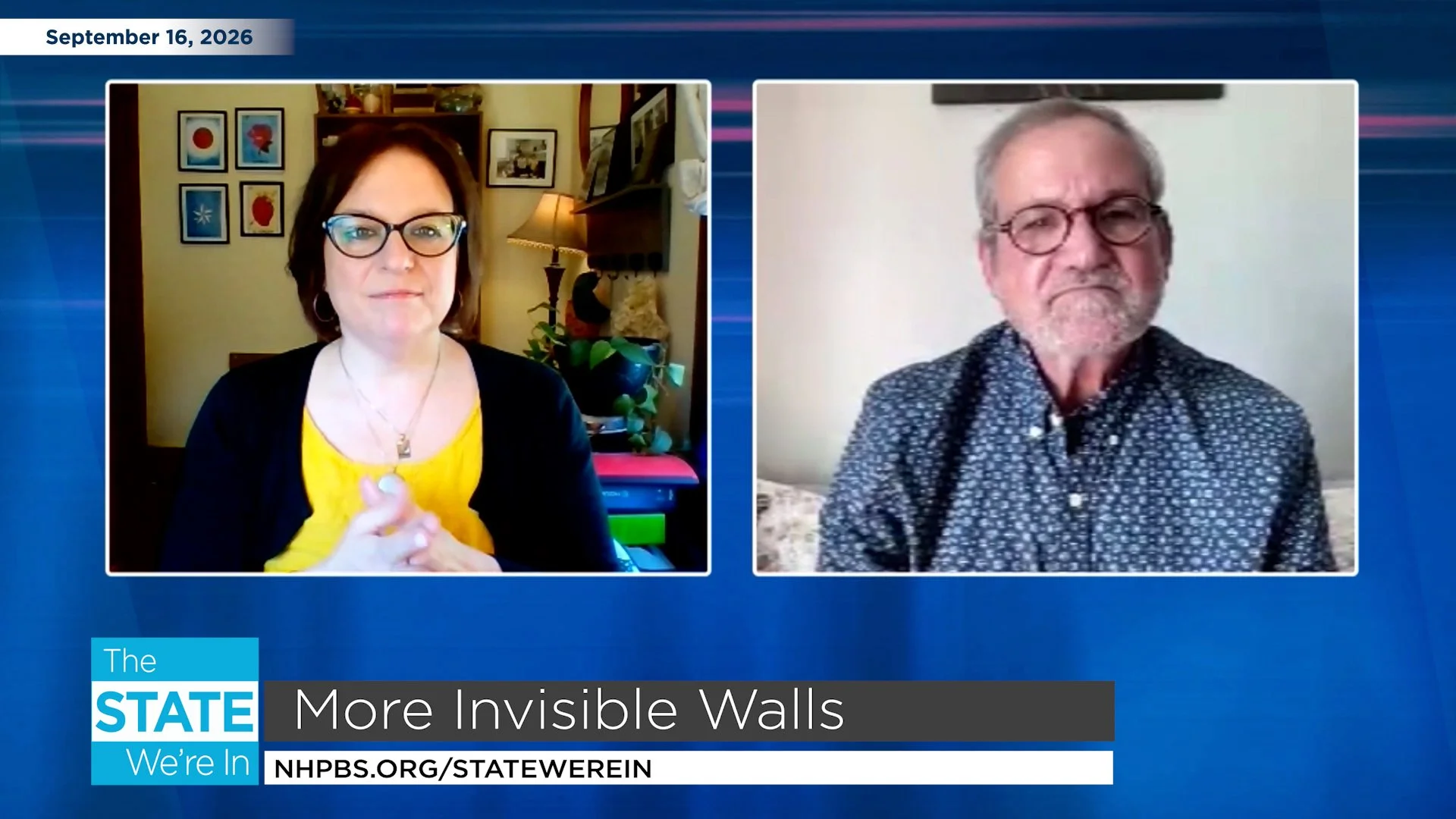
The Granite State News Collaborative, in conjunction with Seacoast Online and the Portsmouth Herald, is in the midst of a series of stories called “Invisible Walls: Seacoast.” It explores how exclusionary zoning laws, urban renewal, and gentrification have created systemic, unseen barriers to affordable housing and socioeconomic diversity in Portsmouth. Here to talk about the series and its findings is one of the primary editors, Jeff Feingold, who works with the Granite State News Collaborative.
By Rosemary Ford and Caitlin Agnew
This article has been edited for length and clarity.
Melanie Plenda:
Jeff, tell us a bit about the series. For those who aren’t familiar, this all started with a similar project in Manchester. What are the highlights in that series?
Jeff Feingold:
The original Invisible Walls series took a really long, comprehensive look at how Manchester's exclusionary zoning laws have reinforced poverty and impacted so many aspects of life in the city. It focused on one area in the city in particular; they call it the center city. It's where there's a lot of multifamily buildings, a lot of which I would say are not exactly in the best shape. Some of them are in poor condition. They're owned by negligent or absentee landlords, but they do have 4-5-6 apartments in each building.
It turns out that, because of the city's zoning — and it also goes back before they even had zoning to the 19th century — created this area where housing options were more affordable. That's where historically, since the 19th century, that's where the newest residents of the city reside. Going back to the Irish, French Canadians, and Greeks in the ’20s, zoning in particular was created to actually restrict people to those areas because of a process called redlining. Manchester was the only city in northern New England to go through redlining, and it just made this place where the poorest people are living.
Melanie Plenda:
Tell us about the Portsmouth project, what did that entail?
Jeff Feingold:
The series is not just about Portsmouth. It's also about the other cities on the Seacoast as well — Dover, Rochester and Somersworth. But we're kicking off the series with Portsmouth because that is by far the most expensive city to live on the Seacoast, and probably is statewide.
Portsmouth is such an important economic engine for the entire area. It's home to hundreds of employers, some of them very very large, as well as two major industries — hospitality and retail — that employ a lot of people. So we've discovered that over the years the city has become far less affordable than it was, let's say 20 or even 10 years ago. As property values rise, lower and middle-class people who have lived there for generations can no longer live there.
The result has been they have to move farther away, which is why we're looking at Dover, Rochester, Somersworth, and other communities in between, because they want to look for affordable housing, and there's very little in Portsmouth. The thing is that we found also that, because of the housing costs up in Portsmouth, they've gone up across the whole Seacoast. So there are people who maybe move from Portsmouth to Dover, then they move from Dover to Rochester or whatever. The problem of affordable housing has many ramifications that people don't always think about.
Melanie Plenda:
For those who aren’t familiar, what do you mean by zoning? What is that?
Jeff Feingold:
Zoning are rules developed by city officials, the City Council or Selectmen, who vote on these things. They want to control what kind of buildings, housing, or businesses can be in certain areas. So you see that in any larger community in the state.
There's a lot of times that what they've done is they've built an area where there's just retail, or industrial parks, or only single-family housing, which is pretty dominant in most communities in New Hampshire. What they have done over the years is say they don't want multifamily built housing in many parts of our city or its community, and that’s because they think that means they'll bring more people in. People believe in the myth that, because you have more people, you'll have more families, you'll have more kids going to school, and it raises property tax, but that's been proved to be completely untrue.
Melanie Plenda:
Can you give us an overview? What are some of the key findings of the project?
Jeff Feingold:
We talked about the zoning. We've also found that what's happened is that we've seen really interesting changes in commuting patterns. How people have moved, because we actually specifically look at the Seacoast bus line, because Seacoast does has one of the better public transportation systems in the state. Not saying that much, but it is one of the better ones.
We found people who work in Portsmouth, especially in the retail and hospitality industries, which are among the lowest-paid jobs there are. They can't afford to live in Portsmouth, so they're moving farther and farther away, and we found people who are commuting from Rochester and Somersworth who go down to Portsmouth for their jobs. They can't afford to live in the city, and some people we found have moved from Portsmouth.
Melanie Plenda:
So what about Portsmouth and the surrounding area today? Should people just accept it becoming a wealthy enclave? Are there solutions to making it more affordable again?
Jeff Feingold:
I think that they are really working on solutions. They're trying to change the zoning. They're trying to allow more multifamily housing in the city. But the problem is so difficult that it's going to take a long time. They have taken some good first steps, but advocates are saying you need to do more. We need to allow residential areas where right now they're restricted to lots; you could allow much more housing on one acre than one single-family house, and you should really be opening up those areas to multifamily housing as well.
Melanie Plenda:
Where are we at in the series as of this Friday and what happens next?
Jeff Feingold:
We've done the stories on urban renewal and on just the overview of what's going on the Seacoast. The next story is going to be about these city workers who can't afford to live in the city, and what that means. We have the police chief saying it's hard for him to recruit police officers. Coming up will be the look at zoning, and then we have the look at the commuting patterns. That story is coming out pretty soon.
One of the other aspects of this that we found is really interesting is manufactured housing and mobile homes. They're very expensive, and that's a place where people historically could go to get cheaper housing. They're being priced out because of various factors, including private equity companies owning mobile home parks.
Melanie Plenda:
Interesting as always! Thanks, Jeff.
The State We’re In, a weekly digital public affairs show, is produced by NH PBS and the Marlin Fitzwater Center for Communications. It is shared with partners in the Granite State News Collaborative, of which both organizations are members.