Hospitals and state reach settlement over Medicaid tax funds

The tax is a method for landing millions of federal dollars to finance health care

By Meera Mahadevan, Granite State News Collaborative

Less than two months after New Hampshire hospitals sued the state over the legality of a Medicaid tax imposed on hospitals, the two parties have reached a settlement that both say will benefit patients.

At issue was a dispute over how much money hospitals receive back from the so-called NH Medicaid Enhancement Tax, or MET. The state imposes an annual 5.4% MET on hospitals’ net patient revenues to help bring matching dollars to New Hampshire from the federal government to support the state’s Medicaid program. 

Medicaid is funded by federal and state dollars. In return for paying the MET, New Hampshire hospitals receive payments from the state to help offset financial losses they incur from caring for patients without health insurance. 

Under an agreement that expired in June 2024, hospitals were getting back 91 percent of what they paid in MET. That number has been a source of contention for several years between the governor’s office and New Hampshire hospitals. After several rounds of negotiations with then-Gov. Chris Sununu and the current governor, Kelly Ayotte, hospitals took the state to court in April, saying the tax was unconstitutional.

The two parties have now settled on a three-year agreement that will give about 93 percent of MET dollars back to hospitals in aggregate, said Steve Ahnen, president of the N.H. Hospital Association, which was one of the plaintiffs that sued the state. Other plaintiffs included Dartmouth Health and its affiliated hospitals, and Concord Hospital and its affiliates.

“It’s certainly an improvement in some respects,” Ahnen said in a telephone interview. “It’s an agreement that will provide greater stability for the Medicaid program, that will insure hospitals can budget, plan and continue to do the important work they do taking care of patients.”

In a prepared statement, Ayotte called the settlement “the best possible outcome for everyone.”

“This agreement is a win for our state, for rural health care access, and most importantly, for patients,” she said. Ayotte’s office did not return inquiries seeking further comment.

The MET, established over 30 years ago, is expected to generate $348 million this year, which will be used to bring $485 million in additional federal funding to New Hampshire to support the state’s Medicaid program, according to the state hospital association. 

Medicaid provides health care to residents with low income and/or disabilities, and also other eligible populations including children and seniors. About 13% of N.H. residents, or 186,319 people, were enrolled in Medicaid as of March. In the fiscal year 2025, the total cost of New Hampshire’s Medicaid program is projected to be $2.57 billion.

These articles are being shared by partners in the Granite State News Collaborative.Don’t just read this. Share it with one person who doesn’t usually follow local news — that’s how we make an impact. For more information, visit collaborativenh.org.

A modern-day lynching: Why we must face hate in 2025

Hate is alive, and it’s closer than we want to admit.

By Shamecca Brown, Columnist, Granite State News Collaborative

When I read about the death of Trey Reed, a student at Delta State University in Cleveland Mississippi, who was found hanging on Sept. 15, my heart shattered. This wasn’t just news on a screen – it was a wound that cut deep. A young Black student, gone in a way that carries the weight of centuries of racial terror. And here we are in 2025, still asking the same haunting question: How can this still be happening?

I’m livid. I’m scared. And as a mother, my fear multiplies. My daughter will be applying to an HBCU soon, and instead of celebrating her journey, I lie awake at night thinking about safety. Thinking about hate. Thinking about how fragile Black lives are in a world that continues to turn a blind eye to violence against us.

This isn’t just about Trey Reed, it’s about what his death represents. It’s about how hate operates in silence, creeping into our schools, our neighborhoods and our daily lives. People say, “That doesn’t happen here.” But hate doesn’t care about geography. It doesn’t care about boundaries. It exists everywhere, including in the Granite State.

What we should be talking about is the truth: Lynching is not a thing of the past. It has transformed, but it hasn’t disappeared. We see it in suspicious hangings, in racial threats, in systems that dismiss our pain as paranoia. We see it when officials hesitate to call things what they are, leaving families without answers and communities without justice.

And here’s what keeps me up at night: Hate today feels sharper, more emboldened. In 2025, we’re supposed to be moving forward, but instead it feels like hate is spreading faster, finding new ways to dress itself up. Sometimes it’s in a cruel comment, sometimes it’s a threat, and sometimes, as in the case of Trey Reed, it’s in the unthinkable.

I feel the anger rise in me because hate isn’t just a feeling; it’s an act of violence. It’s the cruelest part of humanity. And when people try to dismiss it, when they minimize it, when they call it “rumor” or “unconfirmed,” they’re asking us to swallow our pain and silence our fear. But I won’t.

Because hate doesn’t just kill bodies – it tries to kill hope. And if we don’t speak up, it wins. This affects us all, whether we want to admit it or not. When one of us is targeted, all of us are shaken. And in the Granite State, where people like to believe racism doesn’t run deep, I say this: open your eyes. This violence may have happened in another state, but hate knows no borders. It could happen here. It has happened here.

The legacy of lynching still haunts America. We cannot keep sweeping it under the rug as if time alone will erase it. It won’t. And every time we see a story like Trey Reed’s, we are reminded that the work isn’t done. We are reminded that safety for Black children, for Black students, for Black families, is still not guaranteed.

I am angry. I am scared. But most of all, I am awake. And to anyone reading this, I ask: what will it take for you to be awake too?

Because pretending this isn’t happening won’t protect us. Facing it just might.

For those who want to learn more about the history and ongoing impact of lynching in America, I encourage you to read the Equal Justice Initiative’s work on racial terror, Lynching in America.

Shamecca Brown is a New Hampshire-based columnist who is family-oriented and passionate about serving underserved communities. These articles are being shared by partners in the Granite State News Collaborative. For more information, visit collaborativenh.org.

 These articles are being shared by partners in the Granite State News Collaborative.Don’t just read this. Share it with one person who doesn’t usually follow local news — that’s how we make an impact. For more information, visit collaborativenh.org.

From incarceration to employment: investing in prisoner job training

Hiring from among an overlooked workforce can have a strong return on investment

By Anthony Tone Payton, Granite State News Collaborative

When Julian Miller of Hudson isn’t driving a cement mixing truck, you can find him giving motivational speeches in high schools and organizations from Boston to New Hampshire. Both in his speeches and not, he talks about the anchors to his stability: faith, family, and his job.

His story is similar to that of many men and women re-entering society after incarceration.

Miller, a father and husband, has a background involving substance misuse and incarceration, but he said he never let that prevent his passion for redemption and giving back. He said he found redemption while in prison, where he participated in several of the programs available to people behind bars, learning the culinary arts and the food service trade.

“I had to take advantage of those programs in prison,” Miller said. ”I knew it would be easy to find work as a cook or a chef.” Miller said. After some time in the food industry, which had provided him with the stability of a paycheck, Miller eventually landed a better-paying job driving cement-mixing trucks. 

Miller’s journey to work and better employment stands among many examples of the importance of investing in prisoner education and job training.

According to a report by the Michigan-based Mackinac Center for Public Policy, a free-market think tank, providing education and programming to people in prison is directly related to a reduced recidivism rate. The report argues that education and training programs save taxpayers money and have a high return on the investment.

Education and training behind the wall

Vocational and educational programs are important parts of rehabilitative efforts in New Hampshire’s three prisons. The N.H. Department of Corrections offers programs that range from business and computer courses to a whole range of trades. 

And, under the umbrella of the N.H. Correctional Industries, there are also service and manufacturing shops, a retail store, and a working farm that provide incarcerated workers with hands-on training in manufacturing and retail skills, horticulture, greenhouse management, and forestry.

At the State Prison for Men in Concord, incarcerated workers are employed in the plate, sign, engraving, print, and upholstering/refinishing shops. The Northern NH Correctional Facility in Berlin operates a furniture woodshop and an upholstery and refinishing shop. At the Correctional Facility for Women in Concord, incarcerated workers train in warehousing, distribution, and materials-handling through a canteen fulfillment center, gaining production experience in a sublimation print shop.

N.H. Correctional Industries employs 22 full-time and three part-time staffers who oversee about 240 incarcerated workers across the three facilities.

It’s not just basic skills that those in the prisons can obtain. For instance, the Granite State School of Cosmetology, a licensed cosmetology school within the women’s prison, makes it possible for apprentices with enough hours to apply to the state Board of Cosmetology licensing. And they can earn START certificates – a program administered by the American Hotel & Lodging Association that offers general foundational knowledge and skills training for a job in the industry, as well as certification through Restaurant Ready, a similar program to START created by the National Restaurant Association Educational Foundation.

But vocational education is the centerpiece of the department’s rehabilitation efforts. At the men’s state prison in Concord, 39 men completed the automotive mechanics program, 26 finished building trades, 83 graduated from culinary arts, and 139 completed the Intro to the Workforce course. 

Julian Miller, outside of the Donald W. Wyatt Detention facility in Central Falls, R.I., where he spoke to the prison population. Photo: (Courtesy photo)

The business and computer education program had the most participation, with 364 completions.

Inside the women’s prison, 94 women finished business and computer courses, 23 completed Intro to the Workforce, 23 graduated from culinary arts, and 39 earned certification in cosmetology. 

Meanwhile, at the Northern Correctional Facility in Berlin, 10 students completed business and computer education courses, and 13 took part in Intro to the Workforce.

In addition, 26 participants statewide earned their START certification for the lodging industry. Fifteen incarcerated students completed associate degrees through White Mountains Community College, and 34 are currently enrolled in college courses, including 24 continuing their studies at White Mountains.

In other words, people behind prison walls have access to learn the skills and train for jobs that can make them a source of employees for businesses that are still grappling with New Hampshire’s shrinking labor force participation rate. In August  2025, that rate stood at 65.4 percent – 3.6 points lower than the pre-COVID participation rate of 69 percent. 

In July 2025, according to the Bureau of Labor Statistics, there were 34,000 job openings – a job opening rate of 4.6 percent, higher than the national rate of 4.3%.

The range of programs give New Hampshire’s prison population access to learn skills and train for jobs outside prison walls – and that can make them a source of employees for businesses that are still grappling with New Hampshire’s shrinking labor force participation rate. (In August 2025, that rate stood at 65.4 percent – 3.6 points lower than the pre-COVID participation rate of 69 percent.)

Systemic barriers

While some in the formerly incarcerated workforce are not only ready to work, but qualified, their qualifications can become overshadowed by their past. And the obstacles formerly incarcerated people face can be a barrier to employment – the kind of obstacles that are unique among others seeking employment.

Many times, individuals who’ve been impacted by the justice system have to rely on word-of-mouth recommendations from friends to earn a livable wage. Without the network and resources to assist them, many get caught in a cycle of lower pay, entry-level positions.

A hurdle can be something as simple as transportation. For someone who is newly released and living in a halfway house or on parole, getting to and from work can be problematic. They have to abide by the rules of the halfway house or parole, and one of those rules bars them from being in vehicles with anyone who has a criminal record, meaning that in many cases, newly released individuals can often not rely on people in this network to assist them.

Perhaps even more daunting, qualified job candidates sometimes face a background question on employment applications when they’re asked about a potential criminal record. An affirmative answer in many, many cases often resulted in even a highly qualified applicant missing out on the chance to proceed in the hiring process.

Julian MIller with a group of students at a school he recently visited for a presentation. (Courtesy photo)

New Hampshire did have a “Ban the Box” law – which went into effect in 2020 – that banned public sector employers from using the “check box” asking about an applicant’s criminal history. The goal was to allow the employer to judge an applicant’s character and qualifications without being hindered by stigma. The law, however, was repealed in the 2024 legislative session through an amendment added to the so-called budget trailer bill, House Bill 2.

Solutions and organizational help

Setbacks aside, some programs and resources help former prisoners to find not only a job, but a good job.

One is ApprenticeshipNH is a federally funded, workforce education program of The Community College System of NH (CCSNH). CCSNH has fully staffed apprenticeship hubs across the state, with one of the state’s seven community colleges a central part of each hub. 

John Knorr is the coordinator for the Northern and Western hubs – White Mountains Community College in the North Country and River Valley Community College, based in Claremont.

Tracey Jackson is the coordinator of the Southern and East-Central hubs, with the schools being Manchester and Nashua Community Colleges in the south, and NHTI in Concord, Great Bay Community College on the Seacoast, and Lakes Region Community College, based in Laconia. 

Knorr and Jackson work with employers, community partners, and career seekers to develop Registered Apprenticeship and pre-apprenticeship pathways. They often work with individuals who have been previously incarcerated.

Knorr says transportation to the colleges for the required education can be a major barrier for potential participants. “Every apprenticeship program has a related technical instruction requirement that is most often delivered at one of our colleges,” he said. “Folks may live close to the colleges, but others in the region could have a minimum of a one-hour drive. That drive can be a challenge for all apprentices, but it can be a much larger burden for those formerly incarcerated who may not have the resources to travel.”

Jackson, who has worked with many employers to develop recruitment plans for apprenticeship opportunities, stated that many employers may be unaware of the talent and resources they are overlooking by not connecting with those who have been justice-involved.

“We want to help employers screen people into their programs by helping them identify potential barriers in hiring practices and provide solutions that employers may not consider,” stated Jackson. “There are several individuals who may be a good fit for the apprenticeship who need a little more support to enter the program. We can help employers connect with those supports.”

ApprenticeshipNH is connected to both large and small employers in the traditional trades, behavioral health, manufacturing, and business sectors across the state. “There is a great workforce need in these industries,” said Jackson. 

“We look forward to continuing to build partnerships and pathways to help meet these needs.”

Christopher Lalmond, Northern Hub developer for the ApprenticeshipNH team, also helps employers with recruitment. 

“When I build or expand a Registered Apprenticeship program with an employer, I address recruitment as part of my standard workflow, he said. “During the conversation about recruitment, I ask the employer how they might consider broadening their search for career-seekers. It is here that I talk about accessibility for various populations, one of which is justice-impacted individuals.”

 Employer’s incentives

There are also incentives for employers to hire someone who has been formerly incarcerated.

One is the federal Work Opportunity Tax Credit, which is available to employers who hire individuals from groups facing significant barriers to employment, including those who have been convicted of a felony and are within a year of release from prison for that offense.

The tax credit is 40% of up to $6,000 of wages for a person in their first year of employment who works at least 400 hours (the maximum credit is generally $2,400). A 25% credit applies to people who work between 120 and 400 hours.

Several New Hampshire employers have used the credit over the last five years. According to the federal Employment and Training Administration, which oversees the Work Opportunity Tax Credit program, 14 employers claimed the credit; in 2021 and 2022 – at the height of Covid – eight and six employers, respectively, claimed the credit; and in 2023 and 2024, 17 employers claimed the credit in each year.

Another incentive is the Federal Bonding Program, which is designed to entice employers to hire candidates considered “at risk,” including those who were formerly incarcerated.

The bonds, offered at no cost to employers, reimburse them for losses of up to $5,000 from theft or fraud during an employee’s first six months. Since the program began in 1966, more than 52,000 bonds have been issued, with only 1% resulting in claims.

Of course, stigma is real, and getting employers to buy in isn’t an easy task. Julian Miller has faced his share in job interviews.

“It was frustrating,” he said. “But you keep going, hoping for someone to give you that chance.”

Fortunately for Miller and others, some employers have shown they are ready to take that chance. The goal is to connect with an employable pool of qualified people intent on succeeding in society. 

If you or someone you know is struggling with life after incarceration in the Manchester, N.H., area, there are organizations such as Mokse and O So Beautiful The Women’s Reentry Initiative that can assist.


These articles are being shared by partners in the Granite State News Collaborative.Don’t just read this. Share it with one person who doesn’t usually follow local news — that’s how we make an impact. For more information, visit collaborativenh.org.

State Police settle lawsuit alleging ethnic profiling for $65,000

Plaintiff says troopers extensively damaged his truck and cargo in ‘targeted’ search

By Paul Cuno-Booth, Granite State News Collaborative

The New Hampshire State Police have agreed to pay $65,000 to settle a lawsuit alleging state troopers profiled the Latino owner of a moving company when they stopped and searched his truck in 2019.

In the lawsuit he filed in 2022, Mark Ramirez of Houston, Texas, says he was en route to Maine with a tractor-trailer full of furniture and other belongings he was transporting for a customer when state troopers stopped him, questioned him at length, accused him of trafficking drugs and impounded his truck for several days.

Troopers’ search of the vehicle found no drugs or other evidence of criminal activity, but caused extensive damage to the truck and its contents, according to the lawsuit, with some of the customer’s furniture “destroyed beyond repair.” Ramirez says his customer refused to pay him because of the damage and delay. Between the unpaid contract and other expenses, he says the troopers’ actions cost him well over $30,000. 

The lawsuit alleged the trooper who stopped him, Timothy Berky, did so “because [Ramirez] and his passenger appeared to be of Mexican heritage,” violating his constitutional rights.

“I felt we were targeted,” Ramirez said in an interview this month.

According to the terms of the settlement — which was reached in July and obtained through a public records request — State Police dispute the allegations and admit no wrongdoing. Claims against the individual troopers were dismissed before the settlement.

“The settlement document reflects our full position,” Tyler Dumont, a spokesperson for New Hampshire State Police, wrote in response to a request for comment. Dumont declined to answer questions about the case or the department’s current practices for vehicle stops.

Berky, who is now listed in the state’s employee database as a State Police detective, did not respond to a request for comment.

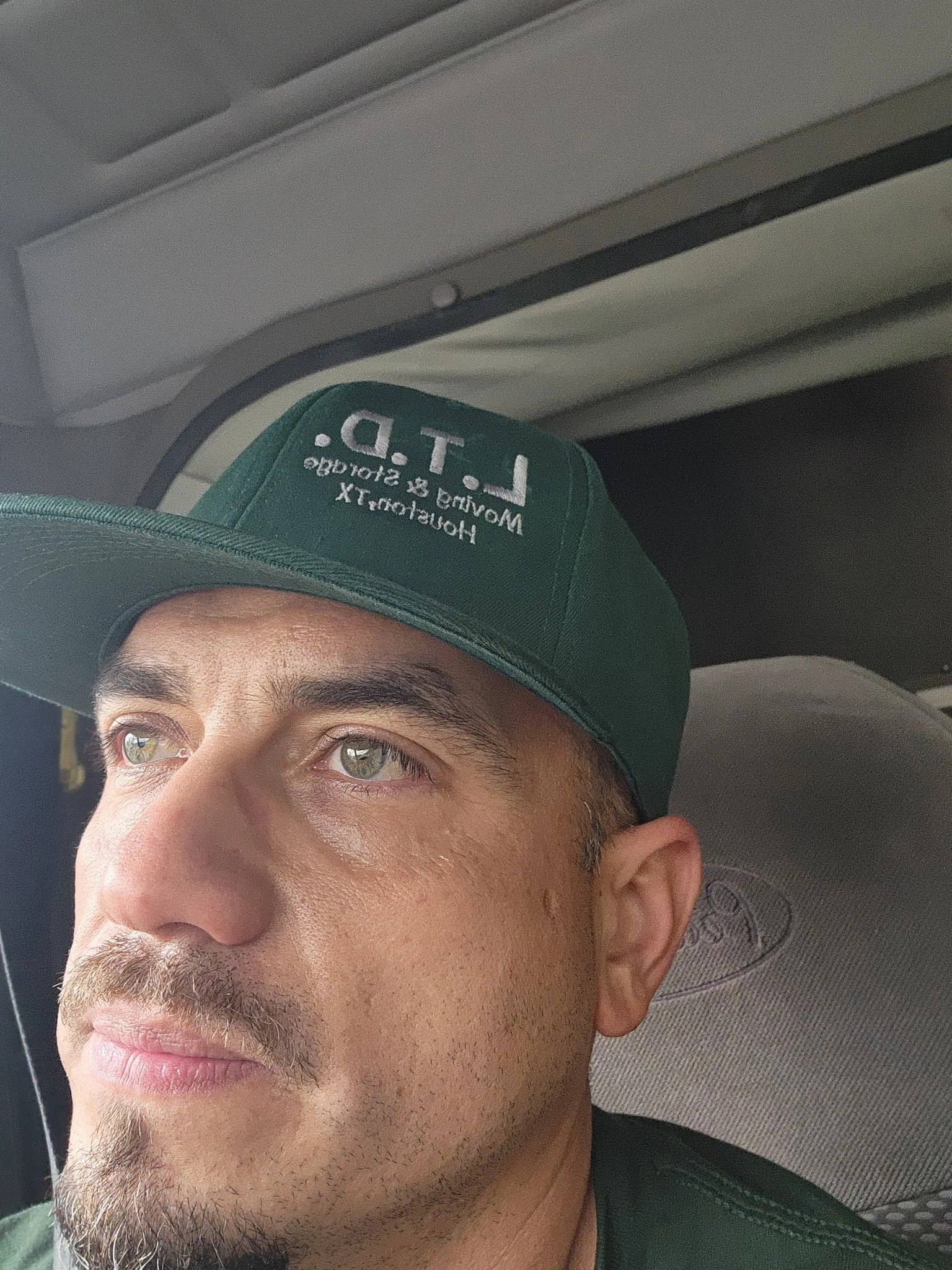
N.H. State Police recently paid $65,000 to settle a lawsuit filed by Mark Ramirez, owner of a Texas moving company, who alleged he was profiled by troopers when they stopped and searched his truck in 2019.  ‘I felt we were targeted,’ Ramirez said. (Courtesy photo) 

At the time of the stop, Berky was a member of New Hampshire State Police Mobile Enforcement Team, a controversial unit that has frequently used traffic stops as pretexts to check for drugs. A previous investigation by the Granite State News Collaborative found at least 17 instances between 2016 and 2020 in which judges or prosecutors had thrown out Mobile Enforcement Team criminal cases because of illegal searches or seizures, a majority involving cars with Black or Latino occupants. 

The Ramirez case is the second lawsuit the state has settled involving allegations against the Mobile Enforcement Team. In 2021, the state agreed to pay a Maine woman $212,500 to settle claims that a different trooper, Haden Wilber, illegally detained her and searched her effects during a vehicle stop in 2017, then made unsubstantiated claims she was smuggling drugs inside her body that led to her spending 13 days in jail and undergoing an invasive body-cavity search. 

Wilber — who also aided in the Ramirez stop — was later fired after State Police determined he committed misconduct in connection with the 2017 case, including dishonesty and an illegal warrantless search of the driver’s phone.

State Police have defended the unit’s actions, calling those cases isolated incidents. A 2021 policy change required Mobile Enforcement Team cases to be periodically reviewed by lawyers from the state attorney general’s office. 

Dumont did not answer questions about whether that policy is still in effect and whether State Police have made any other changes in how the unit operates.


‘It was a state of devastation’

Ramirez said in his lawsuit that he was driving north on Interstate 95 the afternoon of Aug. 23, 2019, when he saw Berky pull out and follow him. At the time, Ramirez and his brother, who works for his company, LTD Moving, were transporting a load of expensive furniture, art and other possessions for a client moving from Houston to Maine.

Berky stopped the truck when it exited the highway to fill up on gas, allegedly for a lane violation. Ramirez said he’s used to being stopped for routine roadside inspections, but this stop almost immediately felt different — as if he was being interrogated. 

“He was just continuing to ask those same questions,” Ramirez recalled in the interview. “Where’d you come from? Where are you going to? Why were you here? What were you doing there? What did you drop off when you were there? What did you pick up?”

Ramirez added, “It just started seeming like he had other intentions.”

As the stop dragged on, multiple other troopers showed up. Ramirez said they questioned him about everything from his logbook to his brother’s tattoos. He said they wouldn’t let him use the bathroom despite repeated requests. One trooper, whom Ramirez understood to be a sergeant, berated him and his brother for interrupting his family dinner and daring to come into his state, he said. 

“He was telling me how I was a criminal, how my brother was a criminal,” Ramirez said.

Troopers searched the truck’s cab and claimed they’d found a “hidden compartment.” Ramirez said it was a standard feature of the truck — a removable panel that allows access to the air conditioner’s air filter. Troopers also ran a police dog around the truck and said it “alerted” to a potential odor of drugs. (Ramirez said he felt the dog was being coached.) 

Troopers then had the truck towed, leaving him and his brother stranded without a ride at night, at a truck stop “almost in the middle of nowhere.”

Because it was a Friday, troopers didn’t fully search the truck until Monday afternoon, after getting a search warrant from a judge. Records show nothing illegal was found. 

Ramirez and his brother went to pick up the truck the next day, having spent over $1,000 on hotels, food, clothing, rental car fees and other expenses. The towing company slapped them with a bill for nearly $3,000, according to records filed in connection with the lawsuit.

Ramirez was shocked when he saw the truck. “It was a state of devastation,” he said.  

The fuel-tank caps were destroyed. Wires were hanging in the engine compartment. The 1997 Peterbilt cab — a proud family possession that his father had just paid handsomely to restore — was “ripped apart.” The trailer and its cargo were in disarray.

“They ripped the trailer apart,” he said, choking up at the memory. “They tore up our client’s furniture. They threw stuff in there. It was bad. It was bad. I wanted to break down on my knees and give up.”

His client, seeing the damage, refused to pay what Ramirez estimated would have been at least a $25,000 bill.

Ramirez’s lawsuit alleged that troopers lacked the legal justification to detain him or search his truck and that they illegally singled him out because of his ethnicity.

“There was no reasonable or articulable suspicion, probable cause or other lawful basis for the stop, detention [and] seizure of the plaintiff nor for the impoundment of the truck and trailer,” the lawsuit states.


‘Concern about the tactics’

In his search warrant application, Berky did not explain his reasons for following the truck. Dumont, the State Police spokesperson, declined to answer a question about that. 

Berky wrote that the decision to impound the truck and search it was justified by the alleged “hidden compartment” and K9 alert, along with a handful of observations he claimed were suspicious, including the trailer being padlocked, recent upgrades to the truck, a seven-year-old possession charge on Ramirez’ brother’s record and religious items in the cab that he speculated could be an “effort to distract law enforcement.” He also suggested it was suspicious that they were coming from Houston, a city “heavily infiltrated with Mexican drug cartels.”

Records show the Mobile Enforcement Team’s commander at the time, then-Sgt. Mark Hall, signed off on the decision to impound the truck. Hall is now the head of the State Police. Dumont did not answer questions about whether Hall continues to believe the stop and search were justified.

Dumont also declined to say whether State Police investigated the incident internally after Ramirez's attorney, Michael Iacopino, filed complaints.

Iacopino said he’s satisfied with the settlement.

“I think it is good that the state saw fit to participate in a settlement here, because I think that demonstrates concern about the tactics that are used by the MET team and other police units on highway stops,” he said.

He said he’s not sure what the Mobile Enforcement Team’s current status is.

“Hopefully it’s a chapter in law enforcement history that’s over for New Hampshire,” he said. “I don’t know that it is, but it’d be nice to think so.”

Ramirez said the incident had a lasting impact on his family and business. The immediate losses alone totaled tens of thousands of dollars, and they lost additional income in the following months while the truck was off the road for repairs, he said. Even after repairs, the cab wasn’t fully restored to its previous condition, because that would have cost too much. 

Ramirez said he sees the settlement as vindication, but also feels there weren’t enough repercussions for the troopers involved. Part of his goal in bringing the lawsuit, he said, was to stop this kind of thing from happening again. 

“You cannot swear to uphold the law and do that,” he said.

Tourism in New Hampshire: Where does it stand in wake of the falloff in number of Canadian visitors?

By Rosemary Ford and Caitlin Agnew

This article has been edited for length and clarity.

Despite the state’s efforts to encourage tourism, New Hampshire saw a decrease in visitors this summer, especially when it comes to visitors from Canada. Tourism is one of New Hampshire’s main industries, and when there are fewer visitors to the state, its revenue suffers. What is going on, and what’s the state doing about it? Here to discuss that is Michelle Cruz, director of the N.H. Division of Travel and Tourism Development. 

Melanie Plenda:

Michelle, what can you tell us about how tourism has gone this past year here in New Hampshire? Let’s start with the summer season, but also talk about fall and look a little bit ahead to winter and ski season.

Michelle Cruz:

Right now we don't have research, so I won't be able to provide some real-time, up-to-date data for summer and fall, but I'll be able to provide what I'm hearing from the businesses and our partners. The way our contracts work is that we do need to have approval from the Executive Council. So right now, the Division of Travel and Tourism doesn't currently have an active research partner because we haven't received approval for that contract.

But what I do know from talking with our partners, around the state and in the White Mountains, there are 17 major attractions collectively welcoming visitors. This past season, what we've heard is that they welcomed about 1.3 million guests from May through October, and most reported being slightly up. There were some reported being flat or that they were a few percentage points lower compared to the previous year. What they shared with us is that food and beverage and retail performed well. Most attractions noted that there was an increase in spending in both areas. While we know that the beginning of the summer was a little bit of a challenge, just because of the consistent weekends of rain — it was a hard start and a slow start to the summer. But as that weather dried out, there were some upticks with visitors being here. They took advantage of the weather that was more in their favor, which helped to work out for vacations that were being planned. 

So while there were some moments where visitation may have been down, I think what happened is the season and the weather shift was in our favor for visitation.

Melanie Plenda:

I know that, especially at the beginning of the summer, there was a lot of concern that tourism was going to take a hit because of the issues between the U.S. and Canada. Did they play out this season? Were you hearing that from local businesses?

Michelle Cruz:

We did. We were hearing it from the Seacoast that they were about 30% down. We heard it from other areas too. I think what we were all trying to do was pivot. We were working with them to see what else could be done. We looked at our marketing initiatives and went beyond our core markets, which are the New England states, New York and eastern Pennsylvania. We were actually targeting about 60 million people east of the Mississippi, and this was based on why people are interested in visiting New England — so we went beyond to reach those visitors to entice them to come here.

Melanie Plenda:

What are your hearing and what are you seeing so far for the winter and skiing season?

Michelle Cruz:

Again, typically during this time, we would be releasing our winter seasonal forecast, and that includes project visitation numbers and estimated visitor spending. We don’t have that information right now because that would come with working with a research partner. But what we do know is that winter is an incredibly important season for New Hampshire's tourism economy. It consistently is the third busiest season, right behind summer and fall. It’s essential for businesses,  from ski areas to snowmobile operators to restaurants, lodging properties and retail. Winter brings a significant influx of visitors who support thousands of jobs, especially in our rural and northern communities

So we are looking for a positive winter, and I’m staying optimistic that we’re going to see snow.

Melanie Plenda:

Were there sectors or areas that were hit harder than others?

Michelle Cruz:

So there's always a challenge with weather. When we saw the rain hitting, there were attractions that might have been hit hard just because it was focused on outdoor recreation. When that happens, I hear from retail that they're doing well because people are staying inside. Same thing with dining, and vice versa.

When the weather changes to be more favorable for sunny, cooperative weather days, people are staying outside more. They're enjoying nature and the beauty and the reason why they come to New Hampshire. We're very weather-dependent, but we are a four-season vacation destination, so it's always looking at what's ahead, and how to be able to work with the weather that we're provided.

Melanie Plenda:

Why is tourism so important here in the state? Can you explain that to our audience? 

Michelle Cruz:

Tourism is the second largest revenue-generating industry. It plays a central role in driving the state's economy and quality of life. We hear that a lot about people being here because of the work-life balance. Every year, millions of people visit the state of New Hampshire from all over the country and around the world. They come for our natural beauty, outdoor experiences. They're looking for the rich history and that small-town charm is what they love, and it's what we can provide. And we have unique attractions that make this state so special.

So in our fiscal year 2024, what we were able to see is that we had about 14.6 million visitors who generated $7.5 billion in spending. So that's money spent at restaurants, hotels, shops, attractions, ski areas, our campgrounds, arts and culture venues and businesses all throughout the state. We're talking about our large and small businesses.

Another thing about tourism is that tourism supports 70,000 jobs in the state of New Hampshire, so that includes our seasonal and year-round hospitality jobs — restaurant employees, guide services, retail staff, lodging operators. Again, it impacts all of those small and large businesses, and it helps to keep the communities vibrant.

But what's really important for us to all keep in mind is that tourism doesn't just benefit visitors. It's going to benefit us — everybody who lives here in the state, because with the visitor spending, it helps keep the local businesses open, supports towns and the cities, and also strengthens our rural communities. So it helps to reduce that tax burden for our New Hampshire residents in many communities.

Tourism dollars make the difference between a business keeping their doors open or not. So tourism is definitely very important to the state of New Hampshire

Melanie Plenda:

You mentioned that research piece, and it sounds like maybe that might be in flux. What do you do if you don't have that research? How do you kind of make that plan going forward, and do you have a sense of what that plan is going to be going forward, even without the research?

Michelle Cruz:

We're looking at how to manage that and stay connected with our businesses and our tourism partners and leaders throughout the state. It is challenging — research is a key component when you're marketing. You're looking at effectiveness, but you're also looking at where people are traveling from, where they're going to, where they're staying, how long they're staying for, how much money they're spending, what that economic impact is. So it's a really key component in understanding visitation to any area in New Hampshire.

Melanie Plenda:

You’re kind of flying blind without a research partner, but going forward, what is your plan into 2026?

Michelle Cruz:

It would be great to be able to have a solid plan for research, so looking at having a research partner is going to be really key in being able to know if our marketing plan is working. It supports the state to stay front and center. We have momentum right now, and it helps to keep us moving forward, supporting our industry, supporting the business community and the residents of the state. It's something that's really crucial in making sure that we're staying ahead.

You know, there are reports of states who have had contracts like this pulled or are unable to market their state as need be, and it was a tremendous impact of not being in the markets they needed to be in and being able to promote their state. and the recovery from it would be years. We want New Hampshire to be front and center. We want to be able to support the tourism that helps to support our economy and then provides the quality of life for residents.

Again, this is something that’s not just bringing visitors here, but it's looking at when visitors come here, they're making their memories, they make their traditions, and then they come here year after year. Eventually, some relocate here, some may take the opportunity to move their business here, and that's through marketing the right way. It's through being able to have research and making sure that we're hitting on all those components to be a strong, competitive state, to be an innovative state, and that's what's really important.

Melanie Plenda:

Is there anything else that can be done, or any other help that's needed?

Michelle Cruz:

It's definitely getting the research, because this maximizes the impact of the strategy that we need to have reliable and up-to-date data. It's the research that tells us about traveling and where people are coming from. It's something that helps to look at the spending — where money is being spent, and the amount of money that's being spent that’s coming into the state.

That's really important, and we're doing the best we can with the tools that we have right now. We're dedicated, but having a dedicated research partner would really allow the work to be next-level. It helps to ensure every decision that we make is grounded in data and helps to keep New Hampshire continuing as a strong tourism destination. It's really important to be able to keep that message and move forward with that. 

Melanie Plenda:

What happens if New Hampshire can’t generate that interest, and bring people back?

Michelle Cruz:

Like I mentioned, I think the amount of the $7.5 billion in spending, which was such a support and it's a revenue generator, and if we don't see that, we take a hit as a state, and we're hoping that that doesn't happen.That's not what we want to see — we want to work towards being able to market and generate the revenue, but also keep New Hampshire front and center. It's not just tourism for visitors, but it's for our residents too.

Melanie Plenda:

Michelle, thank you so much for joining us today.

“The State We’re In” is a weekly digital public affairs show produced by NH PBS and The Marlin Fitzwater Center for Communication at Franklin Pierce University. It is shared with partners in the Granite State News Collaborative, of which both organizations are members. For more information, visit collaborativenh.org.

The ‘invisible’ hunger: The burden of food insecurity on Granite Staters 

By Rosemary Ford and Caitlin Agnew

This article has been edited for length and clarity.

Food insecurity. According to the 2025 Feeding America Report, one in nine New Hampshire residents face hunger. What does that mean? And how did those who rely on government assistance find help in the midst of the government shutdown? Here to discuss this and more is Elsy Cipriani, executive director of the New Hampshire Food Bank.

Melanie Plenda:

Can you explain what the New Hampshire Food Bank is and how it functions?

Elsy Cipriani:

The New Hampshire Food Bank is the only food bank in the state. The simplest way to think about us is that we are the center of a network to relieve hunger. We are a program of Catholic Charities New Hampshire, and at the same time, we are one of more than 200 food banks across the United States that partner with Feeding America.

Something that probably people don't know about the New Hampshire Food Bank is that we don't do a lot of direct service because we are part of a big network of partner agencies, and these partner agencies are soup kitchens, emergency shelters and food pantries. Most of the food distribution takes place through our partner agencies, and we are making sure that they have enough food to feed their communities.

Melanie Plenda:

How did the Food Bank operate during the government shutdown? Did things change? Did you have to pivot in some way? 

Elsy Cipriani:

It was an incredible, challenging few weeks for us. When the federal shutdown occurred, the state's SNAP benefits, which is the food stamp program, were in jeopardy for the month of November. Thousands of families who relied on SNAP were in a state of confusion. One of the things that the state of New Hampshire did, specifically the Department of Health and Human Services, was put together a contingency plan, and they asked the New Hampshire Food Bank to execute this plan.

Then we rallied all our partner agencies across the state. We put together SNAP distribution points, either through mobile food pantries or through specific pantries and different communities, making sure that we cover different corners of the state. We did this for two weeks. 

This crisis showed just how many of our neighbors are just one emergency away from suffering from hunger, and from suffering from poverty or entering into poverty. We continued these efforts for another week, just to make sure that we provide extra relief for families and individuals in New Hampshire. But again, this is something that happens all year-round. Hunger is something that people in New Hampshire are experiencing.

As you mentioned in the beginning of the show, one in every nine people in New Hampshire are facing food insecurity, and the number is even worse for children. We are talking about one in every seven children in the state facing food insecurity. When we look at the North Country, we are talking about more than 20% of children are facing food insecurity.

Melanie Plenda:

What can you tell us about food insecurity in New Hampshire? How have things changed at all in recent months? 

Elsy Cipriani:

Food insecurity means that someone doesn't have consistent access to enough food to live a healthy lifestyle. What has changed is the pressure on families. Families and individuals across the state are faced with impossible challenges. They have to choose between heating, food, clothing for their children, and more. One of the things that we have seen, particularly this past year, is that all these challenges, federal cuts, cuts to the SNAP program and the government shutdown are just creating an incredible amount of stress and confusion for our most vulnerable populations. The people that are most affected by all these changes and all these events are our children, senior citizens and people living with disabilities. 

Melanie Plenda:

What does food insecurity look like, and who does it affect?

Elsy Cipriani:

One of the things about food insecurity is that it can be very invisible for people. Let's think about our family budget when we are going through financial hardship, the first thing that we cut from our budget is food, because it's the most flexible thing that we can play around with. We have to pay rent or mortgage, we have to pay utilities, but food is something that we can play around with. So a lot of people go to the stress of eating less, sacrificing themselves —- especially for parents, sacrificing themselves by not eating so their children have some food. We don't see that — they can be our friends, our neighbors, people in our community — but just because we don’t see it, it doesn't mean that they are not suffering from food insecurity. 

Melanie Plenda:

Can you tell us more about the programs of the Food Bank? Let’s start with the New Hampshire Feeding New Hampshire Program, which purchases food from local farms. What does this process look like across the state?

Elsy Cipriani:

New Hampshire Feeding New Hampshire is one of our favorite programs. It's definitely a win-win situation. We use funds to help our partner agencies buy fresh and nutritious food, like produce, protein and dairy directly from local New Hampshire farms.

One of the things that we do besides buying nutritious food and supporting local farmers in New Hampshire, is that we also provide small grants to our partner agencies so they can do their own purchasing because we know that many of these local food pantries and soup kitchens already have their own partnerships and they all work in relationships with people in their community and the farmers in their community. So besides us purchasing all these nutritious food for local farmers, we also give small grants to our partner agencies so they can decide what to buy, how to buy it, and support the local communities.

Melanie Plenda:

What about the Cooking Matters program?

Elsy Cipriani:

This is a hands-on program that really empowers families and individuals to learn how to cook or to improve their cooking skills, and is mostly targeted to SNAP recipients. One of the great things about this is that we try to use, during our cooking demonstrations and our classes, anything that families will buy with their benefits. We try to show people that even if they are on a budget, on a limited budget, they can still cook healthy, affordable and nutritious meals. 

Melanie Plenda:

In September, the U.S. Department of Agriculture announced it was cutting the annual food insecurity survey across the nation. Since this data usually assists in predicting hunger demand and securing funding, how will the New Hampshire Food Bank pivot in the future without it?

Elsy Cipriani:

That was a significant loss — not just for us, for all food banks across the United States and for Feeding America, because the data that they produce every year relies a lot on the survey.

As a network, we have had some discussions this past September with Feeding America and many food banks across the United States about how we can overcome this challenge. One of the unique things about food banks is that we are in a position where we already gather a lot of data from the people we serve. We have the technology and we have the capacity to gather day-to-day data of how many people our partner agencies are serving and where the need is. So one of the things that we need to get better in New Hampshire is using that data now that we are not going to have resources from the USDA. But that's going to take time, so definitely, there is going to be a gap in information, and there is going to be a challenge until we can reach the point that we can make better use of our own data.

Melanie Plenda:

Is it true that in November and December that the Food Bank receives the most support and donations, due to the holidays? Is it enough? And what about the rest of the year?

Elsy Cipriani:

Yes, that’s true. We receive the most donations, volunteer requests and food drives during November and December. But the truth is, hunger is a 365-day-a-year problem. The need for food relief and hunger relief doesn't end on Jan. 1. In fact, our donations often drop significantly in the beginning of the year.

I also want to highlight the summer, because the summer is a very tricky and challenging time for us when we talk about food insecurity and the different causes for food insecurity. One of the main causes of food insecurity is disruption of some systems, and the school system is a great example. Many children rely on going to school to eat, and when the summer months come they don't have that access, and they may face food insecurity. So we do see donations usually drop during the summer, so we’d really welcome the community to take a look at that and think about that during the summer we do run a good number of summer programs across the state. We partner with the school districts to make sure that even during the summer, children still have access to nutritious meals.

Melanie Plenda:

What can New Hampshire residents do to support the New Hampshire Food Bank and their neighbors facing hunger, now and in the future?

Elsy Cipriani:

There are three specific ways in which people can help the New Hampshire Food Bank or their local food programs. Donate funds — go to our website or to the local food pantries. Volunteer — you can look at our website. We have many volunteer opportunities every week, and you can also host a food drive, and that food drive can benefit the New Hampshire Food Bank. You can contact us and you can drop the food drive items at our location, and you can also support your local food programs.

Melanie Plenda:

Thank you Elsy, for joining us today.


“The State We’re In” is a weekly digital public affairs show produced by NH PBS and The Marlin Fitzwater Center for Communication at Franklin Pierce University. It is shared with partners in the Granite State News Collaborative, of which both organizations are members. For more information, visit collaborativenh.org.

When justice fails: How the system silences victims of abuse

Survivors of domestic and emotional abuse can be re-victimized by the very institutions meant to keep them safe

By Shamecca Brown-Granite State News Collaborative 

Across New Hampshire, too many survivors of domestic and emotional abuse find themselves battling not only their abusers but also the very system that is supposed to protect them. Within family and civil courts, survivors often describe experiences that leave them feeling unheard, dismissed, or even penalized for speaking their truth.

In many of these cases, emotional and psychological abuse – forms of harm that can be just as damaging as physical violence – are not always recognized or taken seriously. When this happens, it sends a discouraging message to victims: that their pain isn’t valid unless it can be seen.

Advocates across the state have long called attention to what they describe as gaps in understanding trauma within the justice system. These gaps can lead to inconsistent rulings, particularly in custody disputes and domestic cases where manipulation, intimidation, or financial control are involved. Survivors report feeling trapped in drawn-out legal battles that exhaust their resources and prolong their suffering.

Organizations such as 603 Legal Aid, the DOVE Project, and the N.H. Coalition Against Domestic and Sexual Violence work tirelessly to assist victims, but their capacity is limited. Many survivors discover that even after reaching out for help, the options available often address immediate safety, such as shelter, while long-term legal protection and financial recovery remain out of reach.

The term “legal abuse” has been used by some advocates to describe how abusers may exploit court processes to maintain control, using litigation as another form of intimidation. It’s a cycle that continues to harm those already affected by trauma and can erode public trust in the fairness of the system.

Fairness is not a privilege

To create lasting change, New Hampshire’s legal system must continue to evolve. Training for judges, guardians ad litem and other court professionals on the dynamics of trauma and emotional abuse is essential. Stronger oversight, improved access to legal representation, and policies that recognize all forms of abuse, not just physical, would ensure a more balanced and compassionate approach to justice.

Justice should not depend on who has more resources, more time or more influence. It should reflect truth, fairness and accountability. Survivors deserve a system that listens, understands and protects, not one that leaves them to fight their battles alone.

Behind every case file is a real person, someone trying to rebuild their life and find peace. We owe it to them  and to the idea of justice itself to make sure no one feels invisible when they step into a courtroom. Fairness should never be a privilege; it should be a right.

Shamecca Brown is a New Hampshire-based columnist who is family-oriented and passionate about serving underserved communities. Her advocacy extends to a range of social issues, with a strong commitment to supporting survivors of domestic and sexual violence.These articles are being shared by partners in the Granite State News Collaborative. For more information, visit collaborativenh.org.

New report gauges how New Hampshire women are faring amid the barriers they face

By Rosemary Ford and Caitlin Agnew

This article has been edited for length and clarity.

The N.H. Women’s Foundation has released the fourth edition of its biannual report, “The Status of Women in New Hampshire 2025.” This report provides data on barriers women face in the Granite State and highlights several programs that aim to support New Hampshire’s women. How are New Hampshire women faring, according to the report? Here to discuss some of their findings is Devan Quinn, director of policy at the N.H. Hampshire Women’s Foundation. 

Judi Currie:

Why does the N.H. Women’s Foundation feel it’s important to release this biannual report? 

Devan Quinn:

The Women's Foundation invests in opportunity and equality for the women and girls of the Granite State through research, education, advocacy and grantmaking. We know that when communities, individuals, leaders and our legislature have adequate data broken down by gender, race, ethnicity, age, geography, income and parenting status, people can make better decisions about how to support women and girls in our community. We are focused on being a trusted source of data that people can rely on — not just our community members and our leaders, but also the organizations that are directly serving women and girls that we also provide grants to as well.

Judi Currie:

Why should all residents care about the status of women in New Hampshire?

Devan Quinn:

Half of New Hampshire is women. Women are vital to our economy, to our care economy, and to the thriving communities all across our state. Investing in women is investing in our state, and we know that there is an under-investment in women and girls. A very small percentage of philanthropic grantmaking goes to women and girls. So when we can uplift what's going on just below the surface of some headlines, we can see where those needs are and opportunities for investment.

Judi Currie:

Last year, we discussed the “Status of Girls in New Hampshire” report, and this year we’re discussing the status of women. What are some of the main differences in what women in New Hampshire face versus what girls face? 

Devan Quinn:

What we are seeing actually is, unfortunately, a parallel between what women and girls are facing. We reported last year that we were facing a mental health crisis, and particularly for girls. This year, in the release of the “Status of Women,” we're also seeing that women are much more likely than men to experience poor mental health, specifically depression and anxiety. The factors that go into poor mental health for girls are uniquely gendered, and the factors that go into that for women are also uniquely gendered. And so in fact, we want to highlight the opportunity to focus on the issues that we see with a gender lens.

Some of the differences in the report, of course, is that the “Status of Girls” also talks about education and how girls are doing in K through 12 and in college, and the “Status of Women” covers leadership in our elected representation of women.

Judi Currie:

Some things are still the same. The gender wage gap is still present, abortion laws are in flux, and child care remains expensive. What are some of the biggest differences in this report from the last “Status of Women” report, in 2023?

Devan Quinn:

It's important to notice the trends that have not changed. Things that have changed, I would say, are the outside impacts on these inequities on women.

We've heard the high cost of living impacts people across the Granite State, but it has a disproportionate burden on women. So what we know, from a headline type of standpoint, is that New Hampshire has a very low poverty rate. The poverty rate for adults in the nation is low, but when you look at the cost of living, that actually indexes New Hampshire much lower, to 11th, so that high cost of living is having a disproportionate burden on New Hampshire women because the costs of things are much higher, including child care, and it's more likely that women are paying those high child care costs, particularly among single moms. 

Also, it's a cost to women and their careers, because women are much more likely to leave the workforce entirely if they can't access or afford child care at all. We also know that access to programs that support families, and particularly women, are not being taken advantage of as much as we would like to see. There's an under-enrollment — the number of women who qualify for programs like WIC or SNAP, we don't have all those who qualify actually enrolled, which could really help them.

And then, of course, women are doing that all along the gender wage gap. So whatever men are earning, women who are in the same type of job and role and responsibility are earning less than men. So when all these things are combined, the new thing this year that we're talking about, is the high cost of living, that burden particularly being on women.

Judi Currie:

Why are these statistics important to highlight, especially during the government shutdown?

Devan Quinn:

It's so important to focus on the precarious position we are in when our systems are not working in a federal government shutdown. Certainly, we're feeling the impact of not having access to SNAP or the potential instability of WIC, or the lack of income from all furloughed workers. 

So one thing that we also want to highlight is that SNAP, WIC or Medicaid — none of these programs cover the cost of menstrual products. So when families have additional burdens of not having their SNAP benefits and having to pay out of pocket for things that SNAP would normally cover, that exacerbates the tightness on their budget and they already can't access menstrual products through SNAP, WIC and Medicaid. Now it's an additional thing in their budget. These are the things that particularly impact women when we talk about menstrual product insecurity or “period poverty.”

What we also want to highlight is that these are not luxury items. These are absolute requirements to live. We would never have this conversation about toilet paper or paper towels in public bathrooms and having access, but we do have to advocate for access to menstrual products, which are health and a dignity issue.

Judi Currie:

Another focus of the report is women in leadership positions. The report states that “39% percent of towns have zero women on their select board.” This percentage has decreased from the 2023 report by 3%, but it still is a prevalent issue. Why is there such a significant gender gap in women being elected for local-level municipal representation?

Devan Quinn:

So what we know, and what we're very proud of, is the women's representation we have at the federal level. At the top of our leadership is a lot of women — our two senators, one of two of our congresspeople and our women governor. We are so proud of that in New Hampshire. But, unfortunately, what we see is that as we look at the more local levels — at the state level and then the municipal level — that drops off. The trend actually reverses, and that is very important for our pipeline of women serving in office. 

One of the reasons we see that is because women need to be encouraged to run for office. It is more likely that women don't see themselves as potential elected leaders, and they are more likely to run when people encourage them to run. So that's something that we all can do right now. To take action is to think about the women in your life and encourage them to run for office.

This is especially important for all these issues we just talked about — from child care to SNAP benefits to mental health — because we know that when women are elected to office, regardless of what party they're in, they are more likely to support policies that benefit women and girls. They're more likely to support policies in health care, in education, in support of the things that we're talking about. We also know that women are more likely to reach across the aisle and be bipartisan and get things done. So it's not just about seeing women in office, which is very important for girls, to see women leading, but it's also important because women can fix these issues.

Judi Currie:

The report also highlights programs that are doing important work to support women in New Hampshire. What were some of the programs highlighted, and how are they helping women?

Devan Quinn:

Because of this opportunity to increase women's leadership we run the Women Run! program, which is the Granite State's only nonpartisan program that encourages and trains women to run for office at the local and state level. We actually had 15 alums this year run for municipal or citywide office, and we're so proud of all the positions they are in and have earned to be in and all of the people who are more likely to run in the future after attending our program.

This is something that we can all be part of. We can encourage women to run for office. Think about the women in your life — ask them to run. Oftentimes, the women who are looking for people to run for office and saying, “You should run for office” actually need a mirror to look at themselves and say that they should run for office.

Judi Currie:

What else can be done to help support women in New Hampshire? 

Devan Quinn:

We need to first be aware, and part of this report is an education effort. It is for people making decisions about investments in the programs that support women and girls. We will give this report to every single legislator. We'll send it around to many partner organizations, state agencies and our grantees. We provide grants to support women and girls, and they use this data as well to apply for grants, and that's how we can encourage more philanthropic giving to organizations that support women and girls. 

If you want to take action right now, give to the organizations in your community that are serving women and girls. Not enough money goes to organizations supporting women and girls. Reach out to your legislators and tell them about the issues that you care about. We have a volunteer legislature who wants to hear from you and really values your thoughts and is accessible to you via call or an email. They usually absolutely respond and think about what you have to say and consider running for office. 

We need more representation, more diverse representation, because we know that when a diversity of perspectives are in a room — whether it’s a hearing room or a community organization — the group is going to come up with better solutions when there is diversity of perspectives. So jump in and get involved and run for office.

Judi Currie:

Thank you Devan, for joining us today. 


“The State We’re In” is a weekly digital public affairs show produced by NH PBS and The Marlin Fitzwater Center for Communication at Franklin Pierce University. It is shared with partners in the Granite State News Collaborative, of which both organizations are members. For more information, visit collaborativenh.org.

How will changes to federal health and welfare programs affect 
Granite Staters?

[Click here to watch the full conversation on The State We’re In]


By Rosemary Ford and Caitlin Agnew

This article has been edited for length and clarity.

What are the impacts of federal policy changes on health and welfare benefits and what changes we expect to see in New Hampshire? The N.H. Fiscal Policy Institute has issued briefs on health care cuts and other changes that affect New Hampshire residents, and here to discuss that is Phil Sletten, research director at the Fiscal Policy Institute. 

Melanie Plenda:

On Oct. 24, the N.H. Fiscal Policy Institute hosted an all day event that focused on the high cost of living in New Hampshire, titled “Working Hard and Falling Behind.” What is it that makes New Hampshire so expensive?

Phil Sletten:

What we really wanted to examine both at the event and in research that was led by my colleague Nicole Heller, was what has happened to the cost of living in New Hampshire over a 20-year period. So we looked at data from 2005-2015 and 2024. We looked at some key living costs, particularly housing, child care, health care, food and gasoline.  We also looked at what a median price single-family house would cost, including interest rates and property taxes, etc.

So those data allowed us to have insight into what these core living costs mean for Granite Staters, and how they have changed for Granite Staters over time. We see that, particularly in the last 10 years, it has become substantially less affordable to live in New Hampshire, especially for a household with median household income, than it was 10 years ago. 

Melanie Plenda:

There were four areas of concern presented at the conference. What is the connection between health care, housing, caregiving and a new term, “rurality”?

Phil Sletten:

We examined these four areas, because these are all cost areas that affect people in ways that, I would say, are difficult to avoid. All of us get sick at some point, so health care is going to be an expense that many of us face. Having health insurance is something that, because of the high cost of basic care and specific expenses, health insurance is something that people — either in conjunction with their employer, through individual means, or through public support — try to maintain. 

Caregiving is a cost that households with children often face or they take the tradeoff of, if you’re not active in child care of some form, then you’re maybe not in the labor force as much but we’re all going to need care at some point or provide care at some point, whether it’s to someone younger or someone older or whether we need care when we’re older ourselves, for example.

Housing is another one. Everyone needs a place to live, whether it’s owning a home or renting.

Then living in rural areas presents particular challenges as well. Some of those costs, particularly transportation costs and also the access to goods and services — not just moving them, but also what happens to them in the process of getting there, or do even often make it to where you live in a rural area. Those are all costs that are difficult to avoid, and all ones that we consider relatively core. There are some costs that you can sort of find inventive and creative ways around, and people do. But we wanted to focus on those areas, because we think there was a lot to unpack there in terms of both cost drivers and some of the potential solutions that our panelists brought forward in the conference.

Melanie Plenda:

Is there a connection between housing accessibility and health? 

Phil Sletten:

Absolutely. If we think about the social determinants of health — which is a fancy way of saying all the things that are sort of upstream of getting sick that may happen to you before you might consider yourself sick, having an illness or some form of disability. All those things are what researchers would call the social determinants of health, and that includes your built environment. Does your housing have all of the things that it needs? Something as simple as having the plumbing fixtures or kitchen fixtures available. Is there mold in the home? Is it difficult to keep your home at temperature when it's very cold outside, because it may not be as well-insulated? Those are all built environment characteristics that could interact with health and social determinants of health, which can also include access to food and other services such as education.

Melanie Plenda:

The “One Big Beautiful Bill,” which became law in July, makes significant changes to the Supplemental Nutrition Assistance program known as SNAP. Who is most affected by these changes?  

Phil Sletten:

The changes to the Supplemental Nutrition Assistance Program in the federal reconciliation law that passed back in July are ones that are direct, but some of them we're going to have to see how they shake out at the state level. That's because SNAP is a program in which all the benefits are federally funded, but there is a split in administrative costs and administrative responsibility between the federal government and the state governments, and that cost split is actually going to change. Both those administrative costs and states are more likely going to have to carry most of the cost of paying for those benefits. 

Melanie Plenda:

What is the state of New Hampshire doing to fill the gap in funding?

Phil Sletten:

Right now, the SNAP program is facing a gap in funding that's associated with the federal government shutdown. So there's two components here. One is the long-term reduction in funding associated with the federal reconciliation law. The other is what's happening immediately and has been happening since Oct. 1, which is that the federal government isn't technically open, or at least not all of it is technically open and funded. 

So the federal government pays for SNAP benefits in monthly installments, and the state will not be receiving its monthly installment for November. That means that the roughly 76,000 people in New Hampshire, including about 26,000 children, who are enrolled in the SNAP program in the state won't receive assistance to afford food from the federal government in November, at least until the federal government reopens. So what the state is doing is finding ways of additional resources and contracting with the New Hampshire Food Bank. 

[Editor’s note: Since this interview took place, the Trump administration agreed to partially fund SNAP, providing 50% of the normal amount.]

Melanie Plenda:

Let’s turn now to Medicaid. More than 180,000 New Hampshire residents are on Medicaid. Who is at greatest risk of losing their benefits with changes to Medicaid enrollment eligibility?

Phil Sletten:

There are both federal and state changes here. The state passed its state budget on June 27, and the federal government passed the federal reconciliation law on July 4. The two pieces of legislation didn't really have a clear vision of what each other was doing as they were being changed. Indeed, the federal changes were happening relatively late in the process, and they weren't watching all the state budget changes. 

So there's a couple of different layers of changes here. The largest one is work requirements. Medicaid, unlike SNAP — which has work requirements currently to maintain enrollment — doesn't have work requirements. Arkansas, New Hampshire and Georgia have all conducted experiments with work requirements in the past, over the last seven years or so, but those have been stopped because of federal law or have been maintained as just a small pilot component because of federal law.

Now that federal law has changed, there are work requirements that are part of the Medicaid program and they affect particularly Medicaid expansion enrollees, who are adults with poverty-level or near poverty-level incomes who are enrolled in what we call in New Hampshire, the Granite Advantage program. The state version of those requirements would have about 100 hours a month of work or community engagement requirements that fit the approved list. The federal government has a somewhat different approved list and identifies 80 hours per month as the threshold for maintaining coverage. It's not clear exactly which of these versions is going to be the dominant one in New Hampshire. 

But that's not the only change for enrollees. There are also going to be co-payments for Medicaid enrollees, and the state passed a version of premiums — payments that people make to the state to remain enrolled in Medicaid, when previously they didn't have to make payments, or at least not payments of this scale. The state implemented premiums, and the federal government implements co-pays in its new law, and those will probably override at least some of the premiums for some populations. 

There are also some certain lawfully present immigrants in the United States who are currently eligible for Medicaid as well as Medicare, SNAP and health care premium assistance tax credits that will no longer be eligible for those services. This includes refugees, asylees, victims of domestic and sexual violence and human trafficking who are lawfully present in the U.S., currently eligible, who will no longer be eligible starting next year.

There are also limits on what are called provider taxes, in this case taxes on hospitals. It's very complex, but the basic upshot of it is that the state raised about $280 million in the state fiscal year 2024 through these provider taxes and federal matching funds to fund the Medicaid program. When the federal limits that are new are fully put into place, that $280 million wouldn't have been able to be raised that way, so it would have to be raised through some other fashion. So that will likely change the Medicaid program in New Hampshire, but we don't know how.

Melanie Plenda:

Do we have a sense or there data that might show, with all of these changes, what might happen as a result in our state?

Phil Sletten:

There are two categories of what might happen. One is disenrollment, and the estimates that I’ve seen from KFF projected that with, all the changes in the federal reconciliation law — just what happened federally, not counting what we might see with the federal-state policy interactions that are a little harder to predict at this point — that was about 27,000 fewer people would have health coverage in New Hampshire in 2024 than would have otherwise if the federal reconciliation law had not passed. That number changes if you include the premium tax credits that are up for discussion at the federal level currently. That would boost it to about 32,000 people.

There’s also a set of unknowns related to fiscal pressures on the state that may prompt state policy decisions because of changes at the federal level.. We don’t know how those are going to shake out in the coming years because those will be a series of state policy decisions that will be implemented at the time those provisions are implemented.

Melanie Plenda:

Phil Sletten, research director at the N.H. Fiscal Policy Institute, thank you for joining us today. 


“The State We’re In” is a weekly digital public affairs show produced by NH PBS and The Marlin Fitzwater Center for Communication at Franklin Pierce University. It is shared with partners in the Granite State News Collaborative, of which both organizations are members. For more information, visit collaborativenh.org.


Love stories like this? Help fuel the next one. Donate today — Newsmatch will double it.

After already saying no to keno, N.H. municipalities have to do it again

New ‘opt out’ law overrides prior local votes to prohibit it

 By Daniel Sarch, Granite State News Collaborative 

 A new law is compelling some New Hampshire communities to consider once again asking voters to decide whether to prohibit bars, restaurants and grocery stores from offering Keno 603, a lottery-like gambling game, to patrons.  

While the communities have voted multiple times to bar Keno 603 since its inception in New Hampshire, a new state “opt-out” law automatically authorizes it in all cities and towns — unless a community’s voters decide not to allow it. If there’s no vote by 2027, Keno 603 will automatically be authorized in a community. 

Under the previous law, municipalities had to “opt in” to allow keno at local establishments.

Keno, first legalized in New Hampshire in 2017, allows players to choose numbers between one and 80. After a bet is made, a set of numbers from a ball machine or random number generator determines if the selected numbers are a match, and gives earnings based on the wager.

In Keene, for example, voters have already been asked to allow keno — in 2017 and 2019. Both times they rejected it. City Councilor Jacob Favolise is spearheading the latest effort to let voters weigh in on the keno question in this year’s municipal election. Favolise emphasized that he has no stance on the game itself, but believes it’s important to let his constituents make their voice heard.

David Yeo, sits at the bar drinking his Moxie cocktail playing pull tabs with the KENO game behind him at the Elks Lodge 1280, in Franklin, N.H., on Oct. 24, 2025. While Yeo has been mostly unsuccessful with KENO, he claims to have once previously won a $55,000 prize. (Photo by Daniel Sarch)

“It's less about keno than it is about local control and communities having a say over what happens within their city limits,” he said.

Now, nine cities and 84 towns allow keno. Along with Keene, Concord and Portsmouth — both of which have also voted twice to prohibit the game — have the question on their ballot in November.

Most Granite State towns do not hold their town meetings until March, and at this point it is unclear which of them will be considering the keno question. The only city that does not have keno and is not voting on it in November is Lebanon, which holds municipal elections in March.

Lebanon Deputy City Manager David Brooks explained that the city council has voted three times from 2018 through 2020 to decline putting the question on the ballot. But Brooks said that, while he had heard about the latest legislation, he was unfamiliar with the new law’s language.

“Speaking for myself, as opposed to the city, it feels a little underhanded for the communities that decided they didn't want to put it on the ballot, didn't want to support it, and now it's forced on us, and we're obligated to put it on the ballot in order to opt out,” Brooks said.

Growth of gambling in N.H.

Margaret Byrnes, executive director of the N.H. Municipal Association, says she is grateful for the two-year decision window, but has concerns over the law’s opt-out nature.

“When it comes to making decisions locally, we want the voters or the legislative body to have to take an affirmative vote or make an affirmative decision on something, rather than allowing something by default because they did not act,” she said.

The continued growth of gambling in New Hampshire concerns Ed Talbot, president of the board of directors of the N.H. Council on Problem Gambling and a gambling addict in recovery for 47 years. He estimates 8,000 people in the state are compulsive or pathological gamblers, and 65,000 have a lesser gambling problem. According to a press release in July on a survey conducted by the National Council on Problem Gambling, nearly 20 million U.S. adults report problem gambling behavior. 

But Talbot is not as concerned with keno as he is with other forms of gambling, such as sports betting, particularly among young adults. He said that prior to the COVID-19 pandemic, the most popular gambling outlets were the lottery, casinos and sports gambling. Since then, with increased access and popularity of wagering through apps like Draft Kings and FanDuel, sports betting has leaped to the top of his list of concerns.

“The state has been very slow to address it. They provide little funding, and New Hampshire was really way, way low in the services available” to address problem gambling, Talbot said. “That's going to change this year. They're really making an effort to address things.”

He pointed to a bill that would allow people recovering from gambling addiction to choose to be voluntarily barred from entering gambling locations. It didn’t pass in the last legislative session, but is expected to be revived for the upcoming session.

Claremont City Councilor Nicholas Koloski is a co-owner of Time-Out Americana Grill, which makes keno available for its customers.

“We have some people in the community that still like to come down, and when they grab dinner, or even to-go, they'll grab a few keno tickets,” he said. “It's more of a convenience item for people.”

Allan Beetle, co-owner of Patrick’s Pub and Eatery in Gilford, said he prefers not to have keno in his establishment. Gilford rejected the game in 2019.

“I never really liked the atmosphere as much when people are playing that game while sitting around at a bar,” Beetle said. “I prefer the bar being a more social area, where people are chatting with themselves and others and the staff.”

Money for education 

Under state law, the net profits of all NH Lottery products, including keno, are earmarked for education funding. As of May, the NH Lottery has contributed $3 billion toward education. 

A keno machine at the Elks Lodge 1280 in Franklin, the first municipality in the state to approve KENO. (Photo by Daniel Sarch)

In the 2024 fiscal year, the lottery generated an all-time high of $207 million in revenue for public schools. In the 2025 fiscal year, $11,790,000 was earmarked for education through Keno 603 alone, according to Maura McCann, the lottery’s director of marketing.

The N.H. Fiscal Policy Institute recently noted that, in 2019, NH Lottery funds comprised between 6% and 10% of Education Trust Fund expenditures. In the last two years, NH Lottery contributions made up almost 17% of the fund.

While the new keno opt-out law is expected to increase funding for public education, Policy Director Alexandra Tilsley of Reaching Higher NH said lottery money is also used for private education programs such as Education Freedom Accounts, which provides vouchers to help families pay for private school tuition and needs. It was estimated that the EFA program will cost about $50 million, leaving less money for public schools.

And despite a N.H. Supreme Court ruling this year to increase base adequacy aid for education, this year’s state budget showed little increase in public school funding. And with lottery games being a voluntary expense, stable funding is not always certain.

“It's unlikely that expanding Keno is going to meaningfully move the needle in the way we need,” Tilsley said. “I think we hope that lawmakers continue to explore other, more stable sources of funding that can really help promote success in the schools.”


These articles are being shared by partners in the Granite State News Collaborative. For more information, visit collaborativenh.org.

New Hampshire startups: How Launch 603 has connected small businesses

 By Rosemary Ford and Caitlin Agnew

This article has been edited for length and clarity.

According to the U.S. Small Business Administration, about 97% of New Hampshire's businesses are small businesses that together employ nearly half of the state's private-sector workforce. A relatively new annual event, Launch 603, brings key startup resources into one space for a half-day of learning and connecting, while also recognizing some of the leading startups in the state. To talk about Launch 603 is Matt Mowry, co-publisher and executive editor of Business NH Magazine.

Melanie Plenda:

The 2025 Launch 603, which took place on Oct. 28, was the second time that you have brought together startups and key service providers. What inspired you to go from writing about startups to creating this event? 

Matt Mowry:

We saw an explosion of startups during the pandemic. It was “The Great Reassessment.” People were stuck at home, and they were wondering, “Is this really what I want from my life?” For some, that meant changing jobs, some for changing careers, and for others, it was taking control of their own destiny and finally starting that new business. 

One of the things that I was commonly hearing from these startups as they moved along is that they didn't realize the resources that we had here in New Hampshire that were either free or low-cost, that could provide them with everything from funding to coaching. So we started producing a guide for startups in our July issue, which is our Business Resource Directory. It's chock full of great information and statistics about the state for businesses. We thought that was a perfect place to put our startup guide, and it received such a phenomenal response, we thought, “Let's take this rich learning we're providing out of the magazine and put it into the real world, where people can interact with these experts and ask questions and have just a full day learning experience that they can emerge from to move their startups to the next level.”

Melanie Plenda:

You had as one of your featured speakers, Brian Gottlob, director of the Economic and Labor Market Information Bureau. When startups are often at the mom-and-pop stage, how important is it to understand the labor market? 

Matt Mowry:

Well, it's one aspect of the economy, and even if you don't have employees, it's good to understand what your customers are going through and what those indicators mean for the economy. Brian's a well -known economist in our state, and he offers an overall look at the economy of New Hampshire to really give some context to our startups about what they're going to be facing in the coming year.

We're entering a stage of economic uncertainty that's going to be a challenge for any business, but particularly for startups who are vulnerable, who don't have the history, the capital and the customer base built quite yet. So we want to give them all the arsenal that they can have at their disposal and Brian's helped set the table for our discussion for the day.

Melanie Plenda:

What about New Hampshire’s business climate makes it a good place to launch a startup?

Matt Mowry:

One is access to people. You have access to things like the Small Business Administration and the Small Business Development Center, SCORE. There's a lot of organizations, and some of them are national, but here in New Hampshire it's very easy to get in touch with them, to get access to experts. We're a state where you can have access to our leaders. If you're having a problem, it's easy to reach out and find someone that can help you solve it. So I think that's one of the really key advantages that we have here in New Hampshire. 

That isn't to say we aren't without challenges but we do have a rich startup culture. We;re ranked 13th overall, according to U.S. News and World Report, for business creation. So we have a lot of entrepreneurial spirit here in the state. But Wallet Hub ranked New Hampshire 45th for conditions that support startups, due to our business environment, business costs and our access to resources, such as funding. So there are challenges of being in a small state and doing a startup, but because of the access that we have to folks to help a startup succeed, I think that makes us a really great place to be.

Melanie Plenda:

We hear often about the “New Hampshire Advantage,” mainly touting lower business taxes, being a draw. Does this really make a difference for small shops?

Matt Mowry:

When you are starting up, you are resource-poor and expense-rich. You're spending a lot of money and at the same time you're not bringing in probably as much as you would like. So any savings is a help, especially when it comes to tax situations. But it's not the only advantage here in New Hampshire. It's the access to people being able to make those connections that can get you to whatever it is that you need.

Melanie Plenda:

It seems as though new banks are entering the New Hampshire market every week. Are they all after the big fish or does this translate to capital startup? 

Matt Mowry:

New Hampshire has been a rich market for banks. We have attracted a lot of out-of-state banks. We've seen a lot of mergers and acquisitions. There's a reason they're attracted to what would appear to be a small marketplace, but we have a lot of businesses here. There's a lot of opportunity. We have a lot of wealth here in our state. So banks are attracted to that.

But different banks are attracted for different reasons. Some of them are going after those big fish, but big fish are a small part of the New Hampshire economy. Small- and medium-sized businesses are an important part of the marketplace in who they want to attract. Startups, depending on the bank, may not be on their radar yet. Startups come with a lot of risk, and especially with the economic uncertainty that we are entering, banks are not going to be willing to take as many risks without some backups. So that's where it's important, where startups can make those connections to things like the Small Business Administration that can provide loan guarantees that make it more attractive for banks to want to do that.

But startups are having to bootstrap more. They're having to go to friends and family. There's crowdsourcing. There's a lot of different options that startups have to look at before maybe they get to the stage where banks are going to take a closer look at them,

Melanie Plenda:

From cybersecurity to the potential for violence in the workplace, how are these challenges different for a small business?

Matt Mowry:

For small businesses, cybersecurity is actually a huge issue. Most people think that it's the big guns out there that really have to worry about it, and while they are targets, they also are more savvy. They have better protection against cyber threats. That's why we're seeing an increase in cyber attacks on small- and medium-sized businesses that don't have as many resources to protect themselves against such attacks. So as a startup, it's something that they really have to consider and look at what they can do to protect themselves. 

Violence in the workplace is an issue for any business. That may not be as much of an issue for a small business because they just don't have employees as a startup, or have a small number of them. But, those attacks are coming from all over. Any concern that a larger or medium-sized business may have, startups are going to have those same concerns. It's just more compounded because they are just getting off the ground, and they just don't have the resources, perhaps, to address all those issues yet.

Melanie Plenda:

What do businesses need to know about AI?

Matt Mowry:

For startups, it's a real opportunity here, and for small businesses, AI can become that extra employee that fills in some of the talent gaps you may not have or expedite some of the things that you're doing as a startup, as an entrepreneur. It can be a real advantage, but there's a lot of pitfalls to AI that people need to know about. There's legalities involved with it too. So there's a lot of catching up to do in a market that's changing very quickly due to AI.

Melanie Plenda:

Can you talk about some of the startups honored at your event? 

Matt Mowry:

So in our July issue, we did in addition to providing information, we wanted to be aspirational, and so we selected some startup stars from those who applied to us for it, as well as working with our partners, the SBA, the SBDC and the New Hampshire Tech Alliance, to identify great startups that are here in the state.

There is a real range of them. Everything from Big Dog Sauce Company, which makes a variety of barbecue sauces and hot sauces and we have New England Sports Hub, which is a large sports dome in Somersworth. That came out from an idea of someone seeing a hole in the marketplace where such a facility might be needed. 

We also have The Printing Press in Dover, started by a woman who used to work for more corporate ‘big box’ printing and copying providers. She wanted to do better for her customers, and decided that she could do so and started her own little, small, independent business.

We had a lot of great companies that we honored as examples of the type of startup and entrepreneurial spirit we have in New Hampshire.

Melanie Plenda:

Matt Mowry, co-publisher and executive editor of Business NH Magazine, thank you for joining us today.

“The State We’re In” is a weekly digital public affairs show produced by NH PBS and The Marlin Fitzwater Center for Communication at Franklin Pierce University. It is shared with partners in the Granite State News Collaborative, of which both organizations are members. For more information, visit collaborativenh.org.

Who’s under the mask? Tricks, treats, and the real monsters among us

By Shamecca Brown, Granite State News Collaborative

Let’s talk, people. I don’t have any tricks, but I do have a treat, and that treat is finding out who’s really under these masks. I’m not talking about the plastic vampire fangs or the dollar-store Spider-Man costumes. I’m talking about the real masks people wear when lining up with racial profiling, discrimination and being flat-out racist. 

I say this because I’ve seen it with my own eyes: a line of people in ski masks on Main Street, holding signs telling others to “go back to where you came from,” “no gays allowed,” “we hate Jews” – and the list goes on. Is that their “trick”? To show up, hide their faces, and try to scare people with their hate? Because, honestly, it looks less like a trick and more like cowardice dressed up as protest.

Now if we’re keeping with the Halloween theme, I’ll admit I’ve got a trick too. My trick would be to make them disappear and reappear in a land just for them. Picture it: They’re all stuck together, forever trapped inside a crystal ball like some spooky snow globe of hate. They can yell their nonsense all they want, but no one has to hear it. Out of sight, out of mind. A little abracadabra, and poof –  they’re gone. But let’s keep it real. That’s not how life works and, unfortunately, hate doesn’t vanish with a magic spell.

Here’s the shame of it: When people act like this, they aren’t just hiding their identities; they’re sending a dangerous message. Hate groups love to mask up because they want to intimidate without accountability. They want the attention without the consequence. But you know who suffers the most from this kind of public display? Kids.

October is supposed to be about children having fun, dressing up, collecting candy, and maybe getting a little spooked by fake skeletons on a neighbor’s lawn. Not by adults in ski masks spewing hate on Main Street. I hope kids are safe this season, and that no one messes with them – or anyone, for that matter. Because when children see that kind of behavior, it plants seeds of fear, confusion and division. And if we aren’t careful, those seeds grow.

The irony is Halloween teaches us more about humanity than these masked protestors ever could. On Halloween night, we knock on strangers’ doors, we greet one another with kindness, and we share. You don’t need to know who’s under the mask to hand out candy; you just give it because that’s what the holiday is about – treats, generosity, fun. Imagine if life worked that way year-round.

Instead, we’ve got grown folks using masks – not for fun, but to cover up their hate. They’ll say it’s about “freedom of speech,” but when your words are so ugly that you have to hide your face to say them, is it really freedom, or is it fear?

Here’s the truth: Racism, antisemitism, homophobia – these aren’t costumes people put on for a night. They’re masks some people wear every day to avoid confronting their own ignorance. And while I can joke about trapping them in a crystal ball, the real power lies in unmasking them. Naming the hate. Calling it what it is.

So this October, I’m asking: What kind of mask are you wearing? Is it one that hides prejudice, anger or fear? Or is it one of courage, compassion and accountability? Because at the end of the day, masks come off. And when they do, the real you shows.

I’ll keep my treat simple: I want a world where kids can trick-or-treat without worry, where families don’t have to explain why people are chanting hate in the streets, and where we can all laugh at spooky decorations instead of cringing at the real monsters hiding in plain sight.

And to the ones still hiding behind ski masks with hateful signs, here’s a little Halloween tip: the scariest costume isn’t the one you put on. It’s the one you live in when your heart is filled with hate. Boo.

Shamecca Brown is a New Hampshire-based columnist who is family-oriented and passionate about serving underserved communities. These articles are being shared by partners in the Granite State News Collaborative. For more information, visit collaborativenh.org.

$1,800 for a one-bedroom apartment? No wonder people are losing their homes

By Shamecca Brown, Granite State News Collaborative

Wow. A one-bedroom apartment starting at $1,800-a-month rent with nothing included. Who’s really surviving this? I can tell you right now – for many of us, it’s not easy. And I’m personally living it.

I’m working, taking care of my family, paying every bill on time, and still feeling like I’m drowning. I’m doing everything I’m supposed to do – showing up to work, being a good neighbor, helping my community, yet I’m sitting here wondering how I’m supposed to afford another rent hike without something else falling apart.

When I first saw my new rent prices, my stomach dropped. $1,800 for a one-bedroom apartment – and that’s before utilities, food, car insurance, gas, or even the basic things families need to get by. It’s like no matter how hard you work, it’s never enough. When did surviving become this expensive?

I know firsthand that homelessness doesn’t always start on the streets; it starts with one rent increase too many, when someone’s paycheck can’t stretch any further, when a single parent has to choose between paying rent or buying groceries for their kids. I work with individuals who receive help through Section 8 or other programs, and even they’re facing rent prices that make no sense. Some of them are still paying hundreds out of pocket just to keep their homes, even with assistance. And what’s worse, I’ve seen landlords take advantage of them just because they hold a voucher. A voucher is supposed to give people a fair chance at decent housing, not turn them into targets for discrimination or price manipulation.

The prices keep going up, but wages aren’t following. It’s like there’s this huge disconnect between what people earn and what landlords expect. And when management companies or landlords keep hiking rent, no matter what’s going on in your life, it feels like greed is winning over compassion.

People talk about homelessness like it’s a personal failure. The truth is, for many families it’s the system that’s failing them. When you’re paying $1,800 just for a roof over your head, how are you supposed to save for emergencies, for your kids, or even for a future? One unexpected bill, a car repair, a medical expense, a lost shift  and you’re in trouble. The worst part about all this is the emotional toll. When your rent goes up, your peace of mind goes down. You start questioning everything – should I move, should I get a second job, will I even qualify for another place if I leave? You feel trapped.

Every time I look at my rent statement, I feel like I’m being punished for trying to live decently. I’m not alone. I’ve seen friends pack up their homes because they can’t afford another increase. I’ve seen families split up because one person had to move in with relatives while the other stayed behind just to keep the lease alive. This isn’t just numbers on paper, it’s people’s lives being rearranged because of unaffordable housing.

Landlords and management companies have a right to make money, but not at the expense of human dignity. We shouldn’t have to work ourselves into exhaustion just to keep a roof overhead. We’re not asking for handouts, just fairness – a system that remembers people are behind those rent checks. Teachers, nurses, shelter advocates, cashiers, drivers are the backbone of the community, yet  many of us can’t even afford to live in the same communities we serve.

Rent shouldn’t be a luxury. Housing is a human need, and when it’s priced out of reach, that’s when homelessness begins. Not because people gave up, but because the system gave out. Staying silent helps no one. It’s uncomfortable to admit that I’m struggling, but it’s the truth. Too many of us are quietly holding on by a thread, afraid to say it out loud. But maybe if more of us do, someone will finally start listening.

We need accountability. We need laws that protect tenants from unreasonable increases. We need rent caps that reflect real life, not corporate greed. And we need more people in power to understand that stability shouldn’t be a privilege; it should be a right. Because at the end of the day, homelessness isn’t just about losing a home, it’s about losing peace, safety, and a sense of belonging. It’s time we start connecting those dots.

Shamecca Brown is a New Hampshire-based columnist who is family-oriented and passionate about serving underserved communities. These articles are being shared by partners in the Granite State News Collaborative. For more information, visit collaborativenh.org.

Education takes center stage in first year of New Hampshire’s data privacy law

While complaints have been filed, the focus is on making affected businesses aware of the statute

By Daniel Sarch

Investigative Paralegal Isaiah Hutchinson, left, and Assistant Attorney General Warren Cormack of the state’s new Data Privacy Unit stand in front of the data server in the Office of the Attorney General in Concord. The three- member unit is tasked with enforcing New Hampshire’s new comprehensive data privacy law. The third member of the unit, Investigator Frederick Lulka, was unavailable for a photo due to preparing and participating in several grand jury proceedings. (Photo by Daniel Sarch)

Nearly a year after New Hampshire’s comprehensive data privacy law took effect, the state’s new enforcement unit has received 27 consumer complaints — a sign of early awareness of the new law.

However, officials say much more work is needed to educate consumers and businesses about the new protections and obligations.

The law, which took effect on Jan. 1, gives consumers more control over how their personal data is used and puts certain responsibilities on businesses. For instance, consumers have the right to learn whether a business is storing their data, and if so, to request access to it, to obtain a copy of it, to correct inaccuracies, and to request that the data be deleted. 

They can also opt out of targeted advertising, and the sale of their personal data or any profiling based on that data.

The law applies only to businesses that process the data of at least 35,000 consumers each year.

With the new law in effect, the Attorney General’s Office has formed a Data Privacy Unit that’s responsible for enforcing the law and responding to complaints. 

Assistant Attorney General Warren Cormack, who heads the state’s new Data Privacy Unit. (Photo by Daniel Sarch)

“Not only are we receiving consumer complaints, but also as part of our work, we're going out and we're doing proactive data privacy enforcement by reviewing business policies and making sure that everything that they're publishing in terms of privacy notices and their business processes generally are operating properly,” said Assistant Attorney General Warren Cormack, who heads up the unit.

Other members of the three-person unit are investigative paralegal Isaiah Hutchinson and investigator Frederick Lulka. Cormack had previously worked in the AG’s Consumer Protection and Antitrust Bureau, focusing on general consumer protection matters. Hutchinson previously worked as a paralegal in the Medicaid Fraud Control Unit, and Lulka spent much of his career as a detective with the State Police major crime unit.

Investigative Paralegal Isaiah Hutchinson, left, and Assistant Attorney General Warren Cormack of the state’s new Data Privacy Unit shown in Office of the Attorney General in Concord, Sep. 23, 2025. Investigator Frederick Lulka was unavailable for a photo due to preparing and participating in several grand jury proceedings. (Photo by Daniel Sarch)

The trio are “sort of the tip of the spear” of the state’s data privacy enforcement efforts, said Michael Garrity, director of communications and external affairs at the N.H. Department of Justice. “If you have cases that need resources, you certainly would be able to pull other investigators in, or other agencies — partner agencies.” Those agencies include not just New Hampshire’s, but data privacy enforcement units in other states, too. 

Working to ‘reach out’ to businesses

So far, Cormack said, the typical complaint involves concern that a business has a consumer’s information and is not deleting it as the new law requires, even after the consumer has filed a deletion request with that business. 

For example, he pointed to a complaint involving a property management company. The consumer alleged the company was keeping their personal information beyond the date they left the apartment. The data privacy unit reached out to the business, which resulted in revisions in its privacy notice to include consumer rights, and the consumer’s data was deleted.

Investigative Paralegal Isaiah Hutchinson, left, and Assistant Attorney General Warren Cormack of the state’s new Data Privacy Unit stand in front of the data server in the Office of the Attorney General in Concord. The three-member unit is tasked with enforcing New Hampshire’s new comprehensive data privacy law. The third member of the unit, Investigator Frederick Lulka, was unavailable for a photo due to preparing and participating in several grand jury proceedings. (Photo by Daniel Sarch)

“When we reach out, it tends to be that they work with us really well,” Cormack said. “We're able to get a good result for the consumer and also put businesses in a better position to be able to honor those rights requests that are required under law now.”

So far, the Data Privacy Unit has not sued anyone as part of its enforcement efforts. During the unit’s first year, the law only requires the state to give notice of possible violation to any company and asks it to find a “cure” before bringing legal action. Companies are given 60 days to do so. But, starting in 2026, the state will not be required to allow companies that “cure” period.

Like any new law, there are growing pains. Since its formation, the Data Privacy Unit has been working to educate the public about the new law, including through Data Privacy FAQs for consumers and businesses.

But the main problem with the law’s rollout is that it remains relatively unknown, said attorney Cameron Shilling, director of the litigation department and chair of the cybersecurity and privacy group at the Manchester-based law firm of McLane Middleton.

“The majority of businesses are unaware of this law, and an even greater majority are unaware of what this law does, or how to comply with it,” Shilling said.

Investigative Paralegal Isaiah Hutchinson, left, and Assistant Attorney General Warren Cormack of the state’s new Data Privacy Unit shown in the Office of the Attorney General in Concord on Sept. 23, 2025. A third member of the unit, investigator Frederick Lulka was unavailable for a photo due to preparing and participating in several grand jury proceedings. (Photo by Daniel Sarch)

With something as abstract as data privacy, Shilling said, some businesses are slow to realize that they must comply with the law. Some businesses have budgetary concerns, he said, and while they allocate money for marketing, client outreach, sales and capital expenditures such as new computers and servers, the benefit of investing in data privacy compliance is not always so clear.

“Businesses prefer to buy things that are tangible,” Shilling said. “Businesses believe that cybersecurity and privacy, at least superficially, is not making them any money. That's just going to cost them money.”

Some businesses have not built data privacy into their management structure. It doesn’t belong in the job description of a chief executive or chief financial officer or a vice president of sales or operations or quality control. Nor does it fall neatly within the IT department. 

But Cormack said the law need not require most businesses to go through a major restructuring. Sometimes t’s as simple as handling rights requests through email.

“As long as you're doing it within the statutory timeframe, and you're doing it in response to consumer concerns, and you're doing it in compliance with the statute … that's a totally reasonable way of operating,” he said.

Easier to comply

Investigative paralegal Isaiah Hutchinson, a member of New Hampshire’s new Data Privacy Unit staff. (Photo by Daniel Sarch)

Shilling compared what is happening with data privacy with the dawn of cybersecurity awareness in the early 2000s, when businesses began switching from paper to digital records. It didn’t become a serious consideration until the 2005 data breach of ChoicePoint, one of the nation’s largest data brokers, that compromised the personal information of more than 163,000 consumers, and resulted in 800 cases of identity theft. 

A settlement in 2006 required the company to pay $10 million in civil penalties and $5 million in consumer redress. That incident also led the nonprofit Privacy Rights Clearinghouse to begin tracking data breaches in 2005. It has since documented over 75,000 data breaches.

Data privacy awareness has been on a similarly slow track. The first widespread data privacy law was enacted by the European Union in May 2015, but didn’t become effective until three years later. The United States had few regulations on data privacy until California passed the California Consumer Privacy Act in June 2018, which took effect in 2020. Since then, 20 states have now enacted their own data privacy laws.

Shilling believes it was the data breaches that led businesses to pursue proper cybersecurity measures, and worries that it might take a similar crisis to bring about adequate data privacy responsibilities. 

“At some point in time, we might see plaintiffs, lawyers and class action lawsuits enforcing privacy laws,” he said. “But we're not there yet, and I'm not sure whether or not we're going to be there anytime soon.”

 But with more and more states passing these acts, businesses will become more aware, Shilling said, and because New Hampshire’s law is like many other states’ laws, it will be easier for businesses to comply.

 “New Hampshire did a good thing by choosing to adopt a law that comes from other states,” he said. “Instead of having a patchwork of state laws, you have a synergy of state laws. It also is good in that it's fairly detailed.”


These articles are being shared by partners in the Granite State News Collaborative.Don’t just read this. Share it with one person who doesn’t usually follow local news — that’s how we make an impact. For more information, visitcollaborativenh.org.

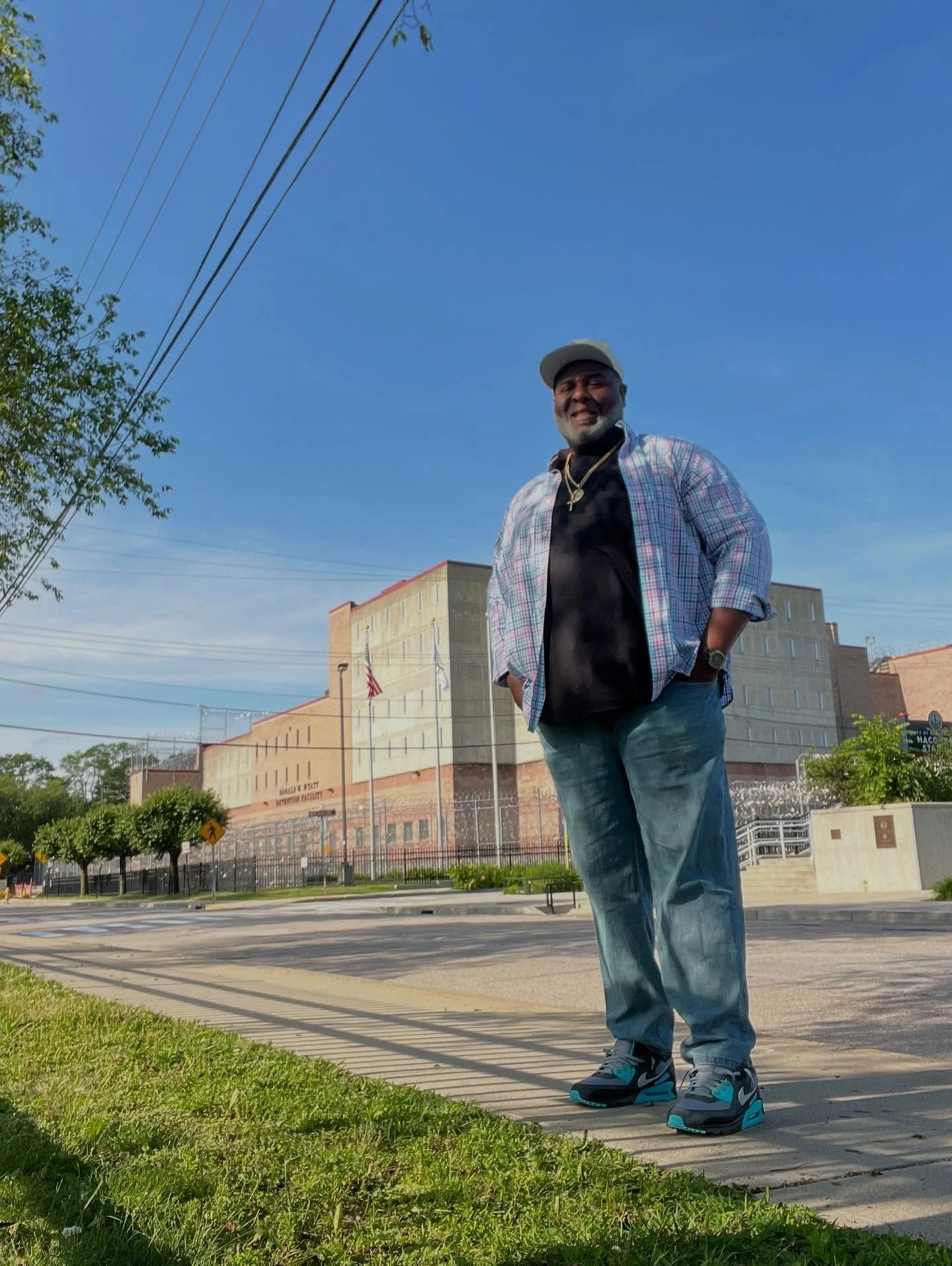
Radically Rural: What the summit’s 2025 edition looks like

The Radically Rural summit is back. The annual event brings together those who love rural life, but also want to solve small-town challenges. Radically Rural is a grassroots movement founded in 2018 in Keene that connects people who are passionate about small-town life with those who are pioneering innovative solutions to common problems. It’s back for 2025 with new ideas and new solutions. To preview the summit are Executive Director Julianna Dodson and Lillian Chase, program and development coordinator, both from the Hannah Grimes Center for Entrepreneurship and part of the planning team for the summit.

By Rosemary Ford and Caitlin Agnew

This article has been edited for length and clarity.

Melanie Plenda:

Julianna, can you tell us a bit about the background of Radically Rural and its connection to the Hannah Grimes Center? 

 Julianna Dodson:

The Hannah Grimes Center started as the marketplace on Main Street about 28 years ago, and has continually evolved to kind of meet the moment that we're in as a region and to meet needs that we have through innovation, collaboration and gathering together.

 About 18 years ago, they started an annual event called Connect and met annually, and it worked really well for our region to kind of come together and shape and share ideas and increase connections, share solutions and making sure folks weren't duplicating efforts, things like that. 

 When The Keene Sentinel got involved in that effort in 2016, the event just continued to grow. At one of the events, someone stood up during an idea jam, and said, “Rural places shouldn't be kept out of being able to host large gatherings just because we don't have large convention centers. We should be able to use our whole downtown as a convention center.” And everyone was like, “We should do that.” So a group got together and really did some brainstorming around what that could look like. 

 Melanie Plenda:

How has it evolved over the years?

 Julianna Dodson:

We had two years before the pandemic of hosting in downtown Keene, and it was hugely successful. Then when the pandemic hit, we moved everything online. Then they received a Northern Border Regional Commission grant to hire a Radically Rural director, and that's where I came on the scene. 

 When I started, we had our first hybrid year, and from that point forward, having someone who is dedicated to this work, we were able to actually expand to year-round programming through virtual roundtables. Over time, we have also evolved to include small town trips every year where we visit one small town and learn all about them and what they're doing and make what makes them unique, what models they have to offer, what challenges they're grappling with. We've also started last year with an annual correspondence to Congress to help communicate some of the needs that we're hearing about from the grassroots community that we steward. 

 I would say also, I think what has evolved the most, in my view, is the relationships in the community, which gets stronger and stronger every year, and that has really allowed us to individually and in groups, kind of customize our support relationally and with connections to resources.

Melanie Plenda:

Lillian, tell us about the theme this year, which is “resonance,” and how that will play out. 

 Lillian Chase:

After last year's summit, based on some feedback from our advisory group, we knew we wanted to do some radical imagination exercises and just look at the stories we're telling about rural communities — and if we could have a perfect rural community, what it would look like and how we could get there. So we started by finding a partner for that work, and we started working with the Resonance Network. They're going to be speaking at several of our sessions

 They explained to us kind of what their name means, and this idea that it's a single force that makes a single vibration something greater. We loved that because it resonated with us. We thought that's what we do at Radically Rural. We take a single idea or thought or model, and we bounce it off everyone else in the room to create a solution, to create ideas that can spark rural innovation across the country. 

 This year, we're diving into that with more cross-sector collaboration than ever. We really want people in public health to be able to bounce ideas off of people in the arts and see what creative solutions can come from.

 Melanie Plenda:

Lillian, what’s new this year at the summit?

 Lillian Chase:

More cross-sector collaboration than ever. Our Wednesday and Thursday sessions are all going to touch on more than one track. So it might be the arts, it might be clean energy, it might be land, but it's going to be multiple of those every single time.

 The other new thing that we're doing is adding a day, so Tuesday, the first day of the summit, is going to be focused on staying in your track, collaborating, making connections with people who are doing similar work to you, so that you can have those bonds and a place to start before you dive into more cross sector collaboration. 

 We're having field trips. We're having track specific sessions. One of the really cool things we're going to do is our Land and Community track is going to Yellowbud Farm in Massachusetts. They're going to talk with the folks that are farming there and just have a chance to really kind of be immersed in the agriculture and the ideas behind the things that are going to be on panels that we're going to talk about in the next few days. 

Melanie Plenda:

Julianna, what kind of an impact do you think the summit has had over the years? 

 Lillian Chase:

This is a fun one, because I am 100% certain that I have not even remotely been able to keep track of all of the impacts and all the mycelium under the soil that has just spread like wildfire. But there are a couple of really tangible things that I can point to. We've had other people start conferences, replicating Radically Rural, and that's been really fun, because we just like to share. So we’re like, “Take everything.” For our programs, we share them freely with anyone who wants to use them and replicate them and change them. 


My favorite part, honestly, is that people have become really good friends through this, and they connect during the year. They support each other during the year. I personally have at least three of my best voice memo friends through Radically Rural, and it's just been delightful to see how it's grown and strengthened over the years.

 Melanie Plenda:

Lillian, who comes to Radically Rural? How do they find out about it?

 Lillian Chase:

We like to say that anybody who hears a problem and wants to solve it comes to Radical Rural — people with that spark of “I could contribute.” Those are the kind of people that come, and then obviously people who love their rural communities. That's why we get together — to celebrate rural, to solve problems for rural areas. So if you live, work or recreate in rural areas, Radically Rural is really the place for you to come meet your people, and people find out about it at this point from previous attendance. 

 Melanie Plenda:

Julianna, what do you hope people take away from attending the summit?

 Julianna Dodson: 

I would say two things. The first one is something else that we haven't done and that we're doing this year is an Education track, and so I'm really hoping that folks can kind of come together from different perspectives as educators and really kind of like work on issues together.

 Then the second thing I would say is we've always been known as very solutions-based, upbeat, positive. As one of our founders, Mary Ann  Kristiansen, would say, “No wringing of the hands, let's actually move forward.” That hasn't changed. However, I would say as we've matured as programming and as we've grown over time, we are more interested, not in what could be considered like low-hanging fruit, we're more interested in really grasping at the roots. 

 Every year we've gotten more and more kind of intentional in addressing how entangled everything really is, ecologically, economically, socially. And that's one of the reasons that we have more sessions that are cross-pollinating this year, and why we're kind of bringing up topics that we really haven't before.

 Melanie Plenda:

And Lillian, where do people go if they want more information about this? 

Lillian Chase:

Go to Radicallyrural.org and you can check out our agenda there. You can sort by track. You can get your tickets there. Definitely go to our website.

Melanie Plenda:

So interesting. Julianna and Lillian, thank you for joining us today.


“The State We’re In” is a weekly digital public affairs show produced by NH PBS and The Marlin Fitzwater Center for Communication at Franklin Pierce University. It is shared with partners in the Granite State News Collaborative, of which both organizations are members. For more information, visit
collaborativenh.org.

From survivor to advocate: a response to Trump’s comments on domestic violence

Why dismissing abuse as a ‘little fight’ isn’t just wrong – it’s deadly

By Shamecca Brown-Granite State News Collaborative 

I know this took place at the beginning of September, but I had to take a couple of deep breaths and really reflect before writing this piece. I am a survivor. I was a victim. And now I am an advocate. And I’m here for all people who have been through domestic violence, no matter their gender, the color of their skin, or their age.

On Sept. 8, Donald Trump, speaking at the Museum of the Bible in Washington, said, while defending his claim that because he sent troops to the capital, that crime was “down 87%” there and that it would be even lower if not for “things that take place in the home they call crime.”

He added: “They’ll do anything they can to find something. If a man has a little fight with the wife, they say ‘this was a crime.’”

When I heard these words, I felt anger, sadness and disbelief all at once. I had to pause, breathe and reflect before writing, because these comments don’t just miss the point – they erase the lived experiences of millions of people. Domestic violence is not “a little fight with the wife.” It is not a minor squabble. It is abuse, it is trauma, and for too many, it is deadly.

Why I’m speaking out

I never even realized I was a victim at first. Like many survivors, I normalized the behavior, told myself it was just a bad argument, or that I had provoked it. I said to myself, “Oh, it’s not that bad.” I even said, “I fought back.” But then I would look in the mirror at my fat lip, my blue and black eye, and my bruised arms. For me, I convinced myself it was somehow protection, twisted into love.

But domestic violence is never love. And it’s never protection. You see, it still hurts, to hear, to see and to go through these things with people I’m helping. Yes, I said people. Because domestic violence doesn’t discriminate. I work with men, women, teens, LGBTQ survivors, immigrants – all walks of life. And every time I sit with someone, I see my story reflected back at me.

I’m glad I had training to help, but more than anything, I’ve lived it. And that’s why I speak out. Because I know it isn’t easy to leave. Not the first time, not the second, not even the fifth. Sometimes you’re just trying to make it out alive. I’ve seen too much. I’ve answered hospital calls. I’ve hidden victims. I’ve watched the trauma crack open inside people who just want peace. And the truth? The trauma cracks open inside me too, because it brings back memories of what I survived.

Yet, while survivors fight for their lives, some abusers walk free. Some stalk. Some kill. Some make bail and never spend a day behind bars. And still, Trump stood there and said this isn’t really a crime. That’s not just careless – it’s cruel.

For every survivor who still questions their worth, for every child who thinks violence is normal, for every life lost to abuse, we must stand up, speak the truth and demand better. Domestic violence is not a “little fight.” It is not lesser. It is not optional to count. It is real, it is devastating, and it deserves every ounce of our attention.

Shamecca Brown is a New Hampshire–based columnist who is family-oriented and passionate about serving underserved communities. Her advocacy extends to a range of social issues, with a strong commitment to supporting survivors of domestic and sexual violence. These articles are being shared by partners in the Granite State News Collaborative. For more information, visit collaborativenh.org.

State House update: Upcoming issues, possible legislation, and how that could affect you

By Rosemary Ford and Caitlin Agnew

This article has been edited for length and clarity.


A new session of the Legislature won’t begin until next January, but lawmakers are already filing new legislation. What issues and bills might come up? How will they affect you? To discuss this is Anna Brown, executive director of Citizens Count, a nonprofit and nonpartisan organization dedicated to educating voters about the political process. Brown is also executive director of the Warren B. Rudman Center for Justice, Leadership, and Public Service at the University of New Hampshire’s Franklin Pierce School of Law.

 Melanie Plenda:

Anna, ‘tis the season for lawmakers to file new bills that may eventually become laws here in New Hampshire. 

 Anna Brown:

We're entering the second year of the legislative session, which usually means we dig into some thornier policy debates that were put off during the first-year budget process, and that's still true. But we also saw House and Senate leaders explicitly say, please put in fewer bills this year, because there's a lot of logistical challenges — parking challenges and some renovations at the Legislative Office Building. So far, it does look like there are significantly fewer bills, but still lots to talk about.

 We're definitely going to see continued debate over housing-related legislation and zoning issues as well as social issues, particularly related to gender and free speech. I've got my eyes on bills related to school funding, because there were those recent New Hampshire Supreme Court rulings which told the Legislature it needs to act.

 Melanie Plenda:

Let’s dig a little deeper. What’s going on in the perpetual struggle between local and state control over zoning? What’s going on in that realm? 

 Anna Brown:

Just this past year, the Legislature passed several laws related to state limits on zoning. For example, expanding accessory dwelling units by right, limiting parking requirements, and so on. There's definitely a group of Republican legislators who are not happy with these changes. I've been watching the fights play out on social media over the summer, so I'm not surprised to see some bill proposals that basically want to repeal what was done last year.

 Melanie Plenda:

When it comes to spending priorities, local towns have been trying to get the state more involved in education — by sending more money — for years. In fact, there have been three, I believe, successful lawsuits that point out the state isn’t meeting its obligations for education funding, yet little seems to change. Will this come up again? What do you expect? 

 Anna Brown:

The debate is already happening. We've seen legislators meeting in committees and talking about what solutions might be brought forward, and they haven't really made much progress. The most recent New Hampshire Supreme Court ruling said the state has to spend more on that base per-pupil amount. It didn't say how. It didn't say when. There's also a group of Republicans who argue the Supreme Court overstepped its bounds. It's a major separation of powers power struggle. 

 I'm curious to see how it's going to play out in the Legislature, and realistically, there will be a lot of debate. But this is another one of those issues where I wouldn't be surprised if any changes are pushed off until the next legislative session, after the following election, because if they do increase base funding, they're going to have to come up with new revenue. Right now, the budget is looking very tight. 

 Melanie Plenda:

What about funding for child care? Is that another issue we might see tackled this session? If so, how?

 Anna Brown:

It's interesting to me, because whenever I go to chambers of commerce or other business groups, they bring up child care as a workforce issue. It's no secret there's a major shortage of child care in New Hampshire, and the speaker of the House even made a special committee on child care not too long ago, but we haven't seen the policy momentum around this issue that we saw around housing. 

 Now, more funding for child care — that's tough because, as I alluded to, we're on a very tight budget right now. There's not that free -flowing money from huge business tax revenue or Covid money from the federal government. That being said, Rep. Katelyn Kuttab from Windham has put in a bill that would create a child care tax credit program. We don't know what that looks like yet — we’ll have to wait for the bill text. I've seen similar ideas get floated before, so maybe momentum is building.

 Melanie Plenda:

As you mentioned, state revenues are already down this year, for a variety of reasons. Is this something the Legislature will have to address this term? Why? 

 Anna Brown:

Realistically, we're operating on a two-year budget. It would have to be a really huge crisis for the Legislature to reopen the budget and make changes like that until 2027, the next usual budget cycle.

 That being said, the first two months of the fiscal year, July and August, business tax revenue came in below projections. If that continues, we might enter the election year with a budget deficit, and it would be up to the governor and legislators to sort of speak to that during their election campaigns. So we already have a really lean state budget and there were some major cuts in this previous budget. For example, positions in the office of the child advocate were getting cut. Republicans also did vote to raise various fees, such as car registration, to help cover the budget. So it's too early to speculate what legislators might do two years from now, but certainly, like the economy, our budget is in a bit of an uncertain pocket.

 Melanie Plenda:

What happens if there is a major deficit? What does that mean?

 Anna Brown:

When we last saw something like that happen, it was during the Great Recession, and that ultimately resulted in some really huge cuts to the university system, for example. Now what's interesting here is we actually saw a big cut to the university system this most recent budget cycle. How deep can you cut? 

 At that point, do you have a conversation about maybe bringing back the interest in dividends tax, which was phased out. I'm sure Republicans don't want to do that? Then again, if we do enter a budget crisis going into that election year, maybe that would give the Democrats something to argue for.

 Melanie Plenda:

Will we see anything related to the assassination of Charlie Kirk?

 Anna Brown:

We're already seeing one big piece of legislation from House Majority Leader Jason Osborne, and he's sponsoring a bill named the CHARLIE Act, which is an acronym for countering hate and revolutionary leftist indoctrination in education. We haven't seen the text of this bill, but you can tell from its name, it's looking to add penalties for teachers who are teaching certain subjects, certain ways of thinking.

 We don't really know how that would be defined. It could result in fines. It could potentially revoke teacher licenses. I will say if it did pass, it would almost certainly face a court challenge, because we've seen court challenges on bills that looked to restrict teaching related to diversity, equity and inclusion, critical race theory, and so on. And if it's not really clearly defined, and how that would be determined, that's when you start to run into trouble with the courts. Also Governor Ayotte has not come out in support of this. Her line so far in the wake of the Charlie Kirk assassination is that “We need to lower the temperature. We need more civil dialogue. Free speech is important.”

 Melanie Plenda:

What about gender issues? Will we see anything like that come out of the Legislature this term?

 Anna Brown:

This is another one that I think is teeing up tension between Republicans in the Legislature and Governor Ayotte, who is also a Republican. This past summer, she vetoed a bill that would allow some discrimination based on biological sex — locker rooms, bathrooms, and so on. Republicans, it appears, are putting forward pretty similar limit legislation again. Once again, we don't have the bill texts, so we don't know how much movement there is. 

Then there's a couple of bills that are looking at other ways gender is in state law. For example, a bill to eliminate or restrict the ability to change the gender on your driver's license, and then also maybe removing references to gender identity in state law. Will those have enough momentum? Will they move forward? I mean, prior to the Charlie Kirk assassination, this looked like it was going to be the most passionate social issue debate that was going to be happening in the Legislature, so I still expect that to be a very intense topic that legislators are grappling with.

Melanie Plenda:

Fascinating as always. Anna, thank you for joining us today. 

These articles are being shared by partners in the Granite State News Collaborative. For more information, visit collaborativenh.org. “The State We’re In” is a weekly digital public affairs show produced by NH PBS and The Marlin Fitzwater Center for Communications. It is shared with partners in the Granite State News Collaborative, of which both organizations are members.

Districts explore whether and how to charge tuition to EFA students

Students who have Educational Freedom Accounts, commonly known as vouchers, are not entitled to free participation in programming from their local districts

By Kelly Burch, Granite State News Collaborative

School districts around the state are scrambling to draft policies about whether and how to charge tuition to students enrolled in the Education Freedom Account program — students who, unlike traditional homeschoolers, are not legally entitled to free participation in district programming. 

“It’s emerging from almost the premise of double-dipping," said Nicole Heimarck, executive director of Reaching Higher NH, a nonprofit focused on education.

The EFA program, commonly known as vouchers, allows families to directly access the state portion of educational funding, known as adequacy funding. This year, the base amount is $4,182, with additional funds for some students, including those with disabilities or who qualify for free and reduced lunches. Last year, families received an average EFA grant of $5,204, according to the state Department of Education. 

It’s relatively common for students educated outside of public schools to participate in select activities in their local school, like science lab, sports or band, educators say. Yet EFA students are not entitled to participate free of charge in programming from their local districts, as districts are no longer receiving state funds to educate those pupils. According to the N.H. Department of Education, districts may allow EFA students to participate in classes and extracurriculars free of charge, decline to allow participation, or charge tuition. 

"That’s totally up to the community itself,” said William Phillips, staff attorney and director of policy services with the N.H. School Boards Association. 

The need to draft policies has become more acute this year, Phillips said, due to the expansion of the EFA program. In August, the program met its 10,000-student cap, nearly double the 5,321 students enrolled last year, before the state removed income caps for the programs. State law allows for the continued expansion of the program if it meets its cap annually. 

Responsibility to taxpayers, students

The Kearsarge Regional School District — which made headlines last year after a resident introduced the idea of a per-pupil spending cap — is one of the school administrative units looking into charging students who are receiving EFAs and also participating in district programming. 

Michael Bessette, assistant superintendent in the district, said charging tuition is a matter of being responsible to the local taxpayers who fund the schools. 

“We work hard to try to get the best out of taxpayer dollars,” Bessette said. “They’re expensive dollars.”

If a family is taking EFA funds, but also free district services, “they’re double-dipping,” Bassette said. 

(By comparison, if a traditional homeschool student takes classes or extracurriculars at the district, the state pays a portion of that student’s adequacy funding to the district, so the district is compensated, educators note.) 

In New London — one of the seven towns in the Kearsarge district — there were 35 EFA students as of early September. If those children were enrolled in public schools, the district would receive an extra $158,452.92 in adequacy funding from the state, Bassette said. 

Proponents of EFAs point out that families receiving the vouchers are still supporting public schools through their property taxes. Local funding accounts for about 70% of public school funding in New Hampshire, according to the N.H. Fiscal Policy Institute.

“If you’re living in a town and paying property tax, that money is funding the school,” said Kate Baker Demers, executive director of the Children’s Scholarship Fund NH, which administers the EFA program. 

Because of that, “a district, especially a smaller district with a relatively close-knit community, might be more accepting of students from within the district at no charge,” said Phillips. 

Districts may be more apt to charge tuition to EFA students who aren’t local residents, he added. 

“When you bring in a student from another district it’s reasonable for all of the taxpayers, the folks who are funding the local school, to have some offset,” he said.

The N.H. School Boards Association sometimes provides sample policies for districts to adapt. The association hasn’t done that for EFAs and tuition due to the “enormous variance in how a district might do this,” Phillips said. 

‘As transparent as mud’

When EFAs were established in 2021, Anne Fowler knew she was “going to have a difficult time.”

Fowler is principal of the Concord Regional Technical Center, one of the state’s Career and Technical Education centers. When a student enrolls in a technical school, the center bills the student’s home district for tuition, which varies by program but is typically $7,000 to $8,000 annually, according to Fowler. 

If a student receives an EFA, the residential school district isn’t responsible for tuition; the family is. The tuition bill came as a surprise to at least one family enrolled at the Concord technical center last year, Fowler said.

To try to avoid surprise billing, she amended the school's application to ask prospective students if they have an EFA. Yet she remains concerned that when this year’s tuition bills are mailed in February, she may notice students who misclassified themselves as homeschoolers when they are, in fact, receiving an EFA. 

Fowler’s experience highlights a common frustration for districts: It’s very difficult to identify which students receive EFA funding. 

“It’s entirely self-reported,” Phillips said. “The districts have no way of monitoring it.”

This fall, the department of education made it easier for districts to identify a “cross-district conflict” — a student who receives an EFA and is also enrolled more than 50% of the time in a local district, educators say. That’s not allowed under state law. 

At Kearsarge Regional High School, five students are in violation of that law, according to Bassette. The district is working with those families and will likely give them a deadline by which they must be under the 50% enrollment threshold or withdraw from the EFA program, he said. 

Yet there’s still no simple way for districts to identify students who are receiving an EFA — and thus could be charged tuition, but who are not enrolled in the district more than 50% of the time. Kearsarge is trying to identify these students using multiple data sheets and student identification numbers, but the process is arduous, Bassette said. 

“It’s been really challenging to obtain information on education freedom accounts,” said Heimarck. “We have heard stories of districts having a hard time verifying whether a student is public school enrolled or a voucher student, and that is creating funding problems for our local districts.”

That’s a point of great frustration for educators. 

"This transparency that the state talks about is about as transparent as mud,” Bassette said. 

In addition, there’s nothing stopping families from quickly spending down their EFA funding on eligible expenses, then reclassifying themselves as homeschool students to access district programming without charge, Phillips said. It’s “very problematic,” he added. 

A strain across the system

Baker Demers said that she’s glad to see more people talking about using EFAs to pay for programming at public schools. Some districts, she said, have been accepting EFA funds for years.

“It’s exciting that that’s on everyone’s radar now, because the public schools can be an incredible resource,” she said. “That is the entire goal of participating in the EFA, to find each educational or learning opportunity that matches the child’s needs exactly.”

However, some educators feel that the state is reinforcing existing inequities by funding EFAs while underfunding other educational options.  

Bassette said Kearsarge can only update its policies because they have the money and staff to research exactly how many students are receiving EFAs and participating in district programming. That likely wouldn’t happen in under-funded districts like Newport or Claremont, he added. 

"Because we have somebody who monitors this type of data, we were able to discover it,” he said.

Fowler pointed out that there’s often a gap in payments for technical education due to the state underpaying its portion of the bill. The gap falls to local districts to pay, she said. It occurs because the state has capped funding for career and technical centers at $9 million, while allocating $27.7 million, last year, for EFAs. 

“It doesn’t seem equitable …” Fowler said. “Schools are being pinched. Taxpayers are upset. And the students themselves are losing out at the end of the day.”

These articles are being shared by partners in the Granite State News Collaborative.Don’t just read this. Share it with one person who doesn’t usually follow local news — that’s how we make an impact. For more information, visitcollaborativenh.org.
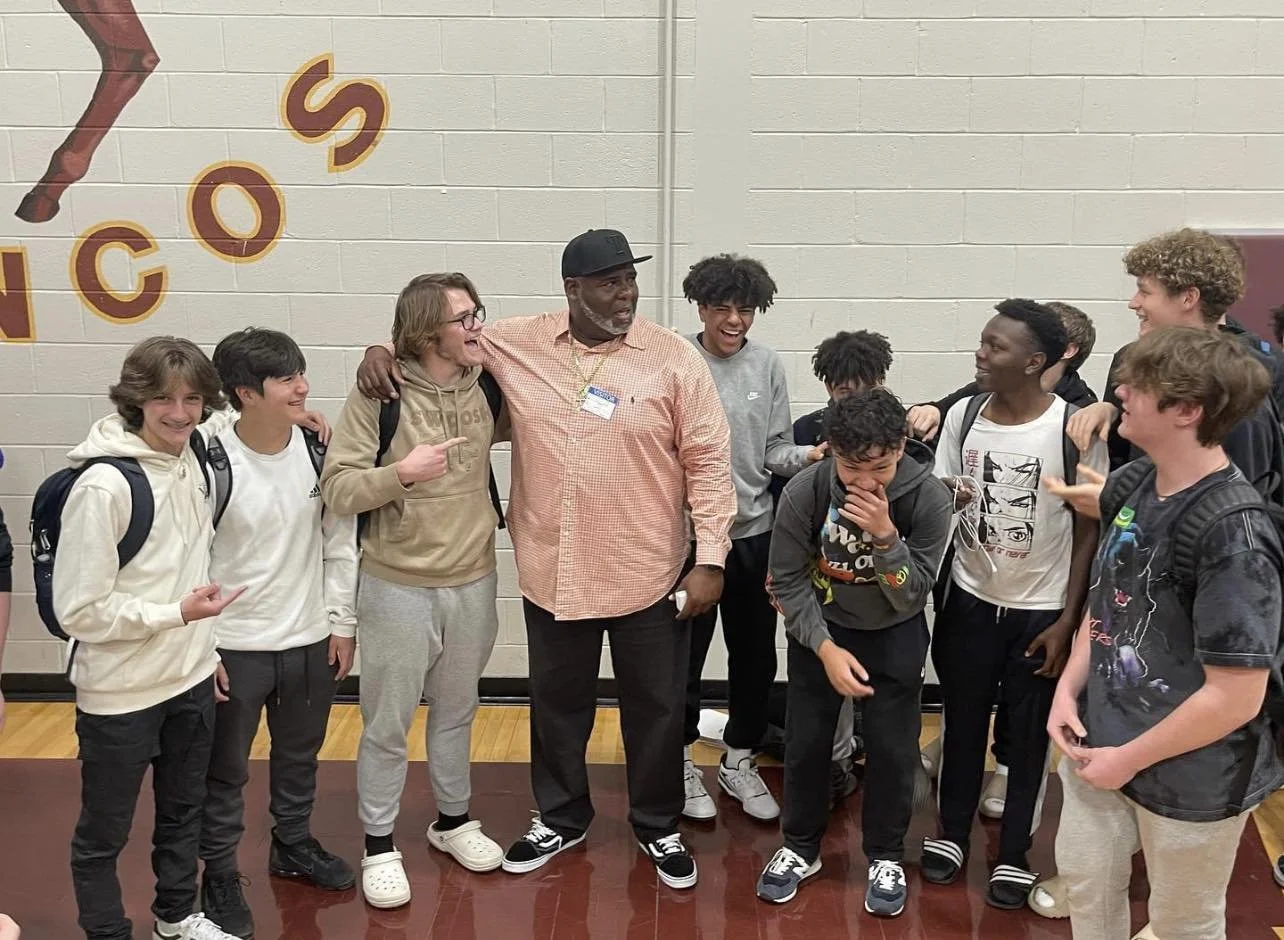
How beech leaf disease affects New Hampshire’s forest ecology

By Rosemary Ford and Caitlin Agnew

This article has been edited for length and clarity.

Beech leaf disease is the latest threat to the state’s beech trees. It’s quickly spread across the state and could have several environmental and human impacts. Here to discuss what’s happening is Lindsay Watkins, a field specialist in forest resources for Strafford County at the University of New Hampshire Cooperative Extension.

Melanie Plenda:

Lindsay, what is beech leaf disease? Where does it come from? What does it look like? 

Lindsay Watkins:

Beech leaf disease is the newest of our forest's health threats that we're seeing here in New Hampshire. It's caused by a foliar nematode. Nematodes are microscopic, worm-like creatures, so we can't see them unless we're looking at them with a microscope. But they're tiny, little worm-like deals that get into the buds of beech trees and do quite a bit of damage.

Beech leaf disease, as far as we know, came from Asia, and likely came on nursery plants or in soil that came in plants from overseas. It was first detected in Ohio in 2012, made its way east pretty quickly and spread up the Atlantic coast. It was first found in New Hampshire in 2022 in Deerfield, Nottingham, Durham and Madbury. Since then, it has spread pretty quickly throughout New Hampshire. 

Melanie Plenda:

How prevalent is this? Are many trees in the areas you mentioned affected?

Lindsay Watkins:

It's extremely prevalent. Last year it was kind of one of those things most of the towns that I would visit in Stratford County, if I looked for it, I could find it in some places. It was very readily apparent. This year, it's everywhere. You can't miss it. The trees look almost what I would describe as kind of crispy this year. The leaves are just leathery, thick, crinkled, and just look really unhealthy.

Melanie Plenda:

Why is this a concern here in New Hampshire?

Lindsay Watkins:

One of the big concerns is that we're seeing beech leaf disease cause pretty rapid mortality in beech trees. In some of the smaller trees, we're seeing those trees die off in about three to six years. It might take a little bit longer for some of our larger, more mature beech trees, but one of the things that we have in New Hampshire as a result of our past forest management, as well as beech bark disease — which is another disease that affects beech trees- is that we have a lot of .smaller, understory, midstory beech tree, and so when you look out into a forest, most of what you're seeing in that lower layer of the forest canopy, in many cases is beech. That's going to change a lot about how our forest ecosystems look and how they function.

So you're changing the amount of light that reaches the forest floor, you're changing the humidity and moisture levels in that understory layer, you are potentially opening up space for other species to come in. Those may be native species, those may be invasive species in some cases. So there's just a lot of things about the dynamics of how our forest ecosystems work that are going to change as a result of beech leaf disease.

Melanie Plenda:

Tell us more about beech bark disease. What is it and when did that become a concern?  

Lindsay Watkins:

Beech bark disease started to appear in New Hampshire around the 1950s, 1960s, and it became really prevalent. It's a more complex disease. It's caused by a combination of a scale insect that is feeding on beach bark and in the process spreading fungal pathogens.

There are actually a couple of fungal pathogens that are believed to be involved. They're native to New England and North America. The scale insect came from Europe. I believe it arrived in Nova Scotia in the early 1900s and then kind of spread south and west.

Beech bark disease is more complex in the way it works. It doesn't outright kill beech trees the way that beech leaf disease might, but it did take out a lot of our older, more mature beech trees and our forests and part of beeches’ ecology is that when a tree is stressed, or when it's killed, it puts out root sprouts. So if you kill a very large beech tree, or you stress out a very large beech tree, part of the way it's going to react is it's going to send out all of these root sprouts, and that's part of why we have so many of these smaller, sapling-size beech trees in our forest.

Melanie Plenda:

What happens if we lose the state’s beech trees? What does that look like? What impact will that have? 

Lindsay Watkins:

The first thing that comes to mind when I think about losing beech trees is just how valuable they are as a tree for wildlife. Beeches produce beech nuts, which are an extremely valuable food source. They're high in fat and protein. They're particularly valuable for bears, but there's a lot of other species that rely on beech nuts as a food source as well. That's a pretty big impact when you think about removing a species that is so important to so many different species. 

On the flip side of that, because of some of the challenges that I mentioned before with beech bark disease, a lot of foresters have spent many years trying to figure out how to manage beech so that there's less of it, so that we can encourage other species that might be more desirable from an economic standpoint, or even just to have greater biodiversity to grow, because in a lot of cases, you'll have so much beech in your forest that it's shading out other species, like sugar maple or red oak or other species that we want to grow. So there's a certain degree to which some folks maybe aren't heartbroken that we're losing some of our beach, but I don't think this is the way we would want this to go.We don't want to lose all of it. It's a really important species for a lot of reasons. 

Melanie Plenda:

How will wildlife be affected? How will people be affected?

Lindsay Watkins:

Sometimes it can be harder to see the direct impacts to us on losing a species or many trees of a species, but beeches are really important characters, like the characteristic tree of our forest.

Think about the northern hardwood forest: You think maple, beech and birch. Those are the species that really make up that forest assemblage. So there's going to be a visual impact. People are going to notice it. It has not been detected in the White Mountains, but I'm pretty sure that by next year, we're going to start to see it throughout the White Mountains. So people out hiking are going to notice it. It's going to change, really, the look of our forests, and I think it's going to change the function of our forest ecosystems, maybe in ways that we don't even quite recognize yet.

Melanie Plenda:

Overall, how healthy are New Hampshire forests? What concerns do you have? 

Lindsay Watkins:

That's a really tricky question — forest health is complex. When I think about what a healthy forest is, I think about a forest that is functioning in a way that it's providing ecosystem services for all of the species that live there — a variety of different tree species, a variety of different tree age classes and sizes, you have different wildlife that are making use of our forests for food and for habitat and getting their needs met. 

I think one of the challenges that we're seeing is that we have these different pests and diseases that, in many cases, are detrimental to an entire species. So we've lost chestnut, largely lost elm, seeing our ash trees die off on a wide scale, and now it's beech. So every time we lose a species like that, it takes away some of the complexity. It takes away some of the ecosystem's ability to respond to further stress and additional disturbances. If you eliminate all the beech, you start to get to a point where your forests are made of one or two or three species, and then what's next? It becomes a little bit of a domino effect. 

Melanie Plenda:

What can the average person do, if anything, about this? 

Lindsay Watkins:

I wish I had some better answers. I think just being aware of what's going on and paying attention. Extension and the New Hampshire Division of Forests and Lands maintain nhbugs.org — it’s a website that has a lot of information about forest pests and diseases. You can go on there and get more information about what to look for.

If you are in the southern half of the state, we probably don't need you to report beech leaf disease. We're pretty sure we know where it is and we've got it. But if you are in the more northern half of the state and you're seeing beech leaf disease in a place that it hasn't been reported yet, please do submit a report to nhbugs or reach out to your county forester and just let them know that it's there. It's just helpful to keep track of where it is, how it's spreading, how quickly it's spreading, as we continue to learn more about it and figure out what we might be able to do from a practical, hands-on perspective. 

If you're a landowner who's managing forest land, I don't think there's anything that you necessarily need to change as a result of beech leaf disease. If you're working with a forester, if you have a forest management plan, it's definitely something to consider going forward how you're going to continue to manage that forest land. If you were going to cut the beech anyway, it's great firewood. By all means, cut beech trees for firewood. If you weren't going to cut beech trees down, there's not really a reason to go out and do that just because this disease is here. It's not a situation where if we cut our beech trees down, we're going to help prevent it from spreading further.

Melanie Plenda:

So interesting! Lindsay, thank you for joining us today. 

“The State We’re In” is a weekly digital public affairs show produced by NH PBS and The Marlin Fitzwater Center for Communication at Franklin Pierce University. It is shared with partners in the Granite State News Collaborative, of which both organizations are members. For more information, visit collaborativenh.org.

‘The power of collaboration and partnership’ invigorates health care in North Country

While other rural health care systems falter, Coos County Family Health-Androscoggin Valley Hospital alliance shores up access to health care

By Kelly Burch-Granite State News Collaborative

Sue Bergquist is 80 and dealing with multiple health issues that have her seeing an oncologist, neurologist and neurosurgeon, along with other providers. That is stressful enough, but Bergquist was also deeply worried about how she’d get from her home in Berlin to all those appointments, which can be up to three hours away. 

Earlier this year, one of her providers put her in touch with the Great Northwoods Community Foundation, which was able to help arrange Bergquist’s transport, providing much-needed relief. 

“Just knowing I don’t have to deal with the rides — that takes a burden off of me,” Bergquist said. 

The Great Northwoods Community Foundation emerged in 2019 through a partnership between Androscoggin Valley Hospital in Berlin and Coos County Family Health, a federally qualified health center with locations in Berlin, Gorham and Colebrook. For more than 20 years, the hospital and the health center have had a collaboration in which they share space and staff. 

Recently, in the face of changes to Medicaid, the partnership has provided a sense of financial security to the health center. Leaders at both institutions say the partnership has benefited their organizations and the surrounding communities, shoring up access to health care at a time when rural health care systems are too often faltering.

“The collaboration has been really critical,” said Ken Gordon, CEO of Coos County Family Health. “We’ve been able to achieve some things we wouldn’t be able to on our own.”

Leveraging federal funding structures

To understand the partnership, it’s helpful to have some context about health care funding. 

An American flag flies in the wind in front of the Coos County Family Health Service clinic, in Berlin, New Hampshire, on Thursday morning, Sept. 18, 2025. (Photo by Daniel Sarch)

Rural hospitals, like Androscoggin Valley, are often on tenuous financial footing. According to KFF, a nonprofit focused on health care policy, 44% of rural hospitals were operating at a loss in 2023, the most recent year for which data are available. This is one factor that’s contributed to the consolidation of hospitals in New Hampshire and other rural states. 

This is true for many reasons, yet perhaps the biggest factor is Medicaid. Medicaid covered 53% of hospital discharges in rural areas in 2023, according to KFF, compared to 45% in urban areas. 

Medicaid, a government health insurance program, is notorious for its low reimbursement rates. Most rural hospitals lose money providing care to Medicaid patients, according to the American Medical Association. 

Federally qualified health centers (FQHCs) like Coos County Family Health are funded primarily by a federal grant known as a Section 330 grant. The grant allows FQHCs to be paid more than other health providers for treating Medicaid or Medicare patients.

Given the different payment structures, leaders at the hospital and the health center realized back in 2003 that it was more advantageous to have the health center deliver the North County’s primary care, rather than the hospital. 

Primary care "was a loss center for the hospital, but a win for [Coos County Family Health’s] structure,” said Kris McCracken, president and CEO of Amoskeag Health, an FQHC in Manchester. 

A ‘symbiotic’ relationship

Together, the institutions had “an opportunity to leverage the FQHC funding mechanism,” said Michael Peterson, president and CEO of Androscoggin Valley Hospital.

The hospital stopped delivering primary care, instead shifting staff and patients to the health center. Today, the health center provides primary care to about 13,000 patients in the North Country, Gordon said.

The shift in primary care allowed both institutions to improve their finances, Peterson said, and also cut down on competition between the two organizations in a region that didn't have the population to support two primary care systems. 

Cecile Belanger, 58, left, and medical social worker Bridget Laflamme laugh while sitting together in a social determinate office at the Coos County Family Health Service clinic in Berlin, on Thursday morning, Sept. 18, 2025. Belanger says she visits the clinic for primary care other health services due to her narcolepsy, which prevents her from working. Laflamme works with Belanger to get assistance through the Great Northwoods Community Foundation. (Photo by Daniel Sarch)

“The power of collaboration and partnership … is more valuable to the mission of either organization than trying to go head-to-head and compete,” Peterson said. “We had to take the egos out of the situation and realize we need each other."

At the time, the hospital committed to providing the health center a community benefit grant annually for 20 years, in part to cover the cost of starting the primary care program. The grant was initially $1.5 million annually, but decreased over time, Peterson said.

Today, with that agreement expired, the relationship between the health center and the hospital is “symbiotic,” Peterson said. 

“Each of us depend on the other for the good of delivering on our mission,” he said. 

The organizations rent space from each other: The health center rents office space in the hospital to deliver primary care and express care, and the hospital rents lab space in a clinic that the health center owns. The hospital provides space at no charge for the health center to run a dental clinic in Colebrook. 

“We wouldn’t have a dental clinic there if it weren’t for that,” Gordon said. 

The organizations also share staff, which is especially beneficial to the health center, Gordon said. Community health centers often can’t compete with the pay that hospitals can offer. Without the partnership, the health center “probably wouldn’t have gotten these candidates,” Gordon said, including a recent hire who is working as a hospitalist and primary care provider. 

This year, the partnership has provided another benefit to the health center. Since the center serves the entire community, it has a higher proportion of patients with private insurance than many other FQHCs. That could provide some insulation against federal changes in Medicaid funding. 

“We’re less reliant on Medicaid than other FQHCs who predominantly serve people with Medicaid,” Gordon said. “It’s advantageous.”

Hiccup in the relationship becomes an opportunity

Physician assistant Maryanne Christiansen with patient Kimberly Mulroney, 61,at  the Coos County Family Health Service clinic in Berlin, New Hampshire, on Thursday morning, Sept. 18, 2025. Mulroney has been a longtime patient with the health clinic, and comes in regularly for primary care appointments. (Photo by Daniel Sarch)

The partnership hasn’t always been without challenges, however. Over time, the grant provided by the hospital became a sticking point. Neither Peterson nor Gordon was leading their organizations during the initial negotiations, but they were tasked with renegotiating the terms of the grant in about 2016.

At that point, “the FQHC was financially solvent, and the hospital margins were getting thinner and thinner,” Peterson said. That change made it difficult for the two sides to agree on a grant amount. Negotiations stalled with a $90,000 difference in what the hospital was willing to provide and what the health center would accept. 

That’s when Gordon and Peterson met up at a local diner. They realized that each organization was impacted by uncompensated care — care delivered to people who couldn’t pay. One way to ease that burden would be through addressing social determinants of health — factors such as transportation and access to nutritious food that contribute to poor health outcomes before someone even sets foot in the hospital or clinic. 

The two formed an idea, which they later brought to their respective boards: They would agree to a smaller grant between the hospital and FQHC, and each organization would contribute seed money to form an organization to address social determinants of health. That was the start of the Great Northwoods Community Foundation — the same organization that’s helping Sue Bergquist secure rides to her appointments. 

The foundation began operation in 2019, and has helped with everything from getting air conditioners to people with breathing challenges to building wheelchair ramps, Peterson said. 

“That’s one of the most proud accomplishments I can point to over the 10 years we’ve been working together,” he said. “That was significant, to turn a challenge into an opportunity.”

Benefiting the community

Peterson says the relationship between Coos County Family Health and Androscoggin Hospital is unique in New Hampshire.

“Typically FQHCs and hospitals have traditionally butted heads,” he said. “They’ve been at odds.”

Team coordinator Shannon Young speaks with a patient over the phone at the Coos County Family Health Service clinic in Berlin  on Thursday morning, Sept. 18, 2025. (Photo by Daniel Sarch)

And yet, the relationship also shows the way that collaboration can lead to two health care organizations having a bigger community impact than either could have on their own. 

Community members see that when they’re getting dental cleanings in Colebrook, being cared for by staff who were attracted to the dual roles available with the hospital and clinic, or taking advantage of the Great Northwoods Community Foundation.

“I don’t know what I’d do without this program,” Bergquist said. “I really don’t.”

She’s just one example of the significance of the partnership, Gordon said: “There are lots of examples of how the collaboration has benefited the community.”

This story is part of Critical Condition: What hospital consolidation means for care, access, and your community, a special series co-produced by partners in the Granite State News Collaborative. These stories are being shared by media outlets across New Hampshire. We want to hear from you! Take our short survey at https://tinyurl.com/3au39uct about your healthcare experiences. For more information, visit collaborativenh.org.